
 Russian Foreign Minister Sergey Lavrov said the Moscow authorities are elaborating a joint document in collaboration with Yerevan to rule out foreign servicemen’s presence on the territory of Armenia.
In an interview with Komsomolskaya Pravda, the Russian official said they are determined to avert possible risks through ensuring transparency.
“We are close to completing the preparation of the document that will guarantee foreign servicemen’s absence there [in Armenia] to make everything transparent in terms of [averting] risks and hazards,” he said.
Meantime Lavrov emphasized that Russia has considerably fewer diplomats compared to the United States.
 Russian and Ukrainian naval forces have clashed in the Black Sea. Though the region lies on NATO’s weak southeastern flank, the alliance is unlikely to intervene in an area where Russian and Western interests collide.
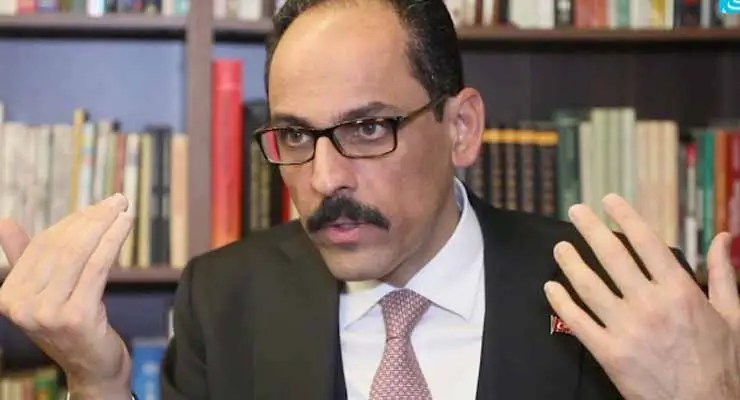 The statements by Ibrahim Kalin, the spokesperson of Turkish President Recept Tayyip Erdogan, give clear signals that Turkey and Russia collaborated very actively in the past to coerce Armenia into concessions, according to an Ankara-based political analyst.
 Russian President Vladimir Putin is traveling to Azerbaijan on Wednesday, September 25 “with a prosaic purpose”: to remind that Moscow is still the leading player in the region, whose opinion should be considered, visiting scholar at the University of Oxford Leila Alieva says in an article published on the BBC’s Russian service.
 Russia has cancelled the CIS interstate arrest warrant for former Armenian Defense Minister Mikayel Harutyunyan wanted in Armenia as part of a criminal case into the March 2008 events in capital Yerevan, Interfax reports, citing its sources.
 By
By  Armenia’s ministry of transport, communication and information technologies is holding talks with the Russian and Georgian partners in connection with the accumulation of Armenian trucks at the Lars border checkpoint, the ministry spokesperson Anahit Arakelyan told Armenpress.
 A World Cup-fueled boon for beer sales is not faring well for thirsty drinkers in Russia and the U.K.
 Bulgaria is dependent on Russian gas, but it is also a member of NATO and the European Union. Straddling the gap between Moscow and Brussels has put the country in a foreign policy quagmire.