Gagrule.net

Gagrule.net News, Views, Interviews worldwide

  • Home
  • About
  • Contact
  • GagruleLive
  • Armenia profile

Turkey: The fate of 5 Milion non-Muslim and Armenian Massacre by: Zeynep TOZDUMAN

July 13, 2013 By administrator

July 13, 2013

By: Zeynep TOZDUMAN

see below Turkish version

5 million from the fate of the Armenian Massacre

Zeynep TOZDUMAN PictureMassacre in 1915 changed the fate of the non-Muslim peoples in Turkey, in particular, more than half of the Armenian population by the central committee of the Young Turk Party for 12 people, through the Special Organization by the destruction carried out in such a short period of 16 months.

Crimes of humanity in this country in 1915, but yurtsuzlaştırma the economy and metruke’lere emval-i and the seizure of bank accounts, etc. economic and cultural-historical genocide marked as a black stain.

The Assembly plenary session held on June 10, 1915 by disabling the temporary confiscation and expropriation law, the parliamentary committee responsible for the financial affairs of the relocated Armenians edildi.Yasa considered, including bank accounts, ‘left behind’ the confiscation of property rights were recognized. Dışılılık compliance with the law, under the law, given that the decision of the Turkish Parliament, even criticism, but it could be caused by sporadic.
Faced with protests in parliament until 1918 Senator Ahmed Riza would say many times in one session. Emval-mentioned goods behind by the show as” kanunsuzluktur. Because of this property is determined in the owners did not leave willingly, they were forcibly, extracted with algebra. Government officials through their possessions sattırıyor now. 21 of this Constitution, contrary to article … It is a tyranny. Keep me in the arm, out at my village, then sell my property and possession, it is not permissible to no time.”
In June 1915 the amount of the value of the Ottoman government treasury banosuna invested 5 million Turkish liras. This investment is then entrusted to Berlin and Vienna, as gold was to be secured. This money Ottoman, European banks to be used after the war had made the investment. Passing up the opportunity into the hands of Germany, the Ottoman official debt immediately singled out the money. Because of the German credit institutions and banks in the first quarter of 1915-1916 due to the loans granted to the Armenians, the lending institutions suffered huge losses, financial losses by declaring that the 5 million mark, did not return the money.

5 million lira sent to Berlin by the Turkish government to protect a part of the sale of Armenian women and children, have been obtained. (1915 Armenian Genocide in the process of captive markets for the sale of women and children in need in areas where the military has been organized for the brothels. (Mardin To give an example, in front of the military commander of the slave market) Missed, haremlerinde confiscated and kept enslaved Muslim women, seizure of the Armenian gene pool application, the use of free labor alongside their men were killed and their women and children as sex slaves by destroying the fertility of the Armenian people running, ie the elimination of one of the most important pillars of the genocide. sexual slavery, genocide, and then finds a wide application area in the region. sexual slavery also one of the organizers of the aracıdır.Seks enrichment area and slavery, slave owners Besides being a means of enrichment, it has also been used as a means of humiliation of slavery also) ‘1

Armenians from Turkey and müttefikilerinin murderous policies, not only their lives, but economies have lost their homeland. After the defeat of triple alliance, confiscations of property stolen from the public were Armenian.
In the meantime, the newly founded Republic of Turkey, Dec. 26, 1925, the government statement, the process is guided by the Young Turks, which was destroyed by the Kemalists” elements” goods confiscated and continued state level.
The question of the fate of five million lira, was introduced at the end of September 1924, the Treaty of Lausanne. After the Germans confiscated by the British as to what the fate of five million lira, wrote a letter to Mary Terzyan 10 October 1944, Stanley Baldwin. Baldwin copy of the memorandum for the year 1924, the British government through the invisible forces, not to Cadogan proposed. The fate of five million of money, so that Mary remained inconclusive attempt Terzyan’nın. Financial obligation to the genocide of the second letter addressed his letter to Lord Halifax, Britain’s ambassador to Washington, has been raised for the second time. Turkey in Berlin, the German Bank (Deutsche Bank) and then transferred to London’s five million pounds of the” What happened to the Armenians?” in vain sought the answer to the question. ‘2
Here in England, stole Armenians by Turks in Germany, London, transporting and keep the 5 million pounds of gold, onion, peeled and conversion of the victims of the genocide is not only Germany was complicit in the United Kingdom. Not restricted to abet. British government officials, the British insurance companies and a variety of people carry their financial obligations towards the Armenians before the war, prevented the fulfillment of the.
The most obvious example of this, the star of life and property insurance company may Assurance Company. No payment in accordance with the agreements with the Armenians so far has done hundreds or even thousands of cases.
The blood of an innocent people who would not have gotten the money to anyone. Until this money returned to the descendants of the Armenian people living in these days it is until the money eventually burn them.

If the time-out is how to crimes against humanity, crimes against humanity madurların the economic claims of the timeout can not be processed. This is contrary to the dialectics of the capitalist economy. These days, living in Australia, Europe and America and the Armenian diaspora in the countries they live parlementolarına simultaneously bringing up the issue of 5 million coins can be disposed of fate and a step towards the collection, I think.
It is my conviction that the crime committed against the Armenian people stop before the international area, then that should be condemned by the legislative bodies and the Government of the Republic of Turkey, Turkey’s financial demands, but also can come up.

Zeynep TOZDUMAN

1-Genocide Laboratory study: Mardin 1915 Çetinoğlu Sait.
2-Proceedings, Relocation and Disposal”” massacres of Christians in the Ottoman Empire between 1912-1922 Compiled by: Tessa Hofmann

Turkish Version:

Ermeni Katliamı ile elde edilen 5 milyonun akibeti

Türkiye’deki gayri müslim halkların kaderini değiştiren 1915 katliamı; özellikle Ermeni nüfusunun yarıdan fazlası Jön Türk Partisinin 12 kişilik merkez komitesi  tarafından, Teşkilat-ı Mahsusa aracılığı ile  16 ay gibi kısa bir süre içinde imha ederek gerçekleştirmiştir.

1915’de bu ülkede insanlık suçuyla birlikte, yurtsuzlaştırma,ekonomiye ve emval-i metruke’lere ve de  banka hesaplarına el konulması v.b. gibi ekonomik ve kültürel- tarihsel soykırıma damgasını vuran kara bir lekedir.

10 Haziran 1915’te ki  meclisde yapılan oturumda genel kurul devre dışı bırakılarak gecici müsadere ve kamulaştırma kanunu, mali işlerden sorumlu parlemento komisyonunda kabul edildi.Yasa tehcir edilen Ermenilerin banka hesapları da dahil, ‘geride kalan ‘ mallarına el konulması hakkını tanıyordu. Hukuka uygunluk görüntüsü altında karar verilen bu yasa dışılılık, Türk parlementosu’nda bile eleştirilere, ancak tek tük neden olabildi.
1918’e kadar defalarca parlementoda protestolara karşılaşan senatör Ahmet Rıza şöyle diyordu bir oturumda.  ” sözü edilen malları emval-i metruke olarak göstermek kanunsuzluktur. Çünkü bu emvalin sahipleri mallarını isteyerek terk etmemişler, onlar yerlerinden zorla, cebir ile çıkartılmıştır. Hükümet şimdi onların mallarını memurları vasıtasıyla sattırıyor. Bu anayasa’nın 21. maddesine aykırıdır… Bu bir zulümdür . Beni kolumdan tut, köyümden dışarı at,  sonra da malımı ve mülkümü sat; bu, hiçbir vakit caiz değildir.”
Osmanlı hükümeti 1915 Haziran’ında 5 milyon Türk lirası değerindeki miktarı  hazine banosuna yatırım yapmıştı. Bu yatırım daha sonra Berlin ve Viyana’da emanetlere altın olarak güvence altına alınması için konuldu. Osmanlı bu parayı,  savaştan sonra kullanmak üzere avrupa bankalarına yatırım yapmıştı.  Eline fırsat geçen Almanya, bu parayı hemen  Osmanlının resmi borcuna saydı. Çünkü, Alman kredi kuruluş ve bankalarının 1915-1916 yılının ilk üç ayında Ermenilere verilen krediler nedeniyle, kredi veren kuruluşların büyük zarara uğradıkları, maddi kayıplarının 5 milyon mark olduğunu bildirerek parayı iade etmedi.

Türk hükümeti tarafından korunması için Berlin’e gönderilen 5 milyon liranın bir kısmı, Ermeni kadın ve çocukların satışından elde edilmiştir. ( 1915 Soykırımı sürecinde Ermeni kadınların ve çocukların satılması için esir pazarlarının olduğu yerlerde askerin ihtiyacı için genelevler organize edilmiştir. (Bir örnek verecek olursak Mardin Askeri komutanlığı önündeki köle pazarı) Kaçırılan, el konan ve esir edilen kadınların Müslüman haremlerinde tutulması, Ermeni gen havuzuna el konma uygulaması, bedava işgücü olarak kullanılmasının yanında Erkeklerinin öldürülerek kadınlarını ve çocuklarını da seks kölesi olarak çalıştırılması Ermeni halkını doğurganlığını yok ederek, ortadan kaldırılması yani Soykırımın önemli ayaklarından biridir. Seks köleliği Soykırım ve sonrasında bölgede geniş bir uygulama alanı bulmaktadır. Seks köleliği ayrıca organizatörleri açısından da bir zenginleşme alanı ve aracıdır.Seks köleliğinin, köle  sahiplerinin zenginleşmesinin aracı olmasının yanında, bu köleliğin  ayrıca  bir aşağılanma aracı olarak da kullanılmıştır)’1

Ermeniler, Türkiye ve müttefikilerinin katliamcı politikaları sonucu; sadece yaşamlarını, vatanlarını değil ekonomilerini de kaybettiler. Üçlü ittifak yenilgisinden sonra, çalınan Ermeni mallarının gaspına da ortak oldular.
Bu arada yeni kurulan T.C, 26 Aralık 1925’te hükümet açıklamasıyla, jön Türkler tarafından yön verilen süreci, Kemalistler’de  imha edilen ”unsurların ” mallarına devlet katında el konularak devam ettirdi.
5 milyon liranın akibeti sorusu, lozan antlaşmasının 1924 Eylül sonunda ortaya atıldı. Almanlardan sonra  ingilizlerin el koyduğu 5 milyon liranın akıbetinin ne olduğu konusunda, Mary Terzyan 10 Ekim 1944’te Stanley Baldwin’e bir mektup yazmıştır. Baldwin’e 1924 yılına ait memorandumun kopyasını, İngiliz hükümeti aracılığı ile görünmez güçler, Cadogan vermemesi önerisinde bulunmuştur. 5 milyon paranın akibeti, Mary Terzyan’nın girişimi de böylece sonuçsuz kalmıştır. Soykırımın maddi yükümlülüğüne ait ikinci mektup İngiltere’nin Washington’daki elçisi lord Halifax’a hitaben yazdığı mektupla ikinci kez gündeme gelmiştir. Türkiye’den, Berlin’deki Alman Bankası’na ( Deutsche Bank ) ve daha sonra Londra’ya havale edilen ”Ermenilere ait beş milyon liraya ne oldu ”? sorusuna beyhude cevap aradı.’2
Burada İngiltere, Türk’lerin Ermeni’lerden çalıp Almanya’da muhafaza ettiği 5 milyon altın lirayı Londra’ya nakletmesi, soykırım kurbanlarının soyulup soğana çevrilmesinde  sadece Almanya’yı değil İngiltere’yi de suç ortağı yapmıştır. Suç ortaklığı  kadarla da sınırlı kalmadı. İngiliz devlet adamları, çeşitli ingiliz sigorta şirketleri ve kişilerin savaş öncesinde Ermenilere karşı taşıdıkları mali yükümlülüklerini, yerine getirmelerini de engellediler.
Bunun en bariz örneği olarak, hayat ve mülk sigortası yapan star Assurance Company şirketi gösterebilir. Ermenilere yapılan sözleşmelere uygun olarak bu güne kadar hiçbir ödemenin yapılmadığı yüzlerce hatta binlerce vaka vardır.
Mazlum bir halkın kanıyla kazanılmış para kimseye yaramaz. Ta ki bu para Ermeni halkının bu gün yaşayan torunlarına iade edilinceye kadar o para, onları er geç yakacaktır.

İnsanlık suçlarında nasıl ki zaman aşımı yoksa, madurların insanlık suçu işlendikten sonra da ekonomik alacaklarında zaman aşımı olamaz. Bu  kapitalist ekonominin diyalektiğine de terstir. Bu gün Avrupa ve Amerika ve de Avustralya’da yaşayan Ermeni diasporasının, yaşadıkları ülkelerin parlementolarına bu konuyu eş zamanlı gündeme getirerek  5 milyon paralarının akıbetleri ve tahsili yolunda bir adım atılabilirler diye düşünüyorum.
İnancım o dur ki Ermeni halkına karşı işlenen suçun önce Uluslar arası alanda, sonra da Türkiye Cumhuriyeti Hükümeti ve yasama organları tarafından mahkum edilmeli ki, Türkiye’deki  maddi talepleri de ancak  gündeme gelebilsin.

ZEYNEP TOZDUMAN

1-Soykırımı Laboratuvarında incelemek: Mardin 1915 Sait Çetinoğlu.
2-Takibat, Techir ve İmha  ”Osmanlı imparatorluğu’nda 1912-1922 yılları arasında Hıristiyanlara yönelik katliamlar ” Derleyen: Tessa Hofmann

Filed Under: Articles, Genocide

Sojourn to Western Armenia: From Ancient Cities to Modern Realities

July 9, 2013 By administrator

BY MARIA TITIZIAN

We left the now-beloved city of Ani behind, but a secret promise was made to return one day only for her. Spending a few hours in that once majestic Armenian capital currently on Turkish territory was fiercely unfair to its history, heritage and legacy…it warranted days, weeks perhaps even a lifetime of introspection and discovery. That mariatitizian2-300x284was one of the first lessons that I learned on this trip to Western Armenia.

As we drove away Ani got smaller and smaller until it finally disappeared from view. Our van now sped along the lonely stretch of highway toward Doğubayazıt. Crudely made houses, mostly out of mud, had several satellite dishes mounted on their roofs. The juxtaposition of the modern with the ancient left me feeling slightly bewildered, it felt as though we were at the juncture where the old met the new with no common language to bridge the divide. The homeowners and landowners in this region of Turkey were not Turks but Kurds. In fact, most of present-day Western Armenia is inhabited by Turkish-Kurds…


As we drove along the slopes of Mount Ararat we could see the hardened lava flows resulting from volcanic eruptions. Nothing grew there, it almost looked like the surface of some other worldly planet pockmarked with craters and meandering crevices. It was strange to be so close to Ararat and yet so impossibly far. It was also on this point of the journey that we saw Yerevan for the first time from Western Armenia. So often we talk about Mt. Ararat being so close from Yerevan that we feel the need to reach out mariavanfortressand touch it…this time I wanted so much to reach out to Yerevan…

In the late afternoon we arrived in Doğubayazıt which lies southwest of Mount Ararat. It was a messy, dirty city teeming with cars, motorbikes and bicycles. We saw a family of five on a motorbike; the father driving, the mother behind him, holding an infant and two more children holding on to their mother for dear life. From Doğubayazıt the smaller of Ararat’s two peaks was almost completely hidden. A large oval shaped cloud sat atop the main peak, resembling a hat as streaks of red and orange pierced the sky as the sun was settling in for the night. We spent the evening in Doğubayazıt, preparing ourselves for the next day’s journey to the city of Van where we would visit the Fortress of Van and then take a short boat ride to Akhtamar Island.

Early the next morning, we began our journey to Van. We were following an old map, trying to make sure we were on the right road. I can’t recall how long it took us to finally see the beautiful shores of Lake Van but I do remember the unbridled excitement in the van when we did see it. It was almost too much to bear. We quickly told the driver to stop so that we could get our first impression of this historic lake. The fusion of discovery and loss was slowly becoming a common theme on this trip. We continued on till we reached the city of Van where our first stop was going to be the famous fortress.

The Van Fortress or Citadel is a colossal and imposing structure built between the 9th and 7th centuries BC by the ancient kingdom of Urartu (prehistoric Iron Age Armenian kingdom centered in Lake Van in the Armenian Highlands).

The fortress was ominous, it could easily provide the perfect backdrop to a nightmare. The sky was overcast and there was a wind that cut to the bone. As we began climbing up, flocks of crows would swoop down upon us and then veer skyward. One of my friends commented that he had heard from someone that crows never leave the site where tragedy had taken place…I was having difficulty breathing not from the climb but from the strange energy that seemed to engulf the structure. I needed to descend, to escape the haunting quality of the place when a small Kurdish boy approached me and started speaking Turkish. I shook my head and said, “Ermeni.” He immediately switched to English and began regurgitating a memorized historical monologue about how the Armenians had once lived here…I quietly listened to him and then began climbing down to escape the suffocating aura of the citadel.

mariaakhtamarOnce we had reassembled at the base of the fortress, a group of local Kurds approached the men in our group and through our Kurdish interpreter wanted to know if we had “the maps” with us. By this they meant had we come to dig up our forefathers’ golds and riches long known (to them) to have been buried at the foot of the fortress before they were massacred or forced off their historic lands. I was nervously watching this warped interchange, feeling sick to my stomach. The Kurds told us to come back at midnight with “the map” to dig up the treasure, which we would then divide equally amongst us….We agreed but never returned. The idea was a knife that cut to our hearts.

The next day, we headed toward the small dock where a boat would take us to the island of Akhtamar where we would finally get to see the 10th century Cathedral Church of the Holy Cross, a masterpiece of Armenian church architecture…The exterior of the church is covered in bas-relief carvings depicting scenes from the Bible. We could not enter the church because it was under renovation by the government of Turkey. We were able to explore the island where we stumbled upon countless stone crosses and other artifacts strewn about. The island was covered with almond trees and as we roamed about the grounds we felt suspended in time and space. Our friend brought almonds back to Armenia with him from Akhtamar Island. He planted them on his property, where they continue to live and thrive today. We filled old water bottles with soil which we also brought back and mixed with our soil in Armenia. We collected pieces of rocks and stones, took videos and photos and stood on the cliffs of the island to let the spirit of the lake fill our lungs and feed our souls.  The overwhelming sense of loss that I had felt in Ani did not follow me here to the island…here, I felt light and radiant, and instead of loss, the discovery of the Holy Cross Church, of this spectacular monument that had somehow survived the onslaught of hatred and annihilation filled me with pride.

We left the island and returned to the sand-covered beach by the dock. My husband announced that he had not come all this way not to dip his feet into the waters of Lake Van and proceeded to take off his shoes and socks, rolled up his pants and walked into the frigid waters. In his hand he had two water bottles which he proceeded to fill with the salty waters of the lake while I stayed a safe distance inland to videotape his labors. Talking incessantly while filming to ensure that our children had a recorded memento of our trip to the “other side of the border” a strong wave unexpectedly rolled in, almost knocking my husband over and completely derailing my plans for staying dry. It was the first time we had laughed in days and truly felt light hearted as the waves kept coming…it was as though the lake was sending us a message, beseeching us to return. I will never forget that moment full of such joy and an almost irreverent peacefulness and oneness with our history.

When he left Van, we drove through the cities of Mush, Erzerum, Ardvin and then on to Hopa on the shores of the Black Sea until we crossed the border into Georgia and spent the night in Batumi.

The stories along the way are countless. We traveled back in time, through time and with the spirit and love, memories and narratives of our grandparents on our shoulders. We witnessed greatness and loss, we saw the ghostly towns and cities of our forefathers now inhabited by Kurds and Turks. We saw churches that had been destroyed or converted into mosques or had undergone controversial “renovations.” We had lived and breathed the past with all its trajectories.

mariasurbprgitchAmong the multi-layered stories and experiences we were blessed with on this journey, a particular one will forever stay with me. One of our friends discovered that in the dark forgotten recesses of her memory, she had stored much of the Turkish language she had heard as a child from her grandmother and which she thought she had forever lost. As the days wore on and as we moved from city to city, traveling through the past, she slowly began to remember and by the time we reached the city of Hopa she was able to converse in Turkish. I wonder how deeply and profoundly she must have been affected by this journey to be able to recall a language she thought was lost… such was the power of the past.

For my part, the defining moment was when we approached the Armenian border. It was bittersweet because I desperately wanted to get back to Yerevan where we had left our children alone for the first time ever yet I knew that our very short sojourn into the past was coming to an end. I would be entering the borders of present-day Armenia but what I didn’t know is that I would be making the re-entry as a different person. We got out of the car to present our passports and clear Armenian customs. I had to suppress the urge to walk up to the young Armenian soldiers at the border and embrace them and thank them for protecting all that is left of the ancient Armenian Kingdom…for I had see all that we had lost and because I had seen it, I appreciated even more what is left. I appreciated it with my heart and my head for I finally began to understand the value of what it meant to have an independent state.

This is the message, the story, the narrative that I want to impart. Without ceasing to demand for the restoration of our historical rights, we need to simultaneously and with the same passion embrace the Armenia we have today. We have to accept it and love it and put aside unrealistic expectations and faulty notions. It is not the homeland that existed in the dreams of our grandparents, it never will be. We have to create and construct the modern homeland of our dreams, not theirs. We are living the dream. We are free and independent, we have the makings for democracy, stability and prosperity, we have the institutions and the resources, we just now need to find the will, define the mechanisms, and utilize our capacity to make it stronger and better. This is the burden of our generation, of the Armenians living in the homeland and in the Diaspora. The historical imperative to move forward with a new narrative has never been so pressing then it is today. I cannot imagine nor do I want to imagine a day that these liberated lands that I have the honor to walk on become a story of loss and memory…

Filed Under: Articles, Genocide Tagged With: Sojourn to Western Armenia: From Ancient Cities to Modern Realities

Activists in Turkey discuss steps toward Armenian Genocide recognition

July 9, 2013 By administrator

July 09, 2013 | 11:11

ISTANBUL. – The “Say No to Racism and Nationalism” movement in Turkey convened a conference on July 6.

161618During the event, the progressive activists of the Turkish society discussed the steps that need to be taken ahead of the 100th anniversary of the Armenian Genocide.

The participants examined the activities that were conducted in the previous years and toward the recognition of the genocide, and a proposal was made to discuss the steps to be taken in the lead-up to the 100th anniversary of the genocide, reports Istanbul’s Agos Armenian bilingual weekly.

It was noted that the objective of this initiative is to bring the Armenian Genocide issue on the agenda and to hold an open discussion.

Also, it was decided to implement a number of steps to keep genocide recognition on the agenda.

Filed Under: Articles, Genocide Tagged With: Activists in Turkey discuss steps toward Armenian Genocide recognition

Iranian-Armenians Want Rouhani to Recognize Genocide

July 4, 2013 By administrator

YEREVAN (Armenpress)—The major contemporary problem facing the Armenian community of Iran is socio-economic in nature, but the recognition and condemnation of the Armenian Genocide is still the most important issue, the Deputy of the Parliament of the Islamic Republic of Iran, Karen Khanlarian, stated at the course of a press Iranian_Parliamentconference held on July 3. As Armenpress reports, Karen Khanlarian underscored that “the primary issue for the Armenian community of Iran and all the communities of the Diaspora remains the issue of the Armenian Genocide.”

Among other things, Khanlarian noted that the Armenian community expects Rouhani to keep the issue of the official recognition of the Armenian Genocide in the centre of his attention. “That’s what we shall demand from Mr. Rouhani,” Khanlarian underscored.

Hassan Rouhani’s victory in the presidential elections in Iran was close to western democratic standards, said the Armenian MP of the Iranian Parliament, Karen Khanlarian, at a press conference in Yerevan.

Reformist Rouhani’s victory will not lead to radical changes in the country, Khanlarian said. According to him, the President-elect is a reasonable politician, and one can expect tangible, tactical changes in the domestic and foreign policies of the country.

The parliament member said the Armenian community actively participated in the pre-election developments.

During the campaign, the Armenian community addressed the candidates with a number of demands, namely to recognize the Armenian Genocide and involve Armenians in the work of executive bodies.

“Now, after elections, we will try to establish contacts with Hassan Rouhani,” Khanlarian noted.

He recalled that, on the eve of April 24, the Deputy Speaker of the Iranian parliament condemned the Armenian Genocide, and that earlier President Ahmadinejad had denounced the tragedy, while former president Khatami had visited Tsitsernakaberd.

The Armenian community of Iran is estimated at 60,000-70,000. Many are leaving Iran due to socio-economic worries, Khanlarian said. Iranian Armenians mostly migrate to the United States and Canada, he added.

“Armenians of Iran have no political problems,” he said. Two Armenians are represented in the Iranian Parliament.

Khanlarian added that Iran’s relations with Armenia can develop and that new projects for economic cooperation can be initiated under the rule of the Iranian president-elect Hassan Rouhani.

“Apart from that, I believe that scientific ties between Armenia and Iran, and student and lecturer exchange programs in particular, will increase during his term”, the deputy told a press conference Wednesday.

Ex-Secretary of National Security, Supreme Council Rouhani, was elected to the presidential post in the 11th presidential election in Iran on June 14, where he polled more than 50% of the votes. Voter attendance was 72.7 percent in the election.

Khanlarian said Rouhani is focused on Armenia-Iran relations and positive changes should be expected in the bilateral relations during his term in office.

Armenia and Iran are planning to implement a number of major projects in the fields of energy and transportation.

Filed Under: Articles, Genocide Tagged With: Iranian-Armenians Want Rouhani to Recognize Genocide

Official: Armenians, Greeks must join forces against Turkish denial policy

June 27, 2013 By administrator

June 27, 2013 – 22:02 AMT

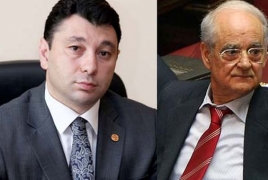
Armenians and Greeks must join forces against Turkish policy of the Genocide denial, deputy parliament speaker said.

163790On Thursday, June 27, Eduard Sharmazanov met with the ex-speaker of Greek parliament, the head of an Armenia-Greece friendship group Apostolos Kaklamanis.

At the meeting, the ex-speaker hailed friendly ties with Armenia, noting that in 1996 his country’s parliament unanimously recognized the Armenian Genocide.

Sharmazanov, in turn, spoke of the genocide of Armenians, Greeks, Assyrians and other Christian nations in the Ottoman Turkey, noting that the National Assembly urged the parliaments worldwide to recognize the genocide of Christian nations, including Pontic Greeks.

Filed Under: Genocide, News Tagged With: Greeks must join forces against Turkish denial policy, Official: Armenians

Australian lawmaker urges for Turkey’s Genocide recognition efforts

June 22, 2013 By administrator

Member of the New South Wales Legislative Council, Rev. Fred Nile delivered a solemn tribute to Australian ANZAC soldiers who witnessed and provided relief efforts during the genocides of the Armenian, Greek and Assyrian population of the Ottoman Empire, the Armenian National g_image-MPCommittee of Australia reported.

Nile’s message comes in light of recent accusations by Turkey’s Ambassador to Australia that these recorded accounts by ANZAC soldiers were somehow false, and it also comes at a time when Turkey’s Foreign Ministry has threatened to ban those Australian politicians, who supported recent motions to recognise these genocides, from attending Gallipoli commemorations of ANZAC Day in 2015.

Nile said: “As we head into the centenary year of the landings at Anzac Cove, it is not an act of friendship to declare that Australian parliamentarians who support motions recognising aspects of Australian history are not welcome at the commemorations at Gallipoli in 2015.”

Shortly after the Gallipoli campaign, Australian soldiers came into contact with the genocides of the Armenian, Greeks and Assyrians. Over 300 ANZACs were held as prisoners of war (POWs) by the Ottoman forces. These ANZACs recorded their experiences in detailed diaries and memoirs with vivid accounts of the genocide. Many of these accounts are now stored in the archives of the Australian War Memorial.

In his speech on the floor of the Legislative Council, Nile called upon Turkey to have respect for Australian history and to recognise the crime of genocide perpetrated by the Ottoman Empire.

Nile said: “Modern Turkey and modern Australia must have a friendship that is based on mutual respect and understanding of historical differences. Turkey and Australia have overcome the legacy of the battles on Gallipoli, so we must overcome whatever difference of opinion we have about recent motions recognising the Assyrian and Hellenic genocides and reaffirming the Armenian genocide.”

ANC Australia Executive Director, Vache Kahramanian welcomed Nile’s statement paying tribute to the ANZACs and confirming the authenticity of their records.

Kahramanian said: “The history of the Armenian genocide is intertwined in the fabric of Australian history. Many brave Australian soldiers risked their lives to provide aid and assistance to survivors of the Armenian, Greek and Assyrian Genocides.”

“This history is clearly recorded in the archives of the Australian War Memorial and is a proud testament to Australia’s humanitarian assistance abroad. Denying the historical reality of the Armenian genocide also denies our proud Australian history, which should never occur,” Kahramanian added.

The NSW Parliament passed two unanimous motions in May of this year recognising the Assyrian and Greek genocides while reaffirming its 1997 motion recognising the Armenian genocide. The motion paid tribute to Australian ANZACs as well as Australia’s proud humanitarian assistance to victims and survivors of this genocide.

In response, the Turkish Foreign Ministry released a statement stating that those who were responsible for this motion will “doubtlessly be deprived of the hospitality and friendship” normally extended to Australians.

More specifically, the official statement says: “These persons who try to damage the spirit of Çanakkale/Gallipoli will also not have their place in the Çanakkale ceremonies where we commemorate together our sons lying side by side in our soil.”

Filed Under: Genocide, News Tagged With: Australian lawmaker urges for Turkey’s Genocide recognition efforts

ZEYNEP TOZDUMAN: CAUTION PARK TRAVEL WANTED OFFENDERS resistance (DİKKAT GEZİ PARKI DİRENİŞİNİN SUÇLUSU ARANIYOR)

June 21, 2013 By administrator

ZEYNEP TOZDUMAN Reporting from Turkey:

—————————English Version ————- See bellow Turkish version ————————

Within the past few days, the news media reported that the so-called art teacher functioning of racism and hate crimes, Yildiz Technical University, Faculty of Art and Design, Head of the Department of Art. Dr. Ahmet on Twitter for the participants of the actions of Atan’ın Travel Park, one tipçiliğin / racism / hatred is still dominant in this Zeynep TOZDUMAN Picturecountry is an indication that. The so-called beating of professor, Twitter “Jewish, Armenian, and to take an active role in acts of Rum’sanız Travel sympathize. Please search for your descendants, “he has shared photos.
We condemn this professor and art, in such form as long as the hands of racist minds come to this country, nor democracy nor peace.

Also in this country, I’d be a racist fascist, Jewish, Greek, Armenian, I’d rather be with honor. Those who think this person is going to be an academic, such as the so-called acts of resistance behind the person before the Kurdish people as terrorists attacked the Kurdish movement. Had enough of these blood suckers. And now the so-called university professor with official openings, Armenians, Greeks, Jews, shameless attacking. Ola ancient peoples that get behind the actions mentioned above. I ask;
1 – Armenians, Greeks, Jews, that they are not a citizen of this country, to join the resistance. Did baskılanmıyor minorities in this country for many years that the passing of resistance?.
2 – One of every four people in the informal müslimken 1915 Turkey these days, 1% does not even. These people need to ask what happened to the so-called professor? TC. According to the official description of the number of non-Muslim origin 70 thousand. I’m going to ask, the resistance of a single night of 15 June 2013 there were 70 thousand Uskudar district. Eagle, Taksim, Bosphorus Bridge, Gazi district, Maltepe, Yenikoy, Şişli, Beşiktaş, Istanbul’s Kadikoy other districts do not even need to write. Armenians, Jews, Rum, Turkey Taksim, this number even if they come from all over the integer result of the work yakalayamayacaklarken criminal / leader of these people do you see. How many did you sell your conscience salary?. This kind of description is to defend a kind of psychology of guilt.
3 – Travel Park” in” and vicinity which are subject to the resistance, was once the Armenian cemetery. Is this place for real owners learned that the Armenians? The functioning of such hate crimes. Comes to find the legal cover to these places, not enough we have usurped by manipulating the facts now appeared, to find a jacket Is fascism attack from these ancient peoples?. This emerging locations, facts, lies ördüğünüz your date of professor supposedly upset.
4 – Please search for your descendants, your words, your so-called eleveriyor of professor. Without realizing that you have accepted the idea of ​​denying the genocide 98 years, actually. How? It’s simple. Ancestors of the Armenians, Greeks, Jews, Assyrians, EZiD first, it is sticking to the Turkish and Kurdish identity is the result of this so-called professor notions of racist and fascist like you.

Of professor who also need to know that you’re, TC., UN Genocide Convention in 1948, the first to accept one of the countries with the USSR. Even the United States from Turkey in 1986 after the parliament approved the contract. TCY signed in 1948 by signing this Convention, adopted and punish the crime of genocide during According to the essence of the de facto Armenian genocide of 1915 is adopted.

Turkey denies the genocide 98 years, how well it does to try to endüstürisi a day will come when international agreements bind Turkey. As the genocide by denying the past in front of the world do not live in the dark and dirty, loud and civil history of mankind to ask for an apology to the rank of professor dear. The only way to prevent new genocides of the past genocides is to ensure that people convicted of conscience. After the first person finishes his hatred and his society, Zoom, Zoom will not. Do not hate people, people go, people to love people as much as we can kutsallaştırdığımız dear professor.

——————————– Turkish Version ————————————-

Geçtiğimiz Birkaç gün içersinde basında yer alan bir haberle sözde Sanat hocası olan ırkçılık ve nefret suçu işleyen  Yıldız Teknik Üniversitesi Sanat ve Tasarım Fakültesi Sanat Bölüm Başkanı Prof. Dr. Ahmet Atan’ın Gezi Parkı eylemlerine katılanlar için Twitter’da yaptığı yorum,  tek tipçiliğin/ ırkçılığın / nefretin hala  bu ülkede egemen olduğunun bir göstergesidir. Sözde profosör  Atan, Twitter’da “Yahudi, Ermeni ve Rum’sanız Gezi eylemlerinde aktif rol almanızı anlayışla karşılıyorum. Lütfen soyunuzu araştırın” diyerek fotoğraf paylaşımında bulunmuştur.

Bu profösörü kınıyor ve sanat; böylesi ırkçı beyinlerin ellerinde şekil verdiği sürece bu ülkeye ne barış gelir ne de demokrasi.

 Ayrıca bu ülkede ırkçı bir  faşist olacağıma, Yahudi, Rum, Ermeni olmayı onurla tercih ederim. Sözde üniversite hocası olacak bu zat gibi düşünenler  direniş eylemlerinin arkasında önce terörist diye  kürt halkı şahsında kürt hareketine  saldırdılar. Yetmedi bu kan emicilere. Şimdide üniversitedeki resmi ağızları olan sözde profosörleri; Ermenilere, Rumlara, Yahudilere hayasızca saldırıyor. Ola ki bu eylemlerin arkasında yukarıda adı geçen kadim halklar olsun. Soruyorum;

1- Ermeniler, Rumlar, Yahudiler bu ülkenin vatandaşı değiller mi ki, direnişe katılmasın. Azınlıklar yıllardır baskılanmıyor mu bu ülkede ki, direnişe geçmesin ?.

2- Türkiye’de  1915’li yıllarda  her dört kişiden biri gayri müslimken, bu gün % 1 ‘i bile bulmuyor. Ne oldu bu insanlara sormak gerek sözde profosöre? TC’. nin resmi açıklamalarına göre orjin gayri müslim sayısı  70 bindir. Sormaya devam ediyorum; 15 Haziran 2013 gecesi direnişte bir tek Ümraniye ilçesinde  70 bin insan vardı. Kartal, Taksim, Boğaz köprüsü, Gazi mahallesi, Maltepe, Yeniköy, Şişli, Beşiktaş,  Kadıköy gibi  İstanbul’un diğer ilçelerini yazmaya gerek bile yok.  Ermeniler, Yahudiler, Rum’lar ,Türkiye’nin her yerinden tam sayı gelseler bile taksim’de bu sayıyı yakalayamayacaklarken neden işin suçlusu/elebaşısı  olarak bu halkları görüyorsunuz?. Kaç maaşa sattınız vicdanınızı?. Bu, çeşit açıklamalar suçluluk psikolojisiyle  bir çeşit savunmaya geçmektir.

3- Direnişe konu olan  ”Gezi Parkı” yer ve civarı, bir zamanlar Ermeni mezarlığı idi. Buranın asıl sahiplerinin Ermeniler olduğunu öğrendiğiniz için midir? Böylesi nefret suçu işleyişiniz. Söz konusu olan bu  yerleri  yasal kılıf bulup, hileyle gasp ettiğimiz yetmedi de şimdi gerçekler ortaya çıkınca, faşizme kılıf bulmak için midir bu kadim halklara saldırılarınız?. Bu yerle ortaya çıkan gerçekler, sizin yalanlarla ördüğünüz tarihi, altüst etti sözde profosör.

4- Lütfen soyunuzu araştırın sözleriniz, sizi eleveriyor sözde profosör. 98 yıldır inkar ettiğiniz soykırım düşüncesini farkında olmadan kabul ettiniz aslında.  Nasıl mı? Çok basit. Ataları Ermeni, Rum, Yahudi, Süryani, Ezidi olanlar,  bu gün Türk ve Kürt kimliğini taşıyorsa  bu sizin gibi ırkçı faşist anlayışlarınızın sonucudur sözde profösör.

 Ayrıca profosör olduğunuza göre şunu da bilmeniz gerek; TC., BM Soykırım Konvansiyonunu 1948’de, SSCB ile birlikte ilk kabul eden ülkeler arasındadır. ABD bile Türkiye’den çok sonra  bu sözleşmeyi 1986 yılında parlementosunda onaylamıştır. 1948 yılında imzalan bu konvansiyona imza atmakla TCY, sında soykırım suç kabul edilip cezalandırdığına göre ; de facto 1915 Ermeni soykırımını kabul etmiş oluyor özünde.

 Türkiye’de 98 yıldır soykırım inkar endüstürisi  ne kadar iyi çalışırsa çalışsın uluslarası sözleşmeler bir gün gelecek Türkiye’yi bağlayacaktır. As olan,  soykırımı inkar ederek dünyanın gözü önünde karanlık ve kirli geçmişimizle yaşamak değil,  tarihimizi yüksek ve medeni insanlık mertebesine getirmek için özür dilemektir sayın profosör. Yeni soykırımları önlemenin tek yolu ise,  geçmişteki soykırımların halk vicdanında mahkum olmasının sağlanmasıdır. Kin ve nefret önce insanın kendisini bitirir sonra yaşadığı toplumu küçülte, küçülte yok eder. İnsana nefreti değil , insana gitmeyi, insanı  sevmeyi kutsallaştırdığımız  kadar insan oluruz sayın profösör.


Filed Under: Articles, Genocide Tagged With: DİKKAT GEZİ PARKI DİRENİŞİNİN SUÇLUSU ARANIYOR)

Scholars Speak Out Against Legitimizing Genocide Deniers

June 8, 2013 By administrator

[The] willingness to ascribe to the deniers and their myths the legitimacy
of a point of view is of as great, if not greater,
concern than are the activities of the deniers themselves.

—Deborah Lipstadt

denial-genocide-posterWATERTOWN, Mass. (Armenian Weekly)— The participation of a number of Armenian studies and genocide studies scholars in the conference “The Caucasus at the Imperial Twilight” in Tbilisi, Georgia, organized by Prof. M. Hakan Yavuz of the University of Utah and sponsored by the Turkish Coalition of America (TCA) has generated a controversy in the diaspora as well as in Armenia over the enabling of genocide denial.

The individual and organization at the heart of this conference have for much of the past decade been actively engaged in efforts to extend denial of the Armenian genocide into academia as well as in the political realm in North America.

Since 2009, the Turkish Coalition of America (TCA), established in 2007, has pumped at least $900,000 into the Yavuz-directed Utah Turkish Studies Project as a continuation of the decades-long campaign to deny, diminish, or otherwise distort the history of the Armenian Genocide. Denial within academia has reached new heights through the publication of genocide denying books by the Utah University Press and other outlets and the organization of four (2010-2013) conferences of which the most recent is the conference in Tbilisi.

The TCA has also lobbied aggressively to block recognition of the Armenian genocide and has engaged in legal actions against, most notoriously, the University of Minnesota and its Center for Holocaust and Genocide Studies (CHGS). The suit alleged defamation because the CHGS website had identified the TCA as an “unreliable” source on the Armenian genocide that engaged in genocide denial. The suit was dismissed and the dismissal upheld, with the decision stating that “the Center’s statement about the TCA is true and, therefore, not actionable.” In addition, in 2011 the U.S. House of Representatives Ethics Committee ruled that the TCA had provided some $500,000 in improper gifts in the form of legal counsel to now former Ohio Representative Jean Schmidt.

A key element of the TCA’s mission is to normalize the presentation of denial of the Armenian Genocide within academia. This approach seeks to establish the Turkish state’s denialist narrative as a legitimate historical viewpoint, as just another scholarly “perspective.” In order to succeed, however, they need legitimate scholars to function as “the other side.”

By participating in the Tbilisi conference, scholars, whether intentionally or not, are providing just that “other side” of the “debate” over the Armenian genocide, argued several prominent scholars contacted by the Armenian Weekly.

Prof. Richard Hovannisian

“I learned a long time ago that providing a platform for deniers, under any guise, is a serious mistake because it affords them a claim to legitimacy. It is no less harmful to the cause of serious scholarship to participate in a conference organized and sponsored by a deceptive university professor and an organization that has repeatedly supported the publication of denial literature and initiated legal proceedings against institutions that exclude denial materials from their programs,” said Prof. Richard Hovannisian, former holder of the Armenian Educational Foundation Chair in Modern Armenian History at UCLA.

“No matter how well-intended it may be, participation in such a conference confers on those behind it an unmerited status as partners in a scholarly dialogue when, I believe, the real purpose is to create doubt and undermine honest scholarly investigation,” added Prof. Hovannisian.

Prof. Roger Smith
Prof. Roger Smith, a founding member of the International Association of Genocide Scholars (IAGS) and a former president of the association, concurred. “Invitations to conferences such as the one organized by Hakan Yavuz of the University of Utah, a university that has numerous graduate students who are churning out denial of the Armenian Genocide, are simply lures and traps,” he said. “Lures in the sense that it gives the appearance of welcoming dissenting views and appears to offer an opportunity to refute the narrative upheld by ‘historians who hold other views of what took place in 1915.’ It suggests a debate and an assessment of the evidence: a normal process in scholarly inquiry. Some scholars may, not unreasonably, jump at the bait, and hope to dislodge the claims of those who argue that the Genocide never took place, that the Young Turk regime is not responsible for whatever happened, and that, in any case, the term ‘genocide’ is not applicable for a variety of reasons. But the trap is when such well-known, non-denialist, scholars participate in such conferences, they inescapably offer legitimacy to the whole conference, to its framework. And that is precisely what the organizers seek: the appearance of legitimacy for bogus history,” he added.

Marc Mamigonian

Marc Mamigonian, the Director of Academic Affairs of the National Association for Armenian Studies and Research (NAASR), said, “Deniers have already hijacked the discussion of the Armenian genocide to an unhealthy extent through their efforts to manufacture doubt about established historical facts. Participating in forums organized and funded by individuals and entities who promote the Turkish state’s denial of the Armenian genocide only contributes to the myth of a scholarly debate.  This also undermines scholars who strive to create honest scholarship in the face of denial and intimidation. Denial—even if it carries a university imprint—must not legitimized and granted a place at the same table as scholarship, because it does not belong there.”

Prof. Keith Watenpaugh
Prof. Keith Watenpaugh, Associate Professor of Modern Islam, Human Rights and Peace at UC Davis, said, “The Turkish Studies Project (TSP) at the University of Utah, which is the sponsor of this conference is funded by the Turkish Coalition of America (TCA). As a federal judge recently ruled, the TCA is a denialist organization. It uses its money and relationship with the University of Utah to support Armenian Genocide denial through publications and through conferences like the one in Tbilisi. Given the genocide denial framework established by the TSP and its director, the Political Scientist M. Hakan Yavuz, the participation by scholars—Armenian or otherwise—cannot help but lend legitimacy to its broader denialist enterprise. I would not participate in something like this. I am reluctant to criticize the few Armenian scholars who did participate, because I stand in solidarity with all those who resist denial and its corrosive effects, even if I don’t agree with the way they go about doing it.”

Watenpaugh added, “Instead we should be asking questions about the continued relationship between the University of Utah and the TCA. It is hard for me to understand why an important American research university would lend its good name to a political organization that seeks to violate academic freedom by, for example, bringing suit against the Center for Holocaust and Genocide Studies at the University of Minnesota, and by promoting the falsification of history through its grants and political advocacy. The real issue here is the fact that the University of Utah has provided an institutional home to genocide denial.”

“Armenians and others should be confident that there are more and better venues of interchange between Turks and Armenians in which elements of their shared past can be examined honestly and in a framework of legitimate historical enquiry. In fact scholarship on late-Ottoman Armenian society and history is one of the most vital fields of history today and the Armenian Genocide is firmly established in the global history of human rights and genocide studies,” Watenpaugh concluded.

Prof. Debórah Dwork
In turn, Prof. Debórah Dwork, the Director of the Strassler Center for Holocaust and Genocide Studies at Clark University, told the Armenian Weekly that “there is no reason—none!—to engage genocide deniers, whether they are deniers of the Armenian Genocide or of the Holocaust, or of any other genocide.” She explained, “A conference or debate offers them an arena to make their arguments. Why would I offer them such an arena? Speaking to them, or arguing with them elevates them to the status of legitimate scholars, and their positions to the status of legitimate history. We are not equals and there aren’t two legitimate, equally historically valid ‘sides.’”

According to Prof. Dwork, “engaging with deniers allows them to set the issues to be discussed; it allows them to hijack the historical account. Why should I talk about the points they wish to raise? And please, would someone tell me why I should I waste my time refuting their arguments? Time is the coin of the scholarly realm, and if we spend it on deniers, we are not moving our research forward.” She concluded, “Engaging with deniers thus undermines history thrice over: it offers them a platform; it confers legitimacy upon them, and it diverts scholars from their own research which, of course, plumbs precisely the genocide the deniers refute.”

Filed Under: Articles, Genocide

‘Genocide’ cartoon in French school shocks Turkish students

May 31, 2013 By administrator

Hurriyet.com.tr

Two Turkish students in a French school have reacted after a cartoon depicting a Turk carrying a basket full of skulls with the words “Armenian Genocide” written on its side was shown in class.

Turkish Scalaton CartonThe incident occurred at the College Anatole France high school in the city of Montbéliard in France’s Comte region.

A teacher displayed a cartoon during a geography and history class and asked students: “What do you understand from this cartoon? Why can Turkey not join the EU according to this cartoon?”

The cartoon depicted a mountain with the EU flag erected at its peak. Three stereotypical caricatures of Balkan peoples were drawn climbing the mountain. At the very bottom of the mountain was a “peasant” Turkish man struggling to get up from the ground with a very large basket on his back. The basket was filled with human skulls with the word “Turkey” written on it and the words “Armenian Genocide” above. Behind the Turkish character, a slender man with “France” written over his head was shown adding a skull to the already-full basket. Turkish students Muhammed Ali Erki, 17, and İsmail Erdal, 14, said they were shocked to see the cartoon. Erki reportedly asked his teacher, “We did not commit genocide, yet you accuse us of it. What do you think about Algerians?”

“You are right but this cartoon is not my idea, I need to give this class as part of the curriculum,” the teacher said in reply.

Erdal said he understood from the cartoon that “the French do not want to see Turkey in the EU.”

The students said they had not been able to concentrate on their classes after seeing the cartoon and added that were especially saddened to see North African students making fun of Turkey and Turks.

The families of the students notified the anti-racism COJEP International foundation. COJEP President Ali Gedikoğlu said they would bring the cartoon to the attention of the authorities in France and file a complaint with the French Education Ministry to have the cartoon removed from the curriculum.

Filed Under: Articles, Genocide

Australian politician speaks on Western Armenia visit

May 16, 2013 By administrator

May 16, 2013 – 11:08 AMT

PanARMENIAN.Net – Member of the New South Wales Legislative Council, Walt Secord, who is also the Deputy Co-Chair of the NSW Parliamentary Friends of Armenian Group, delivered a powerful speech in Parliament recounting his recent visit to Western Armenia, armenia.com.au reports.

Walt SecordSecord made history in 2011 by becoming the first Australian politician to visit the Republic of Nagorno Karabakh. And in December 2012, Secord returned to Armenia to take part in an expedition to Western Armenia and visit towns and cities, which were completely emptied during the Armenian Genocide of 1915-1923.

The tour, which commenced in Yerevan, took Secord north through Gyumri, into the heavily Armenian populated region of Javakhk in Georgia, and then onto the cities of Kars, Van, Ani, Idgir and Akhtamar.

Upon his return to Australia, Secord remarked: “My visit to western Armenia was the most interesting study tour I have undertaken in my life.”

The seven-day visit, which was organized and partially funded by the Armenian National Committee of Australia (ANC Australia), allowed Secord to continue his “exploration of the Armenian genocide”, and allowed him to “see modern Turkey within the context of the interaction between Islam and the West”.

The trip put into perspective the extensive destruction of the Armenian populated regions during the Armenian genocide.

In his speech in Parliament, Secord said: “Of course, official denial is a vital component of oppression and genocide. This is why I will never apologise for my inquiry into the Armenian story or my support for the Armenian community. As I have said in Yerevan, in the Parliament of New South Wales and on many other occasions, it is repugnant for Turkey to deny the deaths of the 1.5 million Armenians.”

Executive Director of ANC Australia, Vache Kahramanian thanked Secord for his continued support to ensure the recognition of the Armenian genocide and for his continued support of the Armenian-Australian community.

“We are grateful for Mr. Secord’s continued efforts in ensuring the just recognition of the Armenian Genocide,” Kahramanian said.

“This trip allowed for the Honourable Member to experience first hand the destruction that fell upon the Armenian people nearly a century ago. Mr. Secord is a dear friend of the Armenian-Australian community and a true champion of human rights.”

Walt Secord will again visit Armenia as part of the New South Wales Parliamentary Friends of Armenian Group delegation in July this year.

Filed Under: Articles, Genocide

  • « Previous Page
  • 1
  • …
  • 360
  • 361
  • 362
  • 363
  • 364
  • …
  • 373
  • Next Page »

Support Gagrule.net

Subscribe Free News & Update

Search

GagruleLive with Harut Sassounian

Can activist run a Government?

Wally Sarkeesian Interview Onnik Dinkjian and son

https://youtu.be/BiI8_TJzHEM

Khachic Moradian

https://youtu.be/-NkIYpCAIII
https://youtu.be/9_Xi7FA3tGQ
https://youtu.be/Arg8gAhcIb0
https://youtu.be/zzh-WpjGltY


gagrulenet Twitter-Timeline

Tweets by @gagrulenet

Archives

Books

Recent Posts

  • An Armenian Story Reaches the British Royal Family
  • Pashinyan & Company, greedy, evil, all-hating & all-powerful people clinging to their chairs…
  • Why Diaspora Armenian Must Begin Discussing a Government in Exile?
  • Israel recognized Armenian Genocide, Pashinyan in Panic
  • Pashinyan Toys: Some of the weapons on display turned out not to be weapons at all

Recent Comments

  • Tina on Anna Hakobyan prepared a heartbreaking text about the deprivations “Hraparak”
  • Baron Kisheranotz on Pashinyan’s Betrayal Dressed as Peace
  • Baron Kisheranotz on Trusting Turks or Azerbaijanis is itself a betrayal of the Armenian nation.
  • Stepan on A Nation in Peril: Anything Armenian pashinyan Dismantling
  • Stepan on Draft Letter to Armenian Legal Scholars / Armenian Bar Association

Copyright © 2026 · News Pro Theme on Genesis Framework · WordPress · Log in