Gagrule.net

Gagrule.net News, Views, Interviews worldwide

  • Home
  • About
  • Contact
  • GagruleLive
  • Armenia profile

Attorney Mark Geragos speaks at Watertown event

May 15, 2013 By administrator

May 15, 2013 – 16:02 AMT

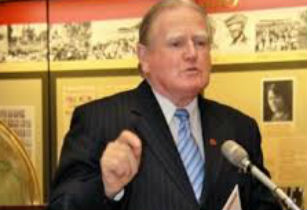
Attorney Mark Geragos, the featured speaker on Monday, May 6, at the monthly dinner meeting of the Men’s Club of St. James Armenian Church of Watertown, MA drew an audience of over 500 people, The Armenian Mirror-Spectator reported.

158341The noted criminal defense attorney spoke about his new book, Armenian heritage, current events and the successful lawsuits against New York Life Insurance and AXA Corp. for claims on insurance policies issued to Armenians before the Armenian Genocide.

To help raise funds for their non-profit group, SOAR (the Society for Orphaned Armenian Relief) volunteers set up an informational booth and sold scores of copies of Mistrial: An Inside Look at How the Criminal Justice System Works…and Sometimes Doesn’t, a new book co-authored by Mark Geragos and Pat Harris.

Dwelling on current events ranging from the Boston-Watertown area to those in California, Geragos covered a lot of ground. He shared his thoughts on the mysterious Mischa – described by a relative of Marathon bombing suspects as an Armenian (Christian) who converted to Islam – and the insensitivity of such a statement coming to light during a time when Armenians commemorate the Armenian Genocide, and where so many Armenians live in Watertown where the bombing suspects were caught.

Regarding recent lawsuits relating to insurance policies issued to Armenians before the Armenian Genocide, he described the great effort and steps involved in documenting the insured, finding heirs, and how one insurance company marketed to Armenians and Syrians; his research found that about 40 percent of policies issued to Armenians had no claims at all since no descendants were left.

During the question and answer period, he suggested a few ideas for creating awareness of Armenians and issues of importance: developing candidates for political office, and engaging the media.

Filed Under: Books, Genocide, News

Photo collection of Armenian children who became orphan during genocide to be interduce in Armenia.

May 15, 2013 By administrator

Filed Under: Articles, Genocide

Shining a light on the shadow of denial

May 15, 2013 By administrator

Below is an article by Chris Bohjalian published in The Armenian Weekly on Monday, May 13.

One night in November 2009, I heard Gerda Weissmann Klein speak in Austin, Texas, at the Hillel chapter at the University of Texas. Gerda is not only g_image14one of the most charismatic women I’ve ever met, she is also an immensely gifted writer and speaker. She is also a Holocaust survivor. Her 1957 memoir, All but My Life, chronicles her harrowing ordeal in labor camps and death marches during World War II. Cecile Fournier, the concentration camp survivor in my 2008 novel, Skeletons at the Feast, owes much to her and to her story. Gerda is, pure and simple, one of the wisest and most inspirational people I know.

During the question and answer period of her speech that night three and a half years ago, someone asked Gerda, “What do you say to Holocaust deniers?”

She shrugged and said, “I really don’t have to say much. I simply tell them to ask Germany. Germany doesn’t deny it.”

I recalled that exchange often this past year. The Sandcastle Girls, my novel of the Armenian Genocide, was published in North America last summer, and the reality is that outside of the diaspora community, most of the United States and Canada knows next to nothing of this part of our story. If you trawl through the thousands of posts on my Facebook page or on Twitter, for example, you will see hundreds of readers of the novel remarking that:

1) They knew nothing of the Armenian Genocide; and

2) They could not understand how they could have grown to adulthood in places such as Indianapolis or Seattle or Jacksonville and not heard a single word about the death of 1.5 million people.

Sometimes these readers told me they were aghast. Sometimes they told me they were ashamed. And very often they asked me why: Why did no one teach them this part of world history? Why did their teachers skip over the 20th century’s first genocide?

And the answer, pure and simple, is denial.

Imagine if I had answered my readers who wanted to learn more about the Armenian Genocide by saying, “Ask Turkey. They’ll tell you all about it. They don’t deny it.” But, of course, Turkey does deny it—as, alas, do many of Turkey’s allies. Now, these readers were not disputing the veracity of the Armenian Genocide. They were not questioning the history in my novel. My point is simply this: There is a direct connection between the reality that so few Americans know of the Armenian Genocide and the Turkish government’s nearly century-long effort to sweep into the shadows the crimes of its World War I leaders.

As anyone who reads this paper knows, the Turkish government’s tactics have varied, ranging from denial to discreditation. They have, over the years, blamed others, and they have blamed the Armenians themselves. They have lied. They have bullied any historian or diplomat or citizen or journalist or filmmaker who’s dared to try and set the record straight.

Now, in all fairness, there might be a small reasonableness trickling slowly into Turkish policy on this issue. Earlier this year, on the anniversary of Hrant Dink’s assassination, the editor of this paper gave a speech in Turkey—in Turkish—about justice for the genocide. You can now read Agos, the Armenian newspaper in Ankara, while flying on Turkish Airlines.

Nevertheless, it is a far cry from these baby steps and Ankara following Berlin’s lead anytime soon and building—to use the name of the poignant and powerful Holocaust monument near the Brandenburg Gate—a Memorial to the Murdered Armenians of the Ottoman Empire.

And the reality remains here in the United States that we as Armenians actually have to struggle to get our story into the curriculums of far too many school districts. We often have to create the curriculums ourselves.

How appalling is this issue? My own daughter went to a rigorous high school just outside of Boston, no more than 10 or 15 minutes from the Armenian community in Watertown and the Armenian Library and Museum of America. I saw the school had an elective course on the history of the Ottoman Empire. When I ran into a student who had taken the semester long class, I asked, “How much time was devoted to the Armenian Genocide?” He looked at me, perplexed. He had no idea what I was talking about. “I guess we never got to it because the course only went as far as the end of the First World War.”

Consequently, this past year I wound up as far more of an activist than I ever expected I’d be about…anything. The reality is that activist artists—or at least activist novelists—sometimes seem more likely to embarrass themselves than affect social change. But with every one of those posts on my Facebook wall, as one reader after another asked me how it was possible that they had never heard of the Armenian Genocide, I found myself growing unexpectedly, uncharacteristically angry. Make no mistake, I wasn’t angry with Turkish citizens or Turkish-Americans. But I was furious with a government policy that has allowed a nation to, in essence, get away with murder—to build a modern, western state and a civilized reputation on the bones of my ancestors. And I found myself energized at every appearance in ways I never had been before, whether I was speaking at a little library in central Vermont with exactly zero Armenian-Americans in attendance or on Capitol Hill, under the auspices of the Armenian National Committee of America.

So, will more Americans know our story two years from now, when the centennial of the start of the slaughter arrives? Darned right they will. We will see to it.

Filed Under: Articles, Genocide

Nuke plants construction in Turkey in exchange for silence on Genocide?

May 14, 2013 By administrator

May 13, 2013 – 18:12 AMT

PanARMENIAN.Net – Countries investing in construction of Turkey-based nuclear power plants will refrain from mentioning the Armenian Genocide 158001in future, Turkish Minister for Energy and Natural Resources said.

“Japan and France’s involvement in the construction of an NPP in Turkey will influence the settlement of issues linked to the Armenian Genocide. After the investments made, the countries in question will be more careful as to their Genocide-related statements,” Sabah quoted Taner Yildiz as saying.

Turkey plans to launch operation of 2 NPPs within 10 years: Sinop, to be constructed by Japan’s Mitsubishi jointly with France’s GDF Suez, and Akkuyu, Russia’s Rosatom project.

Filed Under: Articles, Genocide

Genocide recognition motion has strong focus on the Genocides as part of the Australian national story – Australian MP

May 14, 2013 By administrator

May 14, 2013 – 13:59 AMT

The Hon. Rev. Fred Nile MLC, who introduced the motion recognizing the Assyrian and Greek genocides while reaffirming the Armenian genocide, has directly responded to the Turkish Consul-General’s letter addressed to the New South Wales Parliament.

3The Consul-General letter, which is riddled with baseless accusations goes as far as to say “the proponents of these claims have never been able to support their claims of genocide with a single document”.

Below is the text of the letter:

“Dear Sir,

As you noted in your correspondence of 6 May 2013, I moved a motion of recognition of the Genocides of the indigenous Assyrian and Hellenic peoples of Anatolia, incorporating a re-affirmation of the 1997 recognition of the Genocide of the indigenous Armenian people. The motion was tabled and carried unanimously, in accordance with Parliamentary procedure.

Similar motions of a commemorative nature are moved and carried by members of both Houses of the Parliament of New South Wales on a regular basis on a wide range of issues, particularly related to human rights and current affairs.

My intention in moving this motion was NOT to attack or denigrate the modern State of Turkey which was established by a great Turkish leader, Mustafa Kemal Atatürk, who I greatly admire.

These Genocides were carried out by the leaders of the Ottoman Empire, not the modern State of Turkey which has wonderful relations with Australia, in spite of the Gallipoli campaign.

In moving this motion, I have drawn on the conclusions reached by the International Association of Genocide Scholars, the Australian Institute for Holocaust and Genocide Scholars, and other national and international scholarly groups. The unanimous opinion is that the Assyrian, Armenian and Hellenic peoples were victims of genocide in the 1910s and 1920s.

As noted by Australian jurist Geoffrey Robertson QC in his 2009 study ‘Was there an Armenian Genocide?” (attached), Winston Churchill declared the events to be ‘an administrative holocaust … there is no reasonable doubt that this crime was planned and executed for political reasons.’

When commemorations and scholarly conferences on the Genocide of the Armenians are regularly held within the Republic of Turkey, and Turkish scholars and writers such as Taner Akcam and Orhan Pamuk call for recognition of the fact of the Genocides, I fail to understand how the NSW Legislative Council resolution constitutes ‘sowing the seeds of hatred’ in Australia?

The Genocide Recognition motion has a very strong focus on the Genocides as part of the Australian national story. As documented in the Australian War Memorial in Canberra, ANZACs were captured and imprisoned as far south as the Sinai peninsula, as far east as Mesopotamia (modern Iraq) as well as across Anatolia.

The archives of the Australian War Memorial in Canberra have written and photographic evidence that ANZACs rescued Armenians and Assyrians in Persia (Iran) and Mesopotamia (Iraq), as well as during the Palestine Campaign. Many of these ANZACs later became involved in an international humanitarian relief effort on behalf of the survivors for over a decade.

The events of the Assyrian, Armenian, and Hellenic Genocides were documented by the Australian media from early 1914 (before World War One began), throughout the war and well into the 1920s. I also refer you to a recent study by Dr John Williams of the University of Tasmania, published in the April 2013 issue of Quadrant magazine

As the Armenian National Archives were only formed in 1923, when the Genocides were almost over, a ‘joint commission of history’ between the Republics of Armenia and Turkey would have little to discuss. The archives relevant to the Genocides of the Armenians, Assyrians and Hellenes are in Ankara, Constantinople (Istanbul) and Moscow.

In conclusion, for the Christian Democratic Party, as for the entire Parliament of New South Wales, recognition of the Genocides of the indigenous Assyrian, Armenian and Hellenic peoples of the Ottoman Empire is not simply a matter of history. As the effects of the Genocides continue to this day, it is an issue of international law and human rights and I will continue to advocate such issues at every opportunity.

“Let justice be done, souls consoled, broken hearts mended, nations reconciled and honour given to all those who perished so needlessly during a dark hour in mankind’s recent history,” the letter reads.

Filed Under: Genocide, News

A history of a perfect crime

May 13, 2013 By administrator

Below is an article by Talin Suciyan, a Teaching Fellow and a PhD candidate at the Ludwig Maximilian University of Munich, Institute of Near and Middle Eastern Studies, Chair of Turkish Studies, published in The Armenian Weekly on Sunday, May 12.

I spent my high school years in Samatya. The majority of my classmates were the children of the Armenians who had come to Istanbul from the g_image.php12provinces during the republican years. We were allowed to go out during our lunch breaks. Many of the students lived in Samatya and could go home for lunch. Yet, in the early 1990’s, when the political tension in the country reached its peak, because of the Kurdish issue, we were no longer allowed to go outside the school grounds during lunch breaks.

Although we used to work hard to not only be good citizens but the “best citizens”—we took compulsory national security classes taught by a high-ranking military officer, and would do our military exercises in the schoolyard so loud that half the district would hear our voices—it never guaranteed our security.

In those years, constant bomb warnings were reminders that we were not safe. After each warning, we would go out to the schoolyard until the entire school was searched. Sometimes we would be asked to go home early. We hardly had any idea why a bomb would be planted in our school. No one would put these bomb warnings into context. There was nothing to understand; it was just like that. And so we got used to these warnings, along with the changing security measures that were an ordinary part of our school life.

During my doctoral research, I read Armenian newspapers from the 1930’s and had the chance to look at Samatya from a different perspective. Samatya was one of the districts where kaghtagayans were established. Kaghtagayans were kaghtagan (deportee or IDP) centers that hosted thousands of Armenians from the provinces. These centers functioned until the end of the 1930’s. Armenian newspapers published in Istanbul in the 1920’s and 1930’s were full of reports on the kaghtagans’ severe conditions in these centers, where they often had to live on top of one another. The community in Istanbul was responsible for providing food, work, and a sustainable life for these people. Yet, it was not easy, as the financial means of the community were shortened to a great extent, the court cases for saving its properties continued, and its legal status was in the process of complete eradication. And still, Armenians whose living conditions in the provinces were systematically decimated continued to come to Istanbul.

Armenians who remained in the provinces were threatened in several ways. Arshag Alboyaciyan referred to these attacks in his book Badmut‘iwn Malatio Hayots.’

In 1924, Armenians were leaving en masse since a group of attackers—15 people—were raiding their houses asking for money and jewels, beating them up, almost to death. This organization was called Ateshoglu Yildirim… They would put signs on the houses of Armenians and tell them to leave within 10 days… One day, they put a sign on the main church, giving Armenians five days to leave; otherwise, they said, ‘Ateshoglu Yildirim would burn you all.’

Armenians understood that the organization was trying to intimidate them into leaving in order to take over their properties, along with the other Emval-i Metruke (Abandoned Properties). In November 1923, two prominent Armenians, on behalf of 35 Armenians from Malatya, sent a letter to Mustafa Kemal, asking for security and the right to live in their houses. They wrote that if their citizenship was not recognized and they were required to leave, that this should be told to them officially, and not by raiding their houses. The letter did not have a positive impact; on the contrary, the signatories were asked to leave the country, and the 35 families had to follow them. Over the following months, Armenians continued to leave Malatya to Syria or to Istanbul.

I first came across the Ateshoglu Yildirim cases through an oral history project I conducted for my doctoral research. My interviewee said there were others in Istanbul who could talk about this organization and its raids. He contacted one family, they said yes, but then changed their minds. It was during the same time that Maritsa Küçük, an elderly Armenian women, was brutally killed, two others were severely beaten, and another attacked in Samatya. The atmosphere of fear was once again at its peak for the Armenians, and I decided to stall my research on the topic.

Yozgat, Amasya, Sinop, Ordu, Tokat, Kayseri, Diyarbakır, Sivas . . .And so it continued—Armenians were systematically forced out of Asia Minor and northern Mesopotamia throughout the republican years. They were essentially forced to come to Istanbul, looking for shelter, food, work, and a secure life, following the Settlement Law of 1934; sometimes through extraordinary decrees ordering them to leave a certain place and be settled in another; through racist attacks that occurred on a daily basis; or simply through the state’s refusal to open Armenian schools in the provinces, which was one of the “guaranteed rights” of the Lausanne Treaty of 1923.

Armenians who came to Istanbul remained at the bottom of all hierarchies. They were caught helpless between the institutional power structures of the Armenian community in Istanbul and the state. The latter cared about them the least. These centers were closed at the end of the 1930’s; yet, Armenians continued to come to Istanbul from the provinces throughout the republican era, and their socio-economic problems occupied the agenda of the community for quite some time.

An Armenian suspect was recently arrested for the murder of Maritsa Küçük and for the other attacks on elderly women in Samatya. On the same day, the Turkish media covered the arrest with a news item, disseminated by the police, implying that since the suspect was Armenian, no racism was involved. Hence, the issue has been resolved.

We know that law has little to do with truth or justice. On the contrary, the mechanisms of law create substitutes for truth or justice. The cases of Pınar Selek, Hrant Dink, Sevag Balıkçı, along with the murder of Maritsa Küçük and the other attacks in Samatya, remind us of not only the impossibility of justice, but also the perfection of a crime, which continues to silence the witnesses.

Filed Under: Articles, Genocide

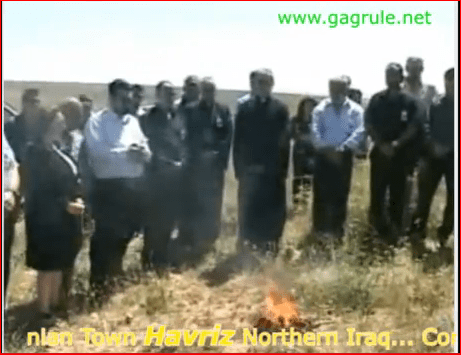
Havriz, is Armenian town located North of Iraqi Kurdistan Region, Commemorating 98th years of Turkish Genocide denial 1915. (Video)

May 11, 2013 By administrator

Havriz, is Armenian town located North of Iraqi Kurdistan Region, Commemorating 98th years of Turkish Genocide denial 1915.

Havriz was eHavrizstablish after 1915 Armenian Genocide.

In 1915 the Turkish government committed the mass killing and deportation of men, women and children of the indigenous Christian population from Anatolia including the Greeks, Armenians, and Assyrians. During this time, the Turkish government also condemned members of Kurdish and select Arab populations to the same torturous fate.  Every year on April 24th, Armenians around the world join together to commemorate the tragic victims of the first genocide of the 20th century and to demand recognition and justice for the atrocities committed against our fallen ancestors.

Filed Under: Articles, Genocide

Aram Hamparian: It’s time for new American approach to Armenian Genocide

May 8, 2013 By administrator

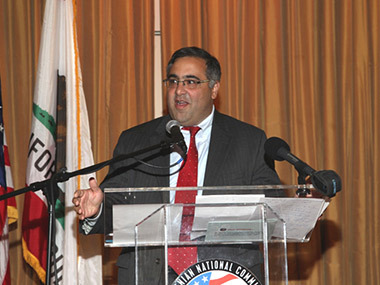
Aram Hamparian, the ANCA Executive Director, has published an article in Asbarez.com, where he spoke about the position of the United States on the Armenian Genocide. The article says, in part:

“It’s time for a new American approach to the Armenian Genocide, one that is as simple as it is sound: Progress and peace based upon truth and justice.

g_image.php66American policy on the Armenian Genocide can be both principled and practical.

Years of futile U.S. efforts to appease Turkey have failed to end Ankara’s blockade of Armenia and only hardened Ankara’s denial of truth and obstruction of justice for this crime.

This denial poisons Armenian-Turkish relations, fosters wave after wave of anti-Armenian intolerance within Turkey, threatens Armenia’s and Artsakh’s security, and, of course, fuels regional tensions.

The future of this region – it’s sustainable stability over the long-term – cannot be built upon a foundation of lies. Justice is good geopolitics.

It’s time for the Obama-Biden Administration to reject Ankara’s gag-rule and proudly reaffirm our government’s record of having recognized the Armenian Genocide. Sadly, under foreign pressure, President Obama has failed to reflect, much less reinforce, America’s standing acknowledgment of the Armenian Genocide as a crime of genocide.

After years of failed efforts to appease Ankara, it’s time for President Obama to honor his words, and for our government to live up to America’s promise of truth and justice.

It’s time to stop outsourcing our nation’s Armenian Genocide policy to Turkey, and – in the interest of both regional stability and our core values as a nation – to reclaim American leadership in support of a truthful and just resolution of this crime.”

Filed Under: Articles, Genocide

The Armenian Mirror-Spectator: Armenian orphans became a source of enriching genetic pool for Turkish nation

May 8, 2013 By administrator

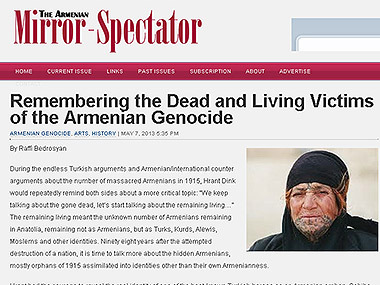
Below, we present an article by Raffi Bedrosyan published in The Armenian Mirror-Spectator.

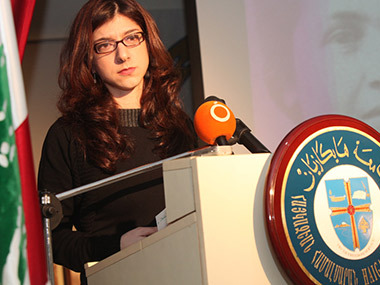
During the endless Turkish arguments and Armenian/international counter arguments about the number of massacred Armenians in 1915, Hrant Dink would repeatedly remind both sides about a more critical topic: “We keep talking about the gone dead, let’s start talking about the remaining living…” g_image.php55The remaining living meant the unknown number of Armenians remaining in Anatolia, remaining not as Armenians, but as Turks, Kurds, Alewis, Moslems and other identities. Ninety eight years after the attempted destruction of a nation, it is time to talk more about the hidden Armenians, mostly orphans of 1915 assimilated into identities other than their own Armenianness.

Hrant had the courage to reveal the real identity of one of the best-known Turkish heroes as an Armenian orphan. Sabiha Gokçen, the first female military pilot and Ataturk’s adopted daughter, was in reality Hatun Sebilciyan, an Armenian girl orphaned in Bursa in 1915. This revelation was the beginning of the end for Hrant, triggering a massive hate and threat campaign against him by the government, the military and the media, resulting in his assassination three years later. But Sebilciyan/Gokçen was only one of tens of thousands of Armenian girls and boys torn away from their parents during the 1915 events. What happened to these orphans? How many were there? This article will cite some examples from different parts of Anatolia.

It is a well-documented fact that during the deportation of the Armenian population from all corners of Anatolia to the Syrian desert, as the convoys approached their towns or villages, local Turks and Kurds snatched Armenian children from their parents to take them home as servants or wives. Many children were sold as slaves by them or the gendarmes escorting the convoys. There were also a few children entrusted by their parents to Kurdish and Turkish neighbors before starting on the deportation route. There were some children initially rescued by European/American missionaries or Pontian Greek religious leaders, but inevitably they were also later seized and sent away or murdered. We can cite one of many documented tragic incidents in Trabzon, where 600 Armenian orphan children were taken to the Greek monastery with the government’s permission after their parents were massacred by drowning in the Black Sea. But after three months, by the order of the Trabzon governor Djemal Azmi, the police forcefully removed the orphans from the monastery and handed them over to a Turkish boat captain, Rahman Bayraktaroglu, who placed each child in a flour sack, securely tied the top and dropped each into the Black Sea. It is documented that Governor Jemal later joked, “The harvest of smelt (hamsi) will be plentiful this season with all the drowned as fish feed.”

Trabzon Governor Djemal Azmi selected about 450 of the best-looking girls from the Armenian community of Trabzon and converted the local Red Crescent Hospital to a whorehouse for the Turkish elite and visiting dignitaries, even sending some of the girls as treats to his superiors in Istanbul. The supply of the orphans got replenished as needed. He kept a supply of 15 Armenian girls for himself but also gave one to his 14-year-old son, Ekmel, as a present. Most of the girls were forcefully Islamicized; a few eventually escaped or committed suicide. These experiences came to light from witnesses during the trials of the Ittihat ve Terakki leaders after the war, but also were told in 1921 by Djemal Azmi’s son himself to his close friend, known to him as Mehmet Ali. The friend, however, happened to be an Armenian named Hratch Papazian, disguised and even circumcised as a Moslem, who had succeeded infiltrating the Ittihad ve Terakki circles hiding in Berlin, in preparation for assassinating the Turkish leaders as part of Operation Nemesis (Djemal Azmi and Bahattin Shakir, head of the Special Organization [Teskilat-i Mahsusa] who was the chief organizer of the deportation massacres, were both assassinated in Berlin on April 17, 1922, right in front of the bewildered widow of Talat Pasha, a year after Talat himself was brought to justice).

The Ittihat ve Terakki government had special plans for the surviving orphans. In an organized operation, while there was a world war going on, most of the surviving orphans were rounded up and sent to orphanages set up in multiple locations, with the objective of converting them to Islam and to be assimilated as Turks. One of these special Turkification orphanages was in Ayn Tura, near Zouk, an hour’s drive from Beirut, where 1,000 Armenian orphans were kept, between the ages of 3 to 15. By the orders of Djemal Pasha, governor of Syria and Lebanon, and under the supervision of Turkish intellectuals and teachers, including the newly-appointed principal, Turkish novelist Halide Edip Adivar, these orphans were converted to Islam and Turkified. The boys were circumcised, and were given Turkish names, but preserving the initials of their Armenian names and surnames, so that Haroutiun Najarian became Hamid Nazim, Boghos Merdanian became Bekim Muhammed, Sarkis Sarafian became Saffet Suleyman. The orphanage was converted from a Christian school after expelling the Lazarist Catholic priests. While famine prevailed everywhere in Lebanon and Syria during the war, abundant food was provided to the orphanage, with the objective of raising well-fed and healthy newly Turkified children. Based on the memoirs of one of the orphans, Harutiun Alboyajian, the children were expected to speak Turkish only; if the supervisors heard any Armenian spoken, the boys would be beaten severely. They were dressed as Turkish children and were taught Islam. It was Djemal Pasha’s firm belief that the Armenians had superior intellect and capabilities, which would help the Turkish nation immensely. Despite efforts to keep the orphanage sanitary, about 300 Armenian orphans died from leprosy and other diseases until 1918. Some of the orphans were placed with families in towns where there were no Armenians left, and some were distributed to other orphanages. At the end of the war, when Near East Relief took over the orphanage, there were 670 orphans, 470 boys and 200 girls, who still remembered their Armenian names.

Another example of Turkification experiment was in Eastern Anatolia, successfully implemented by Eastern Front commander Kazim Karabekir. He estimated that there were about 50,000 desperate orphans after the war in his regional area of operations. It is documented that about 30,000 of them were circumcised and Turkified. He rounded up about 6,000 Armenian children in Erzurum, 2,000 girls and 4,000 boys, and placed them in an army camp. Some were given training similar to a military school; others were taught trades essential for army supplies such as sewing and boot-making. These orphans had become completely Turkified and named “The Healthy Children Army.” The talented ones among these boys were later sent to higher military academies in Bursa and Istanbul. Without going into the psychology of the assimilations and conversions, it is alleged that these converted military officers became the most fanatical ultranationalists in the Turkish army, with some of them participating in the May 1960 military coup which toppled the civilian government of Adnan Menderes.

Apart from the orphanages, tens of thousands of young girls and boys became slaves after 1915, bought and sold in bazaars and markets. Although slavery was officially abolished in the Ottoman Empire in 1909, slavery markets re-opened after 1915 in order to trade Armenian women and children. Kidnapping Armenian children from the deportation convoys not only supplied the Turks and Kurds with servants, free labor or sex objects in their own homes, but also a marketable commodity that could be sold for profit in these markets. The markets were set up in Aleppo, Diyarbakir, Cizre, Urfa and Mardin. It is reported that the Mardin market had the lowest prices. After being branded and tattooed as a slave, Armenian children aged 5-7 found buyers for 20 cents, similar to the price of a lamb. Girls or boys aged 14-15 went for 50 cents, whereas an adult Christian woman was worth about one Turkish lira. But if the slave came from a well-known wealthy family, the price went up significantly, as owning the slave could also bring the future potential of claiming the wealth of the slave’s family. There are several documented cases from the later Turkish Republic era when Kurdish and Turkish families attempted to legalize the ownership of many real estate properties, previously owned by their “wives” or “daughters.”

There are also documented cases when kind-hearted Assyrian priests or European/American missionaries purchased several Armenian children from these markets, with the objective of rescuing them. Assyrian Archbishop Tappuni of Mardin purchased and saved nearly 2,000 Armenian children in 1916. While some Moslems treated the Armenian slaves humanely, most owners savagely beat them, as they believed “Christians only deserve beatings.” The women and girls ended up being second wives for the Moslem owners, who received harsh treatment not only from their husbands but also from the other wives of their husbands. But eventually, they all got absorbed into the Moslem households, bearing children, learning the Quran, praying piously as Moslem women.

According to a post-war report of the League of Nations Rescue Commission for Armenian Women and Children, at least 30,000 Armenian girls were sold in the markets to be placed in harems, or to be used as slave labor. Documented histories of some 2,000 Armenian girls, boys and young women rescued from Turkish and Kurdish households after the war are archived in the League of Nations offices in Geneva. Rescuing the Armenian orphans became one of the first tasks of the League of Nations after the armistice in 1918. Following the pleas of the Istanbul Armenian Patriarchate, the Allied Forces and the League of Nations representatives organized the transfer of most Armenian orphans from Anatolia and Syria to Istanbul, and started searches of Armenian orphans in Moslem homes. As there was no room to place all the orphans in existing orphanages in Istanbul, several schools were used to house the Armenian children, including the French Notre Dame de Sion, St. Joseph, the Italian school, the Russian monastery, and Turkish Kuleli Military Academy.

As some of the orphans already had Turkish names, there started heated discussions between the Armenian Patriarchate and the government authorities as to the real identity of the children. In fact, some of the orphans were already transferred to Turkish homes in Istanbul as maids and servants; among them, 50 orphans sent to the farm of Ittihad ve Terakki leader Enver Pasha. The children were conditioned and intimidated not to speak Armenian, nor to reveal their Armenian identities during the war years.

Documents show that between 1920 and 1922, there were about 3,800 Armenian children brought to Istanbul, 3,000 sent to Cyprus, 15,600 taken to Greece, and 12,000 transferred to Syria from Marash, Urfa, Antep, Malatya and Harput. Significantly, the Istanbul Patriarchate records indicated that there were still at least 63,000 Armenian orphans documented as “Not Rescued” in Turkish and Kurdish households.

In recent years, genocide scholars have stated that the perpetrators not only aim at the “destruction” of the oppressed group but also the “construction” of the oppressor group. The 1915 events and the consequences clearly show that the Armenian orphans became a source of pro-creation for the Turkish nation by enriching their genetic pool. There are now tens of thousands of Turkish and Kurdish families, with a hidden Armenian grandmother. It is remarkable that, even ninety eight years after attempts of forced Turkification, assimilation and conversion, there are signs of hidden Armenian identity in various places in Anatolia starting to emerge. There is a somewhat graphic term defining these people in Turkey, “remnants of the sword” (kilic artigi).

Hrant Dink’s lawyer, Fethiye Cetin, in her book My Grandmother, and the follow-up, The Grandchildren, co-written with Aysegul Altinay, and many other books, documentaries and movies have come out in recent years, describing the existence and emergence of the hidden Armenians in Turkey, carried from one generation to the next, all originating from the 1915 Armenian orphans.

It is of course very difficult to estimate the number of hidden Armenians in Turkey today. One can assume that perhaps up to 100,000 Armenian orphans survived but got Turkified, converted and assimilated. Scholars estimate another 200,000 adult Armenians avoided deportation in various Anatolian villages by converting to Islam. It is therefore conceivable that 300,000 Armenian souls survived the 1915 events. The population of Turkey increased seven fold since then. Using the same multiple, one can extrapolate that there may exist 2 million people with Armenian roots in Turkey today.

I would like to share one of my own personal experiences with a hidden Armenian, albeit indirectly. When I was in Armenia in 1995 as a voluntary engineer inspecting Hayastan All Armenian Fund-financed construction projects, I also visited Spitak where the church destroyed in the 1989 earthquake was being rebuilt. I was informed that the financing came from Turkey from a still confidential donor, as specified in the will of a grandmother of a very wealthy Turkish family, who had only revealed her Armenian roots at her deathbed. In recent years and especially after the reconstruction of the Surp Giragos Armenian Church in Diyarbakir, there has been a resurgence of the hidden Armenians in revealing their identities. It is hoped that the Turkish government sees this as a positive consequence of the recent steps of liberalization and not as a threat, and eventually finds the courage to face its past.

Filed Under: Articles, Genocide

NSW parliament’s lower house adopts motion recognizing genocides

May 8, 2013 By administrator

May 8, 2013 – 11:21 AMT

The New South Wales Parliament’s Legislative Assembly (Lower House) adopted a unanimous motion recognizing the Armenian, Assyrian and Greek 157556genocides. This follows a similar motion passed by the NSW Parliament Legislative Council (Upper House) last week.

This motion, introduced by the Premier of New South Wales, Barry O’Farrell, formally recognised the Assyrian and Greek genocides, while at the same time reaffirming the historical reality of the Armenian Genocide.

Last week’s Legislative Council motion was introduced by the Hon. Rev Fred Nile. That motion was also passed unanimously.

The Executive Director of the Armenian National Committee of Australia (ANC Australia), Vache Kahramanian remarked: “Today is a historic day for the great state of New South Wales. Once again it has stood as a shining beacon in ensuring that the historical reality of the Armenian, Assyrian and Greek genocides are never forgotten.”

152641“We thank the New South Wales Parliament, and in particularly the Honourable Barry O’Farrell MP – the Premier of New South Wales – for introducing the motion to the house and to all Members for standing on the side of truth on this important issue.”

The passing is the result of the combined advocacy efforts of the Armenian National Committee of Australia, the Assyrian Universal Alliance, and the Australian Hellenic Council.

NSW is Australia’s largest state, and the first state in Australia to have recognised the Armenian Genocide in 1997.

Filed Under: Genocide, News Tagged With: NSW parliament’s lower house adopts motion recognizing genocides

  • « Previous Page
  • 1
  • …
  • 361
  • 362
  • 363
  • 364
  • 365
  • …
  • 373
  • Next Page »

Support Gagrule.net

Subscribe Free News & Update

Search

GagruleLive with Harut Sassounian

Can activist run a Government?

Wally Sarkeesian Interview Onnik Dinkjian and son

https://youtu.be/BiI8_TJzHEM

Khachic Moradian

https://youtu.be/-NkIYpCAIII
https://youtu.be/9_Xi7FA3tGQ
https://youtu.be/Arg8gAhcIb0
https://youtu.be/zzh-WpjGltY


gagrulenet Twitter-Timeline

Tweets by @gagrulenet

Archives

Books

Recent Posts

  • An Armenian Story Reaches the British Royal Family
  • Pashinyan & Company, greedy, evil, all-hating & all-powerful people clinging to their chairs…
  • Why Diaspora Armenian Must Begin Discussing a Government in Exile?
  • Israel recognized Armenian Genocide, Pashinyan in Panic
  • Pashinyan Toys: Some of the weapons on display turned out not to be weapons at all

Recent Comments

  • Tina on Anna Hakobyan prepared a heartbreaking text about the deprivations “Hraparak”
  • Baron Kisheranotz on Pashinyan’s Betrayal Dressed as Peace
  • Baron Kisheranotz on Trusting Turks or Azerbaijanis is itself a betrayal of the Armenian nation.
  • Stepan on A Nation in Peril: Anything Armenian pashinyan Dismantling
  • Stepan on Draft Letter to Armenian Legal Scholars / Armenian Bar Association

Copyright © 2026 · News Pro Theme on Genesis Framework · WordPress · Log in