Gagrule.net

Gagrule.net News, Views, Interviews worldwide

  • Home
  • About
  • Contact
  • GagruleLive
  • Armenia profile

Raoul Wallenberg Foundation unveils English version of Genocide ebook

September 13, 2016 By administrator

raoul-wallenberg-foundationThe Raoul Wallenberg Foundation presents the ebook “Armenian Genocide. The silenced extermination”, an English version of the original in Spanish by the Argentinian author, Sulim Granovsky, the Foundation said in a statement.

Edited and published by the foundation in 2010 (Spanish ebook format), the research focuses on the tragic events that took place in 1915. As all the works that comprise the RWF Digital Library, this new ebook is freely accessible to all.

Sulim Granovsky comments on his creation in his own words: “Six hundred years of peaceful coexistence had elapsed within the empire, where Armenians shared in managing finance, business and the exports. Most of the buildings in Constantinople were built by Armenian architects. The main mosques were also the work of Armenian architects. Armenian officials advised the Turkish hierarchy. However, it was a false peace, because a series of vicissitudes anticipated the end of the precarious harmony, prior to the 1915 Genocide. In just a couple of years since 1895 Abdul Hamid, the Red Sultan, named after his bloodthirsty intentions, unleashed the annihilation of 300,000 Armenians. During the Hamidian era “any Muslim had permission to test the sharpness of his sword on the neck of an Armenian Christian.” Hamid’s murderous instinct was somewhat selective: he ordered the massacre of the Armenians in Anatolia, particularly if they had links to political parties and religious missions that could pose a threat to his regime because of the strong influence they had over the people. Truth is that in 1908 the rising movement of the Young Turks had overthrown Hamid, generating the support of the Armenians. However, the charm did not last long, because in the course of secret meetings of the Union and Progress Party, the Young Turks resolved that the Armenians were internal enemies of the Turkification process and should be persecuted and annihilated. The Interior Minister, Talaat Pasha, considered that, since the Armenians “had lost the right to life in the Ottoman Empire”, not a single bullet should be wasted in a holy war and, therefore, they should be killed with knives or drowned in the Euphrates. And this was what was done.”

A recent initiative by the Raoul Wallenberg Foundation in connection with a special chapter dedicated to Turkish and Kurdish rescuers who, scattered around the Ottoman Empire, reached out to save Armenians during the 1915 Genocide. The exclusive research, assigned to and conducted by Professor Taner Akcam, renowned scholar who chairs the Armenian Genocide Studies at Clark University (Worcester, Massachusetts), comprises 73 pages. The work was originally edited in Turkish and later translated into English, Armenian and Spanish. So far, 180 individuals have been identified as rescuers, and the Foundation is still working to unveil further cases.

Filed Under: Articles, Books, Genocide Tagged With: book, Raoul Wallenberg, The silenced extermination

Filmmaker Terry George: Denial of Armenian Genocide justification for new slaughter “the Promise movie”

September 13, 2016 By administrator

tery-armenian-genocideFilmmaker Terry George, director of the Promise movie, believes that denial of the Armenian Genocide became justification for other slaughters.

During a press conference following the premiere of the Promise film, Terry George spoke of political influence of the Turkish government and denial of the event amid strategic importance.

“For me and for the world this is not a question did it happen or if it happened, vast majority of historical studies firmly established this was a planned attempt to wipe Armenian nation,” he said.
The first screening of “The Promise,” a movie about Armenian Genocide, took place Sunday at the Toronto International Film Festival.

Oscar-winning filmmaker Terry George, actors Christian Bale, Oscar Isaac, and Charlotte Le Bon as well as famous musician Serj Tankian, who is lead singer of the world-renowned American Armenian rock band System of a Down (SOAD) and composer of the soundtrack of this movie, “shone” on the red carpet event for the premiere of “The Promise.”

Filed Under: Genocide, News Tagged With: armenian genocide, file, Terry George, The Promise

LEBANON: The Bird’s Nest: Site of a Genocide memorial in a seaside resort

September 11, 2016 By administrator

bird-nestThere are more than a year, the Board of Directors of the orphanage the Bird’s Nest (Trchnotz Pooyn) announced in an interview with Voice of Van [Voice of Van] that projects move graves a cemetery of orphans had been permanently suspended. In his interview, Khedeshian Seta, president of the Board, said that His Holiness Catholicos Aram Premier had ordered the suspension of the project “to provide a more understandable explanation to the public and to create a calmer atmosphere more conducive to a broader consideration of the matter. “ This last interview was organized following a public protest and an online campaign that criticized the plan to develop a private resort on 2.5 hectares of land leased by the Nest. The campaign developed several justifications for this objection, stressing the need to exhume the remains of Genocide survivors new body and allocation of Nico Hall (a building of 1921) with its church Sainte Gayaneh in a restaurant. (*)

The decision to stop the destruction of the cemetery was important for two reasons.

First, regardless of the controversial nature of the proposed project, the danger of the destruction of graves was pushed back in time. Second, Caholicossat has shown its willingness to consult the public by opening an opportunity for dialogue between the various stakeholders.

Unfortunately, a year later, no effort was made to give an explanation on the decisions taken by the Governing Council, to organize a public meeting so that the project scope is clearly stated, and to hear the professionals were critical to the project. Instead, documents of the resort architecture folder called “The Diplomatic Club” [The Diplomatic Club circulated in public. In addition, a section of the proposed budget was published in an architectural site of the Internet [1].

Although the developers have not obtained the building permit [2] necessary for the progress of the project, they have recently emptied the church of St. Gayane, removing the altar and exposing the shell of the building. Deliberately placing illegally to Lebanese law, developers have started changing the destination of the building, ending its religious dimension and paving the way for future recreation.

In short, the desirable relationship of dialogue and transparency between the Church and the community have not been established. Moreover, efforts to achieve the proposed resort continues – silently. [3]

.

The Bird’s Nest, a testament to survival and humanitarian assistance

The collective Nid D’Oiseau, a group of people working for the conservation of the historic site of the Bird’s Nest, campaigned against the project exclusive resort “The Diplomatic Club”. The site is important for Armenians in general and for the Lebanese, who served as a refuge for survivors of the Armenian Genocide in Lebanon and giving a great example of humanitarian aid. Divert such a place loaded symbol – a tangible testimony Genocide – to turn it into a seaside leisure place would conflict with the history and legacy of the site.

The exhumation and removal of Genocide survivors body are unjustifiable

While in France, the bodies of 130,000 unidentified soldiers dead on the battlefield of Verdun during the First World War individually rest in the ossuary of Douaumont, the Armenian Church is planning to exhume the remains of thirty individual -Three Genocide survivors and move them in a mass grave. Ironically, the idea of mass grave associated with the massacres, a tragedy that thirty-three individuals escaped during the Genocide.

Policymakers need to recognize the JPEG - 88 kbsignificance and importance of mass graves, and the reason [4] of their displacement is unjustifiable.

In addition, the online campaign to stop the destruction of the cemetery has collected more than a thousand signatures in only two weeks. In addition, one of the families has officially filed a complaint against moving the remains of their great grandfather of where it finally rests. “What seems to be an insignificant burial is in fact a unique symbol of the vitality of our national memory, which must be kept in its original place and in its original form,” wrote Mr. Garo Armenian in his article “It’s the Orphans’ Cemetery, People!” [Moving! This is the cemetery Orphan]

Contrary to what the Board of Directors, which denies that a church was in the rented area, St. Gayane church served as a unique place of worship for the Armenian Byblos since the 1920s in fact certificates cadastral property report of its official registration as a church. [7] Moreover, Raffi Gergian book of architect and archaeologist, “The Armenian Churches of Lebanon” [The Lebanese Armenian churches], mentions the church Ste Gayaneh as the only Armenian Apostolic Church in Byblos. Built by Armenian orphans Nicol Hall, which today surrounds the St. Gayane church; is the only historic structure that remains today of the complex Bird’s Nest original. “Is there not a moral gap in the fact that it is the Church – an authority that should embody the ideal in that world that decides the conversion of such a place in restaurant” application architect and urban planner Diran Harmandayan.

Filed Under: Articles, Genocide Tagged With: bird's, Genocide, Lebanon, Memorial, nest, site

Book Release: The Assyrian-Chaldeans and Armenians massacred by the Turks Joseph Naayem

September 10, 2016 By administrator

assyrian-genocideby Editions Cercle d’Writings Caucasians

Publishing Circle Writings Caucasians just published the book-testimony “the Assyrian-Chaldeans and Armenians massacred by the Turks” Naayem Joseph (1888-1964), a key eyewitness to the Assyrian-Chaldean and Armenian Genocide.

The Assyrian-Chaldeans and Armenians massacred by the Turks Joseph Naayem

Below editors note: “Of the three oldest indigenous Christian peoples of Asia Minor, Armenian, Greek and Assyrian-Chaldean, who, during the First World War, suffered a genocide in the true sense of the term, hatched and executed by the young Turk regime in the Ottoman empire, completed by their ideological heirs Kemalists in 1919-1923 and endorsed by the infamous Treaty of Lausanne of 1924, the Assyrian-Chaldean, the less numerous and less protected is one whose tragedy remains the most misunderstood.

Yet the rare testimony of Joseph Naayem should, by 1920, raise the indignation of the victorious powers, countless existing evidence of commitment on the Allied side of this small nation isolated, defenseless and surrounded by enemies secular jurors . The same enemies who, taking advantage of the chaos in Iraq and Syria since the 1990s, got down to the elimination of this people, once again under the eyes of the civilized world, who consider him a Christian minority that can be transplanted in Europe or North America, to save and ensure its sustainability. As was done for the Armenian and Greek survivors of Asia Minor … Oblivious to his cultural roots, the West has much wrong to believe, as the recent bloody events on the ground prove it, away from the savage monsters which itself has tolerated the existence and nurtured ambitions in Iraq and Syria, as he had tolerated the existence of the Young Turks in the early 20th century, who thanked him with a World war which commemorates the centenary, which contained the seeds of the second … This reissue includes -in addition the foreword of Joseph Yacoub, Professor Emeritus of the Catholic University of Lyon, specializing in the world’s minorities and Christians in East, author of “Who will remember? “And” Forgotten all »Editions du Cerf -those of Lord Bryce, RP Gabriel Oussani and two additional chapters translated from English absent from the 1920 edition.”

The book will be presented by the editor Hrach Petrosian in many cities in France, on November 18 in Valence (Drôme) by the association “Arménia”.

- “The Assyrian-Chaldeans and Armenians massacred by the Turks” Joseph Naayem. Editions Cercle d’Writings Caucasians, 300 pages, 22 €. http://lecercledecritscaucasiens.over-blog.com/

Filed Under: Articles, Books, Genocide Tagged With: Armenian, Assyrian, book, Genocide

The film “The Promise” by director Terry George, who largely evokes the Armenian genocide at the Toronto Film Festival

September 9, 2016 By administrator

film-the-promise-armenian-genocide

The film “The Promise” by director Terry George, who largely evokes the Armenian genocide at the Toronto Film Festival

The American film “The Promise” by British director Terry George will be presented on September 11th at Toronto International Film Festival Film (Canada). “The Promise” released in theaters in the fall. It tells the story of a young woman covered by an American journalist and a medical student in the last days of the Ottoman Empire in 1922. “The Promise” which was produced with the financial support of the Armenian-American billionaire Kirk Kerkorian -disparu in June 2015-, also discusses extensively the issue of the Armenian genocide. A film with many well-known actors such as Christian Bale, Oscar Isaac, Jean Reno, Angela Sarafyan or James Cromwell. The famous musician Serge Tankian has also contributed to the film “Hollywood”.

Krikor Amirzayan (Գրիգոր Ամիրզայեան)

Filed Under: Events, Genocide, News Tagged With: "The Promise" British director, armenian genocide, Terry George, The American film, TORONTO

Turkey: Video New footage of Dink murder assailant released “1.5+1 Million Armenian murdered by Turks”

September 8, 2016 By administrator

dink-footageNew footage showing the assailant in the 2007 murder of Armenian-Turkish journalistHrant Dink as he was chatting with police officers in a tea room of the police station where he was brought after being caught surfaced on Sept. 8, a day after nine-year-old other video images related to the crime were revealed.

In newly-published footage released by Channel 24, Dink murder convict Ogün Samast is seen with a group of police officers in the police station in the northern province of Samsun, where he was brought to be interrogated. During their conversation police officers are seen sitting next to Samast and asking him about the details of the act, while some others are taking photos of him, instructing him to “smile.”

The same officer who questioned Samast can be seen in the images later praising him for his act before assuring him that the images “would never be released” and that he could talk freely.

In another image, Samast can be seen posing with a Turkish flag.

In his statements, Samast, while watching surveillance camera footage of his act, is heard talking about how he conducted the murder.

“I followed him for two or three days. I took out my gun and shot him. I went and waited in front of his door; I came and shot [him],” said Samast.

On Sept. 7, footage was published by a Turkish broadcaster appearing to show that six former gendarmerie intelligence officers, who are currently being tried over links to the Fethullahist Terror Organization (FETÖ), were complicit in the 2007 assassination of Dink. In the images published by A Haber, they can be seen near the scene at the time of Dink’s murder.

Dink, 52, was shot dead with two bullets to the head in broad daylight outside the offices of Agos in central Istanbul.

Samast, then a 17-year-old jobless high-school dropout, confessed to the murder and was sentenced to almost 23 years in jail in 2011.

But the case grew into a wider scandal after it emerged that security forces had been aware of a plot to kill Dink but failed to act.

Relatives and followers of the case have long claimed government officials, police, military personnel and members of Turkey’s National Intelligence Agency (MİT) played a role in Dink’s murder by neglecting their duty to protect the journalist.

Turkey’s top court in July 2014 ruled that the investigation into the killing had been flawed, paving the way for the trial of the police officials.

In January 2016, Supreme Court of Appeals ruled to tie the main case into Dink’s murder and prosecution into the public officers’ negligence to prevent the killing of Dink. Indictments for 26 people are now included in the merged case.

September/08/2016

Source: http://www.hurriyetdailynews.com/new-footage-of-dink-murder-assailant-released.aspx?pageID=238&nID=103733&NewsCatID=509

Filed Under: Genocide, News, Videos Tagged With: dink, footage, murder, Turkey, VIDEO)

Istanbul Dink murder: Footage reveals further evidence in Dink probe against arrested gendarmerie officers

September 6, 2016 By administrator

footage hrand dinkFootage published by a Turkish broadcaster appears to show that six former gendarmerie intelligence officers who are currently being tried over links to the Fethullahist Terror Organization (FETÖ) were complicit in the 2007 assassination of journalist Hrant Dink. In the images published by A Haber, they can be seen near the scene at the time of the murder of the Armenian-origin Turkish journalist in 2007.

In the footage, unearthed as part of a probe trying former gendarmerie officials suspected of having links to FETÖ and being involved in the July 15 coup attempt, investigators observed that six gendarmerie intelligence officers currently under arrest were present close to the scene when Dink’s murder took place on the afternoon of Jan. 19, 2007, strengthening the suspicion that they were in close contact with the assailant of the murder, Ogün Samast.
The prosecutor in the case has accused the Fetullahist Terror Organization (FETÖ) of staging the assassination.

In his demand for the arrest of the suspects, Dink probe prosecutor Gökalp Kökçü said it would be “far from a legal definition” to identify the acts of the suspects as mere membership or leadership in an armed terrorist organization in light of the failed July 15 coup attempt, which has been blamed on FETÖ. Kökçü claimed that the Dink murder was the “first bullet fired” on the road to the coup.

Dink, 52, was shot dead with two bullets to the head in broad daylight outside the offices of Agos in central Istanbul.

Samast, then a 17-year-old jobless high-school dropout, confessed to the murder and was sentenced to almost 23 years in jail in 2011.

But the case grew into a wider scandal after it emerged that security forces had been aware of a plot to kill Dink but failed to act.

Relatives and followers of the case have long claimed government officials, police, military personnel and members of Turkey’s National Intelligence Agency (MİT) played a role in Dink’s murder by neglecting their duty to protect the journalist.

Turkey’s top court in July 2014 ruled that the investigation into the killing had been flawed, paving the way for the trial of the police officials.

In January 2016, Supreme Court of Appeals ruled to tie the main case into Dink’s murder and prosecution into the public officers’ negligence to prevent the killing of Dink. Indictments for 26 people are now included in the merged case.

Source: http://www.hurriyetdailynews.com/footage-reveals-further-evidence-in-dink-probe-against-arrested-gendarmerie-officers-.aspx?pageID=238&nID=103618&NewsCatID=509

September/06/2016

Filed Under: Articles, Genocide Tagged With: footage, Hrant dink, İstanbul

Documentary trailer “Havresc: Stand on Courage” historical village was started after the 1915 #ArmenianGenocide,

September 6, 2016 By administrator

Armenian Village north of Iraq,

Armenian Village north of Iraq,

**PRESS RELEASE**
by David Ritter and narration by Michael Schmidt.

The last remaining Armenian Village of Iraq, is featured in a documentary by David Ritter and narration by Michael Schmidt. This historical village was started after the 1915 Genocide of Armenians by the families that took refugee from Ottoman era Turkey to Iraq. Today 150 brave families remain,(500+ Armenians) a few Yezidi and Assyrian families.
“Havresc: Stand on Courage” explores the visit of Orange County native Michael Schmidt to N. Iraq, who only knew that Christians needed help in Iraq. What Michael discovered was this historical village “Havresc”.

This great documentary will show at the Glendale International Film Festival (September 28-October 5th) expanded 8 days and 2 theaters. “Havresc: Stand on Courage” scheduled show times are Saturday 10/1 @10:00 pm with a informal discussion beforehand with Michael Schmidt (half Armenian) and fundraiser for our brave Armenian brothers who fight off ISIS. It will be at the MGN 5 Star Cinema @128 N. Maryland Ave., Glendale, CA. “Havresc: Stand on Courage” will play a second time on Tuesday , October 4th @ 8:00 pm.

Tickets can be purchased online
Saturday, October 1, 2016 @10:00 pm goo.gl/cMxHzx
Tuesday, October 4, 2016  @8:00 pm  goo.gl/OwDWSt

Documentary trailer “HAVRESC: Stand On Courage”:  https://www.youtube.com/watch?v=iLSD0QfMV8E
Michael Schmidt:  ph. 949-294-1978  (MSHbot@aol.com)
David Ritter          ph. 978-835-9678

Also Available for interviews
Other films of interest to Armenian viewers:

“Killing Ed” – Sunday, October 2, 2016 @ 7:00 pm (Story of the Gulen Turkish Movement and charter schools in the USA)

“Aram Aram” – Friday, October 1, 2016 @ 8:00 pm (About a young Armenian boy who leaves Lebanon to live in Little Armenia, USA)

“Our Last Stand” – Tuesday, October 4, 2016 @8:00 pm (Helma a Assyrian American teachers venture to Syria and Iraq)
Article here from the National Catholic Registry http://www.ncregister.com/daily-news/100-years-of-genocide-christians-under-siege-in-iraq-and-syria-featured-in/

http://www.glendaleinternationalfilmfestival.com/
Preview and list of 100+ films selected: https://www.youtube.com/watch?v=ofQ-3mSORRQ

To help fund this project go to – https://www.gofundme.com/xkptuc
website – havresc.com
facebook page – https://www.facebook.com/havresc/?not…
Havresc: Stand on courage is a documentary on the struggles of Armenian and Assyrian Christian Iraqis and the village they have formed on the edge os ISIS controlled territory.
Standing in the face of adversity, bigotry, hatred and oppression they have protected themselves from the Islamic state and created a community that is a home to all Christians facing persecution.
Directed by David Ritter.

Filed Under: Genocide, News Tagged With: armenian genocide, HAVRESC, Iraq, Stand On Courage

LOS ANGELES, Supervisor Antonovich to Unveil Genocide Monument at Grand Park

September 5, 2016 By administrator

unveil genocide monumentLOS ANGELES – Los Angeles County Supervisor Michael D. Antonovich will officially unveil a permanent Armenian Genocide monument at Grand Park’s Olive Court on September 17 at 5:00. Last year, Supervisor Antonovich sponsored the highly popular and well-received iWitness public rt installation at Grand Park and the Music Center. Moved by the great response, LA County has teamed-up with the iwitness project to install a permanent memorial to the Genocide. The unveiling will include musical performances and speakers.

The iWitness project is a collective made up of artists Ara Oshagan, Levon Parian, architect Vahagn Thomasian and other activists and artists.

The permanent monument is made of black volcanic tuff rock imported directly from the Ararat Valley of Armenia. Tuff is indigenous to the Armenian highlands and deep-rooted in that millennial history. It has been the material of choice for centuries and used to build hundreds of churches, historical buildings and artworks. The monument is a silent witness to that history as well as a witness to the Genocide itself. The sculpted angular shape of the iwitness monument is an echo and extension of the iwitness installation.

“This remarkable memorial honors the 1.5 million victims of the Armenian Genocide and offers a space for contemplation and reflection,” said Supervisor Antonovich. “I’m thrilled to have this monument in Grand Park where people from diverse backgrounds gather to celebrate and reflect in this urban oasis. It’s a natural fit.”

Sculpted by Vahagn Thomasian, the monument is both organic and conceptual. It is sourced from the earth itself and blends in with the natural flora and fauna of Grand Park. The monument is split in two, symbolizing the spiritual and physical rupture of the Armenian Genocide: a disruption of history and community not only for the Armenian nation but also for all of humanity.

“The idea that a rock can be a witness is perhaps unusual but very significant”, says artist Ara Oshagan. “It was there and that history is imbedded in it. A witness need not speak to be a witness. Just like the trees around Auschwitz are witnesses to the Holocaust.”

The juxtaposition of smooth and rough surfaces on either half of the iwitness monument further symbolizes the past and the present and re-emphasizes the disruption between the two realities.

“The monument is sculpted at 4, 24, 19, 15 degrees symbolizing the date of April 24, 1915,” said architect and designer Vahagn Thomasian. “The monument has meaning at every level of its conceptualization and construction.”

April 24 is the infamous day the Ottoman Turks began their systematic annihilation of the Armenian people. Armenians worldwide annually commemorate April 24 with memorials, vigils, marches, protests and demands for recognition of the Armenian Genocide, which the present Turkish government continues to deny.

Wrapped around the foot of the iwitness memorial are words by the Pulitzer Prize winning Armenian- American playwright and author, William Saroyan—urging a celebration of life and hope for the future. “This is a memorial to a horrible event,” says artist Levon Parian, “but Saroyan’s words elevate and remind us of the mysteries and joys of being alive. We remember the past, but live in the today- reaching for the future.”

Filed Under: Genocide, News Tagged With: Armenian, Genocide, Los Angeles, Unveil

Switzerland A conference in the city of Caux meets Armenian Kurds and Turks

September 4, 2016 By administrator

armenian-kurd-turk-meetingIn the city of Caux in Switzerland, participants of Armenian, Kurdish and Turkish discussed the Armenian Genocide, their common past, the present situation and the ways of reconciliation. As part of the conference “A fair governance for human security”, people from Armenia, Turkey, Lebanon, Spain and the Netherlands discussed the historical problems between the Armenian people, Turkish and Kurdish and solving ways of these problems today.
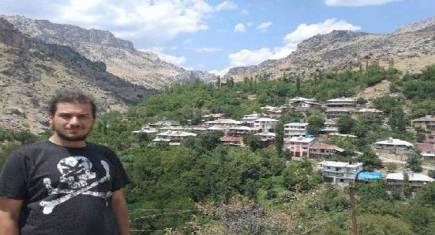
From July 12 to 18, participants of Armenian, Kurdish and Turkish gathered in the city of Caux, Switzerland, and discussed the Armenian Genocide, their common past, the current situation and paths to reconciliation. Every summer, “Initiative of Change” [Initiative for Change] is organizing a series of conferences with 8 sessions. Hundreds of people around the world share their experiences and discuss what should be done to create a better future. The common point of the participants is the fact that each of them has been affected by past or present conflicts. Together the participants discussed the common past that had affected their life spent far they were able to hear the stories of the “other” recounted live.

Speaking during the session ‘A fair governance for human security’, groups of Turkish-Armenian-Kurdish dialogue drew attention of participants from other countries. Armenians, Kurds and Turks from Armenia, Turkey, Lebanon, Spain and the Netherlands attended the sessions.

All Armenians in Lebanon are the grandchildren of survivors of the Genocide. The stories collected ancient family are themed so Kurdish Armenian cities become today. As part of this dialogue project, they told stories of their families relating to emigration and genocide. The grandchildren of the survivors, who were Mount Moussa, Zeitun and Urfa, who had started a new life in Lebanon – Nejteh, Christine and Nora – went to Mount Moussa where their ancestors had fought for their lives during 50 days.

“Where is my real home? “

Nejteh says he never thought it would be so much affected by this journey: “I knew Zeitoun that what I was told. We first went to Mersin, then Ardiyaman to attend a sunrise on Mount Nemrut. Zeitoun as we approached, we saw high mountains. Although I do not believe in this stuff, I felt that my earth started talking to me and welcome me. It’s a feeling that surprises you. Where is my real home? Is Bourj Hammoud or Armenia? Or the land of my ancestors? I did not go to Armenia, but I wonder if I feel the same way I felt in Zeitoun if I was in Armenia. Zeitoun is an inaccessible city, surrounded by mountains. I felt very moved when I thought my family lived here. There was a bridge. My parents fleeing the Genocide have they crossed this bridge? Have they drank the water from this fountain? What were the houses that belonged to them? It’s that kind of thoughts that came to me. This place is now called Suleymanh is not a very developed city.

villageges

Villagers are as welcoming as in other villages. They are hospitable. We have started a dialogue with villagers: I know a few words in Turkish. I told him I was from Lebanon and that I was Armenian. He said: “Welcome to the land of your ancestors.” So I took him in my arms and I cried like a little child. The village children took my hand and accompanied me to the fountain to wash my face. Ironically, I felt a little intimidated. All the villagers know that Armenians lived here. At one time. Some said: “They are just gone one day” and others said, “It is something happened and they left.” Others believe that the Germans and the English have driven a wedge between Armenians and Turks, and that’s why the Armenians are gone; strange explanation. How could they know the truth? They believe what they are told …

“I cried like a baby”

Taking the Turks in high esteem and confidence in the process of normalization between Armenians, Turks and Kurds despite a turbulent past,

Christine told us his trip to Mount Mousa: “My family is from the village of Bitlas in Mount Moussa region. She fled in the 1915 genocide before returning to the village. In 1939, the family had to flee again. My grandmother told me stories of our family. Ascent Mont Moussa, I felt a sense of belonging to this place. There was something special. We went to Vakifli the only Armenian village surviving today. There was a mass at the church. After all the suffering of the past, these people still live and pray here. I burst into tears when I entered the church; I cried like a child. Most villagers know that their house had once belonged to the Armenians. In the village of Yogunoluk we saw they had built a mosque where there was formerly a church. They converted the church into a mosque without demolishing it. I think they have to continue to use it as a holy place. I wondered if they had any Armenians here. When I asked, they said in the village lived a person named Hagop. I found it. He lives there with his wife’s son. He told me that his father fled to Egypt at the time of the Genocide and then had returned to Bitias. His father risked his life by returning there but he managed to survive. I hope that next year we will again visit the village, I want to see Hagop.

Danger of death

Christine does not like talking unpleasant experiences she had during a visit to Mount Moussa. Nora said she was really scared during the trip. She watched the Turkish and Kurdish participants as she spoke; it was obvious she was reluctant to tell him. As it was stressed, she began to talk about what happened to him. At some point of the journey, she found herself in a conversation with a person of the place in a hotel. Another Armenian Lebanese sought help from Christine to talk to this man. Christine began to translate. “They were all nationalists. I did not want to translate some things they said to me, because I feared that a fight broke out. Then they talked about history. As they were about to separate, Hagop [not that of Bitias] said “yes, home of my ancestors is here and we will ensure that they return some day.” I translated this sentence and the other was furious and threatened us with death. We returned to our rooms to avoid a scandal. A few minutes later, we heard gun shots. This man was back in the hotel with the intention of killing us. Even though I knew he would not do it, I was afraid. “

emigration stories

Artak comes from Spain. Artak’s ancestors were of Bitlis, Mush and Kars and they started a life in Spain. Having heard that his friends had told of their journey to Mount Moussa, he said he had never been to Mount Moussa before and that he did not feel ready for such a thing, “I think I could not stand it. “

During the conference, the focus was on the question of emigration. The stories of Kurdish and Turkish participants in the dialogue are also stories of emigration. Bedel is a Kurd from Midyat, farmhouse he lives in Holland. His family had to go to Midyat because of oppression and settle in Istanbul. They later emigrated to the Netherlands because of the political oppression they suffered in Istanbul. Tayfun comes also from the Netherlands, but his family is Ankara. He said his family has strong prejudices against the Kurdish and Armenian peoples. His main thesis regarding the Armenian Genocide, but he says he started with his own denial. When he wrote his thesis: “I started reading about the genocide. at some point, I felt that I could not deny. “ Tayfun has also noted that his family does not like his ideas. The conditions of the encounter between Tayfun Bedel and are interesting. These two people living outside Turkey today tried to tear down the wall between Kurds and Turks with the group of Kurdish-Turkish dialogue they created the Netherlands. Following this session, we realized that every people has different complaints he must overcome and that this is not as easy as you think. And the steps are still many before you arrive …

Caux Palace yesterday a hotel, conference center today

The conference I attended was held at the Caux Palace. Built in 1900-1902, it was the largest and most luxurious hotel in Switzerland at the time. Facing the Alps and Lake Geneva, the hotel went through a crisis due to the First World War. The hotel was closed at the beginning of World War II. He was re-opened by government decision in 1944 in order to keep the POWs fleeing Italy. In December, he hosted Jewish refugees from Hungary.

A group of people who believe that reconciliation in a Europe coins will be created through dialogue, looking for a place to organize conferences that bring together divided peoples. During this research, Caux Palace went on sale and they made the acquisition through the contribution of over 100 people. Subsequently, hundreds of volunteers took part in the renovation of the interior. Opened in 1946, the conference center maintains this tradition of volunteerism. The first Caux reconciliation event took place in 1946- 1950 between French and Germans. In recent years, it became a meeting place for African leaders and representatives of the former colonial countries. India, Japan, the USA, Lebanon, Cambodia, Somalia and South Africa were part of Caux. A delegation of Sud6tyrol visited the place. In recent years, countries like Iraq, Syria, Palestine and Israel have been in Caux search dialog countries; Armenia and Turkey are also parties in this research. In the conferences in Caux every year, hundreds of people share their story. In 2015, 1421 people attended lectures, 55% were women …

Vardouhi Balyan

July 26, 2016

weekly AGOS

Translation Gilbert Béguian

Sunday, September 4, 2016,
Stéphane © armenews.com

Filed Under: Genocide, News Tagged With: Armenian, Kurd, meeting, Switzerland, Turks

  • « Previous Page
  • 1
  • …
  • 128
  • 129
  • 130
  • 131
  • 132
  • …
  • 373
  • Next Page »

Support Gagrule.net

Subscribe Free News & Update

Search

GagruleLive with Harut Sassounian

Can activist run a Government?

Wally Sarkeesian Interview Onnik Dinkjian and son

https://youtu.be/BiI8_TJzHEM

Khachic Moradian

https://youtu.be/-NkIYpCAIII
https://youtu.be/9_Xi7FA3tGQ
https://youtu.be/Arg8gAhcIb0
https://youtu.be/zzh-WpjGltY


gagrulenet Twitter-Timeline

Tweets by @gagrulenet

Archives

Books

Recent Posts

  • A letter from Leading businessman of the United Arab Emirates. Khalaf Hamad Al Habtour, sent to Donald Trump
  • Anna Hakobyan prepared a heartbreaking text about the deprivations “Hraparak”
  • Endless Wars & Concentration of power in one man’s hand:
  • Secret 1920 Document Reveals Turkey’s Plans — Just as Today, to Eliminate Armenia
  • “Corruption, looting, and cronyism appear widespread within the Pashinyan government.

Recent Comments

  • Tina on Anna Hakobyan prepared a heartbreaking text about the deprivations “Hraparak”
  • Baron Kisheranotz on Pashinyan’s Betrayal Dressed as Peace
  • Baron Kisheranotz on Trusting Turks or Azerbaijanis is itself a betrayal of the Armenian nation.
  • Stepan on A Nation in Peril: Anything Armenian pashinyan Dismantling
  • Stepan on Draft Letter to Armenian Legal Scholars / Armenian Bar Association

Copyright © 2026 · News Pro Theme on Genesis Framework · WordPress · Log in