Gagrule.net

Gagrule.net News, Views, Interviews worldwide

  • Home
  • About
  • Contact
  • GagruleLive
  • Armenia profile

Saudi to execute seven for crimes committed as juveniles

March 5, 2013 By administrator

Published March 5th, 2013 – 08:57 GMT via SyndiGate.info
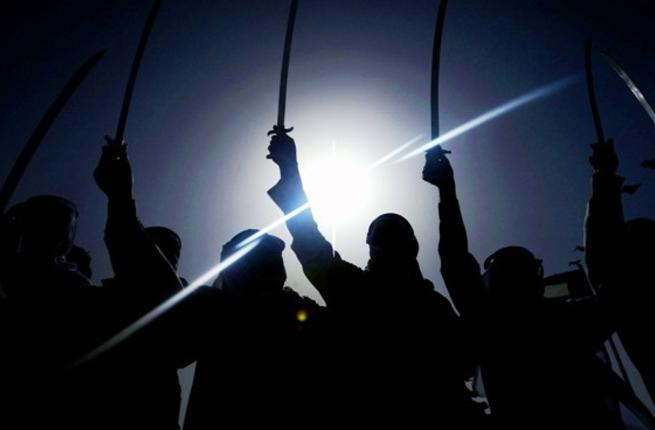
Saudi_BeheadingAlready this year, 17 people have been executed in the kingdom, according to Amnesty.

Saudi Arabia will execute seven men on Tuesday for crimes they committed as juveniles, Amnesty International said.

According to the British-based rights groups, the seven men, from the southern province of Asir, were sentenced to death in 2009 for an armed robbery in 2006, which all are accused of committing aged under 18. Saudi’s King Abdullah reportedly ratified the group’s sentences in February.

Amnesty quoted the men as saying they were tortured into confession, adding: “They have since said they were severely beaten, denied food and water, deprived of sleep, forced to remain standing for 24 hours and then forced to sign ‘confessions’.”

Saudi Arabia has faced criticism from the West over its high number of executions.

Already this year, 17 people have been executed in the kingdom, according to Amnesty.

The last time Saudi executed so many people at once was in October 2011, when eight Bangladeshi men were put to death for an armed robbery in which a guard was killed.

In a 2006 report, the UN Office of the High Commissioner for Human Rights said it was “deeply alarmed” at the imposition of capital punishment by Saudi judges for crimes committed under the age of 18.

The kingdom’s Interior Ministry is yet to comment on Amnesty’s report but has repeatedly said in the past that Saudi Arabia does not practice torture.

Filed Under: Articles Tagged With: Saudi to execute seven

Abu Dhabi bars foreign observers from court as trial of 94 ‘coup-plotters’ begins

March 5, 2013 By administrator

Defendants allege mistreatment but human rights groups are turned away

Even by United Arab Emirates standards, the security arrangements for the largest political trial in its history were draconian. In a packed hearing at Abu Dhabi’s Federal Supreme Court yesterday, 94 defendants – all members of a local Islamist group, Al Islah – were charged with belonging to a secret organisation and attempting to overthrow the state. Representatives of two human rights groups, including Amnesty International, were turned back at the airport while international media and foreign observers were barred.

During the Arab Spring the UAE became increasingly concerned that Al Islah – which it claims is closely linked to the Egyptian Muslim Brotherhood and is the closest thing the country has to any organised political opposition – would become emboldened by the Islamist ideologies gaining ascendancy across the region.

The defendants have been rounded up in a series of arrests over the past year, and several reportedly told the court yesterday that they had been mistreated in custody. The accused include judges, lawyers and teachers. The group’s chairman is Sheikh Sultan bin Kayed al-Qassimi, a member of the royal family in Ras al Khaimah, one of the UAE’s seven emirates.

The men, dressed in blue overalls and plastic slippers, were brought in from a secret location where they claim to have been held in solitary confinement, some for up to seven months. Thirteen women who are also facing trial have been allowed bail, while 10 defendants are being tried in absentia. All face sentences of up to 15 years and have no right of appeal.

“It was very emotional in the courtroom,” said one attendee whose mother and father are on trial. “It was first time the detainees had met each other for months, so they were all hugging and crying. There’s a relief that it’s got to court but it’s [also] upsetting to hear how they were treated.”

According to sources allowed access to legal documents, the charges are based on an alleged confession by one of the defendants, Ahmed Ghaith al-Suwaidi. Yesterday he pleaded not guilty and asked the court for protection for his family and himself. At least two defendants told the court they had been beaten, while others said bright lights were left on in their cells around the clock. The court was adjourned until 11 March and the judge ordered the detainees to be transferred to an official prison. An Abu Dhabi government official said he couldn’t comment on the allegations of mistreatment while court proceedings were still active.

To avoid any mass gathering outside the court, lawyers, family members and local journalists allowed to attend were bussed in from separate locations. The Independent was tailed by state security forces after speaking to some of the 150 family members waiting in the car park of the Federal National Council, away from the court building. Three teenage relatives of the accused were briefly detained after being found in possession of a poster defending the accused.

“It’s just shocking,” said Bushra al-Rokken, a 26-year-old whose husband, brother and father – a lawyer who has defended political detainees in the past – are among the detainees. Like most Al Islah members she claims the movement is “home-grown” and has no loyalties abroad.

US Secretary of State John Kerry was due to arrive in the UAE last night as he nears the end of his Middle East tour. Human Rights Watch called on him to raise concerns about the trial during his visit.

Filed Under: Articles

Maximizing Armenian capabilities to overcome major challenges

March 5, 2013 By administrator

Harut Sassounian
Publisher, The California Courier

The Voice of Armenians TV in New York (VOATV NY) held its second annual fundraising banquet on March 2, at The Palisadium Harut Sassounian1in Cliffside Park, New Jersey. On this auspicious occasion, the television network’s Board of Directors honored Zarmine Boghosian, writer and Principal of Holy Martyrs Armenian Day School; Dr. Herand Markarian, playwright, director and actor; and Harut Sassounian, Publisher of The California Courier and President of the United Armenian Fund.

After opening remarks by Master of Ceremonies Haik Kocharian and welcoming words by VOATV Chairman, Dr. Aram Cazazian, the honorees were introduced by Natalie Gabrelian, Director of Alternative Education, AGBU; Haroutiun Misserlian, educator and engineer; and Appo Jabarian, Publisher, USA Armenian Life Magazine. Congratulatory remarks were made by curator Vicki Shoghag Hovanessian and VOATV Executive Producer and host Karine Kocharyan.

In his acceptance speech, Sassounian shared with the 300 guests in attendance his deeply held convictions based on 40 years of political activism and community involvement. He expressed the hope that the recommendations outlined below would strengthen and empower Armenians worldwide:

1) Encourage the participation of women in every level of community activity. Since women comprise 50% of the Armenian people, once old-fashioned obstacles are removed, Armenians could overnight double their overall resources and capabilities.

2) Involve the youth in all societal activities by assigning them special responsibilities, as they constitute the future of the Armenian nation. If Armenians today fail to transmit their achievements and activities to the next generation, all of their efforts would have gone to waste.

3) Treat every Armenian as a family member, regardless of personal disagreements or differences in social, political, and religious affiliation or country of origin. Armenians should relate to each other as equals. No distinctions should be made between Armenians from the Diaspora and the Homeland.

4) Discard the Ottoman and Soviet mentalities inherited by some Armenians. Even though they left the Ottoman Empire long ago, and the Soviet Union more recently, it appears that the regressive influence of these mentalities has not left them.

5) Extend assistance to the people of Armenia and Artsakh, regardless of the differing views about their leadership. Presidents and Prime Ministers are temporary, while the Homeland is perpetual.

6) Strive always to form a coalition rather than causing dissension. Be a unifier, not a divider. Keep in mind the exhortation of prominent poet Yeghishe Charents: “O Armenian people! Your salvation only lies in your collective power.” Ideally, the Armenian Diaspora should have a democratically elected representation, bringing Armenians under a single umbrella by a popular vote.

7) Support all community organizations, be they social, cultural, religious or political in nature, thus helping to ensure the survival of the Diaspora. A powerful Diaspora is the backbone of a strong and secure Armenia.

8) Reject feelings of helplessness and inferiority and eliminate all defeatist attitudes. Individually and collectively, Armenians can realize their legitimate aspirations, as long as they work together for the common cause. They can overcome all adversaries and adversities by remaining united and strong. If Armenians can put their domestic house in order, they can easily counter all external threats.

9) Finally, with the approach of the Armenian Genocide Centennial, Armenians worldwide — the Republics of Armenia and Artsakh, as well as the Diaspora — should rally around a single unified message about their demands from Turkey. Armenia and Diasporan communities should not make separate and different demands, causing confusion among their supporters and adversaries. The single word that encapsulates all Armenian demands from Turkey is “Justice,” which encompasses moral, financial and territorial restitution to the Armenian nation.

Harut Sassounian
Publisher, The California Courier

Filed Under: Articles, Opinion

Georgian-Armenians discussed possibility of Armenian Genocide recognition with Georgian Government representatives

March 5, 2013 By administrator

10:45, 5 March, 2013

YEREVAN, MARCH 5, ARMENPRESS: “Georgia’s Armenian Community” NGO department representatives had a meeting with Sozar 710392Subari, Political Secretary of “Georgian Dream – Democratic Georgia” coalition. As  “Georgia’s Armenian Community” NGO press service told Armenpress, the March 4 meeting was seeking to introduce the new Government members issues  the Georgian-Armenians are concerned with,  as well as stance of the Georgian-Armenian community regarding them, and put forward ways of the solution of the present issues.

Participation of national minorities in the governing process of  the country, problems observed in the secondary and higher education systems, as well as issues referring to the erection of the cross-stone dedicated to the memory of the Armenian Genocide victims and possibility of official recognition of the Armenian Genocide have been touched upon in the course of the meeting.

Filed Under: Articles Tagged With: Georgia

Nine dozen Aleppo Armenians kidnapped within a year

March 5, 2013 By administrator

15:20, 5 March, 2013

YEREVAN, MARCH 5, ARMENPRESS: In accordance to the information of the Syrian Armenian First Aid Body for Emergencies over 71045890 Aleppo Armenians have already been kidnapped because of one year ongoing clashes in Aleppo. The Press Secretary of the Armenian National Prelacy in Aleppo Jirair Reisian told Armenpress that fortunately the majority has been released. The number of wounded Armenians exceeds 87, the number of victims is being clarified. Presumably their number is about 4 dozen. Two servicemen Khajak Abelyan and Ghazar Karapetyan are missing till now. First Aid Body for Emergencies has allocated over 3500 parcels to the Aleppo Armenians. Conditioned by ongoing clashes in Aleppo in a year, about 12-13 thousand Armenians had left the city.

In accordance to UN earlier published data the overall death toll in Syria surpasses 70 thousand people. The number of Syrian refugees reaches 940 thousand. Turkey has absorbed 300 thousand Syrian refugees, 200 thousand Syrians found shelter in Jordan.

Filed Under: Articles

French law enforcement responds to Armenian community’s petition

March 5, 2013 By administrator

March 05, 2013 | 02:31

PARIS. – The French Police transferred to the country’s attorney general’s office the petition with respect to the case of Azerbaijanis unlawfully entering the French parliament building, Armenian National Congress France Executive Director Hratch 142947.jpgVarjabedian told Armenian News-NEWS.am.

“The attorney general’s office will inform, within one week, as to when the [respective] court hearings will commence. We certainly will take this matter all the way,” Varjabedian noted.

He also informed that the Azerbaijani lawbreakers are under police supervision.

As Armenian News-NEWS.am informed earlier, During the event that was held in commemoration of the victims of the 1988 Armenian pogroms in Sumgait, Azerbaijan, and which was held on February 26 in the French parliament, members of the Azerbaijani delegation refused to pay respects—with a minute silence—to the victims and, instead, exclaimed that they will pay their respects solely to the victims of the Khojaly massacre in 1992. This statement displeased the Armenian delegates and, as a result, a clash broke out, but the police intervened. Azerbaijan’s ambassador to France arrived immediately after the incident and condemned what occurred. It is possible, however, that this provocation was planned because Azerbaijani TV crews likewise were on hand at the event.

Filed Under: Articles Tagged With: France

Kurdish rebels detonate bomb under Turkish military vehicle

March 5, 2013 By administrator

March 5, 2013 – 14:35 AMT

Kurdish militants have detonated a bomb under a military vehicle in southeast Turkey, wounding four soldiers, security officials said on Tuesday, March 5, according to Reuters.

148561Turkish intelligence officials and Kurdistan Workers’ Party (PKK) leader Abdullah Ocalan, imprisoned on an island near Istanbul, began talks last October aiming to end a 28-year-old insurgency in which more than 40,000 people have been killed.

As the discussions have advanced, violence has dwindled, with one of the most recent PKK attacks coming in January, when its fighters killed a Turkish police officer in the southeastern province of Mardin.

In Monday’s attack, militants remotely detonated roadside explosives under a military convoy on a road in the Lice district of Diyarbakir province. Four soldiers in an armored vehicle were lightly wounded, officials said.

Turkish military units were hunting the perpetrators, Diyarbakir Governor Mustafa Toprak said.

According to Kurdish politicians, the PKK is now observing a de facto ceasefire and Ocalan plans to declare an official halt to hostilities by the Kurdish New Year on March 21.

But Turkish warplanes have continued to bomb militant targets in the mountains of northern Iraq where thousands of rebels are based, drawing warnings from the PKK that they are jeopardizing the peace process.

Military operations have also continued in southeast Turkey. Soldiers backed by helicopters launched an operation around Cudi mountain in Sirnak province near the Iraqi border, with artillery units shelling the mountain, officials said.

There was no immediate comment from the PKK on Monday’s attack.

Under a plan discussed by Ocalan and government representatives, the PKK would end hostilities and give up its demands for autonomy for Turkey’s largely Kurdish southeast in return for greater Kurdish rights, enshrined in the constitution, Turkish media have reported.

Filed Under: Articles Tagged With: Kurdish news

Armenians might beat Azeri army without a single shot – journalist

March 5, 2013 By administrator

March 5, 2013 – 16:22 AMT

PanARMENIAN.Net – Baku’s threats of a military settlement to the Nagorno Karabakh issue will never go beyond words, an independent Azerbaijani journalist said.

“However, let148564’s imagine for a moment that Azerbaijan has started a war against Karabakh. First thing for Baku to discover would be that the rival is actually ready for a war, as was repeatedly warned about. Their combat readiness and morale might prove no worse than ours, though less advertised. Besides, there are strong patriotic feelings as well as fewer cases of theft, lies and corruption.

At the onset of the war, Armenians will reflect the widely advertised Azeri strike and can very well commence a counterattack. One forth of Azeri army will be sure to desert at the very first sound of gunshots, another forth of the army, once in control of weapons will kill their officers who beat, raped and ridiculed them,” Cengiz Sultanov said.

The journalist is confident that Armenians might gain the upper hand over the rest of the soldiers without a single shot fired, were they to promise to put an end to corruption in Azerbaijan and start democratic reforms in the country.

Filed Under: Articles Tagged With: Azeri army

Ten years on from the war, how the world forgot about Iraq

March 4, 2013 By administrator

Sunday 03 March 2013 By: Patrick Cockburn

Iraq: The Legacy: A nation in crisis – In the first of a landmark six-part series, Patrick Cockburn reports on the feeling of betrayal in Baghdad

It is 10 years since the start of the war in Iraq which led to the toppling of Saddam Hussein.

The diplomatiiraq.afpc map of the world has been redrawn as a consequence. Inquiry after inquiry has studied the legality of the conflict.

Political reputations have been made and lost. But what of the country itself?

Patrick Cockburn, The Independent’s acclaimed foreign correspondent, toured Saddam’s former empire to find out what state it is in. Who have been the winners?

Who have been the losers? And have we left Iraq in a better condition than we found it?

***

Iraq is disintegrating as a  country under the pressure of a mounting political, social and economic crisis, say Iraqi leaders.

They add that 10 years after the US invasion and occupation the conflict between the three main communities – Shia, Sunni and Kurd – is deepening to a point just short of civil war. “There is zero trust between Iraqi leaders,” says an Iraqi politician in daily contact with them. But like many of those interviewed by The Independent for this article, he did not want to be identified by name.

The escalating crisis in Iraq since the end of 2011 has largely been ignored by the rest of the world because international attention has been focused on Syria, the Arab uprisings and domestic economic troubles. The US and the UK have sought to play down overwhelming evidence that their invasion and occupation has produced one of the most dysfunctional and crooked governments in the world. Iraq has been violent and unstable for so long that Iraqis and foreigners alike have become desensitised to omens suggesting that, bad as the situation has been, it may be about to get a great deal worse.

The record of failure of post-Saddam governments, given the financial resources available, is astounding. One of the reasons many Iraqis welcomed the fall of Saddam in 2003, whatever their feelings about foreign occupation, was that they thought that his successors would restore normal life after years of sanctions and war. To their astonishment and fury this has not happened, though Iraq now enjoys $100bn (£66bn) a year in oil revenues. In Baghdad there is scarcely a new civilian building to be seen and most of the new construction is heavily fortified police or military outposts. In Basra, at the heart of the oilfields, there are pools of sewage and heaps of uncollected rubbish in the streets on which herds of goats forage.

I was in Baghdad at the end of January when there were a couple of days of heavy rain. For years, contractors – Iraqi and foreign – have supposedly been building a new sewage system for the Iraqi capital but none of the water was disappearing down the drains. I drove for miles in east Baghdad through streets flooded with grey, murky water, diluted with sewage. I only turned round in Sadr City, the Shia working-class bastion, when the flood waters became too deep to drive through. Shirouk Abayachi, an advisor to the Ministry of Water Resources, explained to me that “since 2003, $7bn has been spent to build a new sewage system for Baghdad, but either the sewers weren’t built or they were built very badly”. She said the worst flooding had been where in theory there were new sewage pipes, while those built in the 1980s worked better, concluding that “corruption is the key to all this”.

Theft of public money and incompetence on a gargantuan scale means the government fails to provide adequate electricity, clean water or sanitation. One-third of the labour force is unemployed and, when you include those under-employed, the figure is over half. Even those who do have a job have often obtained it by bribery. “I feared seven or eight years ago that Iraq would become like Nigeria,” says one former minister, “but in fact it is far worse.” He cited as evidence a $1.3bn contract for an electricity project signed by a minister with a Canadian company that had only a nominal existence – and a German company that was bankrupt.

***

Iraqis looked for improved personal security and the rule of law after Saddam, but again this has not materialised. The violence is much less than during the mass slaughter of 2006 and 2007 when upwards of 3,000 Iraqis were being butchered every month. But Baghdad and central Iraq remains one of the most dangerous places on earth in terms of bombings, assassinations and kidnappings. It is not just political violence that darkens lives, but a breakdown of civil society that leaves people often looking to tribal justice in preference to police or official courts. One woman said that: “If you have a traffic accident, what matters is not whether you were right or wrong but what tribe you belong to.”

The same sense of insecurity in the face of arbitrary government taints political life. If there is not quite the same fear as under Saddam, it often feels as if this is only because the security forces are less efficient, not because they are any less cruel or corrupt. The rule of Nouri al-Maliki, Prime Minister since 2006, has become a near dictatorship with highly developed means of repression, such as secret prisons, and pervasive use of torture. He has sought to monopolise control over the army, intelligence service, government apparatus and budget, making sure that his supporters get the lion’s share of jobs and contracts. His State of Law Coalition won only 24 per cent of the votes in the 2010 election – 2.8 million  votes out of 19 million registered voters – but he has ruled as if he had received an overwhelming mandate.

Dr Mahmoud Othman, a veteran Kurdish leader and member of parliament, gives an excoriating analysis of what is wrong with present-day Iraq. “It is a failed state,” he says. “The country is run by gangs [within the government] and gangs are more important than law. Maliki rules because he is head of the armed forces. Iraq is run by force, but force does not mean that those exercising it are in control.”

Saddam Hussein and the US both found to their cost that Iraq can never be ruled by compulsion alone, something Mr Maliki has been slow to learn. The power of religious and ethnic communities is too great for successful coercion by the state and is underpinned by Iraqis’ loyalty to tribes, clans and extended families. When the Americans were leaving Iraq their main concern was that they would leave behind a security vacuum. But this was to mistake the nature of Iraqi politics. “The new [post-Saddam Hussein] Iraq has been built on the consensus of three communities: the Kurds, the Shia and the Sunni,” says one Iraqi leader, previously optimistic about the future of the country. “This political consensus has fractured.” He believes there is still some chance of repairing the damage, but, if this fails, he says “the end of Iraq and the division of the country will be inevitable”.

Iraqis who fought for years against Saddam Hussein, blaming most of Iraq’s ills on his regime, today express bitter disillusionment with his successors. Mustafa al-Khadimi, a veteran opponent of Saddam’s rule, says “I feel saddened and disappointed. I have given my life to destroying the old system and have seen members of my family and friends killed. Now I watch Iraq treated like a cake to be cut up between our politicians.” Others, equally despairing, criticise Mr Maliki for exacerbating and exploiting political divisions to keep power in his hands. As the pre-eminent leader of the Shia, three-fifths of the population, he alarms them by suggesting that their political dominance is under threat from the Sunni, a fifth of Iraqis, once in charge under Saddam but now marginalised. Last year, Mr Maliki sought to unite Sunni and Shia Arabs against the Kurds, another fifth of the population, by massing troops and threatening to invade Kurdish-controlled but disputed areas.

What makes these escalating conflicts so bizarre and damaging to Iraq is that they are fought by combatants who are part of the same power-sharing government. But because they don’t co-operate – and indeed hate and fear each other – government itself is paralysed. The administrative apparatus has in any case been degraded by departure of able officials abroad and the allocation of jobs solely through political patronage rather than experience or ability, membership of al-Dawa, the ruling Shia religious party often being the essential qualification. One study of Iraqi officials revealed that on average they put in just 17 minutes’ productive work during the average day. These toxic elements combine to produce a corrupt, self-serving and ineffective government. But its failings have been there a long time and might not in themselves have produced a new crisis. Party patronage may be a crude and unfair way of distributing oil wealth, but it benefits a lot of people. Iraqis may be enraged by the lack of public services such as electricity or health care, but they have suffered these shortages for a long time. By 2011 Iraq had achieved a bloody and unsatisfactory stability that might have endured longer had it not been rocked by important changes in the political balance of power inside and outside Iraq.

***

The last American troops left at the end of 2011 and President Barack Obama made clear by his actions that he did not intend to be inveigled back into the Iraqi political morass. Polls showed American voters had a deep distaste for any involvement in Iraq. American influence plummeted. But the Iraqi political system was in large part a US creation and many of its leaders owed their careers to US backing. This includes Mr Maliki who was appointed as Prime Minister by the US ambassador, Zalmay Khalilzad, because he was one of the few Shia politicians acceptable to the US and Iran.

Both countries, though they fight each other for influence in Iraq, have a common interest in stabilising the post-Saddam settlement. When Maliki was reappointed Prime Minister in 2010 an Iraqi official called me to comment sarcastically that “the Great Satan (US) and The Axis of Evil (Iran) have come together and given us a new prime minister”. With the US departure there disappeared a major force for persuading Iraqi leaders to agree to share power.

In their last years there, the Americans had learned how to play Iraqi political games effectively. In 2007 during the so-called Surge they had offered protection to the Sunni in return for an end to military action against US troops (al-Qa’ida continued to attack the Shia civilians and Iraqi government forces). It was always a temporary arrangement, regarded with suspicion by the Shia-dominated government in Baghdad. Just as the last US soldiers were leaving Iraq, Mr Maliki forced his Sunni Vice-President Tariq al-Hashemi to flee to Kurdistan and he was later sentenced to death.

The Sunni had suffered shattering defeats with the overthrow of Saddam Hussein, the formation of a Shia-Kurdish government and loss of the sectarian civil war. But the conflict in Syria marked a change for the better in Sunni fortunes. They have been emboldened by the bid for power of Syria’s Sunni majority just across the border from their own heartlands in Anbar and Nineveh provinces. They are encouraged by Sunni states like Turkey, Saudi Arabia and Qatar, backing Sunni rebels in Syria and sympathising with Sunni demonstrators in Iraq. Since late December Iraqi Sunni have peacefully protested against discrimination in all its forms. Maliki and his senior officials appear to be finally taking on board the significance of Sunni protests and the strength of the Sunni counter-offensive against the Shia in the Middle East. Mr Maliki predicted last week that “if the opposition [in Syria] is victorious, there will be civil war in Lebanon, divisions in Jordan and a sectarian war in Iraq”.

The US departure, the Syrian crisis and the Sunni protests are all destabilising Iraq. The Kurds and the Shia religious leadership – the Marji’iyyah – regard Mr Maliki and his government with distrust, but the very divisions of Iraq that weaken central governments also make it difficult to get rid of those in power, because their opponents are themselves so divided. Opposed to Mr Maliki they may be, but they cannot agree on a successor.

The Shia are themselves divided. Muqtada al-Sadr, the populist nationalist cleric who fought the US occupation, has called for the removal of Maliki and has praised the demonstrators in Anbar. This is important because his well-organised political movement used to have a military wing, the Mehdi Army, feared and execrated by Sunni for carrying out atrocities against them. Muqtada recently said: “Maliki’s entire policy is offensive to the Shia because it portrays them as a tyrannous majority in the eyes of the Kurds and Sunni.”

Iraq is one of the great political minefields of the world. It is full of ancient and modern battlefields where great empires have been humbled or destroyed. Saddam Hussein claimed to have built up an army of one million men in 1991, only to see it evaporate or mutiny. Much the same happened in 2003. The US army marched into Baghdad full of arrogant contempt for what Iraqis said or did. Within a year the US military controlled only islands of territory in a country they thought they had conquered.

Maliki may employ a million men in different branches of the Iraqi security forces. In most countries this would guarantee government control, but in practice Maliki only has full authority in about half the national territory. He has no power in the northern third of the country held by the Kurds and increasingly limited influence in Sunni areas.

This does not mean the government is collapsing. It still has money, jobs, the army, intelligence services and electoral legitimacy. Qusay Abdul Wahab al-Suhail, the Sadrist deputy speaker of parliament, says that the problem in Iraq is that all parties have some degree of strength and therefore see no need to compromise with opponents. The result is a permanent political stalemate or paralysis.

Whatever the US and British invasion and occupation of Iraq 10 years ago was meant to achieve it has not created a peaceful and prosperous country. If an Iraqi was arrested before 2003 for a political offence he could expect to be tortured unless he immediately confessed, and this is still the case. The one improvement is that he stands less chance of being executed.

Ordinary Iraqis are pessimistic or ambivalent about the future. Professor Yahya Abbas says: “If you ask my students ‘What do you want?’ About 95 per cent will answer ‘I want to leave Iraq.’”

Filed Under: Articles Tagged With: Iraq

First British fighter killed in Syria named as Ibrahim al-Mazwagi

March 4, 2013 By administrator

Sunday 03 March 2013

The first British-born casualty of the Syrian civil war has been revealed as Ibrahim al-Mazwagi, a 21-year-old jihadist who graduated from Hertfordshire University last year.

To his friends, he was a sociable member of the university’s American football team, but to rebels in Syria, he was one of about 80 British men who are believed to have joined the fight against Bashar al-Assad in the last two years. According to the Facebook page set up in his honour, the north Londoner had fought in Libya in 2011 before heading to fight alongside his “brothers” in Syria last August. Announcing his death, a message on the page read: “He took part of [sic] a major operation against the Assad regime forces yesterday and passed in the ensuing battles.”

Filed Under: Articles

  • « Previous Page
  • 1
  • …
  • 2036
  • 2037
  • 2038
  • 2039
  • 2040
  • …
  • 2068
  • Next Page »

Support Gagrule.net

Subscribe Free News & Update

Search

GagruleLive with Harut Sassounian

Can activist run a Government?

Wally Sarkeesian Interview Onnik Dinkjian and son

https://youtu.be/BiI8_TJzHEM

Khachic Moradian

https://youtu.be/-NkIYpCAIII
https://youtu.be/9_Xi7FA3tGQ
https://youtu.be/Arg8gAhcIb0
https://youtu.be/zzh-WpjGltY


gagrulenet Twitter-Timeline

Tweets by @gagrulenet

Archives

Books

Recent Posts

  • Armenia’s Education Crisis: The PISA 2025 Results Should Concern Every Armenian
  • An Armenian Story Reaches the British Royal Family
  • Pashinyan & Company, greedy, evil, all-hating & all-powerful people clinging to their chairs…
  • Why Diaspora Armenian Must Begin Discussing a Government in Exile?
  • Israel recognized Armenian Genocide, Pashinyan in Panic

Recent Comments

  • Tina on Anna Hakobyan prepared a heartbreaking text about the deprivations “Hraparak”
  • Baron Kisheranotz on Pashinyan’s Betrayal Dressed as Peace
  • Baron Kisheranotz on Trusting Turks or Azerbaijanis is itself a betrayal of the Armenian nation.
  • Stepan on A Nation in Peril: Anything Armenian pashinyan Dismantling
  • Stepan on Draft Letter to Armenian Legal Scholars / Armenian Bar Association

Copyright © 2026 · News Pro Theme on Genesis Framework · WordPress · Log in