Gagrule.net

Gagrule.net News, Views, Interviews worldwide

  • Home
  • About
  • Contact
  • GagruleLive
  • Armenia profile

Al Jazeera: Human rights situation in Azerbaijan is deteriorating at an alarming rate

March 8, 2013 By administrator

Report By: Rebecca Vincent

While the international community continues to engage in business as usual with oil-rich Azerbaijan, the country is quickly losing claim to any remaining pretence that it is a democracy. Azerbaijani civil society is under attack at unprecedented levels, as the Rebecca Vincent of Human rightgovernment wages a vicious campaign to silence its critics, American-British human rights activist currently based in London Rebecca Vincent writes in an article in Al Jazeera.

In particular, the Azerbaijani authorities seem intent on punishing those who exposed human rights problems in the country during the period of increased international media attention ahead of the Eurovision Song Contest and Internet Governance Forum (IGF). Rights groups warned of potential retaliation once this attention had faded. They turned out to be right.

“Over the past few months, the Azerbaijani authorities have been scrambling to silence all critical voices in the country – including mine,” the author says and notes that in a highly unusual move, in December, the authorities revoked my residence permit while I was travelling outside of the country, preventing me from returning to my home in Baku and effectively separating my family ever since. No official explanation has been given, but diplomatic negotiations confirmed that the action was politically motivated.

According to her in the run-up to Eurovision and the IGF, she worked with a wide range of international and local human rights organisations that were publically critical of Azerbaijan’s record on issues such as freedom of expression and internet freedom, including through two reports that were banned from being distributed at the IGF. But my work with a new local campaign, Art for Democracy, which had launched just a week earlier in a December 11 event, seems to have been the clincher. Art for Democracy seeks to use all forms of artistic expression to promote human rights and democracy in the country.

“Since December, the human rights situation in the country has deteriorated at an alarming rate. In January, authorities responded to an unrelated series of anti-government protests in Baku and other regions.” the author writes.

At the same time, authorities appeared to support protests against the author Akram Aylisli following his publication of Stone Dreams, a novel covering the Nagorno-Karabakh conflict from a perspective his critics allege is sympathetic to Armenia. Pro-government groups held pickets in February calling Aylisli a traitor and burning his book. “Authorities have also started taking steps to eliminate any chance of a free and fair presidential election in October,” the article said.

Republicanist Alternative (REAL) movement presidential candidate Ilgar Mammadov is in pre-trial detention, facing up to 10 years imprisonment on politically motivated charges of organising mass disorder and violently resisting police.

“Despite this rapid deterioration, the international community has hardly taken note. The support promised to Azerbaijani activists by IGF participants has certainly been lacking,” Vincent writes. She recalls that European politicians directly contributed to the downward spiral by failing to support a resolution on political prisoners in Azerbaijan in a January 23 vote at the Parliamentary Assembly of the Council of Europe – a move that the Azerbaijani authorities clearly interpreted as carte blanche to continue arresting persons for politically motivated reasons.

“To top it all, as recently as February 20, the European Union enhanced a Memorandum of Understanding on Energy with Azerbaijan, signaling once again that in realpolitik, oil trumps human rights,” the human rights activist writes.

Source: Panorama.am

Filed Under: Articles Tagged With: Human rights situation in Azerbaijan is deteriorating at an alarming rate

Iran, Iraq, Syria sign telecommunication agreement

March 7, 2013 By administrator

BY: PressTV
Iran, Iraq and Syria have signed a tripartite telecommunication agreement aimed at establishing an optical fiber network linking the three countries.

shamsara20130306051653893The agreement was concluded by the representatives of the Telecommunication Infrastructure Company of Iran (TIC), Iraq’s Al-Sard Group and Syria Telecom at a meeting hosted by TIC in the Iranian capital, Tehran, on Tuesday.

Based on the telecommunication deal, data and voice signals will be transmitted from Iran to Iraq and then to Syria and European countries.

“In line with its international macro policies, TIC seeks to establish telecommunication connections with all neighboring countries and the new opportunity that will be created by the [planned] optical fiber via Iraq will have mutual benefits for the three countries and will also be highly beneficial for the region,” said TIC Managing Director Mahmoud Khosravi.

The project will enable Syria to utilize TIC’s network via a secure and reliable route for communicating with other countries across the world.

ASH/HSN/HJL

Filed Under: Articles Tagged With: Iran, Iraq

In Turkey it is more dangerous to be journalist than if you are member of al-Qaeda terrorist

March 7, 2013 By administrator

US captured Bin Laden son-in-law on the way to Kuwait.

(“However, a Turkish court decided to release Abu Ghaith after 33 days in detention on the grounds that he had not committed any crime in Turkey.” Does this subsequently imply that entering Turkey with a fake passport is not a crime? Yet Sevil Sevimly gets a five year conviction for having attended a “leftist” concert and for allegedly having spread anti-Turkish propaganda? What kind of justice is this? Good riddance Mr. Ghaith, hope your CIA experience is a memorable one.)

The CIA recently captured Osama bin Laden’s son-in-law Sulaiman Abu Ghaith while passing from Jordan to KuwaCapture 5it, soon after leaving Turkey, daily Hürriyet reported today.

The U.S. asked Turkey to extradite Abu Ghaith after his detention in Ankara early February.

Abu Ghaith, the former spokesman of the al-Qaeda terror network, was seized in a luxury hotel in Ankara after a tip-off from CIA. He was held there by police for 33 days, the Hürriyet report said.

However, a Turkish court decided to release Abu Ghaith after 33 days in detention on the grounds that he had not committed any crime in Turkey.

Ankara considered Ghaith a “stateless” person, as he was stripped of his Kuwaiti nationality after appearing in videos defending the 9/11 attacks and threatening further violence.

Turkish police also found no criminal record for Abu Ghaith, who entered the country illegally from Iran; he could therefore be deported to Iran or to another country of his choice. After Iran did not accept him, Turkey decided to send him to Kuwait via Jordan. Abu Ghaith was sent to Jordan on March 1, the same day U.S. Secretary of State John Kerry visited Turkey.

The CIA started the operation while Abu Ghaith was passing from Jordan to Kuwait. He was captured and taken to the U.S.

The United States wanted Abu Ghaith extradited over his alleged connection to the Sept. 11, 2001 attacks on New York.

His detention in Turkey after he allegedly entered the country illegally from Iran came in the same week that the U.S. embassy in Ankara was targeted in a suicide bombing claimed by a radical anti-U.S. leftwing group.

He appeared in a propaganda video in the aftermath of 9/11, standing beside bin Laden, who was killed in May 2011 in Pakistan in a covert U.S. operation.

Filed Under: Articles Tagged With: Turkey

Argument breaks out at Turkish Parliament when CHP deputy slams idea of Syrian massacre as lies

March 7, 2013 By administrator

ANKARA – Anatolia News Agency/Hürriyet

A fiery scuffle broke out in Parliament today when a Republican People’s Party (CHP) deputy stated that claims the Syrian regime was massacring its own people was a lie, just as claims there are weapons of mass destruction in Iraq is a lie.

n_42493_4During a relatively unheated session on the new Electricity Market law, main opposition Republican People’s Party (CHP) deputy Ümit Özgümüş took the floor to argue that Foreign Minister Davutoğlu had made a misjudgment on Syrian President Bashar al-Assad’s fate, adding that the Damascus regime will stay in power for at least two more years. “The claim that the Syrian regime was massacring its own people is a lie just as the [claim] there are weapons of mass destruction in Iraq [is a lie],” Özgömüş said, adding that the Syrian people were ganging up against imperialism.

Following Özgömüş’s remarks, ruling Justice and Development Party (AKP) deputy Mehmet Metiner rushed from the AKP’s seats shouting that Özgümüş “had no right to support those who were massacring their people.”

Özgümüş responded to Metiner’s interruption by telling the AKP deputy to “stop yapping.”

Özgümüş then invited Metiner to come to the pulpit where both men nearly came to fists despite repeated calls for restraint by Deputy Parliamentary Speaker Meral Akşener, who was chairing the session.

Metiner called Özgümüş “a slaughterer” and “a buffoon,” leading Özgümüş to yell “I will kill you, you moron.”

After much difficulty the two deputies were separated by colleagues from both parties and the session was delayed for an hour.

Filed Under: Articles Tagged With: Turkey

Greek ex-ministers charged over income declarations

March 7, 2013 By administrator

March 6, 2013 – 22:10 AMT

A Greek prosecutor charged three former ministers on Wednesday, March 6, for failing to declare the source of their wealth, the latest high-profile politicians in legal trouble as public anger rises at a political class widely seen as corrupt, Reuters reported.

148824Among them is Yannos Papantoniou, a prominent Socialist politician who was finance minister when Greece joined the euro in 2001. He faces misdemeanor charges for failing to disclose in 2008 that his wife had 2.2 million euros in deposits in a Swiss HSBC account.

Former Public Order Minister George Voulgarakis, 53, was also accused of hiding from the state that his wife had deposits of 117,000 euros in a foreign bank account in 2007.

Papantoniou and Voulgarakis both denied the charges, which stem from a probe into the so-called “Lagarde list” of potential tax evaders published that sparked an outcry among Greeks angry at a wealthy elite partly blamed for dragging the country to the brink of bankruptcy.

Both told a parliamentary committee that looking into the Lagarde list of about 2,000 wealthy Greeks with money stashed abroad that the accounts belonged only to their wives.

Former Deputy Finance Minister Petros Doukas, a member of the ruling conservative party, was also charged with felony after the prosecutor refused to accept his explanation over the disappearance of 1 million euros from his bank account in 2010, court officials said.

Doukas, 60, has denied any wrongdoing. He has said the money was transferred to an investment account, which was declared in his income statement.

Greek politicians are required under law to declare the origin of their wealth after parliament toughened legislation in 2010 soon after its debt crisis erupted.

In the highest-profile conviction of a politician in decades, a court sentenced former defense minister Akis Tsohatzopoulos to eight years in prison on Monday for false income statements in 2006-2009 and for failing to declare a neo-classical mansion when he bought it in 2009, the court said.

Tsohatzopoulos has denied wrongdoing and plans to appeal.

Greece’s coalition government has played up cracking down on high-level tax evasion and fraud as a top priority as it faces a backlash from an austerity-hit public.

Filed Under: Articles Tagged With: Greece

School of Humanities, UCI Irvine, Modern Global Armenian Print, Dr. Sebouh David Aslanian

March 6, 2013 By administrator

Filed Under: Articles, Events

Basque parliament passes anti-Turkey bill

March 6, 2013 By administrator

Basque regional parliament has passed an anti-Turkey bill introduced by the Basque Country’s pro-independence Euskal Herria Bildu party on Feb. 5.

The bill was discussed in the European Affairs and Foreign Relations Commission of parliament and approved in a nine-to-six vote. The commission comprises 15 members.

According to the bill, the Euskal Herria Bildu party, which holds Turkey accountable for the recent killing of three Kurdish women linked to the terrorist Kurdistan Workers’ Party (PKK) in Paris, requests that the Basque Parliament’s EU Council get involved in the solution of the Kurdish national problem.

It also urges Turkey to show respect for all the political and cultural rights of the Kurdish people as well as to make progress in human rights. It also calls on the European Council to get involved in the process of finding a peaceful settlement to the conflict.

The bill also condemns the killing of three PKK women in Paris and expresses its solidarity with the Kurds, adding that it endorses the dialogue process between the representatives of the Kurdish people and the Turkish government and that it hopes it ends in the recognition of the reality of the nation of Kurdistan.

When it was introduced, Turkey reacted harshly to the parliamentary bill. Turkish Ambassador to Spain Ayşe Sinirlioğlu took action against the bill by writing a letter to Basque Parliament Speaker Bakartxo Tejeria. Sinirlioğlu stressed in the letter that the bill, which included serious accusations and misinformation about Turkey, should be corrected.

The letter further noted that it was unacceptable to have a bill that was against the basic principles of the law. Sinirlioğlu reacted harshly to the bill as Turkey was blamed for the Paris killings, which are still under investigation.

The ambassador also condemned the Euskal Herria Bildu bill as it referred to the PKK without describing it as a terrorist organization, this despite the fact that the group is listed by the EU and the US as such.

Citing Turkey’s good relations with the Basque region and Spain, Sinirioğlu warned of potential damage to these relations as a result of Euskal Herria Bildu’s move.

Filed Under: Articles

Iranian website: Distortion of history among priorities of Azerbaijan’s policy

March 6, 2013 By administrator

Distortion ofCapture 3 history is among the priorities of Azerbaijan’s policy, says an article posted on Iranian website Arannews.ir.

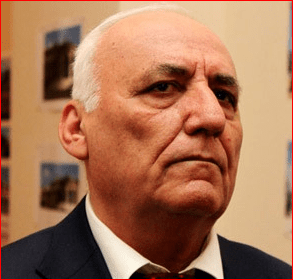
According to Yaqub Mahmudov, Director of the Institute of History of the National Academy of Sciences of Azerbaijan, Azerbaijan cooperates with Turkey in writing common history for Turks, says the article.

Commenting on this statement by the Azerbaijani historian, the Iranian website says, “This information makes it clear how Azerbaijan, a center of support for pan-Azerbaijanism, and Turkey, a center of pan-Turkism, will distort history with joint efforts.

As for Azerbaijan, this state has been distorting history since the communist era as well as since its independence.”

Filed Under: Articles Tagged With: Iran

Azerbaijani Opposition Leader Appeals For Help From Prison

March 6, 2013 By administrator

Azerbaijani opposition leader Ilqar Mammadov was arrested on February 4 and charged with organization of mass disorder, in relation to protests in the town of Ismayilli, 150 kilometers northwest of the capital, Baku. EBFFE0A8-35C8-459D-A618-CFD418A38649_w640_r1_s_cx0_cy3_cw0The chairman of the opposition REAL movement, Mammadov was arrested alongside another prominent opposition leader, Tofiq Yaqublu. Both men could face up to three years in jail if found guilty. Amnesty International and Human Rights Watch have condemned the arrests and the U.S. Embassy in Azerbaijan has expressed concern. Mammadov has written an open letter from prison, which has been passed to RFE/RL. The letter appears in full below. “Here in prison it is particularly striking to see how the international community is ridiculously trying to play by civilized rules with the rich Azerbaijani dictatorship, while the latter is laughing right in the face of that community and of its own citizens.

Twenty minutes after the end of a milestone voting on political prisoners at the Parliamentary Assembly of Council of Europe (PACE), which Azerbaijani authorities won by a margin of Russian MPs and a few corrupt or blindfolded European politicians, a major political uprising took place in the town of Ismayilli, ironically resulting with the expansion of the circle of political prisoners.

Formal charges against me are also linked to that uprising. I visited Ismayilli shortly during calm daytime between two nights of popular clashes with police.  I was there to observe the situation and report to the public my considerations, i.e. to perform precisely the function of civil society and political leaders. Now, Azerbaijani authorities accuse me of organizing that spontaneous, but unfortunately violent protest against corruption.

I am thankful to all international organizations, prominent EU commissioners, and politicians who right away characterized this arrest as political, and demanded my immediate release. They certainly know what is going on. To those people who may shortsightedly take for serious the words of authorities about an “investigation,” I address the rest of the article, which describes how my episodes of activities during the past one year annoyed dictator [Ilham] Aliyev, and how my participation at the forthcoming presidential election could spoil his traditional farce.

In early 2012, “The Washington Post” and Radio Liberty published a series of reports by investigative journalists about corruption involving the closest family members of Ilham Aliyev. It appeared that his children, including underage son, own property and businesses worth hundreds of millions of U.S. dollars — some around the world, and some in Azerbaijan via companies registered worldwide.

Aliyev reacted to these publications not only in a number of repressive ways against the journalists, but also introduced legislative change in June prohibiting public access to company ownership information. Now, Aliyevs can own the country and steal oil revenues through short-lived local companies, and without registering their companies abroad.

The civic organization that I lead — REAL Movement — was the most outspoken critic of the change. We attempted to stage a protest in front of the politically sterile parliament, but I was detained by police, and the law was passed smoothly. I reported this incident to the New-York-based Revenue Watch Institute’s Advisory Board, which I belong to.

That happened in June. Just after the summer break, the parliament introduced severe financial penalties on this kind of “unauthorized” public protests. As a number of critics on social media (TV and radio are fully censored) used tough language against the parliament’s rubber-stamp role in the adoption of this and all other laws, at the very sitting that voted for the penalties, the chairman Ogtay Asadov announced measures “to protect the reputation of parliament from public insults.”

I responded to that on my popular political blog by comparing the institutional role of the parliament to that of the medieval zoos of our shahs. They used to throw opponents into those zoo cells to feed the animals and to scare other residents.

In a true manner of mafia boss, Adil Aliyev — an MP, former police chief, and brother of even a higher- ranking security official — publicly threatened to behead me for this blog posting. About 40 other MPs promised to file a lawsuit. However, this campaign suddenly stopped as if they got a “wait” signal from the very top. By the way, Vice-President of the European Commission Nelli Kroes raised the issue of threats against me — probably to demonstrate that the world is aware of such nasty ideas.

A month and a half later, I joined thousands of youth protesting the record level of noncombat death in the army. This unauthorized protest turned to be a great success as it put a lot of moral pressure on the authorities.

Already after that action I felt that authorities plan to arrest me. Nevertheless, after the first night of anticorruption clashes in Ismayilli, I visited the town to see what has happened. My interest was legitimate not only because of my public status, but also because 11 month prior to that similar clashes took place in Guba, another provincial town. I had characterized those as a clear manifestation of crisis of the current over-centralized local government system, and called for urgent reforms empowering municipalities to be elected. After Guba, I had also predicted that since the crisis was a systemic one, new outbreaks were inevitable. I had said all that to the Voice of America’s 15 minutes video broadcast.

Ismayilli events just supported those observations and conclusions. I spent less than two hours in Ismayilli, in the afternoon, when the town was still calm before the second night of clashes with police. That all happened on January 23 and 24.

Five days later, on 28 January I published on my blog scandalous information that totally outraged the authorities. Despite initial assurances by presidentially appointed governor of Ismayilli that the hotel burnt during the events had no relation to him or his close people, official data that I published confirmed ownership of his nephew (the son of the minister of Social Protection and Labor) over that property. It was the nephew who actually had provoked the public anger on January 23. This publication exploded the information space of Azerbaijan, and brought my blog to the 67th place in the global ranking of LiveJournal blogs (17,000 unique visitors, against previous record of 6,000, and daily average of 500).

Naturally, the next day I was summoned by the prosecutor’s office, which suddenly found “facts” about my instigation of protests in Ismayilli. Five days later, they instructed two “witnesses” to give “evidence” against me and arrested me for 2 months under charges that may lead to seven years of imprisonment.

The last, not the least, dimension of the case is that in early January, the REAL movement decided to nominate my candidacy for the presidential election, and had publicly announced the nomination. A formal public event endorsing that decision would be held on February 9. The national poll is scheduled for mid-October.

These are a few episodes of the past 12 months. My record of political and civil society leadership is much longer. In the past 15 years I have met numerous top and well-known politicians from around the world – U.S. senators, members of the European Parliament, ministers, prime ministers, and presidents — to discuss issues of regional security, development, and democracy. As one of the most outspoken advocates of Azerbaijan’s Euro-Atlantic integration, peaceful resolution of the Karabakh conflict, and real democratic change I have contributed speeches and papers to countless conferences across Europe and United States.

Precisely at the time when the expansion of the REAL Movement gained new momentum as a result of our persistent struggle for the above goals and REAL nominated me as presidential [candidate], the dictatorship locked me up in this prison.

Yes, we live in a totally deformed world where dictatorship imposes visa restrictions against a PACE rapporteur on political prisoners, and two weeks after successful defeat of the latter’s report, comfortably puts an opposition presidential candidate in prison. Two decades of continuous failure to advance democratic institutions in Azerbaijan within the framework of international organizations, and loose inter-government agreements and in fact backsliding since 2003, demands a new approach to the issue of political prisoners.

We should not only maintain a list of political prisoners which the government happily refreshes in order to keep the fear alive in the society, but also we must compile a list of officials directly involved in this conveyer of production of political prisoners and discriminate [against] them internationally and publicly, name by name. I call on the European Parliament, the U.S. Congress, and national parliaments to impose immediate visa, travel, and asset restrictions on these officials.

[…]

I believe that the procedures of the European Court of Human Rights should be adjusted to envisage a fast, if not instant, review of seemingly political cases in countries under political monitoring.

However, even that is not a perfect solution, as the root cause of complexity lies in the dictatorial nature of the Azerbaijani government. As a result of the proposed shift in strategy, some existing but less visible problems will aggravate. For example, I have five lawyers now — brave, honest, and experienced gentlemen who kindly agreed to help me. But there is a political limit on what they can do. In the country where only one state-controlled Bar Association is permitted to function, they risk their license if they push “too hard.” One of them has been back to work just a few months ago — after one year of suspension for doing his job too well. And they are tasked not only with my [needs] from prison, but with such an end to the case that would let me run for presidency in October. Yet, the ECHR is the only judicial hope.

I particularly appreciate COE Secretary-General Thornbjorn Jagland’s telephone call to my lawyers — a sign that this case in given an exceptional priority at the COE, and probably at the ECHR. Now we need a mechanism that would make every political case a priority for the ECHR.

Filed Under: Articles Tagged With: Azerbaijani Opposition Leader Appeals For Help From Prison

The EyeOpener- Can South America Avoid the Globalist Trap? with james Corbett (video)

March 5, 2013 By administrator

With James Corbett

Tuesday, 5. March 2013 by Sibel Edmonds

Although usually ignored altogether by the English-language media, Latin America enjoyed a period of economic growth and growing international trade during the very time that the wheels were coming off of the American-led G8 economies in the collapse and crisis of the Lehman Brothers-Quantitative Easing era. Now, the region is founding trade agreements and even intergovernmental

unions that may just play directly into the hands of the same oligarchs they claim to be resisting. Despite the abject failure of the European Union and its increasingly certain demise, Latin America is now seeking to work toward a common currency.

In this second episode of our Latin America series James Corbett takes a closer look at the latest trend in the Latin America economy, and examines economic and trade agreements such as Mercosur, UNASUR, and proposals such as the FTAA.


Filed Under: Articles, Videos

  • « Previous Page
  • 1
  • …
  • 2035
  • 2036
  • 2037
  • 2038
  • 2039
  • …
  • 2068
  • Next Page »

Support Gagrule.net

Subscribe Free News & Update

Search

GagruleLive with Harut Sassounian

Can activist run a Government?

Wally Sarkeesian Interview Onnik Dinkjian and son

https://youtu.be/BiI8_TJzHEM

Khachic Moradian

https://youtu.be/-NkIYpCAIII
https://youtu.be/9_Xi7FA3tGQ
https://youtu.be/Arg8gAhcIb0
https://youtu.be/zzh-WpjGltY


gagrulenet Twitter-Timeline

Tweets by @gagrulenet

Archives

Books

Recent Posts

  • Armenia’s Education Crisis: The PISA 2025 Results Should Concern Every Armenian
  • An Armenian Story Reaches the British Royal Family
  • Pashinyan & Company, greedy, evil, all-hating & all-powerful people clinging to their chairs…
  • Why Diaspora Armenian Must Begin Discussing a Government in Exile?
  • Israel recognized Armenian Genocide, Pashinyan in Panic

Recent Comments

  • Tina on Anna Hakobyan prepared a heartbreaking text about the deprivations “Hraparak”
  • Baron Kisheranotz on Pashinyan’s Betrayal Dressed as Peace
  • Baron Kisheranotz on Trusting Turks or Azerbaijanis is itself a betrayal of the Armenian nation.
  • Stepan on A Nation in Peril: Anything Armenian pashinyan Dismantling
  • Stepan on Draft Letter to Armenian Legal Scholars / Armenian Bar Association

Copyright © 2026 · News Pro Theme on Genesis Framework · WordPress · Log in