Gagrule.net

Gagrule.net News, Views, Interviews worldwide

  • Home
  • About
  • Contact
  • GagruleLive
  • Armenia profile

U.S. congressman calls for recognition of the Armenian Genocide in response to Turkish threats

February 9, 2018 By administrator

U.S. congressman Ted Lieu, member of Democratic Party from California, has called for a resolution to be passed in Senate, recognizing the Armenian genocide in reaction to Turkish threats to U.S. troops in Syria.

“Turkey essentially is telling the United States that we should end our support to Kurdish YPG fighters or risk being targeted by Turkey. In fact, they had some pretty specific remarks, threats to U.S. troops and our policy there,” said, according to local media sources.

“We all understand that the Armenian Genocide happened, it is a historical fact, and the only reason that that resolution has not been passed is that we want to keep our relations with Turkey,” he said, adding “Is it now time to pass that resolution and tell Turkey that look, if you are going to take these actions against us, we are going to tell the truth and do some things you just might not like?”

According to Ahval news site report, the comments came during a Congress sub-committee hearing on the way forward for Syria in which Turkey was heavily criticized for its ongoing operation against the Kurdish-held Syrian enclave of Afrin.

Filed Under: Articles, Genocide Tagged With: armenian genocide, call, Recognition, U.S. Congressman

Rep. Gabbard calls for Armenian Genocide recognition, stresses Artsakh’s self-determination

September 28, 2017 By administrator

Congresswoman Tulsi Gabbard (HI-02) last week traveled to Armenia on an official, bipartisan diplomatic trip as a member of the U.S. House of Representatives Foreign Affairs and Armed Services Committees, and as a member of the Congressional Armenian Caucus.

“I traveled to Armenia and Nagorno-Karabakh with a bipartisan group of congressional colleagues to hear and see firsthand the challenges and opportunities that exist within Armenia and the region, and identify areas of mutual interest and cooperation that will strengthen the security, economic, and cultural relationships that bind our two countries. Focusing on the priorities of a peaceful, sustainable, and secure region remains the key to deepening the American-Armenian relationship,” Congresswoman Tulsi Gabbard said after the trip.

“The resilience and courage I witnessed in the people of the Nagorno-Karabakh region who remain in an ongoing conflict over their independence, further demonstrates our shared values of freedom, democracy, and self-determination. We must support a diplomatic resolution to this ongoing conflict, such as what has been proposed by the Minsk Group (made up of the United States, France, and Russia), to allow for the people of Nagorno-Karabakh to exercise their freedom and independence,” Tulsi Gabbard.

“One major issue that continues to be unresolved is global recognition and condemnation of the Armenian genocide. It is unconscionable that the United States government still has not formally recognized and condemned the Armenian genocide. I stand with Armenians in America and around the world in condemning the Armenian Genocide, and I call on my colleagues to adopt House Resolution 220 so we never forget, or repeat, the suffering endured by the Armenian people,” she added.

“While there is much progress to be made within Armenia, the resilience of the Armenian people, their rich culture, values, and the depth of economic and academic investment I witnessed during my trip leaves me hopeful for the future of Armenia and the region,” the Congresswoman added.

In Armenia, Rep. Tulsi Gabbard met with President Sargsyan, Prime Minister Karapetyan, distinguished members of the Ministry, representatives from Armenia’s National Assembly, Americans of Armenian ancestry, and a wide range of business, academic, and community leaders to discuss areas of mutual interest to strengthen regional and national security efforts, enhance humanitarian assistance for refugees, build economic opportunities, learn about the ongoing conflict and struggle of the people of Nagorno-Karabakh, and to pay tribute to the victims of the Armenian Genocide.

Last year, Hawaii’s State Legislature passed a resolution recognizing the independence of Nagorno-Karabakh and previously, along with 46 other states, passed legislation formally recognizing the Armenian Genocide, and honoring its victims.

Filed Under: Genocide, News Tagged With: armenian genocide, Recognition, Rep. Gabbard

Cyprus Parliament calls on the international community for #ArmenianGenocide recognition

April 8, 2017 By administrator

Ahead of the 102nd anniversary of the Armenian Genocide, the Parliament of Cyprus has called on the international community to recognize the Armenian Genocide, Ermenihaber reports citing Kibrispostasi news agency.

At the beginning of the Parliament session, Speaker Demetris Syllouris delivered a speech noting that Turkey has implemented a policy of ethnic cleansing against the Armenian people, and although 100 years have passed since the committal of the Armenian Genocide, Turkey continues to deny it.

Syllouris noted that Cyprus was among the first states in the world to recognize and condemn the Armenian Genocide, and in 1990, the Parliament of Cyprus declared April 24 as Armenian Genocide Remembrance Day. The Parliament has also adopted the law on the criminalization of the genocide denial and the war crimes against the humanity.

Armenian MP Vartkes Mahdessian also delivered a speech at the Parliament, noting that the perpetrators of the Armenian Genocide still remain unpunished.

“More than one hundred year has passed. We do not seek vengeance, we seek justice. We want the historical facts over this tragedy to be unanimously accepted,” he added.

Filed Under: Genocide, News Tagged With: armenian genocide, Cyprus, International, Recognition

Frank Engel: Azerbaijan Must Accept its Loss; Recognition of Nagorno-Karabakh Republic is the Only Solution

August 18, 2016 By administrator

frank-engel“The recognition of the Nagorno-Karabakh Republic is the only reasonable solution to the Karabakh conflict; if there were any other solution it would have already been found within 25 years of negotiations… As for the territories, there is one very simple logic here: if you lose a war, then mostly territories are gone as well. As far as I recall, it was Azerbaijan that insisted on the war in early 1990s and not anybody else, and they lost it”, – said Frank Engel, Member of the European Parliament (Luxembourg) in an interview with Nvard Chalikyan of Panorama.am, commenting on the current realities of the Nagorno-Karabakh conflict.
Mr. Engel believes that one of the main reasons for the lack of the solution of the conflict is not the Minsk Group (one of the tasks of which is to formulate avenues for solution) but the current stance of Azerbaijan and the fact that the compromise solution seems to be far from reality.

“The problem with the avenues of solution is that any scenario other than ‘everything goes to Azerbaijan’ is not going to be accepted by Azerbaijan. And Nagorno-Karabakh will never accept being ruled by Azerbaijan again – this is not only applicable to Karabakh, but it applies to the present-day NKR (11,4 sq km) which is something else than it was in 1990s…”, – said the MEP.

Mr. Engel doesn’t find it at all probable that the NKR could go back to the borders of the Autonomous Oblast of Nagorno-Karabakh (NKAO) as it was in the Soviet Union.

“I understand perfectly that the people of Karabakh, given the circumstances, would not be in the position to accept being encircled by Azerbaijan again… this is a security issue for them. Under those circumstances there is really not very much else that we need to talk about. There are facts in life that one simply has to accept, and Karabakh is one of those facts”, – said the MEP, emphasizing that Azerbaijan has to accept that it has lost the war.

Commenting on the response of the EU and other third parties to the 4-day war in April, which often drew a false equation sign between the aggressor Azerbaijan and the Armenian side instead of directly condemning Azerbaijan’s attack, Mr. Engel said that this most probably will remain the formal rhetoric for quite some time. According to him this is because there are other similar conflicts such as Ukraine, South Ossetia and Abkhasia and they should try to keep a consistent approach to all these conflicts.

To the question as to whether there will be a stronger international reaction in case the Azeris (who want to completely wipe the Armenians from the region, unlike Georgians in the case of the Abkhaz or Ossetians) tomorrow attack Karabakh and Stepanakert, Mr. Engel answered,

“I’m afraid until that happens nothing is going to change, regrettably… I believe if we saw that April events were repeated any time soon then people would start moving, but it’s extremely sad and it’s extremely cynical in fact to have to wait for another large-scale attack for people to get together and say that something is wrong there.”

For preventing future Azeri aggression the MEP particularly emphasized the importance of the OSCE ceasefire monitoring mechanisms, noting that Azerbaijan has repeatedly been rejecting these mechanisms because they knew they would be caught if these were in place. “I am relatively convinced that if we use all the technological means at our disposal we will quickly find out who aggresses here and who doesn’t”, – he added, saying that the EU should strongly push for the implementation of the observation mechanism and to make it clear that who doesn’t accept this will be suffering consequences.

“Everyone knows that there is only one party (Azerbaijan) that has an objective interest in violating the ceasefire, but this can only be sunk into the consciousness of European political decision-makers if there is objective verification and if it becomes clear that the shots come from one side only”, – he said.

The MEP also noted that in the EU there is a problem of awareness of what Azerbaijan is and how Azerbaijan functions – this knowledge is not sufficiently developed in European political institutions including among those who indulge in foreign policy, although EU does hold debates on Azerbaijan’s deplorable human rights situation which makes Azerbaijan highly nervous.

“Azerbaijan is basically a kleptocratic dictatorship, which has willingly and knowingly withheld redistribution and development from its people just to keep them alert to getting Karabakh back. That is something which in the same density and intensity is not to be found elsewhere. This means that we would really have to kneel on Azerbaijan in principle in order to tell them that at some point the fun is over and if ever a war of aggression took place on a larger scale than what we have seen, there would be massive retributions directed at the aggressor”, – said Frank Engel.

Mr. Engel also believes that the current regime in Azerbaijan needs to sustain the Karabakh conflict in order to stay in power.

“If the Karabakh issue disappeared from Azeri politics the current regime would break down. Then there would be nothing left for the Aliyev family to hold on to, and people would start demanding fair distribution of oil revenues, asking why there is no decent housing, no freedom of opinion and no nothing. So they desperately need the Karabakh conflict to continue in order to sustain themselves in power. And this concludes the circle – this is why they will never accept compromise”, – he said.

Mr. Engel believes that the Karabakh conflict is a part of a bigger picture which includes also Turkey and that this issue should be brought on the EU-Turkey agenda.

“If I hear Erdogan saying ‘we will stand by Azerbaijan until the end’, that tells me two things – first of all, nothing is done in Baku which Ankara isn’t aware of and secondly, ‘until the end’ means something other than signing a peace treaty. We would be well advised to put this on our Turkish agenda as well”, – he said adding that in this context it is also important that Turkey comes to terms with its past and recognizes the Armenian Genocide as well as refrains from being equated with Azerbaijan.

“Turkey must recognize at the end of the day that it is ridiculing itself if it descends to the same league and to the same level as Azerbaijan. This cannot be the model that Turkey would want to embrace”, – said Frank Engel.


Interview by Nvard Chalikyan

Filed Under: Articles Tagged With: Azerbaijan, Karabakh, Recognition

Armenian president: Pope’s position will pave way for Armenian Genocide recognition by other nations

June 27, 2016 By administrator

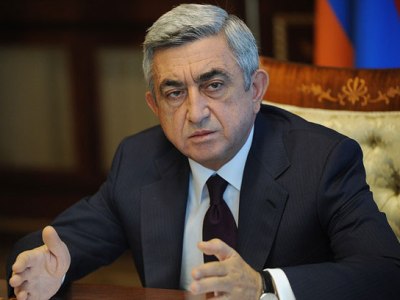
Armenian presidentPope’s acknowledgment of the Armenian Genocide and the resolution by Bundestag “will pave the way for new recognitions by other nations,” President of Armenia Serzh Sargsyan said in an interview with Reuters.

“Germany is a very important and significant actor on the international stage and this (decision) will serve as a good example for other nations to follow and to learn from it,” he said.

President Sargsyan also spoke about Turkey’s ambitions to join EU, saying that in his opinion Turkey cannot impose its views or exert pressure on EU.

“I don’t honestly see any prospects that would pave the way for Turkey joining the EU,” he added.

Filed Under: Genocide, News Tagged With: Armenian, Genocide, pave, Pope’s, position, Recognition

Germany’s Genocide resolution to boost worldwide recognition campaign – debate

June 4, 2016 By administrator

f57529d1309329_57529d1309360.thumbThe German Bundestag’s recently adopted resolution, acknowledging the Ottoman-era killings of Armenians as genocide, essentially broadens the worldwide campaign towards Genocide recognition, according to an expert.
Commenting on the resolution’s wording at a news conference today, Vladimir Hakobyan, who specializes in international law, highlighted particularly the legal aspect of the decision.
“The recognition of a crime and its appropriate labeling are extremely important,” he said, meantime ruling out possible legal consequences for Turkey.
Ruben Melkonyan, a deputy dean at the Yerevan State University’s Department of Oriental Studies, highlighted the complicity factor, noting that Germany,  as a major European state, is known also for its multi-vector cooperation with Turkey.
“Unfortunately, they run counter also to the Armenian interests. It is important to remember that Germany gave home to Talaat, Enver and Cemal Pashas; hence the euphoria we see in Armenia is absolutely pointless,” he added.
Questioning the possibility of legal consequences, Melkonyan also called attention to the decision’s timing.
“What we need to consider further is why they recognized [the Genocide] especially now. With the German-Turkish relations being considerably entangled today, Europe really needs certain restraint mechanisms,” he added.
Melkonyan noted that the 11 Turkish parliament members, who backed the resolution, now face persecution by the Turkish authorities.
But he agreed that the fact is of cornerstone importance in the context of the international recognition campaign.

“What’s more important for me is the step which is to come next. Hence it is now time to bring them to light as evidence of a true happening and a tool to further reinforce the factual bases of the Armenian Genocide,” Melkonyan added.

Filed Under: Articles, Genocide Tagged With: boost, Campaign, Debate, Germany’s Genocide, Recognition, resolution, worldwide

Stick to ‘genocide’ wording despite Turkey, Armenia urges Bundestag

June 1, 2016 By administrator

armenian orphans 250,000(DW) Armenia’s president has urged German politicians to brand deaths in 1915 Ottoman Turkey as “genocide” and not be intimidated by Ankara. Turkey’s president and prime minister have both spoken out against the wording.

Serzh Sargsyan, Armenia’s president, told Germany’s daily newspaper Bild on Wednesday that he was sure that German lawmakers would adopt the wording submitted in a motion from Germany’s opposition Greens.

The draft resolution on Thursday’s agenda of the Bundestag, Germany’s lower house of parliament, contains the word “genocide,” despite warnings by Turkey’s President Tayyip Erdogan on Tuesday, followed by new Prime Minister Binali Yildirim on Wednesday.

Yildirim said the deaths were the result of “ordinary” events during war conditions.

Turkey and Armenia have long been estranged over the World War One massacre. Armenians say up to 1.5 million of their kin were killed between 1915 and 1916. Ankara argues that roughly half a million died in civil strife with Ottoman rulers.

More than 20 nations, including France and Russia, have already recognized the mass deaths as genocide, albeit prompting diplomatic tension with Turkey.

Don’t allow ‘intimidation’

“I am sure: the politicians in the Bundestag see it the same way and will not allow themselves to be intimidated,” Sargsyan said, referring to the draft.

Changing the wording “just because that makes the head of state of another country angry” would not be fair, nor prudent long-term, said Sargsyan.

Erdogan, who telephoned German Chancellor Angela Merkel on Tuesday, told a news conference that the Greens’ resolution, if adopted by the Bundestag, would damage ties between Ankara and Berlin.

‘Absurd’ formulation

Reiterating that stance on Wednesday, Yildirim described as “absurd” Thursday’s pending Bundestag motion, which also has support from Merkel’s conservative bloc and the center-left Social Democrats (SPD).

“History should be left to historians,” Yildirim told journalists in Ankara.

The Greens’ draft resolution entitled “Remembrance and commemoration of the genocide of Armenians and other Christian minorities in 1915 and 1916” carries the contested word throughout the text.

The pending Thursday vote collides with the bid by Merkel and the EU as a whole to get Turkey to implement a complex deal to exchange migrants with Europe.

Germany has extensive ties with Turkey, including 3 million residents of Turkish origin, dating back to a “guest worker” scheme in the 1960s and 70s.

ipj/msh (AP, Reuters, AFP)

Filed Under: Genocide, News Tagged With: armenian genocide, Germany, Recognition, Turkey

UCSC Student Government Passes Armenian Genocide Recognition Resolution

May 26, 2016 By administrator

UC Santa Cruz Armenian Students’ Association

UC Santa Cruz Armenian Students’ Association

UCSC SANTA CRUZ—On Tuesday, May 24th, the student government at the University of California, Santa Cruz (UC Santa Cruz), the Student Union Assembly (SUA), unanimously voted to pass the “Armenian Genocide Commemoration Resolution.” The effort was led by the Armenian Students’ Association (ASA) at UC Santa Cruz. Approximately thirty students attended the SUA meeting at the school’s campus.

The resolution sheds light on the massacres of the 1915 Armenian Genocide and the Ottoman Empire’s attempt to systematically annihilate the Armenian people. Furthermore, it brings awareness to the Republic of Turkey’s continuous genocide denial campaign and efforts to hide its crimes against humanity.

Four Armenian students at UC Santa Cruz, Maral Tatoian, Nara Avakian, Daniel Sarkissian, and Haik Adamian, worked on finalizing the language of the resolution. At last Tuesday’s SUA meeting, Tatoian presented about the resolution, speaking on the history of the Armenian Genocide, the cycle of genocide that continues today, as well as what the passing of the resolution would mean for genocide education and the recognition of the Armenian Genocide on a national level.

“Being one of the co-founders that re-established ASA [at UC Santa Cruz], I have seen this organization grow over the past four years and partake in movements like this. It is very touching for me and truly shows the impact we are making on campus in order to make our voices heard. After all, they tried to bury us, but they didn’t know we were seeds and we will continue to grow!” said Tatoian, a fourth-year linguistics major and education minor undergraduate at UC Santa Cruz.

The resolution calls on SUA to not only commemorate the Armenian Genocide, but also “condemn those attempts made by governments as well as other entities, both public and private, to distort the historical reality and legal relevance of the Armenian Genocide to the descendants of its survivors and humanity as a whole.”

Through this resolution, the students hope to raise awareness about the Armenian Genocide and the ongoing denial by the Republic of Turkey and the United States. Moreover, they hope to work with SUA to educate students on campus about the cycle of genocide that continues with denial.

“For me, the passing of this resolution means a lot. Having a prominent student association recognize our cause as Armenians is a big step. But this is only the first step of many toward the recognition of the Armenian Genocide” said Nara Avakian, a first-year sociology major and global information and social enterprise studies minor undergraduate student.

Furthermore, through the passing of this resolution, SUA “supports the efforts of the Armenian-American community at UC Santa Cruz to establish April 24th as the official Day of Remembrance for the Armenian Genocide.”

“For me, this means the progress of the marginalized Armenian Diaspora. As I am a descendent of genocide survivors, it is an honor to have represented my nation in a monumental step on our campus. With Turkey launching a major anti-genocide [recognition] campaign, every step we take as Armenians towards recognition is valuable to our community” said Daniel Sarkissian, a second-year neuroscience undergraduate student.

The ASA at UC Santa Cruz will be meeting with the school’s Executive Vice Chancellor to discuss the next steps that need to be taken to ensure that April 24th will become Armenian Genocide Remembrance Day at UC Santa Cruz

“Passing the resolution marks the beginning of the battle for getting UC Regents, and other authorities to give up their strategic ties to bodies and companies who are active participants in Turkey’s genocide denial and normalization campaigns. At the very least, we can help to expose the role of the education industry in the widespread denial of the Armenian genocide” said Haik Adamian, a second-year anthropology major at UC Santa Cruz.

Armenian students at the University of California, Irvine (UCI), California State University, Northridge (CSUN) and California State University, Long Beach (CSULB) ensured the adoption of similar genocide recognition resolutions last year on their respective campuses.

Last June, the UC Santa Cruz ASA introduced and ensured the unanimous adoption of “A Resolution to Divest from the Republic of Turkey to End the Perpetuation of the Armenian Genocide”, which calls for UC Santa Cruz, the UC Santa Cruz Foundation, and the University of California to divest $72.6 million dollars worth of University of California bonds and investments in the Republic of Turkey for its crimes in, and continued denial of the Armenian Genocide. The resolution was a part of the greater #DivestTurkey campaign led by the Armenian Youth Federation – Western United States (AYF-WUS) and campus-based ASAs.

Filed Under: Articles, Genocide Tagged With: Armenian, Genocide, Government Passes, Recognition, resolution, student, UCSC

ADL’s Official Recognition of Armenian Genocide Ends Years-Long Controversy

May 16, 2016 By administrator

‘What happened in the Ottoman Empire to the Arme­ni­ans beginning in 1915 was geno­cide,’ wrote ADL CEO Jonathan Greenblatt (Photo: ADL)

‘What happened in the Ottoman Empire to the Arme­ni­ans beginning in 1915 was geno­cide,’ wrote ADL CEO Jonathan Greenblatt (Photo: ADL)

BY RUPEN JANBAZIAN
From The Armenian Weekly

ADL CEO Jonathan Greenblatt’s Op-Ed Welcomed by Armenian Community, Activists
NEW YORK—The Anti-Defamation League, the U.S. non-governmental organization self-described as “the nation’s premier civil rights/human relations agency,” has finally officially referred to what happened to the Armenian people of the Ottoman Empire in the beginning of the 20th century as “unequivocally genocide” and condemned its denial, putting an end to a nearly decade-long controversy that had marred the organization.

“What happened in the Ottoman Empire to the Arme­ni­ans begin­ning in 1915 was geno­cide. The geno­cide began with the rul­ing gov­ern­ment arrest­ing and exe­cut­ing sev­eral hun­dred Armen­ian intel­lec­tu­als. After that, Armen­ian fam­i­lies were removed from their homes and sent on death marches. The Armen­ian peo­ple were sub­jected to depor­ta­tion, expro­pri­a­tion, abduc­tion, tor­ture, mas­sacre and starvation,” wrote ADL CEO and National Director Jonathan Greenblatt, in an op-ed entitled, “ADL on the Armenian Genocide,” published on May 13 on the agency’s website. The statement stood in stark contrast to the ADL’s 2007 statement, which caused uproar not only among Armenian communities in the United States and around the world, but also within the organization itself.

Greenblatt also said that his organization would support U.S. recognition of the Armenian Genocide. “Silence is not an option,” he wrote, noting the significance of educating each generation about the “tragedies of the past.”

Dikran Kaligian, a member of the Armenian National Committee of America-Eastern Region board called Greenblatt’s op-ed and the ADL’s official affirmation of the genocide an important statement, which “clearly responds to the long-standing demand of the ANCA that the ADL unequivocally affirm the historical fact of the Armenian Genocide and support formal U.S. recognition.”

“Coming from the National Director of the ADL, who succeeded Abe Foxman, the statement helps erase the stain on the reputation of the ADL caused by Foxman’s denialist statements and lobbying against genocide resolutions,” added Kaligian, who also urged the ADL to join the growing coalition of organizations advocating for congressional resolutions for justice for the Armenian Genocide and the return of confiscated Armenian properties.

In a statement penned by then-ADL national director Abraham H. Foxman in August 2007, the organization said that it believed that “the consequences of those actions [of the Ottoman Empire] were indeed tantamount to genocide,” a stance that many felt fell short of full recognition. Moreover, it was revealed that the ADL—which, in 1913, was established to “stop the defamation of the Jewish people and to secure justice and fair treatment to all”—notoriously lobbied against passage of a Congressional resolution affirming the Armenian Genocide.

At the time, it was clear that the ADL shared the Turkish government’s opposition to U.S. Congress discussing and voting on a non-binding resolution affirming the Armenian Genocide.

Andrew H. Tarsy, the regional director of the Anti-Defamation League New England office at the time, announced his resignation in December 2007, after months of dispute with the national organization’s stance on the Armenian Genocide.

In light of Greenblatt’s statement, Tarsy told the Boston Globe that recognition was not enough. “I think they ought to lead the conversation about reparations for these families,” he was quoted as saying. “The recovery of assets, land, money, items, family heirlooms. Everything that Holocaust reparations… has represented should be on the table.”

At the time of the ADL’s 2007 statement, the ANCA asked the organization to remain true to its mission and fully acknowledge the genocide, refrain from advocating for Turkish calls for a “historical commission,” and express support for U.S. recognition of the crime. The ANCA also demanded an apology from Foxman for the damage and pain the ADL’s actions and statements caused.

Since the release of the 2007 statement and similar statements in the coming years, human rights activists have continuously pressed the ADL for a full acknowledgement of the genocide. Speaking to the Armenian Weekly, No Place for Denial activist and co-founder of the Coalition to Recognize the Armenian Genocide Laura Boghosian said that when Boston-area Armenians united in the No Place for Denial campaign to fight the ADL’s genocide denial in 2007, they were supported by members of the Jewish community who were disturbed by the ADL’s actions.

“Notably, the rabbis and members of Lexington’s Temple Isaiah and Boston’s Temple Israel joined with us to create the Coalition to Recognize the Armenian Genocide, whose goals were to reverse ADL policy, educate the Jewish community about the Armenian Genocide, and pursue U.S. affirmation of the genocide,” she said. “Nine years later, we are still working together and proving that grassroots activism does make a difference.”

The Coalition to Recognize the Armenian Genocide was established in 2008 to foster communication between the Armenian and Jewish communities and to raise awareness of the Armenian Genocide within the Jewish community. The organization advocates for official recognition of the genocide by the United States government. Coalition members include representatives from the ANCA and the Armenian Assembly of America (AAA).

During the initial controversy in 2007, the coalition helped facilitate contacts between Armenian activists and ADL members and created an online petition calling on the U.S. Congress to recognize the Armenian Genocide.

Nearly seven years after his initial statement, Foxman publicly recognized that the Ottoman atrocities of the Armenian people constituted genocide, during his remarks delivered at Suffolk University Law School’s commencement in 2014, though a statement was never published by the ADL confirming that this was the organization’s stance.

Aram Hamparian, the executive director of the ANCA told the Boston Globe that Greenblatt’s statement was the first time the ADL was very “explicit” in its breaking with Turkish government’s denial of the genocide. Commenting on what he called an “historic statement”, Middlesex County Sheriff Peter Koutoujian said that he was proud to be a part of a “lengthy, open dialogue” with the ADL, along with the ANCA and the AAA over the years. In his statement, Koutoujian also thanked all parties who took part in the discussions with the ADL, including ADL New England regional director Robert Trestan, who he called “a true friend and partner to all Armenians.”

Filed Under: Genocide, News Tagged With: ADL’s Official, armenian genocide, Controversy, Recognition, Years-Long

Nagorno-Karabakh recognition bill not on Armenian parliament’s agenda

May 16, 2016 By administrator

f5739a8e218435_5739a8e21846dThe bill on recognition of Nagorno-Karabakh co-authored by Zaruhi Postanjyan and Hrant Bagratyan has not been approved by the Standing Committee on Foreign Relations, Parliament of Armenia.

A vote was announced after the debates, but the committee members did not take part. Hamlet Harutyunyan (Republican Party of Armenia) and Tevan Poghosyan voted ‘for’ and ‘against’ respectively.
Committee Chairman Artak Zarkaryan saud that the bill would not be out on the agenda.

“It is not the right time yet, but the moment will come soon. I agreed with Ms Postanjyan’s motion on recognition of Nagorno-Karabakh. But my no sharing her opinion is that I am deeply convinced that we need patience. We have no grounds to undertake unfounded initiatives. The bill must be universally approved, without any criticism or voting,” he said.

Filed Under: Articles Tagged With: Agenda, Armenian, Nagorno-Karabakh, parliament's, Recognition

  • 1
  • 2
  • 3
  • Next Page »

Support Gagrule.net

Subscribe Free News & Update

Search

GagruleLive with Harut Sassounian

Can activist run a Government?

Wally Sarkeesian Interview Onnik Dinkjian and son

https://youtu.be/BiI8_TJzHEM

Khachic Moradian

https://youtu.be/-NkIYpCAIII
https://youtu.be/9_Xi7FA3tGQ
https://youtu.be/Arg8gAhcIb0
https://youtu.be/zzh-WpjGltY


gagrulenet Twitter-Timeline

Tweets by @gagrulenet

Archives

Books

Recent Posts

  • Pashinyan Government Pays U.S. Public Relations Firm To Attack the Armenian Apostolic Church
  • Breaking News: Armenian Former Defense Minister Arshak Karapetyan Pashinyan is agent
  • November 9: The Black Day of Armenia — How Artsakh Was Signed Away
  • @MorenoOcampo1, former Chief Prosecutor of the International Criminal Court, issued a Call to Action for Armenians worldwide.
  • Medieval Software. Modern Hardware. Our Politics Is Stuck in the Past.

Recent Comments

  • Baron Kisheranotz on Pashinyan’s Betrayal Dressed as Peace
  • Baron Kisheranotz on Trusting Turks or Azerbaijanis is itself a betrayal of the Armenian nation.
  • Stepan on A Nation in Peril: Anything Armenian pashinyan Dismantling
  • Stepan on Draft Letter to Armenian Legal Scholars / Armenian Bar Association
  • administrator on Turkish Agent Pashinyan will not attend the meeting of the CIS Council of Heads of State

Copyright © 2025 · News Pro Theme on Genesis Framework · WordPress · Log in