Gagrule.net

Gagrule.net News, Views, Interviews worldwide

  • Home
  • About
  • Contact
  • GagruleLive
  • Armenia profile

Stalemate broken in Nagorno-Karabakh peace process – Vladimir Karapetyan

May 26, 2016 By administrator

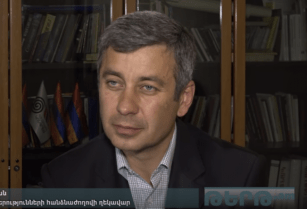
f574735e5a60ff_574735e5a6136.thumbArmenian must insist that an Armenian-Azerbaijani presidential meeting on Nagorno-Karabakh will not take place in June unless the Vienna agreements are properly observed, Vladimir Karapetyan, a Board member, Armenian National Congress (ANC) party, told Tert.am.

The OSCE co-chairs’ statement on an OSCE investigative mechanism and on the expansion of the existing Office of the Personal Representative of the OSCE Chairperson in Office must be put into practice.

“At least we must consider the fact that in the negotiations Armenia is represented by two persons – President Serzh Sargsyan and Minister of Foreign Affairs Edward Nalbandian. I am sure that no information on new details of the document to be negotiated at the top-level meeting is available at a lower level,” Mr Karapetyan said.

Hopes should be placed on the Armenian leaders’ confidence and their not making steps that would pose a threat to Armenia’s interests.

“We have given our enemy some territories of Nagorno-Karabakh. I would like not only Yerevan, but also Stepanakert to understand well that they should stop calling the territories in question ‘of no strategic or tactical importance’ or ‘empty.’ It is not to our credit to justify our losses by making such assessments,” Mr Karapetyan said.

The more active negotiations are the higher are the chances to settle the conflict.

“The negotiations were stalemated. But we can now say this stalemate has been broken because an agreement on a meeting in June has been reached,” Mr Karapetyan said.

Filed Under: Articles Tagged With: broken, Nagorno-Karabakh, Peace, Process, Stalemate

Nagorno-Karabakh recognition bill not on Armenian parliament’s agenda

May 16, 2016 By administrator

f5739a8e218435_5739a8e21846dThe bill on recognition of Nagorno-Karabakh co-authored by Zaruhi Postanjyan and Hrant Bagratyan has not been approved by the Standing Committee on Foreign Relations, Parliament of Armenia.

A vote was announced after the debates, but the committee members did not take part. Hamlet Harutyunyan (Republican Party of Armenia) and Tevan Poghosyan voted ‘for’ and ‘against’ respectively.
Committee Chairman Artak Zarkaryan saud that the bill would not be out on the agenda.

“It is not the right time yet, but the moment will come soon. I agreed with Ms Postanjyan’s motion on recognition of Nagorno-Karabakh. But my no sharing her opinion is that I am deeply convinced that we need patience. We have no grounds to undertake unfounded initiatives. The bill must be universally approved, without any criticism or voting,” he said.

Filed Under: Articles Tagged With: Agenda, Armenian, Nagorno-Karabakh, parliament's, Recognition

Los Angeles Geoffrey Robertson Confirms the Right to Self-determination of the Nagorno Karabakh

May 15, 2016 By administrator

arton126420-480x321May 13, 2016,

USA Armenian Life Magazine

Los Angeles – Last Wednesday, 20 April, the Assembly welcomed the successful presentation of the book An Inconvenient Genocide: Who Remembers the Armenians Now? [An Embarrassing Genocide: Who to Present Remembers the Armenians?] Written by the eminent advocate of human rights and author Geoffrey Robertson QC; This presentation was held in Universal City, California. The event attracted many people, and the hall was packed. “The Armenian Assembly of America was proud to present a giant field of international human rights, to talk about the results of his historical research on the facts that led to this unquestionable genocide” and said Anthony Barsamian, “the Armenian Assembly wishes to maintain momentum while for its part, the Office of the Assembly of the Western Region is continuing its efforts to the same end. Mihran Toumajian and Aline Maksoudian spared no effort to make this event a success. “ During the discussions, Barsamian described the work of the Assembly in Washington DC, the right to self-determination of the people of the Republic of Nagorno Karabakh, and spoke of the irresponsible initiatives of Turkey in the region, addressing directly to the Turkish President Erdogan Erdogan, stop killing your own people. Stop killing the Kurdish people, stop killing Christians in the region, and stop promoting violence against the Armenians of Karabakh. “ Co-Chair introduced Robertson, who spoke of the latest edition of his book An Inconvenient Genocide.? Who Now Remembers the Armenians was first published in 2014 and circulated for a second printing in 2015, to reflect the successes of the Armenian community and its advances under the commemorations of the centennial of the Armenian Genocide. He paid tribute to the tireless efforts to include the Armenian Genocide in the curriculum. “If we do not understand the Armenian Genocide, we will not understand the Holocaust and the genocides that followed,” said Robertson.

Robertson also spoke about the rights of citizens of the Republic of Nagorno Karabakh and thinks that “independence is possible.”

“The Armenians worldwide are grateful to Mr. Robertson for his straight talking, face the systematic denial and distortion of historical facts by Turkey and Azerbaijan. Mr. Robertson holds the language of truth not only about the reality of the Armenian Genocide and the legitimacy of the demands of Armenians repairs but also the right to self-determination and inviolability of fundamental rights of the proud and heroic Armenians Artsakh “, said the Director of the Western Region of Assembly, Mihran Toumajian.

“It is an honor to welcome Mr. Robertson and listen present his book, but also to hear their thoughts and feelings about the current conflict in Nagorno-Karabakh, which worries so our community,” added the Director of the Western Region and Relations Coordinator of Aline Maksoudian Community.

Among the distinguished guests in attendance were the well-known designer Michael Aram, Honourable Deputy Consul of the Republic of Armenia in Los Angeles Valery Mkrtumyan. The director of the Los Angeles office of Facing History and Ourselves (Face to face with the story) Liz Vogel and Charlene Achki-Repko Advisory Committee, Pamela Marcel, representative of Congressman Adam Schiff (D-CA).

Translation Gilbrt Béguian for Armenews

Filed Under: News Tagged With: Confirms, geoffrey robertson, Nagorno-Karabakh, right, self-determination

It is time for international recognition of Nagorno-Karabakh – Karen Mirzoyan

May 13, 2016 By administrator

f57356c8e2210b_57356c8e22141.thumbArmenia and Nagorno-Karabakh can cope with all the difficulties by combined effort, Foreign Minister of the Nagorno-Karabakh Republic (NKR) Karen Mirzoyan told Tert.am.

As to a possibility of Armenia recognizing Nagorno-Karabakh’s independence, he said:

“I would not say Armenia could be the only state to recognize Artsakh [Nagorno-Karabakh]. It is now time for international recognition of Artsakh. Not only Armenia, but the international community must recognize Artsakh. It will be the best security guarantee for Artsakh.”

As to Azerbaijan’s threats to unleash war if Armenia recognizes Nagorno-Karabakh, Mr Mirzoyan said:

“Azerbaijan’s leadership is issuing numerous threats in any case. We must curb its ambitions by all possible means.”

Filed Under: Articles Tagged With: International, Nagorno-Karabakh, Recognition

Nagorno-Karabakh prepared to stop any attempts of Azerbaijan to unleash another aggression – statement

May 12, 2016 By administrator

f5734c2b816936_5734c2b816970.thumb22 years ago, on May 12, 1994, a termless agreement on ceasefire and cessation of hostilities, signed by the Nagorno-Karabakh Republic, the Azerbaijani Republic and the Republic of Armenia through the mediation of the Russian Federation, entered into force.

This agreement, as well as the February 6, 1995 trilateral agreement on strengthening the ceasefire, signed under the auspices of the OSCE, still remain the only real achievement, which laid the foundation for peace talks and created conditions for the activities of the mediators on finding a just and final solution to the Azerbaijani-Karabakh conflict.

Before April 2, 2016, the ceasefire was generally maintained, despite the incessant attempts of Azerbaijan to destabilize the situation on the Line of Contact between the armed forces of the NKR and Azerbaijan.

The NKR authorities have repeatedly drawn the attention of the international community to the purposeful actions of the Azerbaijani side, as a result of which ceasefire violations were becoming more and more threatening in their nature and scale.

Official Stepanakert has been urging the international community to condemn the deliberate policy of Azerbaijan of escalating tensions and derailing the negotiation process conducted under the auspices of the OSCE Minsk Group co-chairmanship.

We have repeatedly pointed out that without an adequate and targeted international response, the consistent and purposeful actions of Azerbaijan on fomenting a war in the region will become irreversible.

In the early hours of April 2, Azerbaijan, in gross violation of the agreements of May 12, 1994 and February 6, 1995, launched a large-scale offensive along the entire Line of Contact between the armed forces of the Nagorno Karabakh Republic and Azerbaijan, using heavy weaponry, artillery and combat aircraft.

Only thanks to the decisive actions of the NKR Defense Army, which gave a fitting rebuff to the insolent rival, on April 5, Azerbaijan was forced to ask, as in 1994, through the mediation of the Russian Federation for the cessation of the hostilities.

It has been generally maintained, despite the recurrent violations by the Azerbaijani side. Even after the failure of the military venture of April 2-5, Azerbaijan has not abandoned the idea to solve the conflict by force, as evidenced by the statements of the Azerbaijani officials, including at the highest level.

Moreover, Azerbaijan tries to unilaterally denounce the ceasefire agreement of May 12, 1994, which is an obvious continuation of the policy on disrupting the process of peaceful settlement of the conflict and instigating a war in the region.

The Nagorno Karabakh Republic, being committed to an exclusively peaceful settlement of the conflict and making every effort to fully restore the ceasefire, is at the same time prepared to stop, in the strongest terms, any attempts of Azerbaijan to unleash another aggression.

Ensuring full compliance with May 12, 1994 agreement and the practical implementation of the February 6, 1995 agreement, which contains a set of measures on early warning and crisis stabilization is the only way of creating the necessary conditions for the resumption of the peaceful settlement process of the Azerbaijani-Karabakh conflict.

Filed Under: Articles Tagged With: attempts, Azerbaijan, Nagorno-Karabakh, prepared to stop

Nagorno-Karabakh: Who won the media war?

May 1, 2016 By administrator

arton125704-480x321Armenian and Azerbaijani forces have fought early April and not just on the field but also to control the narrative of the international media about their long struggle 28 years old for the breakaway region of Nagorno-Karabakh.

The Karabakh conflict has simmered and bubbled during the past 22 years, but in general it has escaped the attention of traditional international journalists. All that changed in the 2 to 5 April with the worst outbreak of violence since the cease-fire in 1994.

However the ability of journalists to cover the conflict varies considerably.

Many foreign journalists were able to enter Karabakh by Armenia unhindered and quickly obtained accreditation upon arrival in the main city, Stepanakert. Local officials de facto held daily press conferences, including question and answer sessions in a central hotel. Public television station offered free satellite links and journalists from Armenia were able to travel independently in civilian vehicles outside the frontline areas.

Every morning, the de facto defense officials and local Karabakh offered to journalists escorted trips in frontline villages such as Talish or Martuni. It was “like a menu in a restaurant, but with only one dish,” joked Gegham Vardanian, editor of a media monitoring site for Initiatives Media Centre based in Yerevan.

On the other side of the divide, journalists found the most difficult conditions. Azerbaijan holds one of the media access control strict policy, particularly in areas close to the front line. The country also has a history of refusing visas to journalists who previously traveled without the consent of Baku in Karabakh and the seven surrounding territories held by Armenian forces and Karabagh.

In a statement on April 12, the Ministry of Foreign Affairs of Azerbaijan has interpreted this policy of aid to foreign media as an Armenian attempt to “deceive the international community and divert attention from the political and legal responsibility that carry the strength of the Armenian army for the subversive and provocative actions. “

Baku has considerable experience of international media blockbusters accommodation, including the Eurovision Song Contest in 2012 and the European Games in 2015. However, a representative of an international media who managed to cover the conflict in Part Azerbaijan said that press management skills of the government during the surge in Karabakh have been lacking. Speaking to EurasiaNet.org on condition of anonymity, the reporter describes the fast and grueling press tour for journalists from Baku to the front line of “messy”.

“International journalists there [in Karabakh] found themselves filmed much as doing shootings,” said the journalist. “The teams of the Azerbaijani television did a story about us.”

Daylight was fading when the cameraman kept filming the first position, he said. “And when we were taken two hours or more in the next place, it was pitch dark. Not good for the television cameras. “

Some journalists who entered Azerbaijan were arrested or deported. Security officials in the Goranboy region of Azerbaijan have detained and questioned a team of Georgian Rustavi2 television for several hours because they did not have accreditation. After the intervention of Georgian and Azerbaijani diplomats, the crew was able to continue to make his report.

A group of Russian LIFEnews chain, which would allegedly close ties to the Russian security services, was not so lucky. The crew was expelled for lack of accreditation and have also spread the assertion made in the Armenian media that Azerbaijan was using terrorists of the Islamic State against Armenian forces and Karabagh.

The spokesman of the Azerbaijani Foreign Ministry Hikmet Hajiyev did not respond to a request for comment.

Karabakh officials appear to have received outside help in the management of dozens of foreign and local journalists. Aside from the 1988-1994 war, the territory has a limited experience with the international media and the local media scene (a television station, a radio station, a newspaper, and a handful of Web sites) that are far be robust.

Barriers aware Samvel Farmanian, former spokesman of the Armenian President Serzh Sargsyan, a native of Karabakh and who speaks English, told EurasiaNet.org that he volunteered to help. Although Armenia and Karabakh have close ties, Farmanian, is now a member of the Republican Party for President and said that nobody ordered him to go.

“It was a kind of self-nomination,” he emailed.

Armenian celebrities have also turned to rally support. The actress Nazeni Hovhannisian (the Azerbaijani media have incorrectly identified as “female sniper”), singer Shushan Petrosian and satirists Narek Margaryan and Sergey Sargsyan were among those who made the six-hour trip from Yerevan. Azerbaijan has made similar efforts or not could not be determined immediately. A march was held in Baku on April 6.

While the separatist Karabakh and Armenia may have been better placed to supply the cycle of international media, Azerbaijan was not without resources.

Michael Cecire, a regional specialist at the Foreign Policy Research Institute in Philadelphia, said that Azerbaijan has its own sophisticated strategic communications operations in Washington, DC, and Brussels. Over time, “the Azerbaijani perspective of events tended to have the advantage in the pages of many newspapers enjoying a greater international visibility,” he wrote in an email interview.

Three days after the cease-fire was announced on April 5, Azerbaijan agreed to pay his top advisers in US public relations, Podesta Group based in Washington DC, an additional amount of $ 70,000 for three months’ public affairs services, “according to documents filed with the US Department of Justice.

Since January, the Podesta Group benefited from a lobbying contract for six months worth $ 300,000 plus costs with Azerbaijan.

Armenia is not registered with US lobbyists. Much of the presentation for his views on the Karabakh conflict comes through the influential diaspora organizations.

It remains to be seen whether the latest episode of fighting has affected international attention to the unresolved Karabakh conflict. Until this month, Google searches in English for “Karabakh” were rare; almost all research came from Armenia and Azerbaijan, according to Google Trends.

Similarly, as the fighting in April triggered a “social media effusion more active” in the history of the past 28 years of the Karabakh conflict, the impact was internal rather than international, noted Katy Pearce, Assistant Professor communication at the University of Washington.

“Although the message of the Kardashian family [TV-celebrity]” Pray for Armenia “on social media could raise some awareness, I doubt this would have a lasting effect,” a-t- she says.

Editor’s Note:

Robin Forestier-Walker is a freelance journalist based in Tbilisi.

Eurasianet.org

Sunday 1 May 2016
Stéphane © armenews.com

Filed Under: Articles Tagged With: media war?, Nagorno-Karabakh, who, won

Nagorno-Karabakh reports more fatalities as ceasefire violations continue

April 30, 2016 By administrator

f5724508c0a697_5724508c0a6ce.thumbTwo servicemen of the Nagorno-Karabakh Defense Army were killed in the continuing ceasefire violations along the Line of Contact on the night of Saturday.
In an official statement released earlier today, Nagorno-Karabakh’s Ministry of Defense says that the Azerbaijani armed troops shot their defense positions from firearms, mine- and grenade-launchers throughout the night.
The servicemen fatally wounded in the attacks were identified as Garik M Movsisyan, 19, and Vazgen H Harutyunyan, 48.
The Ministry shares the grief of the loss, extending its solidarity to the family and fellow servicemen of the deceased.

Filed Under: News Tagged With: ceasefire, continue, fatalities, Nagorno-Karabakh, reports, violations

Armenia close to recognizing Nagorno-Karabakh – analyst

April 28, 2016 By administrator

f572209f0da7a5_572209f0da7dc.thumbThe landmark moment for Armenia to recognize Nagorno-Karabakh’s independence is drawing near, says Stepan Grigoryan, a Yerevan-based political analyst.

According to him the process requires an appropriate consideration and timing. “Recognition of Nagorno-Karabakh’s independence implies automatically abandoning [the OSCE Minsk Group] format. Azerbaijan has embarked on diplomatic processes to unilaterally withdraw from earlier arrangements. Hence I don’t think we should be the side responsible for dismantling that format. But the moment of recognition is definitely drawing near,” he said.

Asked to comment on the necessary political efforts for Armenia, Grigoryan said he sees quite a lot of steps ahead.

“I have given recommendations many times before, but I see very little feedback. On April 2, for example, I said that Armenia should apply to the UN Security Council, calling for an ad hoc session and coordinating the plan with the Minsk Group. ”

As to why the Minsk Group is silent while it sees Azerbaijan attacking civilians, Mr Grigoryan said that it is now difficult to identify the conflicting party responsible for the escalation, whereas it was much easier to do on April 2, but was not done.

“When Azerbaijan launched hostilities, regrettably no one condemned Azerbaijan. And now that Azerbaijan resorts to provocations, our forces retaliate – and they are right – and it is difficult to say for certain. When the very first ceasefire violations take place, it is quite easy to identify the part responsible for that. Regrettably, the international community had not the strength to tell the truth,” Mr Grigoryan said.

It is the lack of necessary statements that are the cause of the current confrontation.


Filed Under: News Tagged With: analyst, Armenia, close, Nagorno-Karabakh, recognizing

Azerbaijan Shelled Nagorno-Karabakh villages in photos

April 26, 2016 By administrator

f571f5ead4ce89_571f5ead4cec0.thumbNagorno-Karabakh’s Ministry of Defense has published photos featuring the devastated  villages of Martakert and Mataghis following the recent Azerbaijani armed attacks.
The pictures, some of which taken in military posts, are treated as a factual proof demonstrating the Azerbaijani armed forces’ violence against civilian settlements and military objectives.


Martakert_7

Filed Under: Articles Tagged With: Azerbaijan, Nagorno-Karabakh, photos, shelled, villages

Nagorno-Karabakh: The April Fool’s War “Another “triumph” of US diplomacy”

April 5, 2016 By administrator

arton124236-480x321by Justin Raimondo, April 04, 2016

(antiwar.com) Last Thursday US Secretary of State John Kerry met with Azerbaijan’s dictator Ilham Aliyev in Washington and called for “an ultimate resolution” of the decades-old conflict in the disputed province of Nagorno-Karabakh. On Friday, as the hereditary Azeri despot was on the plane back to Baku, Azeri troops were already launching an offensive against the breakaway Republic of Nagorno-Karabakh. One of the first casualties was a 12-year-old Armenian boy.

Naturally, the Azeris claim they were attacked first, but this seems unlikely. The front lines in the simmering conflict have been pretty stable since the conclusion of the post-Soviet war between Armenia and Azerbbaijan, which ended in victory for the former and de facto independence for the primarily Armenian region of Nagorno-Karabakh. Already in possession of the disputed territory, the Nagorno-Karabakhians had nothing to gain by restarting the fighting —  and it seems more than coincidental that fresh hostilities commenced immediately upon Kerry’s rather absurd pronouncement.

Absurd because the “crisis’ has already been resolved – today Nagorno-Karabakh is an independent state, in spite of the refusal of the United States to recognize it, and it has enjoyed this status since 1994, when the last Azeri troops were driven from the territory. That the Secretary of State would choose to intervene at this point seems, at best, highly suspicious. Did Kerry give the green light to the Azeris?

I wouldn’t be the least bit surprised. After all, the US has consistently stood with the Azeris no matter which party is in the Oval Office. Washington’s reasons are two-fold: geopolitics and money, not necessarily in that order.

The geopolitical factor involves the US policy of encircling Russia. Ever since the fall of the Soviet Union, Washington has sought to extend its sphere of influence deep into the territory of the former USSR by courting the Oriential despots, like the Aliyev clan, who rule over these former communist “republics.” Which brings us to the second, albeit no less influential factor: money. The central Asian states like Azerbaijan, Kazakhstan, etc. are a rich source of Caspian Sea oil, where huge deposits have been discovered. The problem is how to transport the oil to European and US markets – without pumping it through Russian pipelines.

The solution: the BTC (Baku to Ceyhan, Turkey) pipeline. In 1994, Ilham Alivey’s father, Heydar, announced what he called “the Contract of the Century” in a speech to the Harriman Institute in New York City. His government had just signed an agreement with a consortium of oil companies and investment bankers, giving the biggest oil companies in the world – Amoco, Pennzoil, British Petroleum, Unocal, McDermott, Statoil, Lukoil, and the state-owned oil companies of Turkey and the Saudi Kingdom – exclusive rights to Azerbaijan’s oil and gas reserves. A few years later, Aliyev senior was at the White House with Vice President Al Gore presiding over a ceremony announcing a contract with Chevron, Exxon/Mobil and Azerbaijan’s State Oil Company (SOCAR).

The Clinton administration took up this project with alacrity: in the summer of 1998, Bill Clinton created the Office of the Special Advisor to the President and the Secretary of State for Caspian Basin Energy Diplomacy – a portentous title for what was one of the most brazenly mercantilist US government projects since the Export-Import Bank. Morningstar started off his career as a corporate lawyer and rose to become President and CEO of Costar Corporation, a maker of plastics and other oil-based byproducts. Clinton appointed him to head up the Overseas Private Investment Corporation, another crony capitalist slush fund, and he went on to become Undersecretary of State on Assistance to the New Independent States of the Former Soviet Union and US Ambassador to the European Union. His background as a crony-capitalist and committed internationalist certainly suited him for the Caspian Basin gig, during which time billions of taxpayer dollars were doled out to Big Oil and attendant contractors to fund the BTC pipeline. He was appointed US Ambassador to Azerbaijan by President Barack Obama, in 2012, stepping down in 2015 for a job at Madeleine Albright’s Stonebridge-Albright Group.

Morningstar’s career outlines the corporate and political interests that have been manipulating governments and juggling the fate of nations along the so-called Great Silk Road – the southern Caucasus region that promises great riches to whoever can control it. Long a crossroads of conquering armies, it is today the scene of simmering ethnic and religious conflicts that threaten the best laid plans of the most powerful men on earth – the national aspirations of the people of Nagorno-Karabakh being only one of them.

The original – and cheapest – route for the BTC pipeline went through Armenia, but this was vetoed by Aliyev, and so a more circuitous (and expensive) route was charted: Aliyev gloated that Yerevan would be “isolated.” Yet the pipeline snakes just a few miles from Nagorno-Karabakh, and it isn’t hard to see that this fresh outbreak of violence might endanger operations – and the US government’s hefty investment. It’s not hard to imagine the renewed conflict triggering that old standby of the interventionists: “American interests” (i.e. the financial interests of major corporate donors to the war chests of political candidates) are “threatened”!

Washington has consistently sided with the Azeris in their claim to Nagorno-Karabakh. As I wrote in 1999:

“The US State Department’s tilt toward Azerbaijan on the Nagorno-Karabakh issue was expressed, albeit rather obliquely, in a recent statement: “Armenia’s observance of international law and obligations and OSCE commitments in this respect has been marred by the ongoing conflict over Nagorno-Karabakh. Karabakh Armenians, supported by the Republic of Armenia, now hold about one fifth of Azerbaijan and have refused to withdraw from occupied territories until an agreement on the status of Nagorno-Karabakh is reached.” But Azerbaijan is a Soviet fiction, created by Stalin who fixed its border to keep the Armenians down and the Azeris fully occupied. But the idea that the borders of the phony Soviet “republics” are permanent, and represent anything even approximating justice, is absurd. Yet this is the position the US government has taken in the past, and continues to take.”

The US position has been consistent to this day, with the State Department demanding the withdrawal of Armenian forces from Nagorno-Karabakh and the deployment of Western-backed “peacekeepers” to make sure the Armenians don’t get out of hand with impudent demands for self-determination. The referendum held in 1991 – in which the locals voted for secession from Azerbaijan —  is contemptuously disdained by US officials, just as the Crimean referendum in which voters overwhelmingly chose secession from Ukraine is denounced as “illegitimate.”

Indeed, the Crimean analogy fits Nagorno-Karabakh to a tee. As in Ukraine, which Soviet despot Nikita Khrushchev rewarded with Crimea in 1954, so in the Caucasus, where Joseph Stalin – before his rise to absolute power – handed Nagorno-Karabakh to Azerbajian, with Lenin’s approval. As the Soviets marched into Central Asia, subjugating Armenia and Azerbaijan, the Communists decided that it would be better to placate Kemal Ataturk’s regime in Turkey than to allow the Nagorno-Karabakhians the right to set up their own autonomous “republic.” The Stalinist policy of divide and conquer – splitting up the Armenian-populated areas so as to tamp down “anti-Soviet” nationalist sentiment – persisted until Communist rule imploded.

In Ukraine, the US government insists on the legitimacy of Khrushchev’s decision to sever Crimea from Russia and make a gift of it to Ukraine: in Nagorno-Karabakh, they uphold the legacy of Stalin and Lenin, who sought to keep the Armenians in line by making them live under Azeri rule.

Like Lenin and the Bolsheviks, part of Washington’s reason for this latter stance is to placate Turkey, which unequivocally takes the side of their “Turkic” allies, the Azeris. The current conflict is just another dimension of the unfolding Russo-Turkish conflict, which started in Syria and is now being extended into Nagorno-Karabakh (Armenia, for its part, is aligned with Russia). The ultra- nationalistic Turks, whose ideology of “Pan-Turkism” foresees Turkey as a rising superpower expanding its influence all the way across Central Asia until it reaches the border of China (!), are involved in this up to their eyeballs. And remember: Turkey is a NATO member. In any conflict between Turkey and Russia, the US is obligated by treaty to come to their defense.

Now there’s yet another reason why Donald Trump is right about NATO being “obsolete.”

What did Kerry say to Aliyev Junior that precipitated this crisis? We’ll never know for sure, but of one thing we can be certain: Washington’s meddling in this mess can only result in disaster. Will the April Fool’s War, otherwise known as Kerry’s Provocation, go down in history as yet another blundering intervention by the Americans in a troubled region where they have no business interfering?

I’d bet the ranch on it.

NOTES IN THE MARGIN

You can check out my Twitter feed by going here. But please note that my tweets are sometimes deliberately provocative, often made in jest, and largely consist of me thinking out loud.

I’ve written a couple of books, which you might want to peruse. Here is the link for buying the second edition of my 1993 book, Reclaiming the American Right: The Lost Legacy of the Conservative Movement, with an Introduction by Prof. George W. Carey, a Foreword by Patrick J. Buchanan, and critical essays by Scott Richert and David Gordon (ISI Books, 2008).

Filed Under: Articles Tagged With: Nagorno-Karabakh, The April Fool’s War, Zerbaijan

  • « Previous Page
  • 1
  • 2
  • 3
  • 4
  • …
  • 6
  • Next Page »

Support Gagrule.net

Subscribe Free News & Update

Search

GagruleLive with Harut Sassounian

Can activist run a Government?

Wally Sarkeesian Interview Onnik Dinkjian and son

https://youtu.be/BiI8_TJzHEM

Khachic Moradian

https://youtu.be/-NkIYpCAIII
https://youtu.be/9_Xi7FA3tGQ
https://youtu.be/Arg8gAhcIb0
https://youtu.be/zzh-WpjGltY


gagrulenet Twitter-Timeline

Tweets by @gagrulenet

Archives

Books

Recent Posts

  • Pashinyan Government Pays U.S. Public Relations Firm To Attack the Armenian Apostolic Church
  • Breaking News: Armenian Former Defense Minister Arshak Karapetyan Pashinyan is agent
  • November 9: The Black Day of Armenia — How Artsakh Was Signed Away
  • @MorenoOcampo1, former Chief Prosecutor of the International Criminal Court, issued a Call to Action for Armenians worldwide.
  • Medieval Software. Modern Hardware. Our Politics Is Stuck in the Past.

Recent Comments

  • Baron Kisheranotz on Pashinyan’s Betrayal Dressed as Peace
  • Baron Kisheranotz on Trusting Turks or Azerbaijanis is itself a betrayal of the Armenian nation.
  • Stepan on A Nation in Peril: Anything Armenian pashinyan Dismantling
  • Stepan on Draft Letter to Armenian Legal Scholars / Armenian Bar Association
  • administrator on Turkish Agent Pashinyan will not attend the meeting of the CIS Council of Heads of State

Copyright © 2025 · News Pro Theme on Genesis Framework · WordPress · Log in