Gagrule.net

Gagrule.net News, Views, Interviews worldwide

  • Home
  • About
  • Contact
  • GagruleLive
  • Armenia profile

How Turkey’s assimilation policies (Turkishnes) made Kurds fight Kurds in Syria

June 26, 2015 By administrator

By Mahmut Bozarslan, Contributor,
Kurds fight Kurds in Syria

Kurds fight Kurds in Syria

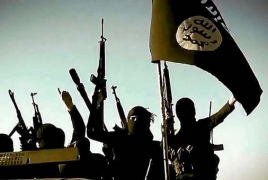
DIYARBAKIR, Turkey — First Kobani, then Tell Abyad. The two Syrian towns along the Turkish border came under the international spotlight amid monthslong clashes between Kurdish forces and the Islamic State (IS). The People’s Protection Units (YPG) triumphed in both battles, breaking the IS siege of Kobani in January and seizing Tell Abyad earlier this month. Though the two adversaries are poles apart ideologically, they have something in common — their Kurdish fighters. A considerable number of Kurds, most of them from Turkey, have joined the ranks of IS in Syria and Iraq.

The impoverished province of Bingol, home to some 267,000 people, has emerged as a major IS recruitment base in Turkey’s predominantly Kurdish southeast. Official figures are not available, but locals estimate at least 600 young men have joined the jihadist group, lured through religious indoctrination and various promises, including money and marriage.

The 18-year-old son of a local grocery owner is one of them. The man, who spoke on condition of anonymity and agreed only to a telephone interview, said he was able to speak only once to his son since he vanished earlier this year.

“My son was a quiet boy. He disappeared two months ago. We wouldn’t have even known he was there [Syria] if he hadn’t called us,” the bereft father told Al-Monitor. “I think he was influenced by friends. I’m just waiting, helpless. I just hope he turns up one day.”

Bingol stands out as a strongly conservative region whose population is overwhelmingly Zaza, an ethnic subgroup in the Kurdish fold. It has long been a major electoral reservoir for conservative and Islamist-leaning parties. The region’s social fabric, however, has propped up not only legal political parties but also outlawed Islamist groups. Militants from Bingol have figured prominently both in the leadership and lower ranks of the Turkish Hezbollah, a Kurdish-dominated Sunni Islamist group with a bloody past. Prominent Hezbollah leader Haci Bayancuk — sentenced to life in 2011 for his role in running the group’s violent campaign in the 1990s — is a native of Bingol. He has been succeeded by his son Halis Bayancuk, known also as Abu Hanzala.

Mehmet Kurt, a Bingol University academic who studied radicalization in Turkey’s southeast during his doctoral studies at London’s Queen Mary University, told Al-Monitor that a complex mix of “strong historic and social dynamics” nourish radicalization in Bingol.

Kurt said that the question of whether Zazas are really Kurdish or not — a debate that has intensified in recent years — contributed to an identity crisis among the Zazas, which often resulted in religious affiliation superseding ethnicity. “This is something the state’s rhetoric has also encouraged,” he said.

“The people’s senses of belonging are often confused and broken. Placing religious identity above ethnic identity becomes easier. For Kurds, in particular, religious identity prevails over ethnicity. Turkey’s assimilationist policies have also contributed to that,” Kurt said. “A Turk could easily define himself as both Muslim and Turkish. For Kurds, however, being Muslim is often perceived as an obstacle to Kurdishness due to historic dynamics and the state’s assimilationist policies. This is especially true for the Zazas in Bingol. Thus, religious identity often takes precedence over ethnic identity and completely obscures it.”

Kurt believes the number of IS militants from Bingol could be lower than 600, but stresses that a large number of people remain potential recruits. To stem the flow, he said, the government needs to step up security measures in the short term and follow up with long-term measures in the socio-economic realm, including education and job creation, to curb radicalization.

While many in Bingol are reluctant to speak openly about relatives with IS, others, like Filit Batir, are not. A retired employee of the local electricity authority, Batir told Al-Monitor how his son Musa, 19, traveled twice to Syria to join first IS and then al-Qaeda before being killed last year in an unknown location.

Batir believes his son was “deceived” into joining the war in Syria, saying he had sought help from the Turkish authorities to get him back, but to no avail. After a first short stint in Syria in 2013, the young man returned to Turkey, but Batir failed to convince him to stay home. Musa ultimately returned in a coffin.

“Shortly after he first went [to Syria], he suddenly came back one day. He didn’t come home but went to his sister in Ankara. I begged him to come home and he finally acquiesced,” Batir said. “He stayed here several months but they took him back again. And one day I got news he was in the hospital in [the Turkish border province of] Hatay. But when I went there, what I received was his body. I brought him home and buried him in our native village.”

Though Bingol has come under the spotlight, Kurds from other regions and various walks of life have also joined IS. In one striking case, an academic at Diyarbakir’s Dicle University, known as a liberal intellectual, lost his three young sons to IS in March.

Tensions between Islamist and nationalist Kurds escalated in October 2014 when some 50 people were killed on both sides in street clashes that erupted during demonstrations against the siege of Kobani and Ankara’s alleged support for the jihadists.

The polarization is perhaps best illustrated in a story of a Kurdish family in Adana, as reported in the Turkish media. The family’s elder son spent a stint with the Kurdistan Workers Party, which has long fought the Turkish state and is closely affiliated with the YPG in Syria. The younger son, meanwhile, joined IS last year. “We’ll behead the YPG guys,” the younger brother reportedly wrote on social media under a picture of himself brandishing a gun.

An estimated 500 Kurds from Iraqi Kurdistan have also joined IS. Most of them are said to be from the Halabja region, which, like Bingol, is known as a conservative stronghold.

Mahmut Bozarslan
Contributor,  Turkey Pulse

Mahmut Bozarslan is based in Diyarbakir, the central city of Turkey’s mainly Kurdish southeast. A journalist since 1996, he has worked for the mass-circulation daily Sabah, the NTV news channel, Al Jazeera Turk and Agence France-Presse (AFP), covering the many aspects of the Kurdish question, as well as the local economy and women’s and refugee issues. He has frequently reported also from Iraqi Kurdistan. On Twitter: @mahmutbozarslan

Filed Under: Articles Tagged With: assimilation, ISIS, Kurd, policies, Turkey

Islamic State kills at least 145 in Syria’s Kobani attack

June 26, 2015 By administrator

194268Islamic State fighters killed at least 145 civilians in an attack on the Syrian town of Kobani and a nearby village, in what a monitoring group described on Friday as the second worst massacre carried out by the hardline group in Syria, according to Reuters.

Fighting between the Kurdish YPG militia and Islamic State fighters who infiltrated the town at the Turkish border on Thursday, June 25 continued into a second day, the Syrian Observatory for Human Rights monitoring group and a Kurdish official said.

A separate Islamic State assault on government-held areas of the northeastern city of Hasaka was reported to have forced 60,000 people to flee their homes, the United Nations said, warning as many as 200,000 people may eventually try to flee.

Islamic State has a record of conducting large scale killings of civilians in territory it captures in both Iraq and Syria, where it has proclaimed a caliphate to rule over all Muslims according to an ultra-hardline vision of Islam.

The attack on the predominantly Kurdish town of Kobani and the nearby village of Brakh Bootan marked the biggest single massacre of civilians by Islamic State in Syria since it killed hundreds of members of the Sunni Sheitaat tribe last year, Rami Abdulrahman, who runs the Observatory, said.

He said 146 civilians had been killed. Kurdish officials said at least 145 had died.

The assault included at least three suicide car bombs. The dead included the elderly, women and children, he said.

The Islamic State fighters were reported to number in the dozens and entered the town in five cars disguised as members of the YPG and Syrian rebel groups.

In their other assault on Friday, Islamic State fighters clashed with Syrian government forces in the south of Hasaka for a second day and shells hit areas in the center, the Observatory said.

It appeared that Islamic State was also fanning out toward the southeast of the city, which is divided into zones run separately by the Syrian government and a Kurdish administration that oversees the YPG.

The twin attacks which began on Thursday showed the fighters returning to the offensive after two weeks of defeats at the hands of Kurdish-led forces, supported by U.S.-led air strikes. Earlier this week the Kurds advanced to within 50 km (30 miles) of Raqqa city, the de facto capital of Islamic State’s self-declared caliphate.

In the latest battles, Islamic State has picked targets where it is difficult for the U.S.-led alliance to provide air support to those fighting on the ground. In Kobani, also known as Ayn al-Arab, aerial bombardment risks civilian casualties in residential areas targeted in the attack.

In Hasaka the Islamic State targets were in areas controlled by President Bashar al-Assad. The U.S.-led coalition, which has been bombing Islamic State targets in both Syria and Iraq since last year, has ruled out cooperating with Damascus.

Photo: Reuters
Related links:

Reuters. Islamic State kills at least 145 civilians in Syria’s Kobani: monitor

Filed Under: Articles Tagged With: islamic state, kobani, Kurd, Syria

Turkey ‘let Isil cross border to attack Kobane’: as it happened

June 25, 2015 By administrator

By Andrew Marszal, and Louisa Loveluck, Cairo

Syrian border town of Kobani (Ayn al-Arab)

Syrian border town of Kobani (Ayn al-Arab)

Kurds accuse Turkey of allowing Islamic State to cross border and attack key border previously secured by US air strike. Follow latest developments here.  The Telegraph

• Isil reenter Kobane, scene of 4-month battle to January
• Jihadists detonate three bombs near Turkey border
• Syria claims Isil attacked from within Turkey; Turkey denies
• At least 12 dead in Kobane attack; 23 executed in nearby village
• Simultaneous Isil assault on Hasakeh in northeastern Syria
• Separate rebel groups including al-Qaeda attack Daraa in south

CCTV footage captured the moment one of this morning’s car bombs exploded. An Isil Toyota pickup truck can be seen approaching a YPG checkpoint, and then exploding.

As the fallout from today’s attacks begins, questions will be asked as to how a car rammed-full of explosive was able to infiltrate the heart of a town that was meant to have been secured.

The Kurdish militia YPG has begun to “surround” and “sweep the area” where Isil jihadists infiltrated Kobane, spokesman Rêdûr Xelîl told the Telegraph:

Today’s early morning, a group of five cars, loaded with 30-35 of Isil elements, wearing the clothes and raising the flag of the FSA [Free Syrian Army rebels] has undertaken a suicide attack.

They entered from the South and the West sides of Kobane to inside the town. In the beginning they exploded a suicide car bomb near the crossing [with Turkey] then they opened fire randomly at civilians, among them women and children.

Then they infiltrated inside to the neighborhoods. The YPG has started to surround them and sweep the area where they entered.

So far, 15 of this group were killed. Three of them managed to escape to Turkey. There are still some elements hiding inside the city.

The clashes are still going on between Isil elements and the YPG.

So far, we have no confirmed news, if this group entered Kobane though the Turkish borders or not. The primary information and the eye witnesses say that they entered from Turkey but officially we don’t have confirmed information yet.

Isil attacked a village called Barambarkh, near the area of Terreen, 20 km from Kobane. Terreen is a border Zone with Isil. In the village they are talking about 20 civilians [killed] but I don’t know for sure the credibility of this number.

After Isil has lost many strategic areas, it wants to prove to its supporters and its elements that they are still powerful and capable to do a lot of things. So that is why they attacked Kobane and the south part of Hasakeh.

It’s not easy for Isil to return back to Kobane. We are expecting some operations of that kind as we have 400 km of borders with them but it’s difficult for them to return to occupy the area.”

Filed Under: Articles Tagged With: ISIS, kobane, Kurd, Turkey

Erdoagn-Davutoglu Mosul Like Invasion in play for Northern Syria

June 22, 2015 By administrator

Erdogan-davutoglu-invasion

Why Davutoglu desparately wanting to Form Government with MHP party?

Erdogan and Davutoglu are in second emergency security meetings possibly planing another false Flag operation invasion of northern Syria just like they did Mosul invasion, which they put ISIS as a buffer zone in between (Iraq) Baghdad and (Kurdistan) Erbil force both Kurd and Arab to capitulate the two oil pipeline going through Turkey this time they will play Turkmen CARD just like the way they used before the invasion of northern Cyprus in 1974.
They will intensify the propaganda that the kurd’s are ethnically cleansing the Turkmen. this time they will put Islamic State between Assad and Kurd (YPG) they will also mobilize Arab groups including ISIL and al-Qaeda and Turkish Secret army called (FSA) which is mostly are Turkmen from central Asia use them to create a buffer zone.
Davutoglu will offer anything and everything possible to MHP to form coalition government with (AKP) because MHP’s Animosity of Kurd (HDP)

Filed Under: Articles Tagged With: Erdogan, Invasion, Kurd, Mosul

What’s in a name? Ask Kurds who hate their own because it is Turkish

June 19, 2015 By administrator

By Polla Garmiany

Photo via DIHA.

Photo via DIHA.

MAINZ, Germany – Many Kurds in Europe, dissatisfied with their Arab or Turkish names, think of changing them for Kurdish ones. But varying laws mean that taking on a new name can be easy in one country and complex in another.

“I have the same name as the man who is responsible for the situation in Northern Kurdistan” in Turkey, said Mustafa Gulen, referring to Mustafa Kemal Ataturk, who denied the Kurds their own state after World War One.

“My parents were forced to give me a Turkish name and I am as unhappy as one can be with a name. I want to change it to a Kurdish name,” said Mustafa, who lives in Belgium.

“I like the name Aras,” he said, explaining that is what his friends have been calling him for years.

He said he has a cousin in Norway who managed to change his Turkish name “Ceng” to the Kurdish name “Shwan.” The alteration was free and worked out without any bigger difficulties.

In Germany, where the Kurdish Diaspora of 800,000 people is the largest in Europe, a solid reason is required for a name change. Depending on the bureaucratic paperwork, the cost can range from a measly 2.50 euros to a daunting 1,022 euros.

By law, a solid reason can be an offensive or a ridiculous name, difficulties in pronunciation or spelling or the change of a child’s last after the parents have been divorced.

“The legal basis for a change of name lies in article two of the German constitution the ‘general right of personality,’” explained Kahraman Evsen, chairman of the German-Kurdish Lawyers Association (DKJ).

“I think every Kurd should have the right to change their name, especially because of the situation and laws in the occupied regions of Kurdistan,” he told Rudaw.  “Take, for example, the Turkish name-law of 1934, which says that every citizen of the Turkish state has to have a Turkish name. That prohibited all non-Turkish names, including the Kurdish ones. However, the procedure in Germany remains at the discretion of the responsible administration.”

Dilek Aktepe, who lives in Germany and has roots in Erzurum in Turkey’s Kurdish east, said he seriously wants to change his name.

“It is a matter of identity: many people think I am of Turkish origin because of my name, but I want to be recognized as a Kurd,” he explained. “Even our last name had to be Turkish in occupied northern Kurdistan. A Kurdish name has a deep emotional meaning for me. I will change my name in the near future.”

Firat Akbulut, whose mother comes from Iranian Kurdistan and father from northern Kurdistan, recalled that his Kurdish name used to get him into trouble when he lived as a child in Turkey.

“When I was a kid the Turkish military often invaded our village and came into our house. Once they asked for my name, and when I said ‘Firat’ they knew I am Kurdish,” he remembered.

“Then they interrogated me, I was about four or five, but they wanted me to say something wrong. ‘What musicians do your parents listen to? Who is the leader of this country? What language do you speak?’ these were their questions,” recalling times when even speaking Kurdish was banned in Turkey.

Yasser Tamimi, who has roots in the Kurdistan Region and now lives in the Netherlands, is another Kurd who hates his name.

“I was born in Baghdad in the 1980s. An Iraqi officer with Palestinian roots saw my parents with their newborn at the hospital and told them to name me Yasser,” he explained.

“’Great men are named Yasser or Saddam’ he told them, referring to the late Palestinian leader Yasser Arafat and ousted Iraqi dictator Saddam Hussein.

“How could they dare to say ‘no’ to an Iraqi officer during Saddam’s times Actually, my parents wanted to name me Kawa, like the ancient Kurdish hero. I will definitely change to a Kurdish name,” he said.

As a consequence of occupation and brutal dictatorships, millions of Kurds had to adopt Arabic or Turkish names in the past, something that happens even today.

In Turkey, bureaucratic barriers to Kurdish names still exist. Mazlum and Songul Erol, a Kurdish couple, were denied the right to name their daughter “Kurdistan.”  A court ruled in favor of the parents in 2013, but the birth registration office denied the parents that right.

In the Kurdistan Region of Iraq, however, Kurdish names have been on the rise since the1960s. Since the 1991 Kurdish uprising against Saddam’s brutal rule, the majority of Kurdish newborns receive Kurdish names.

Filed Under: Articles Tagged With: hate, Kurd, name, Turkish name

Turkey irritated see New flag flies

June 17, 2015 By administrator

A Kurdish People's Protection Units (YPG) flag flies

A Kurdish People’s Protection Units (YPG) flag flies

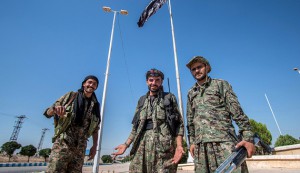
A Kurdish People’s Protection Units (YPG) flag flies, on the same spot where an Islamic State flag flew the day before, in the northern Syrian town of Tel Abyad, as seen from the Turkish border town of Akcakale, in Sanliurfa province, Turkey, June 16, 2015. Syrian Kurdish-led forces said they had captured a town at the Turkish border from Islamic State on Monday, driving it away from the frontier in an advance backed by U.S.-led air strikes that has thrust deep into the jihadists’ Syria stronghold. The capture of Tel Abyad by the Kurdish YPG and smaller Syrian rebel groups means the Syrian Kurds effectively control some 400 km (250 miles) of the Syrian-Turkish border that has been a conduit for foreign fighters joining Islamic State.

Filed Under: Articles Tagged With: flag, ISIL, Kurd, Turkey

Syrian Kurds YPG encircle IS-controlled town: spokesman

June 15, 2015 By administrator

193823The Syrian Kurdish YPG militia said on Monday, June 15 it had encircled the Islamic State-controlled town of Tel Abyad, the nearest border town to the militant’s de facto capital of Raqqa city, according to Reuters.

YPG spokesman Redur Xelil said the militia had surrounded the town along the Turkish border, pushing ahead with an offensive with the help of U.S.-led airstrikes to seize strategic territory held by the jihadists, including their main Tel Abyad-Raqqa supply route.

“Tel Abyad is almost besieged now after the control of the Raqqa-Tel Abyad road,” he said.

The Kurdish units were sending reinforcements to the area south of Tel Abyad from both its stronghold in Hasaka province in the northeastern border area and from Kobani, northwest of Tal Abyad.

Fighting near the border has already forced more than 18,000 people to cross into Turkey from Syria, aid workers say. A further 5,000 are believed to have crossed on Monday, according to a Reuters photographer at the scene.

The YPG has emerged as the main partner on the ground in Syria for the U.S.-led alliance that has been bombing Islamic State in Syria and Iraq. Its advance into Raqqa province follows a campaign that drove Islamic State from wide areas of neighboring Hasaka province

For the YPG, seizing Tel Abyad would help them link up Kurdish-controlled areas in Hasaka province and Kobani.

The expansion of Kurdish influence in Syria near the border with Turkey is a concern for Ankara, which has long been worried about separatism among its own Kurdish population.

Photo: AFP
Related links:

Reuters. Syrian Kurds seize control of main road, encircle Islamic State town: spokesman

Filed Under: Articles Tagged With: encircle, ISIS, Kurd, Syria

Turkish Dictator Erdogan blasts West for destabilizing Syria by supporting Kurdish ‘terrorists’

June 13, 2015 By administrator

turkey-kurds-isis-syria.siTurkish President Recep Tayyip Erdogan has accused the West of destabilizing Syria by supporting Kurdish “terrorist groups,” while bombing Arabs and Turkmens.

The impassioned remarks were made in Erdogan’s first appearance since the general election. He called on all political parties to act “responsibly” in forming a coalition government, after his Justice and Development Party (AKP) lost its parliamentary majority at the polls on June 7.

“The West, which has shot Arabs and Turkmens, is unfortunately placing the PYD (the political wing of the YPG) and PKK in lieu of them,” Erdogan said in a speech at the Ankara chamber of commerce.

The Kurds have a strong presence in Syria, Iraq and Turkey and have proved a formidable enemy to Islamic State (IS), earning international backing for standing up to extremists.

On the other hand, the ethnic group has been historically locked in a fierce struggle of wills with Turkey over its status as a nation.

Meanwhile the Kurdish-linked People’s Democratic Party (HDP) has for the first time managed to get into the Turkish parliament.

This is a difficult situation for Erdogan, who is a US ally on the one hand, but has been showing very negative attitudes toward the Kurdish People’s Protection Units (YPG) forces, which the US has been trying to aid in the fight against IS.

The Turkish leader is uncomfortable with the military gains made by the Kurds in Syria, alleging their links to the Kurdistan Workers’ Party (PKK), whom he’s called “terrorists” on multiple occasions, and who have been fighting the Turkish government in an insurgency lasting more than 37 years.

While delivering the remark, Erdogan has used the opportunity to again strike at the perceived ineffectiveness of the US-led air-strike campaign against IS terrorists.

On Thursday Turkey said it was taking measures to limit the influx of Syrian refugees whose numbers soared recently due to fighting between Kurdish forces and jihadists.

Over the last week, 7,000 refugees had fled to Turkey and another 6,600 had joined them since Wednesday, a Turkish official told AFP.

“Turkey will not accept entries onto its territory from Syria except in case of a humanitarian tragedy,” Deputy Prime Minister Numan Kurtulmus said after visiting the Akcakale border crossing on Wednesday.

Kurtulmus also reaffirmed Ankara’s anger against EU nation’s which have accepted only a small portion of Syrian refugees as opposed to Turkey which has taken over 1.8 million Syrian refuges since the start of the conflict in 2011.


Filed Under: Articles Tagged With: Erdogan, ISIL, Kurd, Syria, Turkey

Injured Kurd when twin bomb blasts hit the HDP’s rally in Diyarbakır on June 5 cast their votes.

June 7, 2015 By administrator

n_83585_1More than 53.7 million Turkish voters head to the polls on June 7 for a crucial parliamentary election. report hurriyetdailynews

The ruling Justice and Development Party (AKP) has framed the June 7 election in Turkey as a key hurdle on the path to the powerful presidential system that President Recep Tayyip Erdoğan wants to introduce.

However, if the Kurdish problem-focused Peoples’ Democratic Party (HDP) crosses the 10 percent election threshold, the number of AKP lawmakers will decrease considerably, making it almost impossible to reach the 330 seats necessary for a constitutional change.

The HDP has faced scores of physical attacks during its campaign. One of its campaign bus drivers, Hamdullah Öğe, was murdered on June 3, and three of its supporters were killed when twin bomb blasts hit its milestone rally in the southeastern province of Diyarbakır on June 5.

Election safety has also been a hot item on the agenda during the campaign ahead of the vote, amid the opposition’s claims that there was fraud in the vote counting process. The government has strictly denied the claim and mobilized a total of 404,000 security personnel to maintain security throughout the day of the election.

Here are the live updates:

6:30 p.m. – 22.2 percent of the votes have been counted so far.

6:20 p.m. – 16 percent of the votes have been counted so far, but the official publication ban on the initial results is continuing.

6:10 p.m. – 10.6 percent of the votes have been counted so far.

6.00 p.m. – According to a consolidated vote tally from Anadolu and Cihan news agencies, 6.6 percent of the votes have been counted so far, but the official publication ban on the initial results is continuing.

5.50 p.m. – During the counting of votes coming from abroad, a group claimed that some ballots were illegally thrown into the garbage at the Ankara Chamber of Commerce, according to private broadcaster CNN Türk. Police have arrived to stop a resulting fist-fight between party officials. “There is no problem at the place where votes from abroad are being counted. Our friends are on duty there. No need to panic,” HDP co-chair Demirtaş has said.

5.45 p.m. – 0.9 percent of the votes have been counted so far, but the official publication ban on the initial results is continuing.

5:00 p.m. – Polls close across Turkey and vote-counting starts at 174,240 ballot boxes.

Click for real-time results shown on a map
4.55 p.m. – A headman in Batman’s Yolveren village was all by lonesome on June 7, as he was the only person to cast a vote at his polling booth because the locality’s other 16 registered voters all now live in Germany. (Click here to read more)

4:50 p.m. – Residents of the Kuşu village in Turkey’s western province of Kütahya have boycotted the elections for a third time since 2011, when the town’s status was reduced to “village” due to a population decrease. (Click here to read more)

4:42 p.m. – Istanbul Gov. Vasip Şahin has confirmed the cars without license plates cannot belong to the police, according to CHP Istanbul provincial head Murat Karayalçın, who spoke with Şahin on the phone.

4:10 p.m. – A Turkish voter in the Aegean province of Manisa stamped himself in the forehead rather than the ballot paper to protest the elections, in which he said he had no faith. (Click here to read more)

Filed Under: Articles, Events Tagged With: injured, Kurd, Turkey, Vote

Turkey’s Erdogan, Kurdish leader in war of words after bombing Chanting “Murderer Erdogan”

June 6, 2015 By administrator

ISTANBUL/DIYARBAKIR, Turkey | By Ayla Jean Yackley and Humeyra Pamuk
Kurd-murdered(REUTERS) Turkey’s Kurdish-rooted opposition party, which could scupper Tayyip Erdogan’s ambitions for sweeping new powers, accused the President on Saturday of a lack of respect for supporters killed in a bomb attack in an election rally and demanded he apologize.

Erdogan countered by accusing Peoples’ Democratic Party (HDP) leader Selahattin Demirtas of instigating violence in October, linked to events in Syria, that killed dozens.

Chanting “Murderer Erdogan” and bearing a banner declaring “peace despite everything”, hundreds marched to the scene of Friday’s attacks in the mainly Kurdish southeastern city of Diyarbakir.

Others joined a convoy of cars heading to a funeral for a 16-year-old boy. Onlookers made the victory sign and chanted “martyrs don’t die” and “AKP you will pay for this”.

HDP deputy Idris Baluken told Reuters his party had told the government it believed anti-HDP rhetoric from Erdogan and the AK Party had paved the way for the attacks.

Two explosions sent ball bearings and nails tearing into a crowd of tens of thousands at Friday, killing two people and injuring over 200.

Demirtas said Erdogan went ahead with his own rally after news of the bombing broke without referring to it or to the people affected.

Erdogan later offered his condolences on what he termed a “provocation” designed to undermine Sunday’s election. He did not spell out who he believed to be the provocateur.

“He needs to apologize to them, express his sadness to them,” Demirtas told a rally on the Asian side of Istanbul.

“He should go to Diyarbakir. Is he not the president of 77 million people? He ought to leave flowers where people were killed.”

Erdogan, the most popular politician in Turkey but accused by opponents of authoritarian tendencies, seeks a large majority for the ruling AK Party on Sunday to furnish him with the powerful presidency he believes Turkey must have. However, if the HDP clears a 10 percent hurdle to enter parliament, that could rob AK of dozens of seats and thwart his ambitions.

“ANSWER AT THE BALLOT BOX”

Polls suggest such a result is within the HDP’s grasp, drawing as the party now is on non-Kurdish center-left and secularist sympathizers as Erdogan’s religious tone has become more pronounced.

At a rally in eastern Turkey, Erdogan said it was Demirtas who should apologize, accusing him of instigating violence that broke out when Kurds in the town of Kobani, just across the Syrian border, came under siege from Islamic State militants.

Demirtas accused pro-government newspapers of giving scant coverage of Friday’s attacks. He held up their front pages as he spoke to thousands from atop a campaign bus in Istanbul.

“I know we are angry, but we will not act in anger. We will act in good conscience. We will be smart and we will give our answer at the ballot box and stand up for our country,” he said.

Demirtas said his party has been the target of 140 violent attacks during the campaign, including a double bombing in southern Turkish cities last month which wounded six.

He says the HDP will continue to promote peace talks between Kurdish rebels and the government whatever the election outcome.

Erdogan has accused the HDP of being a front for the Kurdistan Workers Party (PKK), which took up arms in 1984 in an insurgency that has killed 40,000 people.

Jailed PKK leader Abdullah Ocalan and Ankara launched peace talks more than two years ago.

(Additional reporting by Seyhmus Cakan in Diyarbakir; Writing by Daren Butler; Editing by David Dolan, Ralph Boulton)

Filed Under: Articles Tagged With: Erdogan, Kurd, war, word

  • « Previous Page
  • 1
  • …
  • 33
  • 34
  • 35
  • 36
  • 37
  • …
  • 46
  • Next Page »

Support Gagrule.net

Subscribe Free News & Update

Search

GagruleLive with Harut Sassounian

Can activist run a Government?

Wally Sarkeesian Interview Onnik Dinkjian and son

https://youtu.be/BiI8_TJzHEM

Khachic Moradian

https://youtu.be/-NkIYpCAIII
https://youtu.be/9_Xi7FA3tGQ
https://youtu.be/Arg8gAhcIb0
https://youtu.be/zzh-WpjGltY


gagrulenet Twitter-Timeline

Tweets by @gagrulenet

Archives

Books

Recent Posts

  • Armenia’s Education Crisis: The PISA 2025 Results Should Concern Every Armenian
  • An Armenian Story Reaches the British Royal Family
  • Pashinyan & Company, greedy, evil, all-hating & all-powerful people clinging to their chairs…
  • Why Diaspora Armenian Must Begin Discussing a Government in Exile?
  • Israel recognized Armenian Genocide, Pashinyan in Panic

Recent Comments

  • Tina on Anna Hakobyan prepared a heartbreaking text about the deprivations “Hraparak”
  • Baron Kisheranotz on Pashinyan’s Betrayal Dressed as Peace
  • Baron Kisheranotz on Trusting Turks or Azerbaijanis is itself a betrayal of the Armenian nation.
  • Stepan on A Nation in Peril: Anything Armenian pashinyan Dismantling
  • Stepan on Draft Letter to Armenian Legal Scholars / Armenian Bar Association

Copyright © 2026 · News Pro Theme on Genesis Framework · WordPress · Log in