Gagrule.net

Gagrule.net News, Views, Interviews worldwide

  • Home
  • About
  • Contact
  • GagruleLive
  • Armenia profile

Turkey seeking escalation on all borders Armenia and Iran– Sergey Shakaryants

November 26, 2015 By administrator

f5656e69a51cd4_5656e69a51d0b.thumbPolitical analyst Sergey Shakaryants spoke of global politics at a meeting with reporters on Thursday.
According to him big politics is on the agenda.

“Turkish authorities are seeking escalation on different borders, including our border,” Mr Shakaryants said.
According to him, Armenia and Iran will intensify military and security cooperation while they are seeking closer ties.

As to whether the incident with the downed Russian warplane could affect Turkish-Russian relations, Mr Shakaryants said that the nuclear-power plant construction project will first of all be suspended.

“The military ties have been severed, Russians will not warn of their intention to bomb, while NATO will not intercede for Turkey,” he said.

Commenting on a bill calling for Turkey’s accountability for denying the Armenian Genocide, Mr Shakaryants said that the document passing from the Lower Chamber to the Upper Chamber and, finally to President Vladimir Putin for signing will take much time.

It could sober up Azerbaijan as Russia is well aware of which side is escalating the situation. Moreover. Azerbaijan’s reaction to the issue of the Armenian Genocide is much harsher than Turkey’s.

Filed Under: Articles Tagged With: Armenia, border, escalation, Iran, Turkey

Iran general: Russian warplane downing to cost Turkey dear

November 26, 2015 By administrator

2bb3265b-8eb9-453a-983e-e9c30d2b1290

Major General Yahya Rahim Safavi, a senior military advisor to Leader of the Islamic Revolution Ayatollah Seyyed Ali Khamenei

A senior Iranian general has warned Turkey that its recent downing of a Russian fighter jet and its continued support for militants in Syria will cost Ankara dearly.

Major General Yahya Rahim Safavi, who is senior military advisor to the Leader of the Islamic Revolution Ayatollah Seyyed Ali Khamenei, said on Thursday that Turkey committed a “tactical mistake” by shooting down the Russian Su-24 aircraft near the Syria border.

“In addition to [having been providing] assistance to hired terrorists for five years and causing insecurity in Syria and Iraq, [Turkey] committed a strategic mistake in this incident and these issues will definitely cost Turkey dearly,” said Safavi, who formerly served as the chief of the Islamic Revolution Guards Corps (IRGC).

The Iranian general, who was addressing a group of Basij volunteer fighters in the central Iranian city of Isfahan, said Turkey along with Saudi Arabia, Turkey and Jordan are engaged in an “unjust war” against the front comprising Iran, Iraq, Syria, Russia and the Lebanese resistance movement Hezbollah.

Turkey shot down the Russian jet with two pilots aboard on Tuesday morning, claiming the warplane had violated its airspace. One of the pilots was killed by militants in Syria after ejecting out of the targeted jet and another was rescued by the Syrian army.

Russia denies all of Ankara’s claims, saying that the jet was downed in Syrian airspace, where Moscow has been carrying out operations against Daesh Takfiri terrorists since September 30 upon a request by the Damascus government.

Russian President Vladimir Putin, who had called the downing of the warplane “a stab in the back” by “the accomplices of terrorists,” said on Thursday that Moscow is still waiting for an apology from Turkey or some assurances that “the culprits of this crime” will be punished.

Filed Under: Articles Tagged With: Iran, Russian, Turkey, warplane

Iran: Terror cell linked to Daesh ISIS busted in western Iran

November 18, 2015 By administrator

f5b2624c-3957-4dce-8207-33e60865bb84The Islamic Revolution Guards Corps (IRGC) has busted a terror cell linked to the Takfiri Daesh terrorists in western Iran.

The spokesman for the IRGC in Kermanshah Province said on Tuesday that members linked to the terror group were arrested in a joint operation with forces of Iran’s Intelligence Ministry.

Colonel Mohammad Kalantari, who was speaking to the semi-official Mizan news agency, would not elaborate on further details, including in which city or town the cell was active. The westernmost Iranian province of Kermanshah neighbors Iraq, where Daesh controls some parts far from the Iranian border in the west and north of the Arab country.

Kalantari said the arrested individuals “were militarily prepared and possessed guns and bandoleers.”

It was not clear whether the cell was plotting an attack inside Iran or it was just organizing militants for terror activities in Iraq.

IRGC’s chief commander in Kermanshah said on Tuesday that numerous terror cells working for Daesh have been busted in the province over the past two years. Brigadier General Bahman Reyhani said during a briefing with reporters that all the busted cells had been recruiting and organizing militants for Daesh “outside Iran.”

Iran has previously warned that it will intervene militarily inside Iraq if Daesh manages to reach the 40-kilometer buffer zone outside of the Iranian western borders.

Daesh has been suffering back-to-back defeats in areas under its control in Iraq with pro-government forces managing to liberate over the past few months two key towns of Tikrit and Baiji in the north and major positions in the desert province of Anbar in the west. The anti-Daesh drive in Syria has also gained a fresh momentum since the country began to enjoy Russia’s air support on September 30.

Filed Under: Articles Tagged With: busted, cell, Iran, ISIS, terror

Iran sets its sights on Armenia expanding bilateral economic relations.

November 11, 2015 By administrator

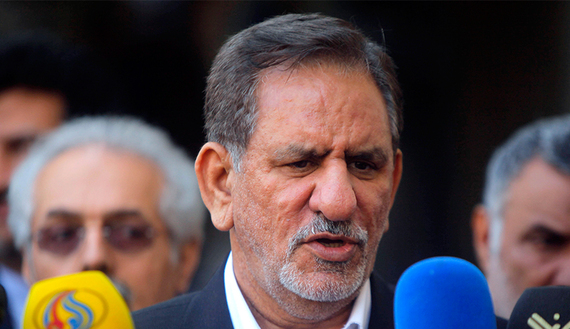
ranian First Vice President Eshaq Jahangiri speaks during a news conference in Najaf, south of Baghdad, Feb. 18, 2015.  (photo by REUTERS/Alaa Al-Marjani)

ranian First Vice President Eshaq Jahangiri speaks during a news conference in Najaf, south of Baghdad, Feb. 18, 2015. (photo by REUTERS/Alaa Al-Marjani)

By Alireza Ramezani,

TEHRAN, Iran — If one thing is certain about Iran’s recent move to step up relations with Armenia, it’s that it’s for very good economic reasons. On Oct. 14, Tehran took the opportunity of impending sanctions relief under the nuclear deal signed in July to send First Vice President Eshaq Jahangiri to Armenia to see about expanding bilateral economic relations. Armenia is the sole Eurasian Economic Union member state that shares a land border with Iran, and could thus be a “gateway for Iranian goods” to the 5 billion-strong markets of Eurasia and Europe, according to Jahangiri, the most senior Iranian official to have visited Yerevan since 2011.

Iran and Armenia have already signed agreements that could keep their ties close for years. For instance, Armenia is providing Iran with electricity in exchange for natural gas imports. The swap is set to continue for the next 15 years, with the electricity generated from power plants built by Iranian engineers on the Armenian side of the border. Under the 2007 gas pipeline contract, Armenia generates and sends to Iran three kilowatt-hours per cubic meter of natural gas. When this contract expires, Iran will get paid for its natural gas exports, and Armenia will be free to use the generated electricity entirely for domestic consumption. It should be noted that Armenia’s political disputes with Azerbaijan and Turkey have left it with Georgia and Iran as the best options for meeting its energy needs.

Jahangiri’s recent visit was mainly aimed at reviving Iranian projects suspended due to sanctions and a shortage of financing. The delayed projects include a high voltage transmission line, connecting the Armenian power grid with that of Georgia and a third transmission line between Iran and Armenia worth around $120 million. The latter is set to come on stream in 2018, increasing the transmission capacity from Armenia to Iran from 300 to 1,000 megawatts. Among other matters raised by Jahangiri during his visit was an ongoing project to connect Iran’s rail network to that of Armenia, a plan that would provide Armenia with access to the southern Persian Gulf states through the International North-South Transport Corridor.

Jahangiri’s call for a focus on bilateral trade cooperation during his stay in Yerevan appears to have been welcomed by Armenian entrepreneurs, as soon after, a group of them announced that they will visit Iran on Nov. 9. According to the Iran Chamber of Commerce’s website, Armenia’s minister of economy will lead the delegation, which consists of about 50 top managers in banking, IT and agricultural businesses. This could be in line with a proposal offered by Jahangiri to create a trade hub in Armenia, from where Iranian goods could be re-exported not only to Belarus, Kazakhstan, Kyrgyzstan and Russia, but also to Europe and the United States.

The head of the Iran-Armenia Chamber of Commerce, Levon Aharonian, believes the new effort to facilitate trade could help curb corruption and cut import duties from Iran significantly. In an article in the leading Iranian Tejarat-e Farda economic magazine, Aharonian argued that Jahangiri’s proposal — if accepted by the Armenian government — could be a “great opportunity” for Iranian traders looking for broader markets. However, he wrote, traders and officials from both sides should first help come up with a new trade mechanism to make the idea feasible. Many of the 6,400 items the European Union allows to be imported from Armenia, Georgia and Azerbaijan at very low tariffs can be supplied by Iranian manufacturers, Aharonian noted.

Iran is currently Armenia’s fourth largest trading partner after the European Union, Russia and China. Moreover, the Islamic Republic’s annual trade with Armenia is set to increase to $1 billion in the near future, up from $300 million now. Earlier this month, Armenian Prime Minister Hovik Abrahamyan agreed with a proposal offered by the Iranian side to revive Armenia’s factories built during the Soviet era. Iran says the factories can be used as a base to process semi-finished goods imported from Iran to eventually be exported to third countries.

But the Islamic Republic is not alone in its interest in Armenia. The United States has provided millions of dollars in assistance to Yerevan since its independence from the Soviet Union in 1991. Moreover, Washington has long been negotiating with the Armenian government to expand bilateral trade and investment relations. Lastly, the United States has — as is also largely the case with Iran — supported the Armenian government in its political and territorial disputes with neighboring states since its independence. These parallel efforts by Tehran and Washington to court Yerevan could end up in a potential clash of interests, even in the aftermath of the Joint Comprehensive Plan of Action, which has repaired US-Iran relations to some extent.

The US 2015 budget provides $24.7 million in assistance to Armenia. Washington has also reached several economic agreements with Yerevan, including the Trade and Investment Framework Agreement (2015), Joint Economic Task Force (1999), Investment Incentive Agreement (1992), Agreement on Trade Relations (1992) and Bilateral Investment Treaty (1992) — all of which provide platforms for deeper economic and trade cooperation between the two countries. According to the Armenian National Committee of America, the two countries have several options to improve their trade relations — including adoption of the Double Taxation Treaty, which is needed to replace the outdated US-USSR Double Tax Treaty from 1974. The committee believes this treaty is an impediment to US investment in Armenia and hinders economic relations between the two countries.

Iran sees Armenia as a regional strategic trade partner, while the United States has been investing in the Caucasian country for an extended period. A potential clash of interests between Iran and the United States thus appears as a serious challenge on the distant horizon. However, if this challenge is addressed wisely and in a timely manner, conflict can be avoided and the American market could even be accessible to Iranian manufacturers through Armenia in the medium term.

Alireza Ramezani
Contributor,  Iran Pulse

Alireza Ramezani has a masters degree in Journalism Studies from Cardiff University, UK. He has worked for media organizations and business firms in Iran since 1999. On Twitter: @AlirezaTehran

Filed Under: Articles Tagged With: Armenia, economic relations, Iran

Archbishop Nareg Alemazian’s Mission

October 31, 2015 By administrator

11953142_412182448986528_8193985679928877263_nBy R.P. Sevadjian

Special for the Armenian Weekly

A few weeks ago I attended Badarak at Sourp Asdvadzadzin Cathedral in Nicosia, the capital of Cyprus. I especially like Badarak there because of the fine choir, John Guevherian’s solos, and Der Momig Habeshian’s beautiful and moving officiation.

Just before communion, His Eminence Archbishop Nareg told us of his recent visit to Iran, after which the Iranian ambassador, His Excellency Dr. Reza Zahib, addressed us.

The ambassador talked warmly of the ties between Armenians and Iranians and invited us all to visit Iran to see for ourselves what a wonderful country it is, with so much historic culture, both Armenian and Iranian. He said he hopes that Archbishop Nareg will assist in starting a dialogue with the Greek Orthodox Church of Cyprus and other Christian denominations, as well as Muslims, to encourage greater ties between Cyprus and Iran. Ambassador Zahib said he feels very close to Armenians, and went on to talk about the importance of friendship between Iranians and Armenians, the fact that the region around Iran and Armenia is being overrun by evil, and the need for the two peoples to stand together and help each other.

A week later Archbishop Nareg told me more of his visit to Iran. When he first arrived in Cyprus in September 2014, his credentials were presented to all of the embassies on the island. The first to make contact and welcome him was the Iranian ambassador—whose embassy, incidentally, is situated opposite the Prelature on Armenias Street. The ambassador invited him to Iran for a dialogue on culture and civilization with the participation of the Islamic Culture and Relations Organization and other entities.

Archbishop Nareg explained that he had been to Iran once before, for an international conference between Muslims, Christians, and Zoroastrians. He wanted to see more of Armenian life there and the possibilities of organizing pilgrimages to sites such as Sourp Tateos (one of the oldest churches in the world) and Sourp Stepanos, important and ancient Armenian churches in Tabriz and Nor Jougha. Pilgrimages to such places are especially important as they reinforce our devotion to our religion and cultural identity

Thus on Aug. 14, a delegation of four went as guests of the ambassador, enjoying excellent hospitality throughout their five-day visit. They met Iranians and Iranian Armenians at universities and other centers of learning in Qom and Tehran for dialogue in inter-faith and ethical subjects. On Sun., Aug. 16, Archbishop Nareg was pleased to officiate at the Feast of the Assumption of the Virgin Mary and the Blessing of the Grapes at Sourp Krikor Lousavorich Church in Tehran.

Archbishop Nareg said that Iranian Armenians have three Dioceses, all under the See of Cilicia—Tehran, Nor Jougha, and Tabriz (Aderbadagan); that there are now roughly 80,000 Armenians living in Iran; and that the vibrant community has many schools and centers, and two members of parliament.

He went on to say that every two years there is official dialogue, both inter-faith and ethical, between the Catholicosate and Tehran; and that this dialogue is very important to perpetuate the mutual respect and good relations between the Iranian and Armenian people. The archbishop says that there are special bonds between the Iranian government and society and the Armenians, and that the centuries-old Armenian community is genuinely an integral part of Iranian society.

Later in August, Archbishop Nareg found himself in Turkey, at Sis, as part of a small group on a mission.

The mission was to hold a requiem, at the ruined site of the historic Sis Catholicosate, for all those who had lived and died there from the establishment of the community in 1293 until its forced exile in 1921; and to read a pontifical message from His Holiness Aram I that spoke of the Armenian Genocide and demanded that the Catholicosate’s Sis property be returned to its rightful owner, the Armenian Catholicosate of Cilicia.

The mission was publicized upon the return of the participants to the Holy See of Cilicia’s present home at Antelias in Lebanon. The story made it into the Turkish press, where interest was elicited about the “1915 events” and the existence of the Catholicosate. Archbishop Nareg says that this illustrates how Armenians must, even after all the news and brouhaha of the 100th anniversary of the genocide, explain often, and as simply as possible, that they had existed in these lands for a long, long time before 1915. He sees it as every Armenian’s duty to educate the world on this topic. He told me that he always manages to say something about it during his meetings and talks with non-Armenians. What he says is not anti-Turk, nor to show any kind of hatred, but to explain why Armenians from historical Armenia and Cilicia are in exile, far from their ancestral lands, and to dispute Turkish denial.

“My grandparents were born in Dortyol and Adana, my mother was born in Iskenderun. My father and I were born in Beirut. Why were we two not born in our homeland? Why are we living somewhere other than our own country? As I grew up I heard my grandparents talk about their forced exile, so did many of their friends—at least 30 of my acquaintances. Why would they lie?”

He said this at a humanitarian society meeting in Germany, at which many German Turks were present. Funnily enough, the topic was “coexistence.” “All were stunned,” he told me.

“We are opening our wounds for the world to see and for healing to take place. We want to be healed by forgiving the past deeds of a people, but there can be no forgiveness until there is admittance of the deed. It is a simple human process.”

Much more and better has to be done until the Turkish government stops denying the past, he says.

I wanted to know how he felt during his mission to Sis. He said that although he found almost all Turks and Kurds to be kind and hospitable (only once had he felt unwelcome), his thoughts kept returning to the subject of the treatment of our people.

“I was there, on lands which are no longer mine, but that no one can take away from me. The same lands on which my people lived for centuries. Lands on which wars were fought of course, but where nothing like 1915 had taken place before. Is it really possible that the people who live on these lands now are [the descendants of] those who were so brutal in 1915? What has changed? If there were a settlement and we were to return to our ancestral lands, would there be a second genocide? What could be done for this not to happen? Could we live safely together or is that an impossibility given the past and the politics in the region today? These are the existential questions which ran through my mind.”

Finally, we talked a little about his ministry in Cyprus.

The archbishop says that Cypriot Armenians are very lucky to have a government that supports the community by completely funding all three Armenian schools, as well as meeting some part of the expense of running the Prelature. But the community has to be engaged to meet the demands of contemporary times.

He is fully aware of the challenges and is doing everything in his power to involve the entire community by keeping it informed of his activities and presenting it with new events and ideas to help it engage with the church.

“My ministry is my vocation and dedication to God for life through the Armenian Church—the people of God, our community,” he said. “The Armenian Church’s ministry is service to God and the people, but in turn the people must help the church which serves them. This is what I characterize as committed discipleship to Christ.”

Filed Under: Articles Tagged With: Armenia, Cyprus, Iran, Nareg

Syria war intensify: Another Iranian General, 7 Other IRGC Members Killed in Syria

October 23, 2015 By administrator

13940718000412_PhotoITEHRAN (FNA)- A top commander of Iran’s Islamic Revolution Guards Corps (IRGC) was killed in clashes in Central Syria last night, bringing the number of IRGC casualties in the war-torn country in the last couple of days to 8.

Brigadier General Reza Khavari, the senior commander of IRGC’s Fatemiyoun Division, was martyred in clashes with Takfiri terrorists in the Northern parts of the province of Hama, Central Syria, Thursday night while fulfilling his duty as a military adviser.

A sum of 7 other IRGC members, mostly from Ansar Corps, have been martyred in Syria in the last two days. Amin Karimi, a member of the IRGC’s Ansar Corps, has also been named among those killed in the last couple of days, although his military rank is not known.

IRGC Public Relations Chief General Ramezan Sharif told FNA on Friday evening that the IRGC has boosted the number of its advisors in Syria in recent days following government troops’ striking victories in multiple fronts across the nation.

Ramezan Sharif confirmed the 8 casualties sustained by the IRGC in Syria in the last several days.

Asked why the IRGC casualties in Syria are mostly ranking officers, he said Iran does not have combat troops in Syria and has only sent advisors to help the Muslim nation, who provide counseling services and strategies to the Syrian army commanders in the battlefield and from a very close range to the forefront. He reminded that low-ranking officers are not fit for such a vital job.

Earlier today it was revealed that the bodyguard of Iran’s former President Mahmoud Ahmadinejad has been one of the latest IRGC casualties in in Syria.

Abdollah Baqeri Niyaraki was martyred while fulfilling his duty as military advisor in Syria’s Northern province of Aleppo.

Baqeri Niyaraki was an IRGC commander who served as a bodyguard of former President Ahmadinejad for some time. Niyaraki was a member of IRGC’s Ansar Corps.

His martyrdom came after three other IRGC war veteran commanders were killed during attacks by the ISIL Takfiri terrorists in Syria.

On October 13, two IRGC commanders, providing military counseling services to the Syrian forces in their fight against the Takfiri terrorists, were killed in Southern Syria.

Colonel Farshad Hasounizadeh, the former commander of IRGC’s Saberin Special Brigade, was martyred while fulfilling his duty as military adviser in Syria and fighting the Takfiri terrorists in the Muslim country.

Also, the former commander of IRGC Hazrat Hojjat 1 Brigade Hajj Hamid Mokhtar-band, nicknamed Abu Zahra, was killed in Syria.

Both Hasounizadeh and Mokhtar-band were IRGC war veterans and were martyred in Southern Syria. According to Iran’s military rules, those missed or killed in operation are promoted to a higher rank and that’s why in a few Persian-language sources, Colonel Hasounizadeh has been referred to as a General.

A few days earlier, a top IRGC commander Brigadier General Hossein Hamadani was martyred during an attack by the ISIL Takfiri terrorists in the outskirts of the city of Aleppo.

General Hamadani was in Syria to render military advice to the Syrian army and popular forces in their fight against the ISIL terrorists in the Arab country.

In September 2014, Deputy Chief of Staff of the Iranian Armed Forces Major General Gholam Ali Rashid announced that Iran’s military advisors are present in the friendly regional states to provide those nations with necessary military recommendations.

“Some of our commanders are in the field to give military advice to the Iraqi army, Lebanon’s Hezbollah and the Palestinian resistance movement,” Major General Rashid said, addressing a conference attended by a group of senior military commanders in Tehran.

Filed Under: Articles Tagged With: general, Iran, Killed, Syria

Iran files case to claim ownership of Turkish carrier

October 22, 2015 By administrator

231497Iran‘s Oil Ministry has opened a legal case in an İstanbul court demanding the ownership of Onur Air, the Turkish airline that in 2013 was acquired by two allegedly official partners of Babek Zanjani, the controversial businessman who has been in jail pending trial on corruption charges for almost two years in Iran.

According to a report in the Hürriyet daily on Thursday, the ministry filed a case against the budget airline carrier to take over its ownership from Kudret Tuncel and Mahdi Shams, Zanjani’s two alleged partners who paid some $235 million to purchase Onur Air from its Turkish owner in 2013. The ministry is arguing that Onur Air’s real buyer two years ago was Zanjani, according to the newspaper.

Reports in the Turkish media claimed earlier this month that all assets belonging to Zanjani might be confiscated, as is sought in the indictment of his trial, which is known as the biggest corruption case in Iran’s recent history. The deputy chief prosecutor in the case also said this month that Zanjani and his two former partners had spent $235 million from Iran’s oil money to buy Onur Air.

Zanjani, supposedly the richest businessman in Iran with $14 billion in assets, who also has alleged ties with Reza Zarrab, the prime figure in Turkey’s graft scandal, is accused of embezzling $2.7 billion of state money while trading oil for the National Iranian Oil Company (NOIC) on behalf of the Iranian government, along with money laundering and corruption within Iran and in several other countries, including Turkey.

It is the first time that Iranian officials have filed a case against a private Turkish company. Onur Air officials have refused to comment on the issue, telling Hürriyet: “One-sided remarks for an issue currently on trial would be misleading. It is better to talk about the issue on a platform with a chance for questions and answers.”

A member of Iran’s special parliamentary committee investigating Zanjani’s case previously asserted that a significant portion of Zanjani’s illegal money was in Turkey under the management of Zarrab, who was implicated along with four of Turkey’s Cabinet ministers in 2013 corruption investigations that were later closed due to what many believe was government pressure on members of the judiciary.

Filed Under: Articles Tagged With: airline, Iran, ownership, Turkey

Businesslike Neighbors: Armenia, Iran consider deepening commercial ties

October 18, 2015 By administrator

armenian iranian business forum

The changes taking place in the global and regional markets, which are linked with softening sanctions against Armenia’s neighbor Iran, open new opportunities and field for cooperation of the two countries’ business environments.

This week, the Armenian-Iranian business forum held in Yerevan is the new stimulus, which, observers expect, will strengthen business ties, and create new opportunities for more sustainable arrangements.

“In terms of activation of bilateral transportation, the construction of the highway of the North-South Corridor is an important project, which is already underway. Another project is Armenia-Iran railway construction. I must also discuss our cooperation in the energy sector, in particular, the construction project of the third Iran-Armenia electricity transmission line and the Meghri hydropower plant,” said Prime Minister of Armenia Hovik Abrahamyan at the Armenian-Iranian business forum.

During his official visit to Armenia Iran’s First Vice President Eshaq Jahangiri, referring to Armenia’s membership of the Eurasian Economic Union (EEU), said that Armenia could become a platform for Iranian goods to be exported to EEU countries, and for its implementation only political will is needed.

“Besides, Armenia has an important role in terms of being a transit area. We have the North-South corridor, and now we should solve the issue of the railway construction, which can have regional significance. Iran is willing to carry out these two programs. We must do everything possible to eliminate all obstacles. In this regard, we should sign several agreements of mutual understanding: a preferential tariff agreement, for example, to set up a bilateral committee for addressing these issues,” said the Iranian vice-president.

Arsen Ghazaryan, chairman of Armenia’s Union of Industrialists and Entrepreneurs, says that the Armenian side has been trying for several years to prove the Iranian side that Armenia is a very good business platform to transfer goods and services to the CIS area, and today already to Europe.

“We hope that this understanding will take place: to bring goods to Armenia through joint ventures, to reproduce, to re-label and take out to markets where we have a privileged tax status both in the EEU area, and through our GSP + system in Europe, which is extremely important,” says Ghazaryan.

However, Iranian businessmen point out that their problems in Armenia are caused by the taxation field, which has already forced many to move their businesses to neighboring Georgia, while they prefer to work in Armenia, with Armenians.

“A man comes from a foreign country and invests money in this country. It means the way for that person should be comfortable and without obstacles. The state should take measures so that foreign investors are not afraid of investing.

This is no problem in Georgia,” says Bitum-Armenia-Iran company founder Javid Zabihollahin, who plans to open a concrete works in Armenia.

According to Iranian businessman Danish Var, in case of public policy implementation, the results of the business environment will be more visible.

“We usually face difficulties in the investment field, because we are not familiar with the field and are not fully aware of the Armenian laws. The good business consultant is necessary for starting a business in Armenia,” said the Iranian businessman.

Arsen Ghazaryan said that during 24 years of Armenia’s independence Armenia has been regarded as a consumer market for Iran, but already today Armenia should be viewed as an investment and production platform.

According to the National Statistical Service, 4.9 percent of Armenia’s foreign trade turnover in 2014 comes from trade with Iran. The main part of the turnover comes from imports from Iran: $206.5 million out of $291 million.


Source:   Gayane Mkrtchyan ArmeniaNow reporter

Filed Under: Articles Tagged With: Armenia, bussinesslike, Iran, neighbors

Jahangiri: Level of Armenia-Iran economic relations unsatisfactory

October 15, 2015 By administrator

Iranian First Vice President Es'haq Jahangiri

Iranian First Vice President Es’haq Jahangiri

YEREVAN. – Iran considers Armenia as the only country of the Eurasian Economic Union that can become a good platform for the exports of Iranian goods to EEU member states, Iranian First Vice President Es’haq Jahangiri said during a business forum in Yerevan.

He added that this will create an opportunity for the Iranian entrepreneurs to produce part of the goods in Iran and another part in Armenia to be exported to the Eurasian Union member states.

Armenia and Iran have historical past and a wide range of political relations, Jahangiri said.

“Armenians of Iran together with the Iranian nation aspire for country’s progress. They are a link between two nations. There is high level political interaction, and there are no obstacles to the development. But I cannot express satisfaction in relation to trade and economic relations. We have to solve this problem,” Vice President said.

Speaking about North South Road Corridor and Armenia-Iran railway, the Iranian official stressed that these projects may have regional significance, and Iran is ready to implement them.

Mr. Jahangiri noted importance of the memorandums on cooperation, including a treaty on preferential prices, for the development of trade and economic ties. He added a committee has to be formed to tackle the problem.

Filed Under: Articles Tagged With: Armenia, economic relations, Iran

Iranian Vice President arrives in Armenia

October 14, 2015 By administrator

Iranian VPYEREVAN. – Iranian First Vice President Es’haq Jahangiri has arrived in Armenia at the invitation of Prime Minister Hovik Abrahamyan.

Armenian PM welcomed his Iranian counterpart at Zvartnots airport.

The officials will hold talks in the government that will be followed by a meeting of delegations.

During his two-day visit, the Iranian official is expected to meet with Armenian president, prime minister and parliament speaker.

Filed Under: Articles Tagged With: armania, Iran, vp visit

  • « Previous Page
  • 1
  • …
  • 12
  • 13
  • 14
  • 15
  • 16
  • …
  • 22
  • Next Page »

Support Gagrule.net

Subscribe Free News & Update

Search

GagruleLive with Harut Sassounian

Can activist run a Government?

Wally Sarkeesian Interview Onnik Dinkjian and son

https://youtu.be/BiI8_TJzHEM

Khachic Moradian

https://youtu.be/-NkIYpCAIII
https://youtu.be/9_Xi7FA3tGQ
https://youtu.be/Arg8gAhcIb0
https://youtu.be/zzh-WpjGltY


gagrulenet Twitter-Timeline

Tweets by @gagrulenet

Archives

Books

Recent Posts

  • Armenia’s Education Crisis: The PISA 2025 Results Should Concern Every Armenian
  • An Armenian Story Reaches the British Royal Family
  • Pashinyan & Company, greedy, evil, all-hating & all-powerful people clinging to their chairs…
  • Why Diaspora Armenian Must Begin Discussing a Government in Exile?
  • Israel recognized Armenian Genocide, Pashinyan in Panic

Recent Comments

  • Tina on Anna Hakobyan prepared a heartbreaking text about the deprivations “Hraparak”
  • Baron Kisheranotz on Pashinyan’s Betrayal Dressed as Peace
  • Baron Kisheranotz on Trusting Turks or Azerbaijanis is itself a betrayal of the Armenian nation.
  • Stepan on A Nation in Peril: Anything Armenian pashinyan Dismantling
  • Stepan on Draft Letter to Armenian Legal Scholars / Armenian Bar Association

Copyright © 2026 · News Pro Theme on Genesis Framework · WordPress · Log in