Gagrule.net

Gagrule.net News, Views, Interviews worldwide

  • Home
  • About
  • Contact
  • GagruleLive
  • Armenia profile

British Parliament officially recognizes ‘Kurdish Genocide’

March 2, 2013 By administrator

Since British petroleum took over oil field in Iraqi Kurdistan region they have now finally recognize Kurdish Genocide but not Armenian Genocide because Armenia have no oil.

n_42182_4The British Parliament officially recognized Feb. 28 the al-Anfal campaign of Saddam Hussein’s Iraqi government against the country’s Kurdish population as the “Kurdish genocide.”

The motion emphasized that the campaign targeting the Kurds begun in 1987 caused the deaths of nearly 200,000 Kurds. The decision comes on the eve of the 25th anniversary of the most infamous event in the campaign, the Halabja massacre, in which poison gas was used against Kurds in northern Iraq.
Kurdistan Regional Government Prime Minister Nechervan Barzani expressed his satisfaction with the decision with a statement.

One of the main sponsors of the motion, Labour MP Jeremy Corbyn, criticized the position taken by the British government at the time, saying the administration’s support for the Baath Party government in its war against the Islamic regime in Iran had “blinded” all of Britain’s policies. Corbyn also said it took a lot of time for the Parliament to take the decision, adding that Britain should adopt a more self-critical stance regarding the period of recent history.

Countries such as Sweden and Norway have previously recognized the Kurdish genocide. According to Human Rights Watch, some 4,000 villages out of 4,655 were wiped out between April 1987 and August 1988, among which 250 had been attacked with chemical weapons. More than 1,700 schools, 2,450 mosques, as well as 27 churches were also destroyed.

Filed Under: Genocide, News

Hayk Demoyan: Aghdam events could, just like attempt on Heydar Aliyev’s life, be planned by Turkish secret services

March 1, 2013 By administrator

Over the years new data and details about the tragedy that took place on the outskirts of Aghdam in 1992 are coming to light. But the question is, what other force besides the People’s Front of Azerbaijan were, in reality, behind the carnage, which actually no one needed. This issue is still unrevealed.

Hayk DemoyanNews agency Panorama.am asked the director of the Armenian Genocide Museum-Institute Hayk Demoyan for commentary.

“Let’s call a spade a spade. Ankara may be blamed in Khojalu massacre; the Turkish secret service, to be more precise. Turkey was clearly not satisfied with the figure of Azerbaijani President Ayaz Mutalibov as a pro-Russian politician, which sought to ensure Azerbaijan’s membership in the CIS. During the first month after the collapse of the Soviet Union, Turkey supported by the West, especially the United States, actively sought to present itself as a visual model of state building. Turkish leaders in the face of the Popular Front of Azerbaijan found decent support in order to strengthen its influence in Azerbaijan. In this regard, publication of Turkish newspaper “Hurriyet” on 17 May 1992, i.e. 2 days after Mutalibov’s re-overthrow, can be considered a sensation. In the magazine one of the senior Turkish Foreign Ministry officials was quoted who in an outburst of joy said about Mutalibov: “Our boys have done it” the English translation of these words was the most interesting. It’s not hard to guess who these boys are,” Hayk Demoyan says.

Asked about the reasons for Turkey’s commitment in the commission of such a bloody act, director of the Armenian Genocide Museum-Institute said that apparently in this case Ankara killed not two but even several birds by one shot.

“First of all, after Armenia gained its independence, the Turkish side became concerned about the possible activation of Armenian Diaspora’s movement, as well as about the recognition of the Armenian Genocide by the independent Armenia and the prospective of possible compensation. From this point of view, the representation of the Armenians as people disposed on mass murders, played into Turkey’s hands, which could seek in Aghdam events a good reason for creating a counter image. One could even claim that it could be considered as a strategic task for Ankara.

Second, the pro-Russian Azerbaijani President Mutalibov was not convenient for Turkish authorities, who would prefer to see obviously pro-Turkish-minded leaders from Popular Front instead of him. Abulfaz Elchibey, APF leader, never concealed his sympathy to everything Turkish, and was constantly expressing himself in an aggressive pan-Turkic manner. Such a massacre was a discrediting evidence for any leader. As a result, we can see that this scenario worked. Mutalibov resigned, PFA in face of Elchibey came to power,” Hayk Demoyan notes.

According to the expert, the involvement of the Turkish agents in the operation of correcting the political administration of Azerbaijan has its own traditions which come since 1918, and February-May events that took place in 1992 can be considered the first successful and a well-planned attempt to recreate these traditions.

“Turkish security forces, who twice tried to remove Heydar Aliyev, didn’t approve of some of his actions after he came to power. The first attempt was so bold and open, that in 1995, during a visit to Baku, the Turkish Prime Minister Tansu Chiller personally apologized to the head of Azerbaijan. The second attempt took place a year later, in 1996, and this time the Azerbaijani special services managed to arrest some persons who were directly connected with the intelligence agencies of Turkey. Let’s add also the assassination attempts on presidents of Uzbekistan and Turkmenistan by Turkish intelligence agencies,” Hayk Demoyan says.

Hayk Demoyan notes that there is another interesting fact; on 25 February Iranian Foreign Minister Ali Akbar Velayati was in Baku on mediatory mission. The visit of Velayati was also planned to be held in Stepanakert and negotiations to be held with the official leadership of the NKR. In the morning of February 27 Velayati left for the capital city of Nagorno-Karabakh, but his plane landed in Aghdam. At a time when Khojalu was under the complete control of Armenian forces, Commander of the Defence Emergency headquarters of Shushi Rahim Gaziyev told by telephone that “the fight for Khojaly continues”. Then Gaziyev continued and said that “the decision of ceasefire (for Velayati’s security) in a situation where the Armenian side captured Khojalu was wrong and is unlikely to be kept.”

“It is not difficult to guess that this message contains obvious desire to disrupt A. Velayati’s mission by NFA and the Turkish secret services. The growing influence of Iran in Azerbaijan, especially its role as a mediator in the Karabakh problem, was obviously not within the interests of Ankara. By that time some Western leaders openly stated that the South Caucasus and Central Asia is a zone of Turkish influence, the main role of which according to them was combating the spread of Islamic fundamentalism and Iranian influence. But the most important thing, in my opinion, is the desire of the Turkish side to create grounds for accusing Armenians in crimes against humanity by organizing these mass exterminations,” Demoyan stated.

On February 26, 1992, during the war in Karabakh, around 200 to 300 people (according to Human Right Watch, and 600 according to the version propagated by Azerbaijan) were killed in unknown circumstances near the city of Aghdam. They have been deliberately withheld by the Azerbaijani authorities in the midst of the military actions. Population of the village of Khojalu, which was one of the firing points shooting at the blockaded Stepanakert (among five others) was kept in the village for months by force and was not evacuated by the authorities of Azerbaijan deliberately, in order to use them as human shields later.

Residents of Khojalu coming out through the humanitarian corridor, that the self-defense forces of NKR had left open, freely passed more than 10 km and reached the Aghdam city controlled by the Azerbaijani troops. Later, not far from the positions of Azerbaijani troops dead bodies of the villagers were found. The exact death toll remains unknown as the official Baku publishes data contradicting each other. Parliamentary Commission investigating the tragic death of the civilians at Aghdam city was dissolved by the order of Heydar Aliyev, the investigative materials are kept secret.

Filed Under: News

Soldier Admits Providing Files to WikiLeaks Pfc. Bradley Manning

March 1, 2013 By administrator

Pfc. Bradley Manning pleaded guilty to 10 criminal counts in connection with the leak to WikiLeaks.

NYT By CHARLIE SAVAGE  Published: February 28, 2013

FORT MEADE, Md. — Pfc. Bradley Manning on Thursday confessed in open court to providing vast archives of military and diplomatic files to the antisecrecy JP-MANNING-articleInlinegroup WikiLeaks, saying that he released the information to help enlighten the public about “what happens and why it happens” and to “spark a debate about foreign policy.”

Appearing before a military judge for more than an hour, Private Manning read a statement recounting how he joined the military, became an intelligence analyst in Iraq, decided that certain files should become known to the American public to prompt a wider debate about foreign policy, downloaded them from a secure computer network and then ultimately uploaded them to WikiLeaks.

“No one associated with WLO” — an abbreviation he used to refer to the WikiLeaks organization — “pressured me into sending any more information,” Private Manning said. “I take full responsibility.”

Before reading the statement, Private Manning pleaded guilty to 10 criminal counts in connection with the huge amount of material he leaked, which included videos of airstrikes in Iraq and Afghanistan in which civilians were killed, logs of military incident reports, assessment files of detainees held at Guantánamo Bay, Cuba, and a quarter-million cables from American diplomats stationed around the world.

The guilty pleas exposed him to up to 20 years in prison. But the case against Private Manning, a slightly built 25-year-old who has become a folk hero among antiwar and whistle-blower advocacy groups, is not over. The military has charged him with a far more serious set of offenses, including aiding the enemy, and multiple counts of violating federal statutes, including the Espionage Act. Prosecutors now have the option of pressing forward with proving the remaining elements of those charges.

That would involve focusing only on questions like whether the information he provided counted as the sort covered by the Espionage Act — that is, whether it was not just confidential but also could be used to injure the United States or aid a foreign nation.

Private Manning described himself as thinking carefully about the kind of information he was releasing, and taking care to make sure that none of it could cause harm if disclosed.

The only material that initially gave him pause, he said, were the diplomatic cables, which he portrayed as documenting “back-room deals and seemingly criminal activity.”

But he decided to go forward after discovering that the most sensitive cables were not in the database. He was also motivated, he said, by a book about “open diplomacy” after World War I and “how the world would be a better place if states would not make secret deals with each other.”

“I believed the public release of these cables would not damage the United States,” he said. “However, I did believe the release of the cables might be embarrassing.”

Private Manning said the first set of documents he decided to release consisted of hundreds of thousands of military incident reports from Afghanistan and Iraq. He had downloaded them onto a disk because the network connection at his base in Iraq kept failing, and he and his colleagues needed regular access to them.

Those reports added up to a history of the “day-to-day reality” in both war zones that he believed showed the flaws in the counterinsurgency policy the United States was then pursuing. The military, he said, was “obsessed with capturing or killing” people on a list, while ignoring the impact of its operations on ordinary people.

Private Manning said he put the files on a digital storage card for his camera and took it home with him on a leave in early 2010. He then decided to give the files to a newspaper.

“I believed if the public — in particular the American public — had access to the information” in the reports, “this could spark a debate about foreign policy in relation to Iraq and Afghanistan,” he said.

Private Manning said he first called The Washington Post and spoke to an unidentified reporter for about five minutes. He decided that the reporter did not seem particularly interested because she said The Post would have to review the material before making any commitment.

He said he then tried to reach out to The New York Times by calling a phone number for the newspaper’s public editor — an ombudsman who is not part of the newsroom — and leaving a voice mail message that was not returned.

Read More on NYT

Filed Under: News Tagged With: Bradley Manning, Soldier Admits Providing Files to WikiLeaks

Twenty-five years ago, Sumgait became scene of bloody anti-Armenian riots

March 1, 2013 By administrator

Twenty-five years ago, the seaside town of Sumgait in Azerbaijan, then part of the Soviet Union, became the scene of bloody anti-Armenian riots in which at least 32 ethnic Armenians were killed, according to the official estimates, although some sumgaitsources say that the real figure is much higher, the article of The Voice of Russia reads.

Radio station says, that a week before the riots, on February 20, 1988, the parliament of the Nagorno-Karabakh Autonomous Region with the predominately Armenian population petitioned to Moscow to be allowed to reunite with Armenia. That was the beginning of the ongoing territorial dispute over Nagorno-Karabakh, which led to a full-scale war between Armenia and Azerbaijan in 1991-1994.

When the Sumgait pogroms broke out, the authorities first branded them as hooliganism and did not intervene. Troops were brought in only the following day but observed neutrality until they themselves were attacked by rioters. Tougher measures followed. The riots were quelled and a curfew imposed. Within days, however, anti-Armenian violence swept Baku, Kirovabad, Hanlar and other Azerbaijani cities. The conflict snowballed and in 1990 the Karabakh war began.

The article says that tens of thousands were killed and hundreds of thousands became refugees. In May 1994, an indefinite ceasefire was signed, putting an end to the bloodshed. A quarter of a century since, that ceasefire still holds.

The Sumgait events were the first symptoms of the looming collapse of the USSR, says Alexander Krylov, a Caucasus expert at the Institute of World Economy and International Relations. “The central government was in a deep crisis and losing control at all levels – republican, regional and nationwide. And bursting from beneath were destructive processes as nationalistic-minded forces sought to achieve their goals. In Azerbaijan, it led to violence in Sumgait and other cities.”

Political scientist Stanislav Tarasov thinks that Nagorno-Karabakh conflict can be resolved, though not in the near future. “There were other forces playing in the region and destabilizing the situation. And now a solution looks more promising than ever. The first scenario is that both sides will demonstrate good will and opt for peaceful coexistence. But the current policies of Armenia and Azerbaijan make that scenario unlikely. It is also possible that, given the geopolitical fragmentation of the region, the independence of Nagorno-Karabakh may, after all, eventually be recognized.”

The Voice of Russia says that the Sumgait tragedy was mentioned at a UN Security Council meeting this week. Top UN officials highlighted the need for joint efforts to protect civilian in armed conflicts. The Armenian side reaffirmed its commitment to settling the Karabakh conflict peacefully and in keeping with international law.

On 26-29 February 1988 in terms of actual complicity of local authorities and inaction of the USSR government mass pogroms of civilians were organized in Sumgait city of Azerbaijani SSR, accompanied with unprecedented brutal murders, violence and pillaging against the Armenian population of the city. Armenian pogroms in Sumgait were carefully organized. At the meetings, which began on February 26 in the central square, city leaders openly called for violence against the Armenians.

On February 27 protests which were attended by hundreds of rioters turned into violence. Armed with axes, knives, specially sharpened rebar, rocks and cans of gasoline and with the pre-compiled lists of apartments where Armenians lived the rioters broke into the houses, turning everything upside down there and killing the owners. In the same time, people were often taken out to the streets or to the courtyard for jeering at them publicly. After painful humiliations and torture the victims were doused with gasoline and burnt alive.

On February 29 army troops entered Sumgait but without an order to intervene. Only in the evening, when the mad crowd began to attack the soldiers the military units took up decisive steps.

The exact number of victims of Sumgait pogroms is still unknown. According to official data, 32 people were killed; however there is ample evidence that several hundred Armenians have been killed in the city in three days. There is also evidence that the riots were coordinated by KGB in Azerbaijan. Executioners of Sumgait were subsequently declared as national heroes of Azerbaijan.

Filed Under: News

Valérie Boyer slams Azeri provocations in French parliament

February 28, 2013 By administrator

February 28, 2013 – 12:57 AMT

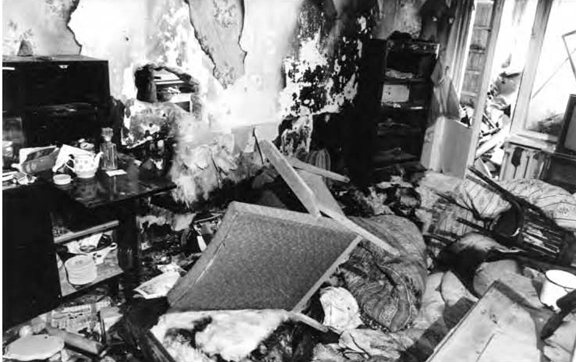
PanARMENIAN.Net – French MP Valérie Boyer has issued a statement on Azeri provocations during Feb 25 event 147913commemorating Sumgait pogrom victims in French National Assembly.

“Aliev regime encourages the incidents similar to that recorded during Feb 25 event commemorating the 25th anniversary of Sumgait pogrom, through promoting the propaganda of denial and increasing anti-Armenian provocations. The incident proves that Baku’s intentions have nothing to do with Nagorno Karabakh conflict settlement,” Ms Boyer said, adding that oil can buy neither memory, nor human rights.

Valérie Boyer addressed French President François Hollande with a call to take relevant diplomatic steps to end provocations of this type. I urge Claude Bartolone to include on National Assembly’s agenda the bill on combating racism and xenophobia through the criminal law. The bill criminalizing Armenian Genocide denial must be adopted,” Nouvelles d՝Arménie quoted Ms Boyer as saying.

Filed Under: News

Turkey turns into world’s biggest jail. CPJ

February 26, 2013 By administrator

16:41, 16 February, 2013

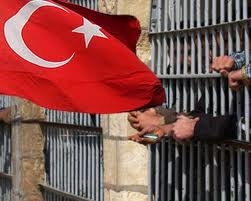
YEREVAN, FEBRUARY 16, ARMENPRESS: It is noted in the report of “Committee to Protect Journalists” international monitoring 708551organization (CPJ) that after detaining 49 journalists “Turkey is turning into world’s biggest jail”. In the “Risk list” of the organization, Turkey stands among Brazil, Ecuador, Iran, Pakistan, Russia and Vietnam. As reports Armenpress, referring to the web site of Turkish T24 channel, in accordance with the report, 43 journalists were killed when implementing their professional duties during 2012, which is for 43 percent more than during previous year.

Filed Under: News

After election win, Anastasiades tackles Cyprus bailout

February 25, 2013 By administrator

By Michele Kambas

NICOSIA | Mon Feb 25, 2013 1:13pm EST
(Reuters) – Cypriot president-elect Nicos Anastasiades, armed with a clear mandate from voters to protect the island from insolvency, said on Monday he was committed to reforms in return for a bailout.

Cyprus presidential candidate Anastasiades, of the right wing Democratic Rally party, leaves a booth as his grandson Andis looks on at a polling station in LimassolThe Conservative Anastasiades won decisive backing in a presidential election on Sunday for an aggressive approach to resolving the island’s worst financial crisis in four decades.

Anastasiades has promised a quick deal with foreign lenders and to bring Cyprus closer to Europe, in a shift from the policies of the outgoing Communist government that first sought aid from Russia before turning to the European Union.

“Long term prospects for Cyprus are excellent as we are committed to carrying out necessary structural reforms. We only need a helping hand now,” Anastasiades told Germany’s best-selling daily Bild, according to advance excerpts of an interview to be published in Tuesday’s edition.
Anastasiades, who says he will form a unity government, held consultations on Monday with the Democratic Party, a centrist party which supported his bid for the presidency.
There were persistent reports Michael Sarris, a former finance minister who successfully ushered Cyprus into the euro zone in 2008, would be appointed.
SMALL ISLAND, BIG PROBLEM

Eight months of talks on a bailout package have turned Cyprus, one of the euro zone’s smallest economies, into a big headache for the euro zone, triggering fears of a financial collapse that could reignite the bloc’s debt crisis.
Anastasiades will be sworn in on February 28, and fully assume duties on March 1. With state funds depleting rapidly and a 1.4 billion euro ($1.9 billion) debt maturing in June, he has little time.
In a joint statement on Monday, the French and German finance ministers said talks must begin with prospective lenders soon so a deal can be reached by the end of March.
Cyprus sought aid from the EU and the IMF last June, after a Greek sovereign debt restructuring saddled Cypriot banks with losses. It is expected to need up to 17 billion euros in aid – about the size of its entire economy.
“There is a pressing need to recapitalize our banking sector,” said Anastasiades in the Bild interview. “I agree with Germany and France that we should reach an agreement by March.”
Virtually all rescue options – from a bailout loan to a debt writedown or slapping losses on bank depositors – are proving unpalatable because they push Cypriot debt to unmanageable levels or risk hurting investor sentiment elsewhere in the bloc.

Although a draft bailout deal says banks may need “up to” 10 billion euros to recapitalize, a banking source said an asset review still under wraps has earmarked between 5.98 billion and 8.86 billion euros for banks.

With Cyprus’s fiscal needs at 7.0 to 7.5 billion over the next four years, the final bailout could reach 16 billion euros.

GERMAN WORRIES

German misgivings about Cyprus’s commitment to fighting money laundering and its strong financial ties with Russia – which has already extended a 2.5 billion euro loan to the nation – have further complicated negotiations.

Known for his no-nonsense style and impressive access to European policymakers such as German Chancellor Angela Merkel, Anastasiades took 57.5 percent of the vote in the run-off election, 15 points ahead of his anti-austerity Communist-backed rival Stavros Malas.

“Money laundering is a global problem and no country can remain immune to this problem. However I believe the comments about Cyprus are wrong and exaggerated. We have gone through proper checks,” Anastasiades said.

The island was ready to agree to further inspections by international or European committees and take on board proposals for improvement, he said.

Cyprus has been shut out of international capital markets for almost two years, with the outgoing administration resorting to heavy borrowing from state-owned corporations to pay public sector salaries.

Yet prices on the island’s internationally traded bonds have rallied in recent weeks. The quoted yield on a Cypriot 10-year benchmark bond has fallen to an 18-month low of 9.45 percent, according to Thomson Reuters data.

Filed Under: News Tagged With: Anastasiades tackles Cyprus bailout

An Armenian injured due to Damascus shelling

February 24, 2013 By administrator

17:03, 23 February, 2013

YEREVAN, FEBRUARY 23, ARMENPRESS: A shelling orchestrated in Syrian capital Damascus left more than two hundred victims, an Armenian inclusive on February 21 . Young Armenian Ara Halagyan has been injured; Syrian Armenian Nazaret Elmagyan told Armenpress. In the words of Elmagyan, the young man was immediately taken to h709405ospital, fortunately currently  his condition is stable and his life is out of danger. Three clashes were held in Damascus on February 23 which resulted in the death of 53 people, 235  people were wounded.

arabic.rt.com web site reports one of the clashes was hosted in the nearby territory of Baas party building in Saba Bahrat square, the second was in Rukn ad Din and the third in Brze district. Syrian SANA agency informs security forces succeeded to prevent another explosion. The terrorist was arrested; one ton blast device deployed in a car over was neutralized.

According to UN data over 70 thousand people were killed during 23 months lasting clashes in Syria, including four dozen Armenians.

Filed Under: News

Raffi Hovannisian meets with residents of Armenia’s Gyumri

February 24, 2013 By administrator

February 23, 2013 | 19:36

YEREVAN.- February 18 is a day of “greetings’ revolution”, presidential candidate Raffi Hovannisian said addressing the residents of Gyumir, Armenia’s second largest city.

141775Addressing the crowd, Hovannisian said the residents of Gyumri stated they are responsible for the votes and will never sell them. He noted that although previous authorities announced their contribution to renovation of Gyumri, destroyed after the 1988 devastating earthquake, nowadays the city remains a disaster area. Hovannisian promised to tackle the problems and create new jobs in a year.

Answering to the calls to overturn the regime, Heritage party leader said he respects Serzh Sargsyan.

“But we are the opposition, we will have enough courage to express gratitude to the first, second and third presidents and tell them the new time has come when power belongs to the people,” he emphasized.

He also announced the rally planned for Sunday in Yerevan, noting it will take place regardless of whether the demonstration will be authorized or not. “If they try to block roads heading to Yerevan, I will take it into account and come here again.”

Filed Under: News Tagged With: Raffi Hovannisian

Armenian youth of France informs Parisians and tourists about falsifications of Azerbaijani propaganda

February 24, 2013 By administrator

“Nazarbek”, the youth organization of Social Democratic (Hnchakyan) Party in France conducted a campaign to inform the public about falsifications of the Azerbaijani propaganda. In one of the tourist centers of Paris, in Montmartre, activists handed out leaflets and flyers to tourists and those interested, which were reflecting the real 1887information about Aghdam events taken place in 1992, called “Khojalu” by the Azerbaijani side.

Today the “House of Azerbaijan” held an action in Montmartre, in Paris, near the Church of the Sacre Coeur by launching balloons with the names of the victims of the events taken place in Aghdam.

On February 26, 1992, during the war in Karabakh, around 200 to 300 people (according to Human Right Watch, and 600 according to the version propagated by Azerbaijan) were killed in unknown circumstances near the city of Aghdam. They have been deliberately withheld by the Azerbaijani authorities in the midst of the military actions. Population of the village of Khojalu, which was one of the firing points shooting at the blockaded Stepanakert (among five others) was kept in the village for months by force and was not evacuated by the authorities of Azerbaijan deliberately, in order to use them as human shields later.

Residents of Khojalu coming out through the humanitarian corridor, that the self-defense forces of NKR had left open, freely passed more than 10 km and reached the Aghdam city controlled by the Azerbaijani troops. Later, not far from the positions of Azerbaijani troops dead bodies of the villagers were found. The exact death toll remains unknown as the official Baku publishes data contradicting each other. Parliamentary Commission investigating the tragic death of the civilians at Aghdam city was dissolved by the order of Heydar Aliyev, the investigative materials are kept secret.

Filed Under: News Tagged With: about falsifications of Azerbaijani propaganda

  • « Previous Page
  • 1
  • …
  • 656
  • 657
  • 658
  • 659
  • 660
  • …
  • 678
  • Next Page »

Support Gagrule.net

Subscribe Free News & Update

Search

GagruleLive with Harut Sassounian

Can activist run a Government?

Wally Sarkeesian Interview Onnik Dinkjian and son

https://youtu.be/BiI8_TJzHEM

Khachic Moradian

https://youtu.be/-NkIYpCAIII
https://youtu.be/9_Xi7FA3tGQ
https://youtu.be/Arg8gAhcIb0
https://youtu.be/zzh-WpjGltY


gagrulenet Twitter-Timeline

Tweets by @gagrulenet

Archives

Books

Recent Posts

  • Armenia’s Education Crisis: The PISA 2025 Results Should Concern Every Armenian
  • An Armenian Story Reaches the British Royal Family
  • Pashinyan & Company, greedy, evil, all-hating & all-powerful people clinging to their chairs…
  • Why Diaspora Armenian Must Begin Discussing a Government in Exile?
  • Israel recognized Armenian Genocide, Pashinyan in Panic

Recent Comments

  • Tina on Anna Hakobyan prepared a heartbreaking text about the deprivations “Hraparak”
  • Baron Kisheranotz on Pashinyan’s Betrayal Dressed as Peace
  • Baron Kisheranotz on Trusting Turks or Azerbaijanis is itself a betrayal of the Armenian nation.
  • Stepan on A Nation in Peril: Anything Armenian pashinyan Dismantling
  • Stepan on Draft Letter to Armenian Legal Scholars / Armenian Bar Association

Copyright © 2026 · News Pro Theme on Genesis Framework · WordPress · Log in