Gagrule.net

Gagrule.net News, Views, Interviews worldwide

  • Home
  • About
  • Contact
  • GagruleLive
  • Armenia profile

Turkey: HDP party Co-chair Selahattin Demirtaş to attend two hearings tomorrow January 17th

January 16, 2018 By administrator

Peoples’ Democratic Party (HDP) Co-chair Selahattin Demirtaş who is jailed since November 2016 will attend two hearings in Turkish capital Ankara tomorrow, Wednesday, January 17th.

The third hearing of the lawsuit against HDP Co Chair Selahattin Demirtaş by Ankara 10th. Penal Court of First Instance will be held on tomorrow at 09:25 a.m. in Ankara. Mr Demirtaş is charged with “insulting Süleyman Soylu” based on his speech that he made before general elections in June 2015.

The fourth hearing of another lawsuit against Demirtas will be held tomorrow in Ankara. In this case, Mr Demirtaş is charged with “insulting the Turkish state and the government”. The charge is based on his speech after the bomb attack in Peace Meeting in Ankara.

Date: January 17, 2018

Time: 09:25 a.m.

Place: Ankara 10th. Penal Court of First Instant (Ankara 10. Asliye Ceza Mahkemesi)

***

Date: January 17, 2018

Time: 11:00 a.m.

Place: Ankara 25th. Penal Court of First Instance (Ankara 25. Asliye Ceza Mahkemesi)

Demirtaş will attend both of the hearings in person.

Filed Under: Articles Tagged With: hearing, Selahattin Demirtas, Turkey

Turkey’s top Diyanet Imam Ali Erbas preaches in United state Maryland mosque for more “madrasah” Video

January 15, 2018 By administrator

Turkey‘s top official Diyanet Imam Ali Erbas preaches in United state Maryland mosque that was built by Turkish gov’t funds over 100 Million dollar, says mosques should be turned into madrasah (Schools teaching Islam) & education centres across the United State of America.

Since 2010, the State Directorate for Religious Affairs has risen in prominence. Diyanet’s budget has quadrupled under the AKP, and the Directorate now issues fatwas on demand, as well as wading into political issues and backing up the AKP position. Moreover, Diyanet has drastically increased its Under the AKP, Diyanet has grown exponentially. In less than a decade, its budget has quadrupled to over $2 billion, and it employs over 120,000 people,.

Under the AKP, Diyanet has grown exponentially. In less than a decade, its budget has quadrupled to over $2 billion, and it employs over 120,000 people, making it one of Turkey’s largest state institutions – bigger than the Ministry of Interior.

Filed Under: Articles Tagged With: Diyanet, madrasah, Turkey

Is Turkey aligned with al-Qaeda affiliate in Idlib?

January 15, 2018 By administrator

The Astana process is on the verge of collapse, as Turkey and Russia are lining up on opposite sides in Idlib, which may prove to be the decisive battle in the Syria war.

Syria’s military operations in Idlib “are making Turkey so tense that it summoned the ambassadors of Iran and Russia and warned them that the Syrian army’s moves violate the accord reached in Astana, Kazakhstan, which provides for de-escalation zones guaranteed by Iran, Russia and Turkey,” writes Fehim Tastekin.

Moscow has intimated that drones that targeted Russian facilities in Khmeimim and Tartus on Jan. 6 originated from areas controlled by Turkish-backed “moderate” opposition groups. Ankara has denied the charge, arguing that the attacks were the result of terrorist forces gaining a foothold in the region as a result of the Syrian offensive.

Turkey is the main backer of the “moderate” Free Syrian Army (FSA). Power in Idlib also rests with Hayat Tahrir al-Sham, the jihadi group that is linked with al-Qaeda and includes fellow travelers from Ahrar al-Sham, which lost out in the power struggle with Hayat Tahrir al-Sham. Both groups see the future of Syria as based on Islamic law, and their rule in Idlib has been characterized by tyranny and torture, as documented by Amnesty International and reported in this column.

In Ankara’s score, the Syrian offensive in Idlib is a violation of the cease-fire agreement and a threat to fragile peace negotiations. “Turkey’s sharp reaction to the uptick in fighting suggests that the agreement struck in Astana, at least as it relates to Idlib, is unraveling,” writes Amberin Zaman. “The immediate trigger appears to be the series of mysterious drone attacks on Russian military bases in Syria’s Latakia province since the start of the year. Moscow apparently believes Turkey did not stick to its side of the bargain either, amid accusations that Turkish forces chose to coexist rather than curb when they moved into Idlib last October as peace monitors.”

As Syrian forces advance, and come into conflict with the FSA and Hayat Tahrir al-Sham, Turkey finds itself in an uneasy alignment with Hayat Tahrir al-Sham, putting it at odds with both Russia and Iran. “The struggle at Idlib is considered by many to be the last act of the war against a jihadi group that is basically controlled by Hayat Tahrir al-Sham under the leadership of al-Qaeda-linked Jabhat Fatah al-Sham,” writes Tastekin. “Hayat Tahrir al-Sham labels the Astana and Geneva peace processes as treason, so the cease-fire Russia formulated excludes Hayat Tahrir al-Sham as well as the Islamic State (IS). From the outset, Russia said the cease-fire covers only ‘moderate’ opposition groups; operations against Hayat Tahrir al-Sham and IS will not cease. Turkey, on the other hand — despite its approval of the Astana process — decided to place Hayat Tahrir al-Sham in a different category. Ankara first tried to reshape that organization as it had earlier with Ahrar al-Sham. When that didn’t work, Turkey tried to split Hayat Tahrir al-Sham. When that didn’t work as well, Ankara accepted the facts of life and decided to cooperate.”

The top priority for Turkey is breaking the power of the Syrian Kurdish People’s Protection Units (YPG) militia, which it considers a terrorist organization, linked to the Kurdistan Workers Party (PKK) in Turkey. “If the terrorists in Afrin don’t surrender we will tear them down,” Turkish President Recep Tayyip Erdogan said Jan. 13.

“According to Hayat Tahrir al-Sham sources,” Tastekin reports, “there were three conditions to allow Turkey’s army to enter the area without encountering any opposition. One was that the target would be Afrin, where the Kurds have declared autonomy. A second would be that there would be no operation against groups controlling Idlib. The third was that local groups affiliated with Turkey’s Operation Euphrates Shield would not enter the area. … Turkey’s deployment — approved and escorted by Hayat Tahrir al-Sham — was not compatible with Iran’s and Russia’s definition of the de-escalation zone. Turkey was indirectly providing a shield for the organizations already dominating Idlib.”

In addition to divisions among the Astana parties, Turkey’s fractures with Hayat Tahrir al-Sham sparked divisions within the jihadi group itself. “In such a risky atmosphere, Ankara is hoping to hold on to Idlib and the triangle of al-Bab, Jarablus and Azaz that Turkey had secured in Operation Euphrates Shield, to use them as a card against Damascus in a settlement process,” Tastekin concludes. “Such a card would have serious ramifications for the fate of the Syrian president and the future of the Kurds as they seek to build their autonomy in the north. Until he gets the concessions he seeks for these two key issues, Erdogan doesn’t want the Syrian army to approach the Turkish border and face Turkish troops.”

Al-Monitor detailed financial roots of Iranian demonstrations in June 

The Wall Street Journal this week provided an in-depth report on the role of Iran’s unregulated financial and credit institutions in the current demonstrations.

The article reminded us of the outstanding and prescient analysis by Al-Monitor columnist Bijan Khajehpour, who in June 2017 warned of the risks if the Central Bank of Iran (CBI) did not license Iran’s unregulated credit and financial institutions.

Khajehpour wrote that “a sizable segment of the Iranian financial sector has become dominated by mostly unlicensed CFIs [credit and financial institutions]. These are usually affiliated with religious foundations, which claim the financial institutions are an extension of the religious responsibility of their umbrella organizations to extend interest-free loans to applicants. For a long time, the CBI was unable to challenge these entities as they claimed they were not engaging in mainstream banking and financial activities.”

Khajehpour wrote, “One apparent reason why there is a market for such institutions is that licensed public or private banks are not fully equipped to satisfy the demand for personal and business loans in the market, hence pushing many loan applicants to enter into a contract with CFIs. In other words, CFIs have filled a gap that has existed in the country’s money market in the absence of a more developed financial sector. At the same time, the mushrooming of unregulated CFIs and various cooperative funds across the country has led to unhealthy disruptions in the money market.”

He concluded, “Beyond the planned mergers and a potentially more stringent supervision by the CBI over CFIs and banks, the remaining core problem is a culture of corrupt dealings that needs to be addressed. In particular, entities closely affiliated with religious and political power centers have engaged in embezzlement schemes that have undermined the economic and social well-being of the country and further delegitimized the Islamic Republic as a political regime that can manage the complexities of a modern economy.”

AUB dedicates Halim and Aida Daniel Academic and Clinical Center

The American University of Beirut (AUB) this week dedicated the Halim and Aida Daniel Academic and Clinical Center, made possible through a generous gift from the Levant Foundation.

The center is named in honor of the parents of Jamal Daniel, the founder and chairman of Al-Monitor and founder and principal benefactor of the Levant Foundation.

AUB President Fadlo Khuri said, “The inauguration of the Aida and Halim Daniel ACC allows us to elevate our clinical care to a genuinely world-class level, and to launch clinical trials of the highest caliber. This is truly transformative change for the university, and we are grateful to the Daniel family for making this possible.”

Jamal Daniel said, “We are delighted that the Halim and Aida Daniel Academic and Clinical Center will touch the lives of future generations by providing both world-class education and the very best medical care for Lebanon and the Region, with the benefit of this first-class building and facility. The AUB institution is part of our collective history, and we need altogether in the Levant Region to go on reclaiming that history, because only when we see the world as it really is, can we begin to imagine what it could be.”

Filed Under: Articles Tagged With: Syria, Tahrir al-Sham, Turkey

US to use 30,000 border troops for security in Syria, anger’s Turkey

January 15, 2018 By administrator

The US-led coalition is working with a Syrian Kurdish group to set up a new border force of 30,000 personnel, the coalition said on Jan. 14, a move that has added to Turkey’s anger over US support to the group in Syria.

A senior Turkish official told Reuters the US training of the new “Border Security Force” is the reason that the US charge d’affaires was summoned in Ankara on Jan 10. The official did not elaborate, according to Hurriyet Daily News.

The force, whose inaugural class is currently being trained, will be deployed at the borders of the area controlled by the Syrian Democratic Forces (SDF) – made up mostly of People’s Protection Units (YPG)
militants.

In an almost immediate reaction to the American move, Presidential Spokesperson İbrahim Kalın said that Turkey has the right to defend itself against “terror groups” on its own terms and time, and that the U.S. stance on the issue is “unacceptable,” state-run Anadolu Agency reported.

“Turkey will continue to take all necessary precautions aligned with its national interest to preserve its national security,” Kalin added.

US support for the SDF has put enormous strain on ties with NATO ally Turkey, which views the YPG as a terrorist group for its link with the Kurdistan Workers’ Party (PKK).


In an email to Reuters, the coalition’s Public Affairs Office confirmed details of the new force reported by The Defense Post. About half the force will be SDF veterans, and recruiting for the other half is underway, the coalition’s Public Affairs Office said.

The force will be deployed along the border with Turkey to the north, the Iraqi border to the southeast, and along the Euphrates River Valley, which broadly acts as the dividing line separating the U.S.-backed SDF and Syrian government forces backed by Iran and Russia.

The coalition said the BSF would operate under SDF command and around 230 individuals were currently undergoing training in its inaugural class.

Filed Under: Articles Tagged With: Syria, troops, Turkey, U.S

Turkey: HDP co-chair Selahattin Demirtaş appears in court for first time in 14 months Video

January 12, 2018 By administrator

Jailed Peoples’ Democratic Party (HDP) co-chair Selahattin Demirtaş appeared before court in Istanbul on Jan. 12 for the first time, 14 months after his detention.

Demanding the case be referred to the Constitutional Court, Demirtaş argued that the cases were a violation of the legislative immunity granted to him through his lawmaker status.

Demirtaş, who is currently in prison in the northwestern province of Edirne, was being tried for “insulting the president” in comments he made regarding President Recep Tayyip Erdoğan on Dec. 24, 2015.

The hearing was part of just one of over 20 cases filed against the Kurdish issue-focused HDP co-chair, and over 90 hearings have been held in cases against him in his absence.

Demirtaş was imprisoned on Nov. 4, 2016 over charges related to terrorism. The first hearing of that case took place on Dec. 7, 2017.

Security reasons had until now been cited as the reason for not bringing him to hearings in Istanbul, Ankara or Diyarbakır. Demirtaş had also refused to connect to the courtroom via SEGBİS, an audiovisual system.

Giving his first statement after 14 months behind bars, Demirtaş stressed the judicial immunity granted to him by his status as an MP, stating that the legislative processes for these 20 cases had not been implemented at the same time.

Demirtaş also noted that he was not ordered to be arrested as part of this particular case.

“I had the chance to appear before the judge for the first time in 14 months for more than 20 legal suits brought against me. Some 97 hearings had been held about me. All of those hearings were either held in my absence or SEGBİS was imposed upon me,” said Demirtaş in the courtroom.

Filed Under: Articles Tagged With: in court, Selahattin Demirtas, Turkey

United States, urging U.S. citizens to reconsider travel to Turkey “due to terrorism and arbitrary detentions.

January 12, 2018 By administrator

The U.S. cited two justifications for its strong travel warning on Turkey: The continued risk of terrorism and the arbitrary detention of individuals under the ongoing state of emergency.

It called on U.S. citizens to avoid all travel to any areas along the Turkey-Syria border, as well as the southeastern provinces of Hatay, Kilis, Gaziantep, Şanlıurfa, Şırnak, Diyarbakır, Van, Siirt, Muş, Mardin, Batman, Bingöl, Tunceli, Hakkari and Bitlis due to terrorism.

“Terrorist groups continue to plot possible attacks in Turkey. Terrorist organizations explicitly target Western tourists and expatriates,” it stated, stressing that tourist locations, transportation hubs, markets/shopping malls, local government facilities, hotels, clubs, restaurants, places of worship, parks, major sporting and cultural events, educational institutions, airports, and other public areas may be potential targets.

It also added that these areas have been vulnerable to terrorist activities as well as kinetic actions by the Turkish security forces, recalling that “large-scale terrorist attacks including suicide bombings, ambushes, car bomb detonations, improvised explosive devices, as well as kidnappings for ransom, shootings, roadblocks and violent demonstrations” have occurred in these areas.

‘Politically motivated detentions’

The note posted on the State’s Department’s website also referred to the ongoing implementation of the state of emergency in Turkey, saying “security forces have detained individuals suspected of affiliation with alleged terrorist organizations based on scant or secret evidence and grounds that appear to be politically motivated.”

U.S. citizens have also been subject to travel bans that prevent them from departing Turkey, it urged, warning that participation in gatherings, protests, and demonstrations not explicitly approved by the Turkish government can result in arrest.

“The Government of Turkey has detained and deported U.S. citizens without allowing access to lawyers or family members, and has not routinely granted consular access to detained U.S. citizens who also possess Turkish citizenship. U.S. government personnel in Turkey are subject to certain security restrictions. Family members cannot accompany U.S. government employees who work at the U.S. Consulate in Adana,” it stated.

Ties between Ankara and Washington have undergone severe turbulence in recent months. A local employee at the U.S. Consulate General in Istanbul, Metin Topuz, was arrested on terror charges in October 2017, just ahead of a trial of a former Turkish state banker at a New York court on charges that he was helping an Iranian-Turkish businessman evade U.S. sanctions on Iran.

Filed Under: News Tagged With: detentions, motivated, Politically, Travel, Turkey, U.S

Turkey 500 soldiers died suspiciously in four years

January 11, 2018 By administrator

Suspicious Deaths and Victims Association Chairperson Oktay Can said that 500 soldiers have lost their lives under suspicious circumstances in the last four years.

The Suspicious Deaths and Victims Association had recently announced that 2.500 soldiers have lost their lives in the last 22 years. The provinces with State of Emergency practices are in the lead in suspicious soldier deaths.

The organization’s chairperson Oktay Can said they founded the Suspicious Deaths and Victims Association in 2013 and that 500 families have appealed to them to date claiming their children had died under suspicious circumstances and added that the suspicious soldier deaths have increased with the reimplementation of the State of Emergency.

“NOBODY ELSE KNOWS THE PAIN OF LOSING A CHILD”

Can said he personally lost his son in 2009 in the Hozat Sarıkaş Outpost in Dersim and stated that he experienced the deep pain of losing a child and they founded the association so other families never do and suspicious deaths are prevented. Can pointed out that lawsuits about soldiers who lost their lives under suspicious circumstances have never been concluded to date and have been stuck on the statute of limitations: “My son lost his life when his commander shot 2 bullets to his head. There were bruises on my son’s neck due to battery. I received the autopsy report, it stated how he died, but when we wanted to investigate the matter we were told the military prosecutor’s office would issue a statement. There are many soldier deaths by the hands of commanders like my son’s. To date, some 2.300 families have been subjected to such approaches. The cases weren’t resolved through lawsuits. I am following up on my own son’s file. Most recently I took my son’s case to the European Court of Human Rights (ECHR). And as an association we are working for other families’ children as well.”

“IF COMMANDERS DON’T SHOOT SOLDIERS, WHAT HAPPENED ON JULY 15?”

Can said they took the deaths to the Grand Parliamentary Assembly of Turkey, but couldn’t convince anybody there that the deaths were in fact suspicious: “Nobody we talked to in the Parliament believed us. I spoke to the President about this as well, but he told me commanders don’t shoot soldiers. We saw in the July 15 coup attempt that soldiers can in fact turn their guns towards the people, to their own, and they attacked people with tanks. In any case, we have so much evidence, but we can’t explain ourselves to the prosecutors. Because military prosecutors receive orders in doing their duty, and thus our initiatives fall short. The prosecutors decide against investigating ‘suspicious deaths’. So we speak to others about our issues. People who appeal to us say their sons were killed by their commanders.”

“IT’S USUALLY KURDISH AND ALEVI SOLDIERS WHO DIE”

Can said the suspicious soldier deaths occur most frequently in Kurdish provinces and contiued: “Many people suffer torture during their military service, and many are killed arbitrarily. There is a lot of evidence to document this, but as the military courts are not completely just, our cases don’t produce results. Most of the deaths occur in Eastern and Southeastern parts. And most soldiers who die there turn out to be Kurdish or Alevi.”

“500 SOLDIERS KILLED UNDER SUSPICIOUS CIRCUMSTANCES IN 4 YEARS”

Can stated that they have received appeals from many provinces since the association was founded and added: “To date, some 500 families have appealed to us. Their children also received violent abuse from their commanders. 80% of the families are Kurdish. They are pressured and intimidated by the commanders to not file charges. There are many families we can’t reach because of this intimidation. We demanded that a parliamentary commission be formed to investigate the matter and hear the families. Among our demands is that our children are insured by the state, that our children are not killed by their commanders. There are some soldiers who were married, and because the state doesn’t offer any form of aid after they are killed, there are children of these soldiers who have to pick bread out of the trash to eat.”

“NO MANDATORY MILITARY SERVICE”

Can spoke of the necessity to remove mandatory military service and said: “When we look at the Turkish Armed Forces (TAF), soldiers suffer either food poisoning, or they are tortured, or they are killed. That is why we demand an end to mandatory military service. Even if they don’t fully remove the mandatory military service, they should introduce a civil service in any state institution as the duty to the country.” Can concluded his words with a demand to try and punish the killers of soldiers.


Filed Under: Articles Tagged With: died, soldiers, suspiciously, Turkey

Tension keeps rising in Cairo over Turkey-Sudan island pact Turkish military expansion

January 11, 2018 By administrator

George Mikhail,

January is Egypt’s coldest month as far as temperatures go, but things are heating up rapidly there over Turkey’s recent deal to lease Suakin Island from Sudan.

Turkish President Recep Tayyip Erdogan says Turkey just plans to renovate the island and restore Ottoman relics. But Egypt, as well as Saudi Arabia, fears Ankara’s plans go much further, to include a military base that could threaten their security.

“The Suakin Island deal is provoking anger in Egypt because it has ambiguous objectives, and because there is [already] a problem between the parties that signed the agreement and Egypt,” Maj. Gen. Kamal Amer, the head of the Egyptian parliament’s National Defense and Security Committee, told Al-Monitor.

Amer was referring to the Egyptian-Sudanese territorial dispute over the Halayeb and Shalateen triangle, and Sudan’s position against Egypt in Cairo’s argument with Ethiopia over the Grand Ethiopian Renaissance Dam. As for Turkey, Egypt distrusts Ankara’s support for the Muslim Brotherhood, which Egypt considers a terrorist group.

Amer minced no words over Egypt’s position on Suakin Island. “Egypt has in its possession proof that there are Turkish military purposes behind [the deal] over the island. Turkey has built several military bases in Africa. To preserve its security, Egypt will not allow a Turkish military base to be built [in Sudan],” he said.

While visiting Sudan in late December, Erdogan signed 13 development agreements covering a port and shipyards for military and civilian ships in the Red Sea, a hospital, a free-trade zone in Port Sudan, grain silos at different locations, a university, power stations and a new airport for Khartoum, the capital.

Sudanese President Omar al-Bashir said there are other plans for the island that he would discuss later.

Tarek Fahmy, a political science professor at the American University in Cairo, told Al-Monitor that Egypt is worried because Turkey has already demonstrated its desire to build a military presence in the region by recently opening a base in Somalia. Egypt fears Turkey plans to exploit the island “to tighten the noose around Egypt’s neck, given that the island is close to the Egyptian border,” he said.

Cairo must see the Suakin deal as a declaration of a Turkish-Sudanese alliance opposing Egypt. Tensions between Sudan and Egypt escalated to the point that Sudan’s Foreign Ministry recalled its ambassador to Cairo for consultation Jan. 4. Egyptian Foreign Ministry spokesman Ahmed Abu Zeid said, “An integral assessment of the situation is taking place and will precede an appropriate action by Egypt.”

He said Cairo has options. “Egypt is able to deter the Turkish actions via different means, including to enhance relations with African countries to prevent Turkey from filling the gap, and to develop the Egyptian army in anticipation of any threat and in order to bring about a balance of power in the region,” Zeid noted.

Egypt’s media outlets have fiercely lambasted the Suakin deal. Journalist Emad Eddin Adeeb wrote in a Dec. 25 article that Sudan has plainly granted Turkey permission to build a military naval base “for defense, training and weapon storage.”

“It will be built via Turkish companies and will be entirely funded by Qatar,” he predicted, echoing what many have speculated.

Media figure Ahmed Moussa said Dec. 26 on Sada al-Balad channel that the deal basically allows for “Turkish colonization” and poses a threat to Arab-Egyptian national security. He claims Turkey seeks to exert hegemony by expanding outside its boundaries.

It’s not lost on Egypt that the Ottoman empire based its navy at Suakin.

Adding to the tension, the Turkish and Sudanese chiefs of staff have agreed to develop military cooperation. In his “Facts and Secrets” show Dec. 28, media figure Mustafa Bakri said the deal will be “designed to ensure a Turkish presence in the face of the Egyptian ships.”

In response to the Egyptian media’s sharp criticism of the deal, Sudan’s Foreign Minister Ibrahim Ghandour stated Dec. 26, “We do not concern ourselves with the approving or disapproving reactions. It surprises me how some of the Egyptian media reacted, but we do not consider all Egyptians to be on the same side. Clearly, there are some who do not comprehend how relations are managed among the states.”

In a Dec. 29 interview with the official Turkish TRT Al-Arabiya outlet, Ghandour said that some Egyptians are “ignoring the fact that a strong Sudan is important for a strong Egypt.”

The Saudi press also lambasted the Suakin deal. Okaz daily published an article Dec. 27 saying Sudan has succumbed to Turkey’s “embrace.” The story highlighted Turkey’s immense ambitions in Africa, noting that Turkey has not contented itself with the new military base it inaugurated in Somalia in September.

Samia Rafla of the parliamentary Foreign Affairs Committee said the committee will be holding an important meeting about the Suakin deal, Egypt’s Dostor.org reported Jan. 6.

Filed Under: Articles Tagged With: military expansion, sudan, Turkey

Greece Seizes Libya-Bound Ship Carrying Explosive Materials Loaded In Turkish Ports

January 11, 2018 By administrator

Greek authorities have seized a Tanzanian-flagged ship heading for Libya and carrying materials, which have been loaded in Turkey’s İskenderun and Mersin ports, used to make explosives, the Greek coastguards said on Wednesday.
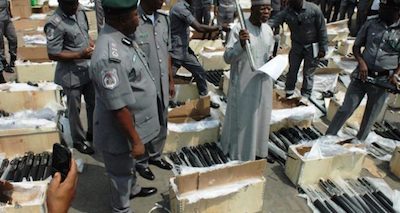
According to a report by Reuters, the vessel was detected sailing near the Greek island of Crete on Saturday. Authorities found 29 containers carrying materials including ammonium nitrate, non-electric detonators and 11 empty liquefied petroleum gas tanks. “The materials were headed to Libya,” Rear Admiral Ioannis Argiriou told reporters. He said the material could be used “for all sorts of work, from work in quarries to making bombs and acts of terrorism.”

European Union and United Nations-imposed arms embargoes have prohibited the sale, supply or transfer of arms to Libya since 2011. According to the ship’s bill of lading, the cargo had been loaded in the Turkish ports of Mersin and İskenderum and was destined for Djibouti and Oman.

But the Greek coastguard said a preliminary investigation found the captain had been ordered by the vessel’s owner to sail to the Libyan city of Misrata to unload and deliver the entire cargo. No shipping maps were found on the ship’s logbook for the Djibouti and Oman areas, the coastguard said. The eight-member crew has been arrested and will appear before a prosecutor on Thursday.

On September 2017, the Tin-Can Island Command of the Nigeria Customs Service (NCS) busted syndicates that smuggled weapons into Nigeria in containers containing guns from Turkey and apprehended weapons and ammunition two times within two weeks. Nigerian customs had said the guns were found in a 20-foot container marked No. CMAU189817/8.

The statement quoted Col. Hammed Ali, the comptroller-general, as narrating how the terminal operator quarantined the flagged container for stricter analysis. “It was transferred to the enforcement unit, where 100 percent examination revealed 470 pump action rifles as against elbow plumbing plastics on its bill of lading,” it said.

“Importer of this deadly cargo is Great James Oil and Gas Ltd, while the vessel is MV Arkas Africa owned by Hull Blyth. This discovery brings to a total of 2,671 rifles seized within the last eight months of this year,” said the statement. “Since this container belongs to the same importer of the 1,100 rifles, the ongoing investigation will be reinvigorated to fish out all those directly or remotely connected with these dangerous importers,” it added.

A top Nigerian official had also met with the Turkish ambassador to Nigeria after a container containing hundreds of guns from Turkey was confiscated. The Nigerian media had reported that this was the fourth time in a year that illegal arms shipments from Turkey were seized by customs officers in Nigeria. Nigeria Customs Service, NCS, said 2,671 rifles had been imported from Turkey since January.

“The government is worried about the incessant importation of arms from Turkey. This year alone, four shipments have come from that country,” customs spokesman Joseph Attah had told AFP. According to Attah, 470 rifles were seized on Tuesday less than two weeks after operatives of the Tin-Can Island Command of NCS busted a syndicate that smuggled over 1,100 weapons into Nigeria.

“We have found out that the people bringing in these weapons are Nigerians. They have syndicates in Turkey who are manifesting these weapons,” Atah said and added that “We are yet to get to the bottom of the whole issue. We will investigate to know if these weapons are meant for commercial purposes or group of insurgents or agitators.”

In January 2014, a number of trucks that were found to belong to MİT were stopped by Turkish gendarmes in two separate incidents in the southern provinces of Hatay and Adana, after prosecutors received tips that they were carrying arms to Syria.

Although the Justice and Development Party (AKP) government has claimed that the trucks were transporting humanitarian aid to the Turkmen community in Syria, opposition voices have continued to question why, if the operation was within the law, the government intervened to prevent the trucks from being searched.

Cumhuriyet daily had reported in May 2015 that  trucks allegedly owned by the National Intelligence Organisation (MİT) were found to contain weapons and ammunition that were headed for Syria when they were stopped and searched in southern Turkey in early 2014.

When the MİT truck story first broke in 2015, it produced a political firestorm in Turkey about the role of the Turkish spy agency in arming rebel factions in Syria and prompted an investigation into Cumhuriyet daily journalists Can Dündar and Erdem Gül, who published the report.

Also in 2014, Turkish Airlines attracted attention after a voice recording surfaced, allegedly a phone conversation between a senior Turkish Airlines (THY) official and one of then-Prime Minister Recep Tayyip Erdoğan’s advisers.

“Lots of material is on its way to Nigeria right now. Is it going to kill Muslims or Christians? I am sinning right now, you should know,” one voice, purportedly that of the THY official, says.

The voice supposedly of Erdoğan’s adviser says he would contact with MİT Undersecretary Hakan Fidan. Turkish Airlines denied carrying weapons and military equipment to Nigeria.

Filed Under: Articles Tagged With: Explosive Materials, Greece, Turkey

German Foreign Minister Sigmar Gabriel condemned for palling with Turkey

January 8, 2018 By administrator

German Foreign Minister Sigmar Gabriel has been criticized for pouring tea for his Turkish counterpart Mevlut Cavusoglu. And for saying there was nothing wrong with reinforcing Turkish tanks, despite human rights abuses.

Virtually all of Germany’s political parties came together on Monday to condemn Foreign Minister Sigmar Gabriel for his impromptu meeting with his Turkish counterpart Mevlut Cavusoglu in the central German town of Goslar at the weekend.

Cem Özdemir, departing leader of the Green party, didn’t like the imagery: particularly a widely-shared picture of Gabriel, a member of the center-left Social Democrats (SPD), pouring Cavusoglu a cup of tea. “If I’d have been representing Germany, I certainly wouldn’t have served the Turkish foreign minister with a Turkish tea service and allowed myself to be photographed doing it,” he told public broadcaster ARD on Monday morning.

This image would be understood in Turkey as a sign that “Germany was serving Turkey and the Turkish foreign minister,” added Özdemir, who might himself have angled for Gabriel’s job had the Green party’s coalition negotiations with Angela Merkel’s conservative Christian Democrats (CDU) gone differently last year.

Virtually all of Germany’s political parties came together on Monday to condemn Foreign Minister Sigmar Gabriel for his impromptu meeting with his Turkish counterpart Mevlut Cavusoglu in the central German town of Goslar at the weekend.

Cem Özdemir, departing leader of the Green party, didn’t like the imagery: particularly a widely-shared picture of Gabriel, a member of the center-left Social Democrats (SPD), pouring Cavusoglu a cup of tea. “If I’d have been representing Germany, I certainly wouldn’t have served the Turkish foreign minister with a Turkish tea service and allowed myself to be photographed doing it,” he told public broadcaster ARD on Monday morning.

This image would be understood in Turkey as a sign that “Germany was serving Turkey and the Turkish foreign minister,” added Özdemir, who might himself have angled for Gabriel’s job had the Green party’s coalition negotiations with Angela Merkel’s conservative Christian Democrats (CDU) gone differently last year.

Other sections of Germany’s political spectrum made similar complaints. The Free Democratic Party (FDP) — Germany’s free-market purists — also criticized the unofficial meeting as “inappropriate” while “Germans were being kept as prisoners without charge in Turkish jails,” as FDP parliamentary leader Alexander Graf Lambsdorff put it. German-Turkish journalist Deniz Yücel has been kept without charge in a Turkish prison for nearly a year.

“To re-start German-Turkish relations we need clarity,” he told the WAZ newspaper. “That’s only possible if the German hostages like Deniz Yücel are released immediately. Only after that can trade, defense cooperation and other issues go back on the agenda — and not before.”

No changes in Turkey

Turkey is keen to buy German equipment to reinforce its tanks against mines laid by the “Islamic State” militia in northern Syria, and in Goslar on Saturday Gabriel appeared to suggest that “when it comes to this concrete case,” Turkey’s arguments “make sense to me.”

This drew criticism from other German politicians, not least because it had been Gabriel who, in the thick of the SPD’s election campaign last summer, had said that Germany needed to take a tougher course against Ankara. As many politicians pointed out this weekend, Turkey’s political climate has hardly become more liberal since then. “There is nothing new substantially, no change and no solution to problems, because nothing has changed about the causes of the problem,” as the CDU’s Norbert Röttgen said.

In response, Gabriel was quick to qualify his statements on Sunday. He insisted that he had used the meeting with Cavusoglu to urge Yücel’s release. and said that the government would not change its line on another joint project between German and Turkish arms companies — the building of a tank factory, which German weapons maker Rheinmetall was keen to be part of, despite much protest.

Filed Under: Articles Tagged With: condemned, pouring, Sigmar Gabriel, tea, Turkey

  • « Previous Page
  • 1
  • …
  • 13
  • 14
  • 15
  • 16
  • 17
  • …
  • 271
  • Next Page »

Support Gagrule.net

Subscribe Free News & Update

Search

GagruleLive with Harut Sassounian

Can activist run a Government?

Wally Sarkeesian Interview Onnik Dinkjian and son

https://youtu.be/BiI8_TJzHEM

Khachic Moradian

https://youtu.be/-NkIYpCAIII
https://youtu.be/9_Xi7FA3tGQ
https://youtu.be/Arg8gAhcIb0
https://youtu.be/zzh-WpjGltY


gagrulenet Twitter-Timeline

Tweets by @gagrulenet

Archives

Books

Recent Posts

  • Pashinyan Government Pays U.S. Public Relations Firm To Attack the Armenian Apostolic Church
  • Breaking News: Armenian Former Defense Minister Arshak Karapetyan Pashinyan is agent
  • November 9: The Black Day of Armenia — How Artsakh Was Signed Away
  • @MorenoOcampo1, former Chief Prosecutor of the International Criminal Court, issued a Call to Action for Armenians worldwide.
  • Medieval Software. Modern Hardware. Our Politics Is Stuck in the Past.

Recent Comments

  • Baron Kisheranotz on Pashinyan’s Betrayal Dressed as Peace
  • Baron Kisheranotz on Trusting Turks or Azerbaijanis is itself a betrayal of the Armenian nation.
  • Stepan on A Nation in Peril: Anything Armenian pashinyan Dismantling
  • Stepan on Draft Letter to Armenian Legal Scholars / Armenian Bar Association
  • administrator on Turkish Agent Pashinyan will not attend the meeting of the CIS Council of Heads of State

Copyright © 2025 · News Pro Theme on Genesis Framework · WordPress · Log in