Gagrule.net

Gagrule.net News, Views, Interviews worldwide

  • Home
  • About
  • Contact
  • GagruleLive
  • Armenia profile

New Glendale Library exhibit honors Armenian heritage

July 14, 2018 By administrator

Ashot Khudaverdyan’s paintings on display during the “Yerevan 2800” art exhibit at the Glendale Central Library. The paintings are part of a special 10-day exhibition at the Glendale Central Library’s ReflectSpace and PassageWay galleries to celebrate Yerevan’s history. (Courtesy of Glendale Central Library)

By Michael Livingston,

A new art exhibit will pay homage to Armenia’s capital city, a place many Glendale residents call their native home.

To celebrate the 2,800th anniversary of Yerevan, the capital of Armenia, a special 10-day exhibition at the Glendale Central Library’s ReflectSpace and PassageWay galleries will celebrate the city’s history.

The library’s newest exhibit, “Yerevan 2800” will be in its ReflectSpace and PassageWay galleries. It is a joint effort between the city of Glendale and the Library, Arts & Culture Department in collaboration with the Yerevan Municipality Tourism Office.

“We usually approach an exhibit with contemporary art, along with historical images and context,” said co-curator Ara Oshagan. “There is a huge population of Yerevanians in Glendale.”

The exhibit will feature contemporary art, photography and film from eight artists — Sev Black, Sophia Gasparian, Narine Isajanyan, Edmond Keshishyan, Ashot Khudaverdyan, Karen Mirzoyan, Emily Mkrtichian and Anahid Yahjian — who have Yerevan connections.

The exhibit also comes on the heels of Armenia’s “Velvet Revolution,” a nonviolent grass-roots movement to remove President Serzh Sargsyan from office. Sargsyan resigned on April 23, and opposition leader Nikol Pashinian was elected prime minister on May 8.

Isajanyan, 41, was in Yerevan a few days before the exhibit opened on Wednesday.

She and her 10-year-old son were in the city for 40 days while Isajanyan worked on a group art exhibit. Isajanyan said the Yerevan people are still in the honeymoon period after the election.

“People were so happy. Everything has changed completely,” Isajanyan, 51, said. “They believe the new generation will lead us to new heights.”

For her portion of the exhibit, Isajanyan painted abstract pieces that symbolically represent how Yerevanians are never far from their native home.

“In America, there are a lot of nationalities. People are trying to live together,” Isajanyan said Friday morning. “This is an opportunity to be together. We are bringing you our culture, showing who we are and where we come from.”

“In my work, I show how people don’t have to physically be somewhere” to appreciate it, she said.

Artist Black lived in Yerevan for 22 years and brought an interesting piece from his homeland to the exhibit — garbage.

“I’m not offended when people say, ‘What does your garbage represent?’ Sometimes people ask what I do for a living. I say, ‘Garbage collector,’” Black said Friday afternoon.

Sev Black, whose real name is Henrik Khachatryan, is presenting a collection of artwork created in Yerevan in the early 1990s from garbage.

What residents considered useless or expired, Black saw inspiration. He said his pieces are in relation to possession and how society treats inanimate items, and by extension, people, who matter and don’t matter.

“We use them, then throw them away,” Black said. “Then, when it [breaks], we throw it away. And we project our way of being onto the people, too. If we can get some profit or something from them, we will have good relations with them. If not, we throw them away.”

Black, 63, collected the garbage and then used different torches to create his work.

“They are like my brushes,” he said.

Black considers himself a performance artist who sometimes brings the process-making of his work to the audience.

“When I was younger in Yerevan, I burned my art in public,” Black said. “In one exhibition, I was burning one piece, then we would go inside to see the other.”

Black said Friday he would not be burning anything during the exhibit’s opening reception later that night. He will be smiling, as he will be sharing his homeland with people interested in its history, culture and people.

“I lived there all my youth and some of my adult life,” Black said. “I am proud.”

Filed Under: News Tagged With: Armenian, Heritage

A world heritage exhibition at the warehouse, Depo’da bir dünya mirası sergisi

March 14, 2018 By administrator

ANI A world heritage

Ստամբուլում ցուցահանդես և կոնֆերանս` Անիի ճարտարապետական կոթողների թեմայով

Today, on March 13, Depo is preparing to host a display entitled ‘The Stone Poem Ani: A Treasure of Architecture at the Crossroads of Cultures’. The exhibition, which will be opened at 18:30 at the Depot, will show photographs and videos of Ani, which has a great proposition in Armenian history and added to the list of World Cultural Heritage in 2016. Photographs of Ara Güler, Martin Manukyan, Murat Germen and Vedat Akçayöz and the videos of Ümit Kıvanç, Engin Akhisar and Neslihan Koyuncu will be available until 29th April.

A conference will be held in Algeria on Wednesday, March 14 as part of the exhibition. which will begin at 18.30 Anime: A World Heritage Site in Turkey titled ‘conference in Norway, former director of the Cultural Heritage Research Institute Carsten Paludan-Müller, deputy chairman of the institute Armen Kazaryan, restoration architect Yavuz Özkaya and photographer Valerie Akcayoz, in Ani will make presentations on cultural history.

Ստամբուլում երեկ և այսօր միջոցառումներ են կազմակերպվել` Անիի ճարտարապետական ժառանգության վերաբերյալ: Այդ մասին, ըստ Akunq.net-ի, հաղորդում  է Կ.Պոլսում հայերեն և թուրքերեն տպագրվող հայկական «Ակօս» շաբաթաթերթը:

Աղբյուրի համաձայն, երեկ` մարտի 13-ին, Ստամբուլի «Դեփո» անվամբ մշակութային կենտրոնում ցուցահանդես է բացվել` «Քարերի պոեզիան` Անին. ճարտարապետական գանձարան մշակույթների խաչմերուկում» խորագրով: Ցուցահանդեսին ներկայացված են 2016 թ. ՅՈՒՆԵՍԿՈ-յի համաշխարհային ժառանգության ցանկում ներառված Անիում արված լուսանկարներ և տեսագրություններ: Սույն ցուցահանդեսն այցելուների առջև բաց կլինի մինչև ապրիլի 29-ը: Ցուցադրված են Արա Գյուլերի, Մարտին Մանուկյանի, Մուրադ Գերմենի և Վեդաթ Աքչագյոզի հեղինակած լուսանկարները:

Իսկ այսօր` մարտի 14-ին, Ստամբուլի Ջեզայիր սրահում կոնֆերանս կկազմակերպվի` «Անի. համաշխարհային մշակույթի ժառանգություն Թուրքիայում» խորագրով, որին կմասնակցեն Նորվեգիայի Մշակութային ժառանգության ուսումնասիրության ինստիտուտի նախկին տնօրեն Քարստեն Փալուդան-Մյուլլերը, նույն ինստիտուտի փոխնախագահ Արմեն Ղազարյանը, վերականգնող ճարտարապետ Յավուզ Օզքայան և լուսանկարիչ Վեդաթ Աքչագյոզը, ովքեր զեկուցումներ կներկայացնեն` Անիի մշակութային պատմության թեմայով:

Bugün, 13 Mart’ta Depo, ‘Taşın Şiiri Ani: Kültürlerin Kavşağında Bir Mimarlık Hazinesi’ başlıklı bir sergiye ev sahipliği yapmaya hazırlanıyor. Saat 18:30’da Depo’da açılacak olan sergide, Ermeni tarihinde büyük bir öneme sahip olan ve 2016’da Dünya Kültür Mirası listesine eklenen Ani’ye ait fotoğraflar ve videolar gösterilecek. Ara Güler, Martin Manukyan, Murat Germen ve Vedat Akçayöz’ün fotoğrafları ile Ümit Kıvanç, Engin Akhisar ve Neslihan Koyuncu’nun videolarının yer alacağı sergi, 29 Nisan’a kadar ziyaret edilebilecek.

Sergi kapsamında 14 Mart Çarşamba günü Cezayir’de bir konferans da düzenlenecek. 18.30’da başlayacak olan ‘Ani: Türkiye’de Bir Dünya Kültür Mirası’ başlıklı konferansta Norveç Kültürel Miras Araştırma Enstitüsü’nün eski direktörü Carsten Paludan-Müller, enstitünün başkan vekili Armen Kazaryan, restorasyon mimarı Yavuz Özkaya ve fotoğrafçı Vedat Akçayöz, Ani’deki kültürel tarihe dair sunumlar yapacak.

Source: http://www.agos.com.tr/tr/yazi/20328/depoda-bir-dunya-mirasi-sergisi

Filed Under: News Tagged With: Ani, exhibition, Heritage, World

RAA releases new volumes of the series featuring historical Armenian heritage

December 29, 2017 By administrator

“Around 5 or 6 Armenians currently live in Salmast, Iran, while the adjacent villages have been totally stripped of the Armenian population. The Armenian school in Salmast town operated until 1970,” the Director of Research on Armenian Architecture Foundation (RAA) Samvel Karapetyan told reporters on Friday at a press conference.

Karapetyan, whose Foundation investigates and documents Armenian monuments located outside the borders of the present-day Republic of Armenia, namely in Historical Armenia (the Armenian districts of Turkey, Iran, Georgia and Azerbaijan) informed about the two volumes of the newly-published series dedicated to ancient Armenian provinces. The first one titled “Hayots Dzor” (Armenian Gorge) devoted to Vaspurakan province and the second one named “Salmast”. The third volume which is planned to be released in the coming year is devoted to Artskhe community located in the area of Lake Van. In total, 36 volumes are planned to be published corresponding to the number of letters in the Armenian alphabet.

“Thus far, only one brief book has been published telling the story of Salmast, released in 1906 in New Jugha. No work has been published over the past 110 years. Our book is the first publication after the long break. The book also tells the story of the cemetery of Payajuk village in Salmast, where the mother of renowned Armenian novelist Raffi is buried,” Karapetyan said.

The researcher next presented the newly released book named “Azerbaijan: Enemy of civilization,” covering documented cases of Azerbaijani vandalism against Armenian cultural heritage.

Filed Under: Articles, Books Tagged With: Armenian, Heritage, Historical, raa

Canada urged to call Baku to account for destroying Armenian heritage

December 9, 2016 By administrator

The Armenian National Committee of Canada (ANCC) is marking the 11th anniversary of Azerbaijan’s destruction of the historic Armenian cemetery of Djulfa by calling on the Canadian government to hold Azerbaijan accountable for the systematic destruction of Armenian historical, cultural and religious sites and monuments, the ANCC said in a statement.
On December 10, 2005, the government of Azerbaijan began the final demolition of the historic Armenian cemetery in Djulfa, an ancient Armenian city now located in Azerbaijan. This marked the final blow to the 10,000 intricately hand carved khachkars (stone crosses) which were erected between the 6th through the 17th centuries. Khachkars are a uniquely Armenian form of stone carving which UNESCO has recognized as being both culturally and religiously significant to the Armenian people and constituting part of humanity’s shared intangible cultural heritage in need of urgent safeguarding.

By December 15, 2005, the final destruction was complete. Approximately 200 Azerbaijani soldiers gathered at the Nakhichevan-Iran border to desecrate the remaining grave markers at the Djulfa Armenian cemetery. The cemetery has since been replaced with an Azerbaijani military training base.

Despite clear evidence and condemnation by international bodies such as the European Parliament and International Council on Monuments and Sites (ICOMOS), Azerbaijani authorities continue to deny this crime, while still promoting the destruction of all Armenian religious and cultural sites in the country.

Shahen Mirakian, President of the ANCC stated “The Armenian monuments represent unique architectural value and the international community should be aware of the policy of their destruction that can only be defined as cultural genocide.”

Mirakian called upon the Canadian government to exert the necessary pressure on the Azerbaijani government to end this campaign. “The annihilation of the civilization of a people is incompatible with any country aspiring to become an honest broker for peace, justice and equality around the world. Azerbaijan cannot be regarded as such, until it faces its own history, and respects the rights and freedoms of other nations” said Mirakian.

Filed Under: Articles Tagged With: Armenian, Baku, Canada, destroying, Heritage

European Heritage Days in Armenia

September 24, 2016 By administrator

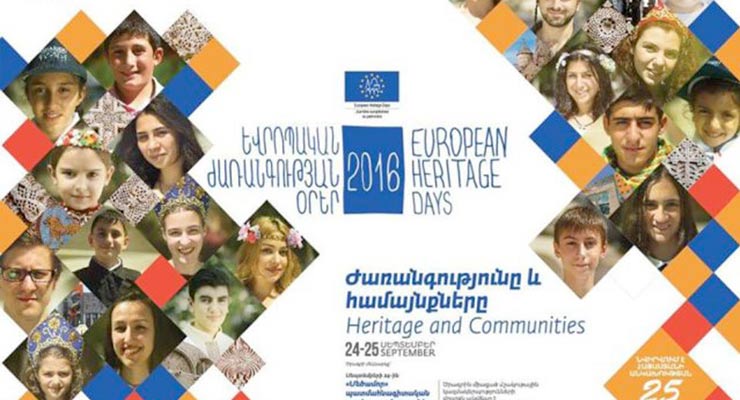
european-haritadge-dayOn September 24-25 2016, under the motto “Heritage and Communities”, “European Heritage Days” will be held in the Republic of Armenia and the Nagorno Karabakh Republic.

According to information and public relations department of the Armenian Ministry of Culture, as part of the program numerous exhibitions and diverse events, concerts, meetings, discussions, lectures, watching movies, literary and musical matinees, educational and interactive programs will be organized.

This year’s program is dedicated to the 25th anniversary of Independence of the Republic of Armenia.


Source Panorama.am

Filed Under: Events, News Tagged With: Armenia, day, European, Heritage

Australia MP speaks about his Armenian heritage

September 8, 2016 By administrator

australian-armenian-mpNew Australian MP Tim Wilson acknowledged his Armenian heritage when he delivered his maiden speech in the House of Representatives.

Wilson rose to political fame in Australia as an outspoken believer of true liberalism and has advocated for maximum “freedoms” as a think tank director and as Human Rights Commissioner in the past, and he pledged to do the same in Federal Parliament, Armenian National Committee of Australia reported.

Wilson’s wide-ranging maiden speech touched on his upbringing and family tree, as these speeches often tend to do. He referred to the bloodied past of his mother’s father, who had to endure and survive the Armenian Genocide, which was a source of inspiration for Wilson.

He said: “My maternal Grandpa left behind the genocide of his people. I never met him. He died before I was born. But I still see him everyday when I look into the mirror and into his dark and recessed Armenian eyes.”

Armenian National Committee of Australia (ANC Australia) Executive Administrator, Arin Markarian said: “We congratulate Mr. Wilson on his fantastic maiden speech as he enters public office. It is also encouraging to see Mr. Wilson seek inspiration from his family’s history, mentioning his grandfather who survived the Armenian Genocide.”


Filed Under: Articles Tagged With: acknowledged, Armenian, Australian, Heritage, MP, Tim Wilson

Amal Clooney: My heritage is not Armenian, but I do not see why this should matter

March 16, 2016 By administrator

GREECE ALAMUDDIN PARTHENON MARBLESAs it happens my heritage is not Armenian, well-known human rights activist and attorney Amal Clooney told RFE/RL.

Azerbaijan President Ilham Aliyev’s associates periodically declare that Amal Clooney is Armenian.

“I don’t see how belonging to any nation, whatever it is, would discredit me in any way,” she stated. “As it happens my heritage is not Armenian, but I do not see why this should matter. (…) But obviously the fact I represented Armenia does not make me Armenian.”

Amal Clooney was representing Armenia in a high-profile European Court of Human Rights (ECtHR) case in connection with the Armenian Genocide.

The Azerbaijani side has made such assumptions on Amal Clooney’s ethnicity also because her husband, renowned actor and humanitarian George Clooney supports the 100 LIVES initiative created by Armenian businessmen, and that Amal Clooney likewise confirmed her involvement in this program.

Meanwhile, in a handwritten letter to RFE/RL, imprisoned Azerbaijani reporter Khadija Ismayilova, who is serving her time in a Baku prison, condemned the attacks on Clooney, who is helping represent her before ECtHR.

“I chose Clooney because she defended [journalists,] and I was happy with the quality of her defense,” Ismayilova said in the letter. “I didn’t ask about her heritage, as people from civilized countries don’t ask such questions.”

Clooney on Monday submitted a lengthy filing to the ECHR on behalf of Ismayilova.

George and Amal Clooney will come to Armenia on April 22, on a three-day visit.

During the trip they will attend the 100 LIVES’ Aurora Prize award ceremony, where this prize is awarded to people who have risked their lives to help others, including for helping Armenians after the Genocide.

Filed Under: Articles, Genocide Tagged With: amal clooney, Armenian, Heritage

Save Armenian, Greek heritage in Turkey

March 12, 2016 By administrator

207879An exciting new project to protect Turkey’s non-Muslim architectural heritage is bringing together volunteers from Turkey, Greece and Armenia, Anadolu Agency reports.

Well over a hundred at-risk churches, schools, monasteries and synagogues will be logged and catalogued by experts from the three nations.

The project is being organized by the Association for the Protection of Cultural Heritage, as well as Anadolu Culture – two initiatives that support different communities in Turkey.

Architects, art historians and engineers have come together to review Turkey’s Greek, Armenian and Jewish heritage.

Speaking to Anadolu Agency, project coordinator Cagla Parlak said that they aimed to reach an estimated 140 structures across Turkey, currently at risk.

There are only a couple of people who could be called experts on Armenian art history, she said, pointing to a lack of expertise on art history surrounding restoration projects in Turkey.

The group will document findings from their visits to sites in seven regions across Turkey, including the province of Kayseri, the southern region of Adana and Aegean Izmir.

Financed by the U.S. embassy in Ankara, the project took a year to come together and ran parallel with the foundation of the association in 2014.

The project has publicized its first results by publishing a book called ‘Kayseri: With Its Armenian and Greek Cultural Heritage’ in February.

The project has revealed its first results by publishing a book called “Kayseri: With Its Armenian and Greek Cultural Heritage” in February.

The Armenian population in the city was around 15,000 in late 19th century, the book states. Today only one Armenian lives there, according to local media.

The group uses an inventory prepared by the Istanbul-based Hrant Dink Foundation, registration decisions by local heritage Protection Boards and literature reviews, Parlak said.

The foundation worked for more than two years making an inventory to gather information about Turkey’s cultural heritage.

It found out about more than 10,000 monuments across Turkey. According to the research, there are 4,600 Armenian, 4,100 Greek, 650 Assyrian and 300 Jewish structures across the country.

Related links:

Anadolu Agency. Experts volunteer to save non-Muslim heritage in Turkey

Filed Under: Articles, Genocide Tagged With: Greek, Heritage, save Armenian, Turke

Today marks 10 years since destruction of Armenian cultural heritage in Nakicevan

December 15, 2015 By administrator

f56702d00d87d5_56702d00d880f.thumbTen years ago today, the Azerbaijani authorities destroyed the Armenian monuments on the territory of Nakicevan and the Armenian cemetery of Jugha.
In the unprecedented act of vandalism, thousands of Armenian khachkars (cross-stones) were leveled with the help of heavy equipment.
The desecration of the monuments began back in 2003 and continued through 2006 onwards, reaching its end only in 2006.
Speaking to Tert.am, Samvel Karapetyan, a monument expert studying samples of Armenian architecture in and outside of Armenia, described Azerbaijan’s vandalism as an act encouraged first of all by Turkey, the country traditionally considered its more powerful brother.
“The ancient site of international significance does not exist for ten years, so we are not able to do anything to return [it]. But we can, of course, raise the world’s awareness of the crime committed. To rule out such brutalities, that country must be condemned and punished. Otherwise, such incidents will always repeat themselves. And they do; while we are talking now, the Azerbaijanis are destroying [more monuments]. That’s also because their ‘elder brother’, Turkey, wasn’t punished for that.”
International reaction to Azerbaijan’s vandalism from European Commission to UNESCO
Azerbaijan’s vandalism received an international reaction by such authoritative institutions as the European Commission, the Parliamentary Assembly of the Council of Europe (PACE) and even the Holy See of Vatican and the Greek Orthodox church’s Synod, as well as the International Council on Monuments and Sites (ICOMOS). World-renowned scholars and politicians also voiced their criticism over the act of desecration.
On February 16, 2006 the European Parliament adopted a resolution condemning the destruction of a medieval cemetery in Jugha, as well as the historical monument on Azerbaijan’s territory and demanding that the European Parliament representatives be allowed to visit the country.

The question is raised at almost every session of the PACE. A European parliamentarian has once even proposed organizing a visit to Jugha, but Azerbaijan strongly rejected the idea.
In comments to Tert.am, Naira Zohrabyan, a member of the Armenian delegation to the PACE, recalled the screening of the movie “20th Century Vandals” at a joint session of the EU-Armenia Parliamentary Cooperation Committee.  The Armenian parliamentarian, who then headed the Committee, remembered the strong reaction to the move.
“And it was unprecedented, as we managed to break the Azerbaijani lobbyist resistance to organizing the screening. Of course, numerous notes of protest by the Azerbaijani Foreign Ministry followed, but we believe we did manage to attract  European organizations’ attention to the problem,” she noted.

Different international scholars, joined by US senators, so-signed a letter to the UNESCO and other international bodies, condemning Azerbaijan’s aggression. Mikhail Borisovich Piotrovsky, the director of the Hermitage Museum in Saint Petersburg, described the violence as an act tantamount to a crime. A British member of the European Parliament, Charles Tennock, compared it with Taliban’s move to destroy the monument of Buddah.
Adam Smith, an anthropology professor at the Chicago University, condemned the vandalism as “a shameful episode in humanity’s relation to its past, a deplorable act on the part of the government of Azerbaijan which requires both explanation and repair.”
In 2010, a cross-stone park with 20 replicas of the vandalized khachkars opened near the Church of Holy Savior of All in Gyumri, Armenia’s second largest city.

Filed Under: Articles Tagged With: Armenian, cultural, destroyed, Heritage, Nakicevan

Great Neck South grad shares heritage, spreads awareness of Armenian genocide through debut play

December 21, 2014 By administrator

By AMY ONORATO

AnoushAnoush Baghdassarian, 19, of Great Neck, published her first play “Found,” focusing on the impact of the Armenian genocide when she was still a senior at Great Neck South High School. Baghdassarian, now a college freshman, hopes her play can be used as an educational tool in schools. (Credit: Anoush Baghdassarian) Reported by newsday.com

Growing up in Great Neck, Anoush Baghdassarian spent her Sundays in school at the Armenian Church of the Holy Martyrs in Bayside, reading stories of her country and learning how her heritage has been shaped over time.

“When I was young, in second, third grade, I was captivated by the stories of our past, what makes my culture,” Baghdassarian, 19, said. “I just wanted to learn more.”


Filed Under: Genocide, News Tagged With: anoush, armenian genocide, Heritage, play

  • 1
  • 2
  • Next Page »

Support Gagrule.net

Subscribe Free News & Update

Search

GagruleLive with Harut Sassounian

Can activist run a Government?

Wally Sarkeesian Interview Onnik Dinkjian and son

https://youtu.be/BiI8_TJzHEM

Khachic Moradian

https://youtu.be/-NkIYpCAIII
https://youtu.be/9_Xi7FA3tGQ
https://youtu.be/Arg8gAhcIb0
https://youtu.be/zzh-WpjGltY


gagrulenet Twitter-Timeline

Tweets by @gagrulenet

Archives

Books

Recent Posts

  • Pashinyan Government Pays U.S. Public Relations Firm To Attack the Armenian Apostolic Church
  • Breaking News: Armenian Former Defense Minister Arshak Karapetyan Pashinyan is agent
  • November 9: The Black Day of Armenia — How Artsakh Was Signed Away
  • @MorenoOcampo1, former Chief Prosecutor of the International Criminal Court, issued a Call to Action for Armenians worldwide.
  • Medieval Software. Modern Hardware. Our Politics Is Stuck in the Past.

Recent Comments

  • Baron Kisheranotz on Pashinyan’s Betrayal Dressed as Peace
  • Baron Kisheranotz on Trusting Turks or Azerbaijanis is itself a betrayal of the Armenian nation.
  • Stepan on A Nation in Peril: Anything Armenian pashinyan Dismantling
  • Stepan on Draft Letter to Armenian Legal Scholars / Armenian Bar Association
  • administrator on Turkish Agent Pashinyan will not attend the meeting of the CIS Council of Heads of State

Copyright © 2025 · News Pro Theme on Genesis Framework · WordPress · Log in