Gagrule.net

Gagrule.net News, Views, Interviews worldwide

  • Home
  • About
  • Contact
  • GagruleLive
  • Armenia profile

Archives for September 2013

The Sellstrom Report: The United Nations’ Syria Inspector Shills for NATO and Israel

September 20, 2013 By administrator

By Yoichi Shimatsu
Global Research, September 18, 2013
un-nato-logo1Instead of a non-politicized investigation and lab analysis, the UN investigation of alleged nerve-gas attacks inside Syria was led by Professor Ake Sellstrom, a man of mystery who keeps a veil of secrecy around his research and political-military relationships.

Sellstrom’s report on Syria for the UN and his prior inspections record in Iraq are dubious, to say the least. In the eyes of laymen, his seeming objectivity and non-partisanship is based on the myth of Sweden’s neutrality. The public assumes – wrongly- that Sweden never takes sides in wars or geopolitical conflicts.

Fraud of Neutrality

This cosmetic veneer of Swedish neutrality has been deftly exploited by Israel and NATO to perpetrate falsehoods throughout Sellstrom’s work for the UN, including denial of the chemical-and-biological causes for “Gulf War Syndrome” and the shipments of U.S. chemical weapons to the Saddam Hussein regime.

The Hans Blix-Ake Sellstrom inspection teams in Iraq did not investigate the special-weapons bunkers that were bombed by American warplanes in the U.S. invasion.

Sellstrom also never made any attempt to probe the U.S.-produced 20-foot-long cannisters of VX nerve gas discovered at Balad Air Base by American National Guardsmen. His mission was not to prove Iraqi guilt but to get Washington off the hook for supplying tons of nerve gas to Baghdad. Saving U.S. officials like Donald Rumsfeld from disgrace and treason charges is far more important to imperial power that disclosing any facts in a theater of war.

The salient critique of the UN inspections in Iraq was made by American inspector Scott Ritter who accused the team of spying for Washington and NATO. The same question hangs over Sellstrom’s report on Syria. Is Sellstrom acting on behalf of Washington and Tel Aviv?

NATO Front Man

What is publicly known about Sellstrom is that the biochemist heads the European CBRNE Center [Center for advanced Studies of Societal Security and Vulnerability, in particular major incidents with (C)hemical, (B)iological, (R)adiological, (N)uclear and (E)xplosive substances], at Umea University in northern Sweden, which is sponsored by the Swedish Defense Ministry (FOI). Though not a NATO member, the Swedish military and police have a leading role in European security affairs as drafters of the repressive 2009 EU action plan based on the Stockholm Counterterrorism Programme.

Major funding for the CBRNE multidisciplinary research projects at Umea comes from the EU budget for the war on terrorism. These projects include: defense strategy for large-scale terrorist attacks (notice the term “relatively large scale” in his just-released Syria report); recommendations for EU medical emergency responses; and specialized training at Umea for experts, including military officers attached to NATO.

Sweden’s military-industrial complex, which includes Saab and Bofors, is anything but peace-loving and neutral. The kingdom’s cloak of neutrality is most useful for Israeli interests, which have exploited Scandinavia’s clean image to skew international policy against the Palestinians and Arab states, as demonstrated in the half-baked Oslo Accords.

Israeli Infiltration of Scandinavia

Umea University is deeply involved in joint research with Technion (Israel Institute of Technology), the Haifa-based university that provides state-of-art technology to the Israel Defense Force (IDF) and its intelligence agencies. Several departments, which are involved in joint Israeli research, participate in multidisciplinary studies at Sellstrom’s CBRNE center. These include: the computer department, which has cooperated with Technion on control systems since 2004; the medical faculty; and chemistry, his own field of studies.

The Israeli-Swedish research cooperation is fostered by the Royal Swedish Academy of Sciences, which provides scholarships and awards to bind together the industries and universities of the two countries. This year the State of Israeli is sponsoring the Start Tel Aviv program for expanded cultural ties, in its relentless campaign to subvert Scandinavia. The political agenda and military links behind the bilateral cooperation has prompted an anti-Israel boycott by conscientious Swedish academics.

No Credibility on Syria

The term “relatively large scale” chemical-weapons attack used in the introduction to the UN report on Syria is hyperbole, since any major attack with sarin would have resulted in tens of thousands of fatalities, especially if dispersed by military rockets. The first videos from Ghouta showed residents pouring out of their homes onto the street, gasping for fresh air. If indeed highly efficient rockets had been used, every one of them would have been killed instantaneous. The gassing, therefore, must have been an accidental release indoors, probably from a hidden rebel arsenal.

Chemical residues from the alleged rockets would have been oxidized by the heat of impact and certainly no intact organophosphate traces would be detectable, since sarin is designed to decompose after 20 minutes. Rockets are designed to use a binary system by which two chemical precursors are mixed during mid-air dispersal. Thus, there is no need for stabilizers or dispersants, meaning an absence of any identifying chemicals. The UN inspectors arrived long after the expiration period for sample testing. There is a possiblity also that the site and rocket parts may have been tampered with falsified evidence by the rebels and their foreign military advisers.

The casualty figures are unverifiable, and certainly not any of the videos showed more than a dozen corpses at a time. The scenes of swaddled infants is typical of war propaganda, certainly not believable when only a few faces were visible. The sum effect of these images is closer to theater than credible reporting.

Sellstrom’s strategy is to point fingers of guilt at the Syrian regime, while avoiding all possibility of alternative and more probable scenarios.

Hidden Agenda

American ambassador to the UN Samantha Power made emphatically clear that the “nerve gas used in Syria was more concentrated than the nerve gas in Iraqi.” Her statement should be rephrased as: “Saddam may have trans-shipped U.S.-supplied nerve gas into Syria, but it wasn’t our nerve gas used against Syrian civilians.”

That is the essential point of the Sellstrom report: To take Washington off the hook for being the major supplier of nerve gas precursors, formulations, delivery technology and storage systems to the Middle East, incluing Israel, Egypt, Libya, Iraq and very possibly Syria (during the Clinton era of good will).

The UN report of chemical weapons on Syria lacks basic credibility due to the duplicitous record of its chief inspector, Ake Sellstrom, who is politically and financially compromised at every level. An impartial fact-finding mission of credible international experts is required, but it would have no chance of conducting a fair investigation so long as Washington provides weapons and political support to the insurgency, including its Al Qaeda faction.

The geopolitical objective underlying the White House orchestrated hystrionics over Syria is to strip Damascus of its limited deterrence capability against Israel’s nuclear forces. Nerve gas may not be much of a counter-strike response compared with atomic warheads, but it seems Israel’s goal is absolute strategic supremacy against the Arab states and Iran. With the new UN report on Syria, Tel Aviv is a giant step closer to the dream of rendering all its neighbors defenseless and divided.

Yoichi Shimatsu, a science journalist based in Hong Kong, led a team of investigative reporters for the Japan Times Weekly and served as consultant to Takarajima 30 magazine during the Tokyo subway gassing in 1995.

Filed Under: Articles Tagged With: The Sellstrom Report: The United Nations’ Syria Inspector Shills for NATO and Israel

How the Syrian Chemical Weapons Videos Were Staged (Video)

September 20, 2013 By administrator

Detailed Video Analysis on GRTV
By James Corbett, Mother Agnes Mariam, and Prof Michel
syriachemicalweaponsmap21-400x225In the wake of the Syrian chemical weapons attack, shocking footage of the victims of that attack were widely circulated in an effort to raise the ire of the public and spur support for military intervention.

Now, a new report on that footage finds troubling inconsistencies and manipulation with the video that calls the official narrative of the attack and its victims into question.

Earlier this week, UN Secretary General Ban Ki-Moon submitted the findings of the UN chemical weapons inspection team dispatched to Syria last month to gather evidence on the August 21st chemical weapons attack in Ghouta.

The report has been used as justification for the US and UK’s allegations that the attack originated from the Syrian government, but it does not in fact reach this conclusion. The inspection team’s mandate was limited to determining if an attack took place, not where it originated from, limiting their findings to a simple statement of fact:

“On the basis of the evidence obtained during our investigation of the Ghouta incident, the conclusion is that, on 21st August 2013, chemical weapons have been used in the ongoing conflict between the parties in the Syrian Arab Republic, also against civilians, including children, on a relatively large scale.”

The determination of where the attacks originated from is of course the key issue geopolitically speaking. If the attack originated with the Syrian government it would mark a serious escalation in the conflict, but if the weapons were launched by the terrorist insurgency it would mean the attack was a false flag provocation, designed to draw the US and its allies into armed military intervention in the country.

As analysts have been at pains to point out, the motive for such an attack has always suggested that it was more likely that the terrorists were the culprits in Ghouta, not the Syrian government. They have been losing the ground war against Syrian government forces for months, and they knew that the use of chemical weapons was the “red line” that Obama had set as the threshold for military intervention. Those who argue Assad’s culpability have to believe that not only did he suddenly and inexplicably resort to using chemical weapons on his own people for no strategic military reason, but that he waited until UN chemical weapons inspectors arrived in the country before doing so.

The background and history of the conflict also provide ample evidence that the terrorists have chemical weapons in their possession, and are trained and motivated to use them. Last December it was reported that US forces were training the terrorist forces in the the handling of chemical weapons. Also last December the insurgents released a video showing their chemical weapons operations and threatening to use them against government supporters. And in July of this year, Russia submitted an exhaustive 100-page report to the UN outlining how the terrorist insurgency was in fact to blame for the March 19th chemical weapons attack in Khan al-Asal on the outskirts of Aleppo.

But in the light of this latest chemical weapons attack, the UK, the US and France have all released their own intelligence studies blaming Assad for the incident and calling on the “international community” to increase pressure on the Syrian government. The reports, however, contradict each other in numerous places, with wildly different estimates of casualties in the events suggesting that the intelligence agencies that produced the report cannot even agree on the most basic details of the attack.

Now, new evidence is emerging that the attacks were used and manipulated by the terrorists in order to provoke the US and its allies into armed intervention in Syria. This evidence suggests that the videos used by the US and its allies to conclude what happened in Ghouta were in fact carefully stage managed to portray a narrative that would pin the blame for the attacks on Assad.

The first indications of this plot emerged early on, when expert analysis of the videos suggested inconsistencies in the footage itself.

That analysis was later expanded on by a report from ISTEAMS, a Syria-based human rights group working in conjunction with the International Institute for Peace, Justice and Human Rights. In this thorough report, published on GlobalResearch.ca on September 16th, numerous discrepancies and inconsistencies in the footage are documented.

The report documents through eyewitness testimony and video evidence that the affected areas had been largely abandoned by local residents in the days prior to the attack. Yet in the footage of the aftermath, there are large numbers of child victims who are portrayed. There exists very little footage of parents with their children, and what little footage exists portrays some of the parents apparently “discovering” their children on multiple occasions in different locations. Other footage shows the same children arranged in different formations in geographically distant neighborhoods. The report concludes that the footage was carefully stage managed to create the greatest emotional impact on foreign audiences. These videos were then used by the Obama administration to convince the Senate of their case for military intervention.

ISTEAMS President and one of the key researchers on the report, Mother Agnes Mariam, joined The Corbett Report to discuss the problems with the official narrative of the chemical weapon attack emanating from Washington and its allies last month.

The ISTEAMS report raises many troubling questions about the scenes in the Ghouta videos. Were the victims of the attack local children? If so, why were they there after these areas had been largely abandoned? Where are their parents? In the days after the attack, Dr. Bouthaina Shaaban, an advisor to the Assad government, provided an equally troubling answer to these questions to Sky News.

These reports dovetail with videos posted by the Mujahedeen Press Office to YouTube just six days before the attack confirming that the terrorists had kidnapped hundreds of women and children from the rural villages of Alawite stronghold Lattakia to use as bargaining chips in the conflict. Were these kidnap victims moved to Ghouta to be killed in the chemical weapons attack? Is this why so many children were there in these largely-vacated areas, and why so few parents appear on video mourning their children?

Although further research and investigation is urgently needed by third-party organizations to establish the identity of the Ghouta attack victims and the whereabouts of the kidnapped Lattakian families, the reports, if true, are evidence of the most disgraceful war crimes imaginable and the most cold-blooded manipulations of evidence to suit an agenda. Earlier this month, Global Research Director Michel Chossudovsky appeared on GRTV to discuss the nature of the terrorist insurgency.

Now, the US and its allies are trying to use the UN’s new report in combination with the video “evidence” of the attack’s aftermaths to justify the use of military force to back up the Syrian chemical disarmament process. Some are even calling for Assad to face war crimes prosecution on the back of this and similarly manipulated evidence.

In order to prevent this war agenda from proceeding any further or these propaganda images from being used in the pursuit of military intervention, it is vital that this latest ISTEAMS report is downloaded from Global Research, widely disseminated, and thoroughly investigated.

Filed Under: Articles Tagged With: How the Syrian Chemical Weapons Videos Were Staged

Iraqi Secularists Struggle To Establish Political Presence

September 20, 2013 By administrator

Iraq secularProtesters demand that the pensions of parliamentarians be canceled during a demonstration in Baghdad, Aug. 31, 2013. (photo by REUTERS/Thaier al-Sudani)

By: Ali Mamouri for Al-Monitor Iraq Pulse
Observers of the Iraqi situation may be surprised by the rise to power of religious parties in the government established after 2003. They may even wonder where the secularists went. They also might ask whether these religious parties are representative of the real situation in Iraq, or if there is another, unseen group which has not yet found its way to the surface.

This issue should be considered in the context of the historical background of secularism in modern Iraq. Secularism was ideologically associated with the nationalist or left-wing model, which has attached to it the stereotype of being anti-religion. On the other hand, the huge failure of the previous regimes have left a bad impression of secularism, since it is somewhat associated to nationalist or leftist ideology in the collective conscience of Iraqis.

After 2003, secular figures were unable to create a societal current that was involved in the political process for various reasons.

First, the secular personalities participating in the political process after 2003 lacked any kind of efficient partisan organization and presence among the voting public. This led to their decline and elimination as soon as the electoral process began. On the other side, the religious parties have a long experience of party organization and popular support.

Second, the extreme sectarian divides in Iraqi society have led to the retraction of secularists or their fusion into the religious parties, having lost touch with the public. Their secular discourse runs contrary to prevailing sectarian rhetoric.

Third, in Iraq, religious parties established themselves with the support of the regional forces that had hosted them for decades, or at least gained such support by aligning themselves with the sectarian strife between the regional parties.

The secularists have had no financial support, neither from influential domestic sides nor from regional or international authorities — not even the United States. The latter, which had entered Iraq to spread democracy, did not care about matters related to the consolidation of democracy as much as it cared about the appearance of democracy, which failed to guarantee the stability of a true democratic regime in the country.

Nevertheless, there’s a silent group that may form the nucleus of a strong secular current that may emerge in the future, one that will be able to join, participate in and change the political process. This has been apparent during the recurring protests that began two years ago in Baghdad and other cities throughout Iraq. The characteristics of these popular protests indicate that they might evolve into a secular movement.

The first of these characteristics is that these protests have focused on general popular demands about services and security, completely unrelated to sectarian rhetoric or religious claims. This is something rare in Iraq’s modern protests. The second characteristic is that the leaders of these protests are youth figures without affiliations to religious parties, or figures who have defected from these parties because of the failures of these groups. The third characteristic is that secular rhetoric was emphasized in the slogans and statements espoused during these protests, such as demands that religion not be involved in the administration of state affairs. For example, one such slogan was “Baghdad will not be Kandahar.”

In the absence of an experienced leadership for this emerging movement, the lack of financial support and a strategic development plan, it seems that converting this popular current into efficient partisan bases will require time to allow its adherents to gradually mature and grow. That is, if the negative domestic and regional developments do not put an end to the entire political process.

Ali Mamouri is a researcher and writer who specializes in religion. He is a former teacher in Iranian universities and seminaries in Iran and Iraq. He has published several articles related to religious affairs in the two countries and societal transformations and sectarianism in the Middle East.

Filed Under: Articles Tagged With: Iraqi Secularists Struggle To Establish Political Presence

Zirve case key to Armenian-Turkish journalist Dink, Father Santoro cases: Lawyer

September 20, 2013 By administrator

ISTANBUL – Hürriyet Daily News
By:Vercihan Ziflioğlu
Once the Zirve Publishing House trial is enlightened, many other murders from the past 60 years including journalist Hrant Dink’s and Father n_54788_4Andrea Santoro’s will also be solved, according to Zirve’s lawyer The solving of the murders in Turkey’s recent past will shed light on key points of the deep state, according to Erdal Doğan, the lawyer for the Malatya Zirve Publishing House and Hrant Dink cases.

Doğan, who until recently was also an attorney for the Dink case, told the Hürriyet Daily News that the Zirve Publishing House trial was a key case that would unravel the last 60 years of Turkey’s deep state.

“Once the Zirve Publishing House trial is solved, a picture of Turkey’s past 60 years will appear. It will be clear how governments have been brought down, how ethnic structures have been played with, and how psychological propaganda has been made,” he said.

Three missionaries, a German, Tillman Geske, and two Turks, Necati Aydın and Uğur Yüksel, were tied up and tortured before their throats were slit at the Zirve Publishing House, a Christian publisher in Malatya, on April 18, 2007. Prior to that incident, Father Andrea Santoro was shot dead on Feb. 5, 2006 as he prayed in his church in the Black Sea city of Trabzon. In addition, Armenian journalist Hrant Dink was shot on Jan. 19, 2007 in front of the building of the Armenian-Turkish Daily Agos, where he was the editor-in-chief.

Doğan said that the latest indictment in the Zirve trial openly showed the cell structure of the Ergenekon coup plot group, adding that Christians – especially Armenians – were targeted. “The structure that committed the Zirve murders is the same structure that committed the Dink and Santoro murders. The government is targeted, and chaos is aimed for,” he said.

Doğan claimed that all of these cases had ties with the Special Warfare Department, which also helped organize the anti-Greek riots in Istanbul of Sept. 6-7, 1955.

“The structure of 1955 was developed in the 1990s, and a structure under the Special Forces Command was formed. We talk about a structure named Turkey’s National Strategies and Warfare Department (TUSHAD), which came up clearly with documents in the Zirve murders trial,” said Doğan.

‘Black and white’ forces

He also claimed that the Turkish General Staff had approved of the existence of this structure of “black and white” forces. “The whites are established as civilians and they point out targets by disinformation,” he stated.
Retired General Hurşit Tolon and former Malatya Gendarmerie Regiment Commander Mehmet Ülger, who both were convicted in the recent Ergenekon coup case verdict, have also been added as suspects in the Zirve murders’ case. In addition, the court that is considering the case has also demanded the court files of the Ergenekon, Balyoz, JITEM and Musa Anter cases.

Upon being asked whether the government could be held responsible for these murders, Doğan said that as the government had signed the National Security Council decision of 2003, which perceived missionary works as a threat, it could be held responsible.

He said sufficient speed could not be given to the Dink case thus far as there had been considerable levels of disinformation. Doğan claimed that the 14th High Criminal Court looking at the case had reached its verdict by ruling at the very beginning of the trial that there was no organization behind the murder. He also stated that the 9th penal chamber of the Supreme Court of Appeals had “signed Dink’s death decree” by notoriously putting him on trial for breaching Article 301 of the Turkish Penal Code. “Therefore, neither of the courts are objective or independent,” said Doğan.

Filed Under: Articles, Genocide Tagged With: Father Santoro cases: Lawyer, Zirve case key to Armenian-Turkish journalist Dink

EU ready to develop ties with Armenia despite Customs Union decision

September 20, 2013 By administrator

September 20, 2013 – 16:43 AMT

PanARMENIAN.Net – The European Union activated work to involve a number of countries from the post-Soviet space into the Eastern Partnership Brazile Canselfollowing Armenia’s decision to join the Customs Union, Alexei Pushkov, chairman of the Russian Duma’s foreign affairs committee said.

Russia’s Duma is studying the statement to be issued in response to European Parliament’s resolution accusing Russia of pressuring the so-called Eastern Partnership states.

“Brussels was deeply dissatisfied with Armenian leadership’s decision to join the Customs Union. It came as a shock and was taken as a signal for a counterattack, seeing as the Eastern Partnership plan aimed to subdue a number of CIS states to the EU policy might be threatened,” Pushkov said.

As he noted, it was this fear that prompted the European Parliament’s accusatory resolution as well as the statement by the Commissioner for Enlargement and European Neighborhood Policy, Stefan Fule suggesting EU’s intention to support Ukraine’s sovereignty in decision-making.

“European Parliament’s understanding is that sovereign decisions are those which might alienate Ukraine from Russia to engulf the former into the EU’s sphere of influence. And the pressure that Ukraine’s been submitted to in this matter exceeded any we’ve witnessed so far,” RIA Novosti quoted Pushkov as saying.

As Commissioner Fule said during the Yalta European Strategy conference, EU is still willing to develop cooperation with Armenia despite the latter’s preference for the Russia-led Customs Union.

The Armenia-EU ties have cooled down following President Sargsyan’s voicing Armenia’s readiness to join Customs Union, with further plans to be involved in formation of Eurasian Economic Union.

However, later the European Commission said that the Association Agreement (including a Deep and Comprehensive Free Trade Area) with Armenia can be compatible with economic cooperation with the members of the Commonwealth of Independent States.

When in St. Petersburg to attend the G20 summit, European Council President Herman Van Rompuy said that Armenia, Moldova, and, if possible, Ukraine will hopefully sign the Association Agreement at the Vilnius Summit in November 2013.

“This is a political agreement. The Agreement would allow Armenia to go through comprehensive change both politically and economically. Therefore, after getting the news about Armenia’s plans of joining the Custom’s Union the EU expects to hear from Armenia what her further plans are. We have not received official explanations from Armenia, yet we don’t think this is a zero sum game and the same refers to Ukraine. Some benchmarks will be necessary to meet. There are some outstanding issues but we hope to see results in Vilnius. We are still engaged with these countries and still expect to sign the Association Agreements,” he said.

Meanwhile, a spokesman for Stefan Fule, the European Commissioner for Enlargement and European Neighborhood Policy, said that the European Parliament is not going to initialize either the Associated Agreement or the Deep and Comprehensive Free Trade Area with Armenia, as it’s not compatible with membership in the Customs Union.

Filed Under: Articles Tagged With: EU ready to develop ties with Armenia despite Customs Union decision

Egyptian journalist: Turkey terrified that Egypt can recognize Armenian Genocide

September 20, 2013 By administrator

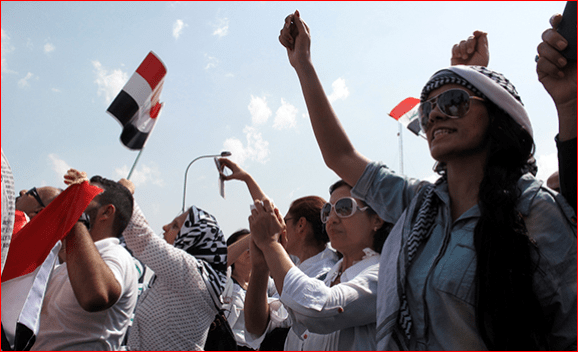
Turkey is terrified that Egypt can recognize the Armenian Genocide, Alaa El Din, visiting Egyptian journalist for cultural and diplomatic affairs, Egyption journalisttold a news conference in Yerevan.

“When Turkish Prime Minister Erdogan announced that what took place in Egypt was not a revolution but a coup, Egypt hinted that it can recognize the Armenian Genocide. Currently, it is also the wish of the Egyptian people. Erdogan calmed down after that. However, before this statement was made, the Egyptians did not know about the Armenian Genocide. Now there is a general view in the Egyptian public that the Armenian Genocide should be recognized at the state level. This will also be a step against Turkey,” the journalist said.

Egyptian journalist, international studies expert Hazem El-Mallah noted that there are friendly ties between Armenia and Egypt and the Egyptian people now know about the Armenian Genocide.

“I think pressures should increase for the recognition of the Armenian Genocide,” the Egyptian journalist said.

Source: Panorama.am

Filed Under: Articles, Genocide Tagged With: Egyptian journalist: Turkey terrified that Egypt can recognize Armenian Genocide

A Stroll through Yerevan on Independence Day

September 20, 2013 By administrator

BY CATHERINE YESAYAN

Saturday September 21, is Armenian Independence Day, which I’d say holds a special place in the hearts of all Armenians. It certainly does for Armnia 21me. The day signifies an important milestone, the realization of a dream held for generations that suddenly and unexpectedly happened 22 years ago after the fall of the Soviet Union.

This year I’m going to celebrate Armenian Independence Day here in Glendale, but last year I had the great opportunity to be in the beautiful city of Yerevan. It was a crisp Friday morning, around 77F. What I had always heard is definitely true: the best time to visit Yerevan is at the end of September. Indeed, it was so enjoyable to walk along the wide sidewalks. The city absolutely sparkled with newly refurbished sidewalks and streets. Everything looked so fresh.

I had guests who were visiting Armenia. It was a perfect day to stroll along the streets of Yerevan and show them all the sites. The mature sycamore trees lining the main streets were shining in the sunlight and everything looked so clean and effervescent. The tricolor flags had been hoisted all over the city and along the streets just a few days earlier. The sight of them made my blood boil.

We started from Freedom Square, where the Opera is. We took a few pictures of the tricolor flags set in the center of the square and waving gracefully in the wind. Then we proceeded to the Opera, where I wanted to check at the box office about upcoming cultural events.

From the Opera, we passed by a few cafés and then came to Swan’s Lake. We took photos of the lake and the swans swimming there. Then we took a few more photos of the abstract statue of Arno Babajanian playing piano. I was full of pride – as if I owned the city.

From Swan Lake, we made our way through the newly-constructed pedestrian Northern Avenue to Republic Square where last-minute preparations were underway for the evening celebration. A light show and a concert were expected to bring thousands to the square.

Walking along Northern Avenue, we encountered a full throttle of Independence Day spirit. There we met groups of young people, marching with flags wrapped around their shoulders or hoisted in their hands. They were chanting upbeat patriotic slogans, and the sound carried across the street.

It was so heartwarming to see those kids, our next generation of leaders, keeping the spirit of the Day alive. I had imagined they had no idea how dear Independence Day was to us. For centuries, under different rulers, we had strived to regain our independence, and now we have it.

Most people were wearing either tricolor or orange shirts. Young women were wearing fashionable tricolor headbands. Most carried small flags in their hands. It seemed everyone in the city had come outside for the celebration. I met some friends that had traveled long distances to be there for the occasion.

We sat at a café to have a bite. My eyes traveled to all corners of the street, soaking in the spirit of the day. Young artists were painting tricolor tattoos on young peoples’ arms or faces. The charge was 200 dram (50 cents). I regretted that I didn’t purchase one.

More than not having a tattoo, I regretted that we had missed standing outside on Northern Avenue during early morning hours when the state philharmonic orchestra and state academic choir had put together a “flash-mob” concert. But, thanks to YouTube, we can still have the pleasure of listening to it.

That’s how the laid-back city of Yerevan, last year, celebrated Independence Day.


Filed Under: Articles, Videos Tagged With: A Stroll through Yerevan on Independence Day

Kerry revealed special knowledge of Armenian’s contribution to America’s vitality

September 20, 2013 By administrator

September 20, 2013 | 01:44

n_42105_4WASHINGTON, D.C. – On the occasion of Armenia’s Independence Day, the U.S. Secretary of State John Kerry congratulated Armenian Nation, Armenian News-NEWS.am reports.

“On behalf of President Obama and the American people, I extend my warmest wishes to the people of Armenia as you celebrate your Independence Day on September 21.

The United States and Armenia have a strong relationship based on historic ties and mutual respect. I am proud and grateful for the enduring friendship of many in the Armenian community. As someone who for three decades represented Massachusetts, which boasts one of the largest populations of Armenians outside of Armenia, I have special firsthand knowledge of the contributions that you have made to America’s culture, democracy and economic vitality.

Today our two countries are working together on a dynamic bilateral and regional agenda. Through forums such as the U.S.-Armenia Economic Task Force, we look forward to further strengthening the economic and commercial bonds between our peoples.

I wish all Armenians a joyful and prosperous Independence Day, with peace and happiness in the coming year,” reads the congratulatory message.

Filed Under: News Tagged With: Kerry revealed special knowledge of Armenian’s contribution to America’s vitality

Iraqi leaders in Baghdad to sign peace charter (Video)

September 20, 2013 By administrator

Leaders of Iraq’s political groups have gathered in the capital Baghdad to sign an agreement aiming at stopping the bloodshed in the country.
Leaders of IraqiThursday’s meeting was called by Iraq’s Vice President Khodair al-Khozaei to sign the Charter of Honor and Social Peace.

Prime Minister Nouri al-Maliki, Parliament Speaker Osama al-Nujaifi and leader of Supreme Islamic Council Seyyed Ammar al-Hakim attended the meeting at the presidential palace.

The charter was introduced by the vice president back in May in an effort to maintain national unity and protect the country from sectarian violence.

According to the United Nations, 1,057 Iraqis, including 928 civilians, were killed and another 2,326 were wounded in terrorist attacks throughout the country in July — the deadliest month since 2008.

And 804 Iraqis lost their lives in August in the deadly attacks, a third of which took place in Baghdad.

In an interview with Press TV in July, an international human rights lawyer said that foreign powers are attempting to fabricate and benefit from Shia-Sunni discord in Iraq and elsewhere, seeking to see the Muslim world weakened in the wake of such rifts.

“Who benefits is of course the key issue. It’s really not the people of Iraq, it’s not the Sunnis, it’s not the Shias. It is external powers that want to exploit and create division. Those are the parties that benefit,” said Canada-based attorney Edward Corrigan.

Iraq’s Interior Ministry has said that militants have launched an open war in Iraq and they want to push the Middle Eastern country into chaos.

Filed Under: Articles, Videos Tagged With: Iraqi leaders in Baghdad to sign peace charter

RAGE RIOTS: Turkish Police CLASH with PROTESTERS ANGRY at Ankara Supporting TERRORISTS in Syria! (Video)

September 20, 2013 By administrator

Journalist Manuel Ochsenreiter

Journalist Manuel Ochsenreiter

Turkish riot police have clashed with hundreds of students protesting against a municipal project to build a road across part of their university campus in Ankara.

On Thursday, police used tear gas and water cannons to disperse hundreds of students at the entrance of Ankara’s Middle East Technical University.

The students have been protesting against the project for weeks, saying the reconstruction plans would lead to the destruction of a large number of trees both inside and outside the campus.

On September 6, more than a dozen people were arrested during a similar demonstration in the campus, one of the largest green spaces in Ankara.

In June, a peaceful sit-in to save Gezi Park in central Istanbul from being razed prompted a violent police response.

Several people were killed and thousands injured after the protests spiraled into nationwide demos against the government of Recep Tayyip Erdogan.

Filed Under: Articles, Videos Tagged With: RAGE RIOTS: Turkish Police CLASH with PROTESTERS ANGRY at Ankara Supporting TERRORISTS in Syria!

  • « Previous Page
  • 1
  • …
  • 10
  • 11
  • 12
  • 13
  • 14
  • …
  • 35
  • Next Page »

Support Gagrule.net

Subscribe Free News & Update

Search

GagruleLive with Harut Sassounian

Can activist run a Government?

Wally Sarkeesian Interview Onnik Dinkjian and son

https://youtu.be/BiI8_TJzHEM

Khachic Moradian

https://youtu.be/-NkIYpCAIII
https://youtu.be/9_Xi7FA3tGQ
https://youtu.be/Arg8gAhcIb0
https://youtu.be/zzh-WpjGltY


gagrulenet Twitter-Timeline

Tweets by @gagrulenet

Archives

Books

Recent Posts

  • A letter from Leading businessman of the United Arab Emirates. Khalaf Hamad Al Habtour, sent to Donald Trump
  • Anna Hakobyan prepared a heartbreaking text about the deprivations “Hraparak”
  • Endless Wars & Concentration of power in one man’s hand:
  • Secret 1920 Document Reveals Turkey’s Plans — Just as Today, to Eliminate Armenia
  • “Corruption, looting, and cronyism appear widespread within the Pashinyan government.

Recent Comments

  • Tina on Anna Hakobyan prepared a heartbreaking text about the deprivations “Hraparak”
  • Baron Kisheranotz on Pashinyan’s Betrayal Dressed as Peace
  • Baron Kisheranotz on Trusting Turks or Azerbaijanis is itself a betrayal of the Armenian nation.
  • Stepan on A Nation in Peril: Anything Armenian pashinyan Dismantling
  • Stepan on Draft Letter to Armenian Legal Scholars / Armenian Bar Association

Copyright © 2026 · News Pro Theme on Genesis Framework · WordPress · Log in