Gagrule.net

Gagrule.net News, Views, Interviews worldwide

  • Home
  • About
  • Contact
  • GagruleLive
  • Armenia profile

Turkey Car bomb kills 18, injures 27 at military police station in southeastern Turkey

October 9, 2016 By administrator

car-bomb-policeTen soldiers and eight civilians have been killed in a car bomb blast near a Gendarmerie station in the southeastern Turkish town of Semdinli, local media reported. The area has seen continued fighting between Turkish forces and Kurdish militants.

The death toll from the car bomb blast has risen to 18, including ten military police and eight civilians, Turkish Prime Minister Binali Yildirim said, according to NTV. Twenty-seven others, including 11 soldiers, are said to be injured.

A vehicle was detonated outside a gendarmerie station in Semdinli earlier on Sunday, according to local broadcaster NTV. The blast took place during car searches that were being conducted at a checkpoint around 20 kilometers (12 miles) from the town center.

Later in the day, Turkish General Staff said in a statement cited by Haberturk TV that eight soldiers had been killed and five injured in the blast, citing the latest casualty figures available at the time.

It is yet unclear whether the attack involved a suicide bomber or a remote-controlled detonation.

Although no organization has claimed responsibility so far, the General Staff claimed that the Kurdish Workers’ Party (PKK) was behind the attack.

The town of Semdinli is in a mountainous area bordering both Iraq and Iran, where fighting between Turkish forces and Kurdish Workers’ Party (PKK) militants has been taking place.

A wave of explosions that rocked Turkey earlier this year, killing hundreds of people, has been blamed on either Kurdish militant groups or Islamic State (IS, formerly ISIS/ISIL).

In the most recent incident, at least 30 people were killed and almost 100 injured in August, when a suicide bomber targeted a wedding ceremony in the city of Gaziantep close to the Syrian border. Authorities said that IS was the likely behind that attack.

The deadliest terror attack in recent years took place at Istanbul’s Ataturk airport in late June, when three blasts left 43 people dead and 239 injured. That terrorist attack has also been blamed on Islamic State.

Intense fighting broke out between Turkish security forces and the PKK last year following the collapse of a fragile truce that had been respected for over two years. More than 600 Turkish troops and thousands of Kurdish militants have been killed since then, according to Turkish media.

Filed Under: Articles Tagged With: Car Bomb, Kurd, Turkey

Kurdish Liberation Army PKK killed 10 Turkish soldiers seven wounded in attacks Turkey’s southeast

September 26, 2016 By administrator

10-killed-7-woundedAt least 10 Turkish soldiers were killed and seven others were wounded on Sept. 26 in two separate attacks by the of the Kurdistan Workers’ Party (PKK) in the country’s southeast.

Six soldiers were killed in an atack on a checkpoint in Şırnak, while four others were killed in a roadside bomb attack in Mardin’s Derik district.

PKK  remotely detonated an explosive placed on the Kızıltepe-Derik motorway during the passing of a civilian-plated minibus carrying soldiers at around 9:20 a.m. near Tepedağ village.

Four soldiers were killed and another six were wounded in the attack, according to initial reports.

The wounded soldiers were transferred to hospitals in Derik and Kızıltepe.

Hous later, six soldiers were killed in the Uludere district of the southeastern province of Şırnak during a clash with PKK , Doğan News Agency has reported.

A number of ambulances were dispatched to the scene for the wounded soldiers at the checkpoint near a prison, Doğan said. One PKK militant was also killed in clashes.

Separately, a bomb planted by PKK hit a freight train in the eastern province of Van on Sept. 25, injuring two personnel and damaging four wagons, the regional governor’s office said.

“The train’s locomotive was damaged and burnt, while four wagons derailed,” a statement by the Van Governor’s Office said.

Earlier, the local railway station directorate in the province’s Saray district told Anadolu Agency that PKK  detonated the bomb when the TCDD-53032 train passed by after it came from the Kapikoy border gate located along the Turkish- Iranian border, 10 kilometers away from Saray.

Meanwhile, a Turkish armed drone “neutralized” at least three PKK  in an airstrike in southeastern Turkey’s Hakkari.

Filed Under: Articles Tagged With: 10, Killed, Kurd, PKK, soldiers, Turkey

85% of Islamic State-recruited Kurds attended Islamic schools in Kurdistan: ministry

September 25, 2016 By administrator

A Kurdish man reads the Quran in a mosque in Iraqi Kurdistan. Photo: Mariwan Naqshbandi/Rudaw

A Kurdish man reads the Quran in a mosque in Iraqi Kurdistan. Photo: Mariwan Naqshbandi/Rudaw

HEWLÊR-Erbil, Iraq’s Kurdistan region,— Among Kurds recruited by the Islamic State (IS), 85 percent have been educated at Islamic schools under the control of the Ministry of Endowments and Religious Affairs in the Kurdistan Region, the ministry’s Official Spokesman, Mariwan Naqshbandi, said on Sunday (September 24).

“The number of Kurds who joined IS does not only include those who graduated from Islamic schools but also those who may have studied there for a short period of time,” Naqshbandi said, while speaking at the third day of the “Seclusion Platform” in Sulaimani.

Former students from the Kurdistan Region’s 23 Islamic schools joined IS after receiving an education from Islamic schools similar to those in Afghanistan, Yemen, Iran and Egypt, Naqshbandi said.

The IS members identified as Kurds were between the ages of 13 and 25, he added.

“Those schools had been under the control of the Kurdistan Region’s Ministry of Endowment,” the ministry’s spokesman said. “While this does not mean we are responsible, I am saying this to acknowledge we are all accountable.”

There have been about 500 people identified as Kurds who have joined IS, of whom 300 were killed and 150 returned to the Kurdistan Region.

“About 150 of those who joined IS have returned to the Kurdistan Region, most of whom are under surveillance or under detention,” he said on June 15. “Some of those who returned have been freed and are living a normal life.”

Naqshbandi said it has been one year since a Kurd had joined IS from the Kurdistan Region.

Source: eKurd.com

Filed Under: Articles Tagged With: ISIS, Kurd, State-recruited

The return of Turkey’s ‘dirty war’ against the Kurds

September 17, 2016 By administrator

kurd-depressedThe mystery of Kurdish politician Hursit Kulter has renewed concern the Turkish state is forcibly disappearing people with impunity. His case highlights an all-out assault on the Kurdish movement.

Where is Hursit Kulter? The last message the Kurdish politician sent to his family carried an ominous tone, one that has human rights organizations concerned he has joined hundreds of other people disappeared by Turkish security forces over the years.

“Forgive me with your blessings,” the 33-year-old texted to his family from the besieged city of Sirnak on May 27. “There is not much time left. Give my regards to everybody.”

As a provincial executive of the Democratic Regions Party (DBP), Kulter was an advocate for Kurdish rights and autonomy. He had decided to stay with his people during an open-ended curfew implemented in March in Sirnak as security forces battled Kurdish militants.

Two witnesses reported seeing Special Operations teams take him into an armored vehicle on May 27. Several days later, a Twitter account believed to be associated with Special Operations in the region shared a post saying he was being interrogated. The tweet was later deleted and the account closed.

Turkish officials deny Kulter was ever arrested and claim to not know his whereabouts.

Southeastern Turkey has witnessed a surge in violence since a two-year ceasefire and peace process between the state and the Kurdistan Workers’ Party (PKK) broke down last year, leaving thousands of security forces and guerrillas killed and at least 300 civilians dead.

In response to PKK militants and armed youth groups occupying urban areas in the southeast and declaring autonomy, Turkish security forces used heavy-handed tactics and open-ended curfews to root out the rebels. Several towns have been heavily destroyed and more than a million people displaced.

Widespread abuses during months of counter-terror operations in southeast Turkey have been reported.

“We have received repeated and serious allegations of ongoing violations of international law as well as human rights concerns, including civilian deaths, extrajudicial killings and massive displacement,” UN rights chief Zeid Ra’ad Al Hussein said earlier this week.

The Turkish state has a troubling history of forced disappearances, extrajudical murders and torture during the height of the PKK conflict in the 1990s. During the so-called “dirty war,” thousands of people were extrajudicially killed, disappeared and tortured with impunity.

Kulter’s case raises concerns the state is again resorting to the method of forced disappearances as it prosecutes its war against the Kurdish movement. In Sirnak alone, more than 200 people were disappeared after being arrested in the 1990s. The last case in the province was in 2001, when two Kurdish politicians disappeared.

“Fifteen years later, it raises a lot of concern that a young Kurdish politician all of a sudden disappears when only security forces are present and nobody is allowed to go out on the streets,” Sebla Arcan of the Turkish Human Rights Association’s Commission for Enforced Disappearance under Custody told DW.

All applications for state authorities to investigate have gone unanswered, human rights organizations and Kurdish politicians say. An independent investigation is also not possible due to an ongoing curfew in Sirnak, despite the government calling an end to military operations in June.

“The government should explain what happened to Hursit Kulter. If he was arrested, then why the denial? If he wasn’t arrested, then his whereabouts should be investigated. Why does the government just remain silent?” Arcan said.

Adding to the sense of growing impunity, the Turkish parliament in June passed a law granting immunity from prosecution to members of the security forces conducting counter-terror operations.

Leyla Birlik, a parliamentarian from Sirnak for the pro-Kurdish Peoples’ Democratic Party (HDP), which is close to the DBP, said she is blocked by security forces from entering the city and judges, prosecutors, police and the governor ignore her calls for any investigation.

She told DW by phone from a internally displaced persons camp outside Sirnak that 70 percent of the city had been destroyed and 60,000 civilians forced out. Meanwhile, scores of wounded people were not allowed to be evacuated to a local hospital and were left to die during the curfew earlier this year. “This is in effect a form of extrajudicial execution,” she said.

Activists and social media users have sought to keep Kulter’s case active, for example, through a campaign asking #HursitKulterNerede (#WhereisHursitKulter). The Saturday Mothers, a group of families of the forcibly disappeared and human-rights activists peacefully protesting on Istanbul’s main pedestrian thoroughfare every week for nearly two decades, has also taken up his cause.

In some ways, Kulter’s case has fallen by the wayside, becoming one questionable event among many as part of the Turkish state’s vigorous effort to clamp down on the Kurdish movement.

The assault on the Kurdish movement has gained momentum with sweeping emergency powers granted in the wake of July’s failed coup attempt, as the state goes after all of its enemies with massive purges.

What last year started as a hardened military response to the PKK has since warped into military intervention in northern Syria in part to thwart Kurdish gains there and an offensive against Kurdish politicians at home, most recently this week with the replacement of 24 elected Kurdish mayors over allegations of ties to the PKK.

“The government has launched a multi-pronged assault against the PKK, its political affiliates, and sympathizers, carrying its military battle for the first time to Syria as well,” Amberin Zaman, a public policy fellow at the Wilson Center think tank, told DW.

“The aim is to weaken the Kurdish movement to the point where the government feels it can impose rather than negotiate a solution,” she said. “It is not going to work, it’s proven unsustainable in the past.”

Since 1984, nearly 40,000 people have died in fighting between the Turkish state and PKK, which fights for greater political and cultural rights for Kurds.

Filed Under: News Tagged With: dirty, Kurd, Turkey, war

Reports of continued human rights violations in southeast Turkey worrying: UN

September 13, 2016 By administrator

human-right-viiolationThe UN high commissioner for human rights has voiced concerns over allegations of continued violations of international law in southeast Turkey.

Zeid Ra’ad al-Hussein made the remarks during a speech at the 33rd session of the Human Rights Council held in Geneva on Tuesday.

“We have received repeated and serious allegations of on-going violations of international law as well as human rights concerns, including civilian deaths, extrajudicial killings and massive displacement,” he said.

While adding that his concerns over people’s rights in the region remain “acute,” the high commissioner stressed that sufficient consideration must be lent toward the humanitarian and protection requirements for the thousands who have been displaced and affected by Ankara’s actions in the region.

“We continue to receive reports of destruction and demolition of towns and villages in the southeast,” he added

Stressing that the Turkish government has so far refrained from granting unfettered access to the region, he noted that, “We have therefore set up a temporary monitoring capacity based in Geneva, and we will continue to inform this Council of our concerns.”

Turkey’s mainly Kurdish southeast has been the scene of severe clashes between government forces and the outlawed Kurdistan Workers’ Party (PKK) since a shaky peace mechanism, which had started out between the two sides back in 2013, collapsed last year. It is estimated that the resumption of the hostilities killed nearly 2,000 people between July 2015 and July 2016.

Filed Under: News Tagged With: Human Right, Kurd, Turkey, UN, violation

Do not let Erdogan génocider Kurds! by Franz-Olivier Giesbert, West given carte blanche to Erdogan to exterminate the Kurds,

September 11, 2016 By administrator

massacre-of-kurdThe West has given carte blanche to Turkey to exterminate the Kurds, is scandalized Franz-Olivier Giesbert. Are we going to do?

It’s an amazing story, on cynical background, fumigation and encyclopedic ignorance: the West has given carte blanche to Turkey to exterminate the Kurds when they were in the process of annihilating the Islamic State in northern Syria. Even if it does not move the Western media, often in the boot of their chancellery or delay of a war, this infamy is assumed. John Golden Mouth US diplomat, John Kerry has spilled the beans by declaring: “We do not support the Kurdish initiative in Syria. “

read more….

http://www.lepoint.fr/editos-du-point/franz-olivier-giesbert/ne-laissons-pas-erdogan-genocider-les-kurdes-10-09-2016-2067398_70.php

Filed Under: Articles Tagged With: A conference in Turkey dedicated to 100th anniversary of Armenian Genocide, carte blanche, Kurd, Massacre, Turkey, west

Turkey: pro-Kurdish activists began a hunger strike

September 6, 2016 By administrator

hunger strickFifty pro-Kurdish activists, including MPs, Monday began a hunger strike in Diyarbakir, in southeastern Turkey, to protest against the lack of information about the imprisoned Kurdish leader Abdullah Öcalan.

Activists complain of not having heard from the leader of the Kurdistan Workers’ Party (PKK) for several months. “We have not received any objective information on the health and safety of Ocalan,” said Sabahat Tuncel, spokesman for the group.

Abdullah Öcalan, imprisoned since 1999, is being held in the prison island of Imrali near Istanbul but was not allowed to receive visits nor his lawyers nor his family since the cease-fire between the PKK and Turkish security forces ended a year ago.

Dressed in T-shirts bearing the image of Öcalan, some activists shouted slogans in praise of their leader during the rally. “The strike will continue indefinitely,” he told AFP Ferhat ENCU, deputy of the pro-Kurdish party HDP, which is involved in the movement.

Sunday, Justice Minister Bekir Bozdağ has denied any problem regarding the health and safety of Öcalan. “The subject is constantly operated by the separatist terrorist organization (PKK) and the public receives false information,” he said in a statement released by the pro-government agency Anadolu.

The strike comes as Ankara has intensified its fight against the PKK rebels in the southeast of the country. The last weekend, Turkish warplanes bombed positions of the separatist movement after the death of twenty soldiers in clashes with the PKK.

Filed Under: Articles Tagged With: hunger, Kurd, strike, Turkey

Switzerland A conference in the city of Caux meets Armenian Kurds and Turks

September 4, 2016 By administrator

armenian-kurd-turk-meetingIn the city of Caux in Switzerland, participants of Armenian, Kurdish and Turkish discussed the Armenian Genocide, their common past, the present situation and the ways of reconciliation. As part of the conference “A fair governance for human security”, people from Armenia, Turkey, Lebanon, Spain and the Netherlands discussed the historical problems between the Armenian people, Turkish and Kurdish and solving ways of these problems today.
From July 12 to 18, participants of Armenian, Kurdish and Turkish gathered in the city of Caux, Switzerland, and discussed the Armenian Genocide, their common past, the current situation and paths to reconciliation. Every summer, “Initiative of Change” [Initiative for Change] is organizing a series of conferences with 8 sessions. Hundreds of people around the world share their experiences and discuss what should be done to create a better future. The common point of the participants is the fact that each of them has been affected by past or present conflicts. Together the participants discussed the common past that had affected their life spent far they were able to hear the stories of the “other” recounted live.

Speaking during the session ‘A fair governance for human security’, groups of Turkish-Armenian-Kurdish dialogue drew attention of participants from other countries. Armenians, Kurds and Turks from Armenia, Turkey, Lebanon, Spain and the Netherlands attended the sessions.

All Armenians in Lebanon are the grandchildren of survivors of the Genocide. The stories collected ancient family are themed so Kurdish Armenian cities become today. As part of this dialogue project, they told stories of their families relating to emigration and genocide. The grandchildren of the survivors, who were Mount Moussa, Zeitun and Urfa, who had started a new life in Lebanon – Nejteh, Christine and Nora – went to Mount Moussa where their ancestors had fought for their lives during 50 days.

“Where is my real home? “

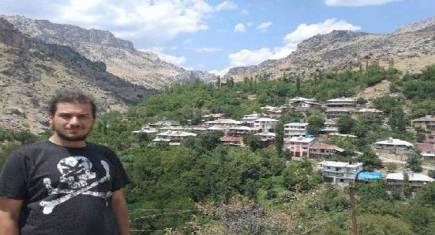
Nejteh says he never thought it would be so much affected by this journey: “I knew Zeitoun that what I was told. We first went to Mersin, then Ardiyaman to attend a sunrise on Mount Nemrut. Zeitoun as we approached, we saw high mountains. Although I do not believe in this stuff, I felt that my earth started talking to me and welcome me. It’s a feeling that surprises you. Where is my real home? Is Bourj Hammoud or Armenia? Or the land of my ancestors? I did not go to Armenia, but I wonder if I feel the same way I felt in Zeitoun if I was in Armenia. Zeitoun is an inaccessible city, surrounded by mountains. I felt very moved when I thought my family lived here. There was a bridge. My parents fleeing the Genocide have they crossed this bridge? Have they drank the water from this fountain? What were the houses that belonged to them? It’s that kind of thoughts that came to me. This place is now called Suleymanh is not a very developed city.

villageges

Villagers are as welcoming as in other villages. They are hospitable. We have started a dialogue with villagers: I know a few words in Turkish. I told him I was from Lebanon and that I was Armenian. He said: “Welcome to the land of your ancestors.” So I took him in my arms and I cried like a little child. The village children took my hand and accompanied me to the fountain to wash my face. Ironically, I felt a little intimidated. All the villagers know that Armenians lived here. At one time. Some said: “They are just gone one day” and others said, “It is something happened and they left.” Others believe that the Germans and the English have driven a wedge between Armenians and Turks, and that’s why the Armenians are gone; strange explanation. How could they know the truth? They believe what they are told …

“I cried like a baby”

Taking the Turks in high esteem and confidence in the process of normalization between Armenians, Turks and Kurds despite a turbulent past,

Christine told us his trip to Mount Mousa: “My family is from the village of Bitlas in Mount Moussa region. She fled in the 1915 genocide before returning to the village. In 1939, the family had to flee again. My grandmother told me stories of our family. Ascent Mont Moussa, I felt a sense of belonging to this place. There was something special. We went to Vakifli the only Armenian village surviving today. There was a mass at the church. After all the suffering of the past, these people still live and pray here. I burst into tears when I entered the church; I cried like a child. Most villagers know that their house had once belonged to the Armenians. In the village of Yogunoluk we saw they had built a mosque where there was formerly a church. They converted the church into a mosque without demolishing it. I think they have to continue to use it as a holy place. I wondered if they had any Armenians here. When I asked, they said in the village lived a person named Hagop. I found it. He lives there with his wife’s son. He told me that his father fled to Egypt at the time of the Genocide and then had returned to Bitias. His father risked his life by returning there but he managed to survive. I hope that next year we will again visit the village, I want to see Hagop.

Danger of death

Christine does not like talking unpleasant experiences she had during a visit to Mount Moussa. Nora said she was really scared during the trip. She watched the Turkish and Kurdish participants as she spoke; it was obvious she was reluctant to tell him. As it was stressed, she began to talk about what happened to him. At some point of the journey, she found herself in a conversation with a person of the place in a hotel. Another Armenian Lebanese sought help from Christine to talk to this man. Christine began to translate. “They were all nationalists. I did not want to translate some things they said to me, because I feared that a fight broke out. Then they talked about history. As they were about to separate, Hagop [not that of Bitias] said “yes, home of my ancestors is here and we will ensure that they return some day.” I translated this sentence and the other was furious and threatened us with death. We returned to our rooms to avoid a scandal. A few minutes later, we heard gun shots. This man was back in the hotel with the intention of killing us. Even though I knew he would not do it, I was afraid. “

emigration stories

Artak comes from Spain. Artak’s ancestors were of Bitlis, Mush and Kars and they started a life in Spain. Having heard that his friends had told of their journey to Mount Moussa, he said he had never been to Mount Moussa before and that he did not feel ready for such a thing, “I think I could not stand it. “

During the conference, the focus was on the question of emigration. The stories of Kurdish and Turkish participants in the dialogue are also stories of emigration. Bedel is a Kurd from Midyat, farmhouse he lives in Holland. His family had to go to Midyat because of oppression and settle in Istanbul. They later emigrated to the Netherlands because of the political oppression they suffered in Istanbul. Tayfun comes also from the Netherlands, but his family is Ankara. He said his family has strong prejudices against the Kurdish and Armenian peoples. His main thesis regarding the Armenian Genocide, but he says he started with his own denial. When he wrote his thesis: “I started reading about the genocide. at some point, I felt that I could not deny. “ Tayfun has also noted that his family does not like his ideas. The conditions of the encounter between Tayfun Bedel and are interesting. These two people living outside Turkey today tried to tear down the wall between Kurds and Turks with the group of Kurdish-Turkish dialogue they created the Netherlands. Following this session, we realized that every people has different complaints he must overcome and that this is not as easy as you think. And the steps are still many before you arrive …

Caux Palace yesterday a hotel, conference center today

The conference I attended was held at the Caux Palace. Built in 1900-1902, it was the largest and most luxurious hotel in Switzerland at the time. Facing the Alps and Lake Geneva, the hotel went through a crisis due to the First World War. The hotel was closed at the beginning of World War II. He was re-opened by government decision in 1944 in order to keep the POWs fleeing Italy. In December, he hosted Jewish refugees from Hungary.

A group of people who believe that reconciliation in a Europe coins will be created through dialogue, looking for a place to organize conferences that bring together divided peoples. During this research, Caux Palace went on sale and they made the acquisition through the contribution of over 100 people. Subsequently, hundreds of volunteers took part in the renovation of the interior. Opened in 1946, the conference center maintains this tradition of volunteerism. The first Caux reconciliation event took place in 1946- 1950 between French and Germans. In recent years, it became a meeting place for African leaders and representatives of the former colonial countries. India, Japan, the USA, Lebanon, Cambodia, Somalia and South Africa were part of Caux. A delegation of Sud6tyrol visited the place. In recent years, countries like Iraq, Syria, Palestine and Israel have been in Caux search dialog countries; Armenia and Turkey are also parties in this research. In the conferences in Caux every year, hundreds of people share their story. In 2015, 1421 people attended lectures, 55% were women …

Vardouhi Balyan

July 26, 2016

weekly AGOS

Translation Gilbert Béguian

Sunday, September 4, 2016,
Stéphane © armenews.com

Filed Under: Genocide, News Tagged With: Armenian, Kurd, meeting, Switzerland, Turks

Kurdish Freedom Fighters PKK send another 11 Turkish soldiers body bag to #RT_Erdogan

September 3, 2016 By administrator

11-soldiers-kild

Kurdish freedom fighters PKK

Nearly a dozen Turkish soldiers have been killed during separate clean-up operations against Kurdistan Workers’ Party (PKK)  in Turkey’s restive eastern provinces of Mardin and Van.

Military officials said three soldiers were killed after Kurdish forces attacked a military post in the Dargecit district of Mardin Province, situated about 1,100 kilometers (683 miles) east of the capital, Ankara, on Friday.

The unnamed officials added that three village guards and a civilian also sustained gunshot wounds during the assault.

Separately, eight soldiers lost their lives during fierce exchanges of gunfire with PKK members in a mountainous area of the eastern Turkish province of Van.

The Turkish General Staff also said in a statement that 33 PKK militants had been killed and 30 others injured after Turkish government forces launched a series of aerial and ground operations against the Kurds’ positions in the southeastern Turkish province of Hakkari.

Turkish military forces have been conducting ground operations as well as airstrikes against PKK positions in Turkey’s troubled southeastern border region and Iraq’s semi-autonomous Kurdistan region over the past year.

The campaign began following the July 2015 bombing in the southern Turkish town of Suruc, which claimed more than 30 civilian lives. Turkish officials held the Takfiri Daesh terrorist group responsible for the act of terror.

PKK militants, who accuse the Ankara government of supporting Daesh, launched a string of supposed reprisal attacks against Turkish security forces after the bomb attack, in turn prompting the Turkish military operations.

The Turkish military recently attacked Kurdish positions inside Syria in a ground incursion as well.

Filed Under: Articles Tagged With: Killed, Kurd, PKK, soldiers, Turkey

Germany: Kurdish rally ‘against Turkish dictatorship and for equality’ gathers in Cologne

September 3, 2016 By administrator

kurd-protestA rally of 30,000 people from Kurdish communities across Germany has been organized in Cologne to protest the policies of Turkish President Recep Tayyip Erdogan and to call for an end to attacks in Syria.

Under the banner “Against Dictatorship and For Equality” a number of Kurdish organizations have organized a rally Saturday in the western German city of Cologne.

Groups including the Democratic Social Center of Kurdish people in Germany” (Nav-Dem) have condemned what they called Erdogan’s “dictatorial approach” in Turkey following the failed coup attempt in July.

Police were out in force in Cologne to monitor the rally and announced they would intervene to prevent what they called “illegal propaganda.” By mid-day a police spokesman said the situation remained calm.

Rally participants also oppose the state of emergency imposed in Turkey following the failed July 15 coup and the arrests of tens of thousands of people suspected of involvement.

They also condemned the Turkish army attacks on Kurdish militia in Syria.

A number of people carried banners with the portrait of Abdullah Ocalan, the imprisoned leader of the banned Kurdish Workers Party (PKK). The European Union and the United States both regard the PKK as a terrorist organization. It has been banned in Germany since 1993.

Leader of the Left party, Bernd Riexinger, is due to address the rally. He again called for the lifting of the PKK ban. He said the “complete isolation” of Ocalan was not correct. He said the leader should instead be involved in negotiations between Kurdish groups and the Turkish government to bring about a peaceful solution to the ongoing conflict.

jm/sms (epd, dpa)

Filed Under: Articles Tagged With: against, Erdogan, Germany, Kurd, rally

  • « Previous Page
  • 1
  • …
  • 8
  • 9
  • 10
  • 11
  • 12
  • …
  • 46
  • Next Page »

Support Gagrule.net

Subscribe Free News & Update

Search

GagruleLive with Harut Sassounian

Can activist run a Government?

Wally Sarkeesian Interview Onnik Dinkjian and son

https://youtu.be/BiI8_TJzHEM

Khachic Moradian

https://youtu.be/-NkIYpCAIII
https://youtu.be/9_Xi7FA3tGQ
https://youtu.be/Arg8gAhcIb0
https://youtu.be/zzh-WpjGltY


gagrulenet Twitter-Timeline

Tweets by @gagrulenet

Archives

Books

Recent Posts

  • Pashinyan Government Pays U.S. Public Relations Firm To Attack the Armenian Apostolic Church
  • Breaking News: Armenian Former Defense Minister Arshak Karapetyan Pashinyan is agent
  • November 9: The Black Day of Armenia — How Artsakh Was Signed Away
  • @MorenoOcampo1, former Chief Prosecutor of the International Criminal Court, issued a Call to Action for Armenians worldwide.
  • Medieval Software. Modern Hardware. Our Politics Is Stuck in the Past.

Recent Comments

  • Baron Kisheranotz on Pashinyan’s Betrayal Dressed as Peace
  • Baron Kisheranotz on Trusting Turks or Azerbaijanis is itself a betrayal of the Armenian nation.
  • Stepan on A Nation in Peril: Anything Armenian pashinyan Dismantling
  • Stepan on Draft Letter to Armenian Legal Scholars / Armenian Bar Association
  • administrator on Turkish Agent Pashinyan will not attend the meeting of the CIS Council of Heads of State

Copyright © 2025 · News Pro Theme on Genesis Framework · WordPress · Log in