Gagrule.net

Gagrule.net News, Views, Interviews worldwide

  • Home
  • About
  • Contact
  • GagruleLive
  • Armenia profile

Aghjayan delivers talk on ‘hidden Armenians’ in Ankara

January 20, 2014 By administrator

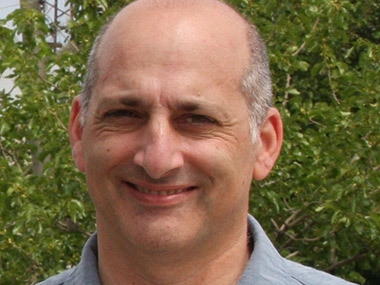
By George Aghjayan
From The Armenian Weekly

On Jan. 18, writer and activist George Aghjayan delivered a talk in Ankara on Turkey’s “hidden Armenians.” He was speaking during a panel discussion held in memory of Hrant Dink. Below is the full text of his talk.
g_image.php-20The first time I traveled to Turkey was in 1996. I spent three weeks covering the length and breadth of the country, from Istanbul to Van, from Erzurum to Musa Dagh. The land had been calling me for some time, yet the trip was extremely difficult emotionally and physically. Even though I had left many things undone, it took 15 years before I could even begin to put behind the emotional scars from that trip.

It was the re-consecration of the Surp Giragos Church [in Diyarbakir/Dikranagerd] and the conference on the social and economic history of the Diyarbakir province organized by the Hrant Dink Foundation that brought me back in 2011. I found a much different reality in Turkey and have now returned 4 additional times since 2011. I am profoundly thankful to the organizers of this event for providing me yet another opportunity to be here and to reflect on the cruel murder of Hrant Dink.

Hrant observed, “When we talk of 1915, we should not just speak of those who perished, but also of the experiences of those who survived.” Over the almost 20 years now that I have been traveling to Turkey, I have met many Armenians, and I would like to share a few of their stories.

I think of my first trip to Keserig where we met a very old Armenian woman. My uncle, whose family was from Keserig, was asking if she recognized our family name. As the conversation progressed and the crowd around us grew, I remember a man getting very angry with us and screaming, “Why do you ask about the Armenians?” I distinctly remember another man shouting him down, telling him to go away, and kindly offering to show us where the church and other significant places had been. It occurred to me that, quite reasonably, the first of these men represented the descendants of those who committed the genocide. If not literally, surely in spirit, those who deny the genocide and reveal their racism today are linked to the criminals of the past. The second man, in turn, represented those whose humanity demanded that they rescue Armenians.

I think of the visit to my grandmother’s village of Uzunova where one of the leading men revealed that both his grandmothers were Armenian. My own grandmother was a young girl when she was taken as a slave to a Muslim family. Her father murdered, her mother and two sisters sent on the death march never to be seen or heard from again, she survived six years in servitude before her sole surviving sister rescued her.

When I met this man, I felt the bond of two sons of the village—his grandmothers were taken and never escaped, while mine was rescued. We were two sides of the same coin.

I think of our wonderful friend Armen who has bravely embraced his Armenian and Christian heritage, and his brothers who have remained Muslim. They open their home time and time again to Armenians visiting their village, and share their knowledge of the history of the region. This family, like so many others, has seen the crimes against both Armenians and Kurds…crimes of hate and racism.

I think of Asiya from Chungush, about whom my friend, Chris Bohjalian, so eloquently wrote in the Washington Post. On one visit to Chungush, as we were about to drive away, her son-in-law tapped on the window of our van. Upon rolling down the window, he indicated that his mother-in-law was Armenian. Not knowing exactly who or why this man had approached us, we began to drive away. He stopped us again by banging on the window, this time with greater anxiety. As the window was being rolled down, he thrust his phone to my friend Khatchig Mouradian, and on the phone was a video of Asiya telling the names of her Armenian relatives. We would meet Asiya that day.

I think of entering a village near Moks, where I knew Armenian were still living in the recent past. On the main road to the village, we stopped a man who was walking by and asked if he knew of any Armenians living there. He said there was an elderly Armenian woman who was very sick and homebound. He indicated this woman’s son was working in the field just up ahead of us. So we drove on and eventually came upon a man working in the field. However, when we inquired about his mother, he indicated she was too ill to talk to anyone and was not Armenian in any case. His explanation for the confusion was that the other man had something against him and that is why he had claimed that his elderly mother was Armenian.

So, you see, those who descend from the remaining Armenians deal with their heritage in very different ways. The reception they have received from the Armenian community and their Muslim neighbors has been equally varied.

I recall the genocide survivor memoir titled, In the Shadow of the Fortress. It is a fascinating account from the village of Hussenig of what it was like for those who survived the genocide in hiding. The author recounts how after each round of deportation, there would be a period of calm followed by pronouncements that it was now safe for the Armenians to come out of hiding. After a period of time, the Armenians who naively believed such promises would be rounded up and marched off. This happened time and time again. Similarly, many of those who hide their identity today have survived over the decades by remaining silent, by not believing that the climate had in fact changed. Throughout the years, they have learned that those who believe in change and reveal themselves ultimately suffer persecution.

The Islamized Armenians must be welcomed back to their Armenian heritage. Not as second-class citizens, and definitely not to experience a new kind of discrimination. Every single Islamized Armenian is a precious miracle of the survival of identity and is the key to the return of the Armenian presence to these lands. Armenian culture and heritage was born of this land, and after a thousand years of assimilation and purposeful destruction, we demand the right of its return.

Today, there is a window of opportunity that has opened a crack. It is our challenge—those of us here today and others who are like-minded—to open the window wider, and permanently. If we fail, we may never have another opportunity. That is what the criminals are counting on.

Filed Under: Articles, Genocide, Interviews Tagged With: Aghjayan delivers talk on ‘hidden Armenians’ in Ankara

Academic Çınar: Turkish State biggest producer of hate speech in Turkey

January 19, 2014 By administrator

academiccinarAcademic Mahmut Çınar (Photo: Today’s Zaman)

This week’s guest for Monday Talk says the state would be the first convict if Turkey had a hate crimes law because it is the biggest producer of hate speech.

“If we had a well-rounded hate crimes law in Turkey, first, the politicians who hold power would be put on trial. Therefore, it is hard to believe that a well-rounded hate crimes law will be drafted and implemented in Turkey,” said Mahmut Çınar, an instructor at Bahçeşehir University’s New Media Department who is the editor of a recent book, “Medya ve Nefret Söylemi” (Media and Hate Speech).

The government had a proposal in its latest democracy package in September last year to work on a law to curb hate crimes in Turkey. Çınar points out that civil society is concerned about how a hate crimes law would be implemented in Turkey.

“In countries where the judiciary’s independence is established, implementation of hate crime laws would not be problematic. But in such countries as Turkey monday-talkwhere the judiciary is used by the executive power to assert the executive’s desires, hate crime laws will not be implemented well,” he said, adding: “If there is such a draft law, many people who study hate crimes and hate speech in Turkey believe that such a law will reflect only the worries of the government regarding Islamophobia. People who are concerned about this issue in Turkey think that just like insulting Turkishness has been a crime in the country, insulting Islam would be a crime, too. There are growing concerns that the government will impose its own ideology and belief system on the society.”

Çınar answers our questions as commemorative events by the civil society are being held in various towns in Turkey on the seventh anniversary of the murder of Hrant Dink, late editor of the Turkish-Armenian weekly Agos.

The European Court of Human Rights ruled in 2010 that Turkey had failed to protect Dink, despite being warned that ultra-nationalists were plotting to kill him. The court also criticized Turkish authorities over the investigation of his murder.

The book’s title is “Media and Hate Speech.” Hate speech is in everyday language, especially in politics, in Turkey; how did you decide to choose examples in the media in regards to hate speech?

There are two reasons; one is that in 2012, together with the Hrant Dink Foundation’s project to watch the media in regards to hate speech usage, we had a class on the topic at the university. That’s why we focused on the media. And we started to think about the media encompassing different mediums, such as, news media, cinema and new media. Previous works on hate speech in media focused only on the news media.

The second reason is that media plays a crucial role in producing, disseminating and legitimizing such statements and expressions. Yes, hate speech is mostly produced by the people who have authority and power, and they use media as a tool to spread this language. Therefore, media is quite effective in the reproduction of hate speech.

When I was in the school of communication in Turkey, hate speech in relation to its place in the media was not really a topic of discussion, and certainly, it was not in our textbooks, not in the curriculum. What was the situation when you were at the school of communication? Was the topic debated?

Not really; only certain professors who are known to be politically sensitive to such issues would talk about this concept in their lectures. It was not such a “popular” topic at the time.

When did it start to become popular?

It has become popular especially in the past 10 years. We can even say that Hrant Dink’s murder was a turning point in this regard because the role of the media was great in Dink’s killing.

What happened with Dink’s murder? Would you elaborate?

We’ve clearly seen that using hate speech can play a big role in the murder of somebody, and how hate speech can lead to murder. There have been great efforts by civil society organizations in showing how this is possible; how the media played this role and how the media was responsible. And also with the efforts of the academia, the concept of hate speech has entered the agenda of the Turkish society.

‘Real murderers of Hrant not behind bars’

What else has happened when Hrant Dink was murdered, considering that he was an Armenian?

This is something we are trying to tell students in our lectures: Hate speech is different from a basic insult; it is a type of speech disparaging a racial, sexual, or ethnic group or a member of such a group. In other words, this kind of speech is bigoted speech attacking a social or ethnic group or a member of such a group. People who use hate speech think that such people deserve this kind of speech. And when hate speech leads to hate crimes, its punishment should be more severe. If somebody kills a person just because this person is, for example, a Kurd or Armenian, then all Kurds or Armenians are attacked because people who belong to the identity of Kurdish or Armenian would feel threatened. That’s why there should be more severe punishments given to people who commit hate crimes; they hurt a whole group of people’s right to have safe and peaceful lives.

Many observers of the Hrant Dink case state that after seven years of his murder, Dink’s “real” murderers have still not been punished. What happened to Hrant Dink’s murderers? Are they getting the punishment they deserve?

I don’t think that those people who were accused and punished were the real murderers of Hrant. At this point, I neither find the penalties given were sufficient nor think that all the criminals were punished. When it comes to the role of the media on Dink’s murder, it definitely had a role; it was given a certain role and media fulfilled this role in the most aggressive form. Ogün Samast’s and Yasin Hayal’s [triggerman Samast was convicted of premeditated murder and sentenced to 22 years and 10 months of prison after a two year-trial] statements about the media’s role were aimed at preventing the revelation of real criminals and trying to show the murderers as if they were victims of a media campaign.

It should be pointed out that the punishments were given as if this was a usual, individual murder case, not punishments given as the result of a hate crime. It was obvious that the real target was not just Hrant Dink but the whole Armenian society. Therefore, the punishment of a hate crime should have involved more severe penalties than in a usual murder case because when you murder a member of a certain group because this person belongs to that group, then you target all the people who belong to the same group to the level that they all feel threatened and targeted.

‘Hate crimes seen often in Turkey’

Turkey does not have a law on hate crimes even though there are some articles of the Turkish Penal Code that can be used in cases in relation to hate crimes. Do you think Dink’s murderers could have been punished more fairly if Turkey had a hate crimes law?

My personal view is that laws produce only temporary solutions, and they produce political correctness. But we are looking for mere correctness, not political correctness. If there is no consensus on a concept in the society, people would not respect it just because there are laws saying it’s a crime. Therefore, laws sometimes do not mean much. However, in such countries as Turkey where hate crimes are seen often, there should be laws to punish hate crimes because laws would have a deterrent effect. Still, deterrence would not prevent the use of hate speech. This is because there is a broad background behind the use of hateful language — political and ideological — in regards to how hate speech is produced in the society. Without dealing with this, neither hate speech nor hate crimes would be eliminated.

At the beginning of our talk, you mentioned how power holders in a state produce hate speech and use the media as a tool to disseminate it. How is this done in Turkey?

The biggest producer of hate speech in Turkey is the state. The state produces “others” all the time in order to secure continuation of its authority, which is based on some pillars such as being Sunni, Turk and male. This identity is untouchable in Turkey. You would see court cases against people who are claimed to insult “Turkishness,” but you’d never see cases against people who insult “Kurdishness” or “Armenianness.” According to the state, identities except Sunni and Turk need “protection” and “tolerance” of the state. And if this is why the state is going to have a law on hate crimes, I am against it. But if the state is really concerned with the fact that people with identities other than Turk and Sunni are intimidated, harassed and targeted, then a study to design laws intending to curb hate crimes would be very valuable. It is also important to see how such a law would be implemented.

‘Judiciary not independent, used by executive’

Are there countries that implement hate crime laws properly?

We do not see the hate crimes laws well implemented in the world. The main reason for this is that such judicial actions demand very good interpretation. In many cases, such laws are seen as obstacles in front of freedom of speech. Hate speech and crimes should be well understood before there are laws intending to curb hate crimes. In countries where the judiciary’s independence is established, implementation of hate crime laws would not be problematic. But in such countries as Turkey where the judiciary is used by the executive power to assert the executive’s desires, hate crime laws will not be implemented well.

Well, the Turkish government has been recently asserting its power on the judiciary; it has a proposal to restructure the judicial body and the speaker of Parliament, Cemil Çiçek, said that independence of the judiciary is now dead. What can we expect under the circumstances?

In Turkey, the judiciary has been used by the power holders, currently the executive, as a tool to punish the “other.” It is the power holder that determines what is good and acceptable for the society, and the rest is the “other,” which may even deserve to be discriminated against. If we had a well-rounded hate crimes law in Turkey, first, the politicians who hold power would be put on trial. Therefore, it is hard to believe that a well-rounded hate crimes law will be drafted and implemented in Turkey.

‘Civil society concerned about gov’t interpretation of hate crimes law’

PM Tayyip Erdoğan mentioned a proposal in its latest democratic reform package last year in September that there is work being done to write laws against hate crimes in Turkey. Why do you think it has come about at the time?

There are now serious civil society pressures on the government in regards to the subject that has entered the agenda of the society in Turkey. If there is such a draft law, many people who study hate crimes and hate speech in Turkey believe that such a law will reflect only the worries of the government regarding Islamophobia. People who are concerned about this issue in Turkey think that just like insulting Turkishness has been a crime in the country, insulting Islam would be a crime, too. There are growing concerns that the government will impose its own ideology and belief system on the society. Again, there is a concern where the lines will be between freedom of expression and hate speech.

In the your book there is a section on hate speech and hate crimes; the examples of hate crimes in Turkey start in the year 2005. Why is that?

This must be because hate crimes intensified starting that year in Turkey. Previously, I mentioned the example of Dink’s murder, but prior to his murder, we saw an increase in hate crimes against non-Muslims in Turkey. This of course does not mean that there have not been hate crimes committed in Turkey before. There were many hate crimes committed, and among them were the Thrace pogroms [1934], Sept. 6-7 events [1955], Maraş events [1978], Çorum events [1980], Sivas events [1993] and so on. All of these are attacks against people who remain outside of the state hegemony’s definition of “ideal” citizens, defined as Sunni Turks. With the foundation of the Turkish Republic, this has been the new identity blessed by the state. In order to make this new identity “esteemed” or “valued” or “cherished,” other identities have been scorned. Apart from Sunni Turks, others have not been honored or held dear.

‘We need to change established discriminatory language’

Observers are concerned that Turkey is in a period in which one man rules at the top restricting civil society freedoms. Are you still hopeful that some people sensitive to such topics as hate speech and hate crimes will be able to rise up and voice their demands to obtain higher standards for citizens in this kind of an environment?

Transformation and change in society have never been easy. And change does not come from the top all the time. It is difficult to trust rulers in Turkey; each ruler is in search of masses that will be obedient. This is true for absolute power holders everywhere in the world. Absolute power holders leave old hate speech rhetoric behind and instead produce their own. The civil society has a big role to change this. Sensitivities in regards to the use of language should not remain in academic circles but should be prevalent in the society. We should think about how we can teach our children about these sensitive issues. We should review how we speak in everyday Turkish and how we can change the established discriminatory language. How can we achieve this through education? How can we change our textbooks?

I emphasize the role of education here because we learned about all this discriminatory and hateful language through education — how a Turk is worth a world of people, how our country has been surrounded by enemies, how each of us is a soldier, how strong males are, how women should take care of their homes, etc. And the media is even more important than education to reverse this tide. Once we learn to change the language we use in a non-discriminatory way, then we will indeed discover more and much better ways to express ourselves in daily language, in cinema, in photography, in novels, etc. Because we will see that the discriminatory language produces only hatred, animosity, insult, slender and clichés; and all you can do with it is turn it into comedy so people can laugh at it.

PROFILE 

Mahmut Çınar

He is an instructor at Bahçeşehir University, New Media Department. Çınar’s academic research comprises of media and nationalism; emergence of modern Turkey and Turkish national identity; minority media; and discrimination. He has been involved in several national and international projects about fighting discrimination and hate speech, including the Council of Europe’s “Speak out against discrimination” project. He is one of the members of the advisers’ board of the Hrant Dink Foundation’s “Hate Speech Course” initiative. Çınar writes for several media publications about Turkey’s political situation, and media in Turkey.

Filed Under: Articles, Interviews Tagged With: Academic Çınar: Turkish State biggest producer of hate speech in Turkey

Turkey: An Action Movie without a ‘Good Guy’

January 17, 2014 By administrator

By Ayse Gunaysu // January 17, 2014  Special for the Armenian Weekly

In Turkey today, a very high-tempo, high-tension action scene is unfolding, with a life-or-death fight at the top of the state apparatus. A volcano of corruption is erdogan-gulen-2erupting once more, releasing all the filth from below the surface. We’re seeing the sons of cabinet members being taken from their homes, alongside prominent businessmen, and put into custody; the mass removal of middle- to high-ranking security officers; and comprehensive changes in the juridical organization. But there are no prospects for a better Turkey, because both parties of this fierce fight belong to the “bad guy” club—the ruling AK Party and the informal but all-mighty clandestine organization of the “Gulen community.”

The audience is deprived of the expectation of a reward for watching these horrors play out. There is no hope for the emergence of a good guy, who will punish the bad and set things right. There is no need to wait for it, because there is no good guy at all in this action film. None of the already-few forces of democracy in Turkey have the slightest role to play in the plot.

The new enemies are, in fact, old comrades-in-arms. Until very recently, both were acting in perfect harmony in their evil-doings—their vulgar, gross denial of the genocides of Asia Mnior’s Christian population, their repression of the Kurdish resistance, their involvement in judicial scandals (Turkey has the highest number of political prisons in the world), in human rights violations of every kind, in public racism and discrimination, in the prisons where life becomes hell for the inmates.

The disintegrating state apparatus

Now, let’s take a short look at what happened: On Dec. 17, 2013, the İstanbul police detained 47 people for their involvement in corruption and bribery. The names of the detainees created a stir: they included the sons of three cabinet members, Muammer Güler, the Minister of Interior, Zafer Çağlayan, Minister of Economy, and Erdoğan Bayraktar, Minister of Environment and Urban Planning; Mustafa Demir, the mayor of the district municipality of Fatih (known for the much-debated “urban renovation project” that left thousands of Roma homeless); as well as a number of prominent businessmen, including the Iranian-Azerbaijani Raze Zarrab and Süleyman Aslan, the general manager of the state-run Halkbank. Newspapers have also reported that Egemen Bağiş, the Minister of European Union Affairs, may be a potential suspect of bribery related to businessman Reza Zarrab.

The police reportedly confiscated some $17.5 million used for bribery during the investigation; $4.5 million came from Aslan’s residence, and $750,000 from the Interior Minister’s son’s home. Prosecutors accused 14 people, including 2 sons of cabinet members, of corruption, fraud, money laundering, and smuggling gold. On Dec. 21, the court ordered their arrest. Reports indicated that a new investigation would be held on Dec. 26 involving Prime Minister Recep Tayyip Erdoğan’s sons, Bilal and Burak, as well as certain al-Qaeda affiliates from Saudi Arabia, such as Yusuf Al Qadi and Osama Khoutub. But police officers in the Istanbul Security Directory, newly appointed by the government just a few days prior, reportedly refused to carry out the orders of arrest. The deputy director of public prosecutions also didn’t approve this new operation. The man behind this second investigation, Prosecutor Muammer Akkaş, was dismissed on the same day. Akkaş said he was prevented from performing his duty.

A few days later, on Jan. 7, the police force was purged, and the positions of 350 police officers were changed, including chiefs of the units dealing with fraud, smuggling, and organized crime.

The public’s amazing state of numbness

The only good thing in this show is the possibility that the Turkish people, still loyal to their “father state,” may take one tiny step towards doubting the morality of the entire mechanism that dominates their life. With each new scandal, the Turkish public is shocked at the extent of the corruption revealed. Yet, it always falls back into an everlasting state of oblivion, forgetting that corruption seems to be an integral part of the establishment.

The republican history is full of scandals that tell stories of large-scale irregularities, embezzlement, and abuse. Not very long ago, in 1996, the famous “Susurluk Accident,” during the peak of the armed clashes between the PKK and the Turkish army, had prompted  many to believe that nothing would be the same again. The car crash victims included the deputy chief of the Istanbul police department; a member of parliament who led a powerful Kurdish clan serving as the paramilitary armed support of the Turkish army; and the leader of the ultra-nationalist Grey Wolves, who was a contract killer on Interpol’s red list.

The scandal had revealed the close relations between the government, armed forces, and organized crime in a wide variety of unlawful activities that ranged from drug trafficking, gambling, and money laundering to extra-judicial killings and gross human rights violations in the Kurdish provinces. Although then-Interior Minister Ağar, who was shown to be closely involved with outlawed gang members, and then-Prime Minister Çiller, who led the state-sponsored assassinations, resigned after the scandal, no one received punitive sentences. Ağar was eventually re-elected to parliament as a leader of the True Path Party (DYP), and the sole survivor of the crash, chieftain Sedat Bucak, was released. In short, the perpetrators escaped justice. A number of Susurluk investigators subsequently died in car accidents suspiciously similar to the Susurluk car crash itself—two in 1997, and one in 1999.

The corruption that gave birth to Turkey

Nothing—no restructuring of the state apparatus, no reformulation of the founding values of the government, no enlightenment on the part of the Turkish public—came from this outpouring of immense filth that lay deep beneath the surface.

Corruption forms the very texture of life in Turkey, because corruption is the initiator, the founder, the very reason for its existence. Less than 100 years ago, it was founded on the massive plunder of Armenian, Greek, and Assyrian property, and the unlawful transfer of their wealth to the state and to the local Muslim population.

Since then, since this tremendously large-scale theft, embezzlement, fraud, and corruption, we in Turkey all live on a vast land of sticky, stinky swamp, bubbling continuously, emitting nauseous vapors, fuming sickening smoke and, from time to time, creating small volcanoes that throw up the age-long filth the swamp has struggled to keep inside.

Parliament is now (as of Jan. 12) debating a government-proposed bill that would strengthen the Justice Ministry’s hold on a council that appoints judges and prosecutors and oversees their work. Opinion makers, academics, and politicians are on TV heatedly protesting (rightly) that this would put an end to the already feeble independence of the judiciary system.

The judicial system and denialism

From the start, the judicial system in Turkey was designed to serve denialism—the denial of the founding essence of the Turkish state, the genocide, the suppression of all opposition. It was the High Court of Appeals that, in 1974, decided that the minority foundations’ “1936 declarations”—given at the request of the government to record the immovable properties they presently possessed—should be considered to be the foundations’ charters and, therefore, unless it was clearly indicated that the foundation could acquire new immovables, acquisitions made after the declaration had no legal validity. So hundreds of immovables acquired by foundations after 1936 (by way of donation or passed on by elderly non-Muslim individuals, as they were once sources of income of the non-Muslim communities’ churches, hospitals, orphanages, cemeteries, and schools) were seized by the state. What was unbelievably unlawful in this decision was that these foundations of non-Muslim citizens of Turkey were referred to as the institutions of “foreigners”! Such is the lawlessness practiced by the highest body for justice in this country.

The swamp is sticky and contaminates everything that it comes into contact with. The recent scandal that led to a wide-scale cabinet reshuffling broke out during the so-called “peace process” between the PKK, the armed organization of the Kurdish liberation movement, and the Turkish government. While generally, individual Kurds and some prominent local officials in the Kurdish provinces display an honest and conscientious attitude towards Armenians’ demands for genocide recognition, recently one of the top-level Kurdish leaders, a woman, Bese Hozat, made anti-Armenian, anti-Greek, and anti-Jewish statements, causing great disappointment and resentment among democratic forces in Turkey.

In an interview with the Kurdish Firat news agency about the “parallel state” (a trendy phrase nowadays to refer to the Islamic Fethullah Gulen movement), Hozat said: “The Jewish lobby, the nationalist Armenians and Greeks are such parallel states. Such parallel states are in touch with one another and have interests from each other. Parallel states do not have formal and constitutional rights. It seems they do not have troops either, but they have an organized and a strong structure and they hinder the efforts for democratization in Turkey.”

It was only a couple of weeks before that Rupen Janbazian, in the Armenian Weekly, wrote how he was deeply impressed by his visit to Diyarbakir/Dikranagerd. “What is interesting, however, was that nearly a century after the genocide began, the descendants of those Kurds not only accepted our delegation in Dikranagerd with open arms, but actually apologized, time and time again, for the part some of their ancestors had in the genocide—something Armenians across the world wish to hear from the government of Turkey,” he said. “Hospitality is a trait Armenians have been known to value for millennia, but what we experienced in our six days in Dikranagerd was something I had, quite unfortunately, never felt in Armenia nor in the Armenian Diaspora, not to that extent, anyway. These people, who I had heard only negative things about from so many of my compatriots, were not only taking us to all the sites of Armenian civilization and culture in the city, but were giving us the factual, unadulterated history behind these places.”

The only hope for a ‘Good Guy’

Were Bese Hozat’s words an answer to Rupen Janbazian? No, this discourse has its roots in the original corruption, the initial one—the genocide and its denial, the one that gave birth to the still-fuming swamp that contaminates everything, even the politics pursued by the most radical opponent of the present Turkish state, the PKK.

These words reflect the dirty politics that the PKK leadership is itself caught up in, in this fight between the two bad guys, believing it has to choose the one that will maintain official power for the sake of the “peace process,” which will mean nothing if the original corruption is not revealed, recognized, and compensated.

These words also reflect the Turkish state’s biggest fear: the possibility of mutual understanding and cooperation between the politically involved Armenians and Kurds. The PKK leadership is forced to give into the government’s demands for a concession by declaring that it will not challenge the official Turkish thesis on the Armenian question.

But these words do not belong to the people of Dikranagerd who welcomed Janbazian. Here is how Janbazian described them in the Armenian Weekly: “One would assume that a stadium full of Kurds who don’t understand Armenian would be bored, uninterested, and ultimately indifferent—especially since we were speaking as representatives of a people who once called these lands ‘home.’ Yet, we witnessed the exact opposite that day. As I read out loud what we had written in the Western Armenian dialect of my forefathers, the audience watched and listened attentively. It almost seemed like they understood everything I said.”

It is clear that the politically conscious sections of the Kurdish people are far ahead of the PKK leadership, which is more interested in gaining ground in the negotiations behind closed doors than adhering to the ideal of justice.

The emergence of a “good guy” in this disgusting action film will depend on whether or not the movement for recognition from below can become strong enough to challenge the denialism that spews from the swamp of corruption.

About Ayse Gunaysu

avatar_aysegunaysuAyse Gunaysu is a professional translator, human rights advocate, and feminist. She has been a member of the Committee Against Racism and Discrimination of the Human Rights Association of Turkey (Istanbul branch) since 1995, and was a columnist in a pro-Kurdish daily from 2005–07. Since 2008, she writes a bi-weekly column, titled “Letters from Istanbul,


Filed Under: Interviews, News Tagged With: Turkey: An Action Movie without a ‘Good Guy’

Gérard-François Dumont: Neglecting historical facts makes solution of Karabakh conflict even harder

January 15, 2014 By administrator

The interview was conducted by Nvard Chalikyan

Panorama.am presents an interview with Professor of Demography at the University of Paris IV-Sorbonne Gérard-François Dumont.

g_image.php-15-1Nvard Chalikyan: Prof. Dumont, in your recent article titled Nagorno-Karabakh: the geopolitics of a conflict without end you speak about the origins of the Nagorno-Karabakh conflict. How do you assess the fact that these historical realities are completely ignored in the current conflict resolution process?

Gérard-François Dumont: The ignorance of the historical facts which are at the heart of geopolitical conflicts is unfortunately quite common. This is clearly seen in the conflicts currently taking place in Sudan, Central Africa and even in Europe, where there is a marked tension between Hungary and the European Union. The main reason of the latter is that the treaty of Trianon, signed on 04 June 1920 in the aftermath of the World War I, was unjust. The truth is that the principle of the inviolability of frontiers currently endorsed by the international community results in complete neglect of the causes and history of the formation of these frontiers.

Comparisons are not always appropriate, however, it is interesting to compare the situations in the South Caucasus and Ukraine. The USSR, having employed the principle of «divide and rule», in 1946 attached to Ukraine Crimea, which gave Moscow access to the Black Sea and then to the Mediterranean. This complicated the current geopolitical situation of Ukraine, which is vividly seen from the fact that Crimea was the only region which voted against the independence of Ukraine in the referendum of 1991. Ceteris paribus, the USSR drew the borders of Azerbaijan according to that same principle, a fact which is now largely ignored. Similarly, the pogroms of Armenians in Baku in 1988 have also been ignored. But the neglect of historical facts always has the same result – it makes the solution of the conflict harder and fuels it even more.

NC: Considering the fact that Azerbaijan continues to pose an existential threat to Nagorno-Karabakh today (given current anti-Armenian policies, military rhetoric, etc.) do you think the proposed Madrid Principles provide tangible security guarantees to the people of the Nagorno-Karabakh against possible Azerbaijani aggression?

Gérard-François Dumont: Historically the principles are like agreements and declarations. They have exactly as much importance as the politicians give to them. Geopolitics is a game based on power balance. No principle, however desirable it might be, can ever guarantee the security of a people. Whether you are for or against the Madrid Principles, they are only principles, the interpretation of which can vary greatly depending on the protagonists, while their implementation can be very different depending on the balance of power. In other words, Nagorno-Karabakh must be ready for all the possible developments. As a matter of fact, only the peace agreement which will include security guarantees, as well as willingness to preserve those, can guarantee the security.

NC: From purely geopolitical perspective is there a scenario that can bring to a final solution of the conflict and to a long-term peace in the region?

Gérard-François Dumont: History teaches us that conflicts are resolved only when the immediate parties to the conflict really want to put an end to it. Of course, international powers can contribute to the solution of the conflict if they refrain from igniting it and if they offer guarantees. The Minsk Group plays a useful role by trying to appease the conflict and facilitate the dialogue. However, it cannot solve the conflict, as past two decades have shown. The Nagorno-Karabakh conflict can only be completely solved if Azerbaijan, Armenia and Nagorno-Karabakh find common ground and are equally eager to resolve it.

NC: And what would you say about the role of democracy in the resolution of this conflict?

Gérard-François Dumont: One of the factors that complicates the resolution of the Nagorno-Karabakh conflict is that it depends on the situation between the parties to the conflict. It is a lot easier to find a solution to those conflicts where the parties are democratic, as peoples do not like being imprisoned within closed borders and they eventually vote for those leaders who want the borders to be used as a means of exchange and trade. Thus we can only wish democratic progress to these countries.

NC: From the geopolitical perspective how do you assess the decision of the Republic of Armenia to become a member of the Customs Union? Could Armenia have possibly taken another rout being faced with the choice between Russia and Europe?

Gérard-François Dumont: Armenia, which has limited resources and is largely isolated because of the closed borders with Turkey and Azerbaijan, has to rely on those partners which have the capability and the wish to effectively contribute to Armenia’s security. The current situation in the international relations is such that the United States gives preference to Turkey at least merely due to what I call “the rule of numbers” – Turkey has a population of 76 million, while Armenia, together with Nagorno-Karabakh, has a population of three million.

The European Union, being an ally of the US, in 2005 started negotiations with Turkey for Turkey’s membership in the EU, or to be more precise, for granting Turkey a status of a candidate country, with all the financial privileges pertaining to it. But this situation is ridiculous: Turkey does not recognize the sovereignty of one of the EU members; neither does it guarantee the protection of the rights of its minorities, which is a fundamental European value.

Thus, being unable to rely either on the US or on the EU, Armenia had no other choice but to join the Russia-led Customs Union. Besides, Moscow has paid for it by offering to provide gas to Armenia with “friendly prices”. At the same time however the Customs Union cannot work miracles, for two reasons. First, the CU opens for Armenia a smaller market compared to that of the EU with the population of 500 million; second, the economy of the CU member states is based more on the exploitation of natural resources than on innovations. Having said this, it must also be acknowledged that Russia, the country that has founded the Customs Union, does after all provide a necessary security umbrella for Armenia.

NC: Professor Dumont, thank you very much for the interesting interview.

The interview was conducted by Nvard Chalikyan


Source: Panorama.am

Filed Under: Articles, Interviews Tagged With: Gérard-François Dumont: Neglecting historical facts makes solution of Karabakh conflict even harder

Those who died in war did not want the Armenia we live in, says hero activist

January 8, 2014 By administrator

g_image018Sasun Mikaelyan, a veteran of the Nagorno-Karabakh war and a former political prisoner, has spent this New Year at home in Armenia as he always does. Speaking to Tert.am, the hero activist said he isn’t in the habit of leaving the country at this time of the year. “I don’t like formalities like this; one has to celebrate New Year at home,” he told our correspondent. Asked to comment on the current situation in Armenia, Mikaelyan said he doesn’t think it is what the heroes who shed blood in the war expected.


The full interview is provided below.

Summing up the past year, to what extent do you think it was favorable, especially for the freedom fighters who launched a campaign [for their rights]?
Nothing has changed. Nothing will be achieved unless there is consolidation, unless all the freedom fighters unite their efforts and realize that it is now time to stand up for a struggle against this government. What is the difference? There is now a struggle inside, so we must fight and win. The incumbent authorities are, in the strictest sense of the word, selling our country and the lands we have liberated. The guys, who gave their lives at the sacrifice for their country, did not want this kind of Armenia.
Which year do you consider the most favorable for the country since gaining independence?
[The period] when [late Defense Minister] Vazgen Sargsyan was with us. We realized we were building a fatherland and making our country prosperous. But whatever was good vanished after he was gone. Evil came to dominate this country. Up until 1994, this country was facing a war, but there was belief as people were waiting for tomorrow. But that tomorrow appeared more cruel, unfortunately.
What positive expectations do you have, nonetheless?
For some reason, I am positively disposed. So I expect the new year to be better for our people, because it cannot be worse than this. I wish our people to be consolidated and to restore their trust. May all the ideas you had – in the period when we launched the Artsakh [Nagorno-Karabakh] Movement – come true this year. All our victories – not only nowadays, but also in the course of history – have been achieved due to consolidation. A kind of new nation has been born inside the nation, with some people oppressing others, becoming rich artificially, without regard to the existing poverty and the ignored state of the people. This kind of living does not fit the people who have been winners.
What is your optimism conditioned by?
It is my belief that people will win after all. It is now time to come to our senses; tomorrow, it will be too later. We won’t be able to step aside. We’ll roll down right into the abyss if we go on like this.
What are your plans for the new year, which you think you will manage to realize?
Change of regime; only and only a shift of government. A government is a government only thanks to its people. That government is isolated from the people today. But it could never exist without the people. I wish that whatever happens this year happen due to the people’s vote and the people’s desire, not through violence or under pressure. We are switching over from slavery to servility today; that’s the cruelest thing. So I wish the people to come over this.


Is a change of government alone enough for solving those problems?

I don’t think these authorities would have changed or made systemic changes if they were able to. They must step down. I am positively disposed, so 2014 will mark the beginning of a new Armenia.

source: tert.am

Filed Under: Articles, Interviews Tagged With: says hero activist, Those who died in war did not want the Armenia we live in

The War in Syria, the Humanitarian Crisis, and the Armenians

January 3, 2014 By administrator

An interview with Sarah Leah Whitson

BY NANORE BARSOUMIAN
From The Armenian Weekly

In early December, I conducted a telephone interview with Sarah Leah Whitson, the director of the Middle East and North Africa Division of Human Rights Watch Sarah-Leah-pic(HRW), on the Syrian crisis. HRW monitors and highlights human rights abuses worldwide, and has been documenting the plight of refugees since the outbreak of violence in Syria in March 2011.

In this interview, Whitson talks about how the international community, and particularly neighboring countries where “the streets…are littered with child beggars,” are coping with the refugee crisis.

Whitson also discusses the plight of Syria’s minorities—including Armenians—whose very existence in the country is under threat. “We know that the Armenian community in Iraq was completely destroyed,” she said. “It’s not clear how much longer the Armenian community in Aleppo can withstand or can survive.”

The interview also covers the makeup of the opposition groups; the spillover into neighboring countries; the urgency of referring Syria’s case to the International Criminal Court (ICC); and HRW’s work in Syria.

* * *

Nanore Barsoumian: In September, HRW reported that there are around 2 million Syrian refugees—an average of about 5,000 people leaving Syria daily—and over 4 million internally displaced people. There are also reports of severe food shortages. How are neighboring countries and international organizations coping with the refugee situation?

Sarah Leah Whitson: I think there are a couple of ways you can look at it. I think the first way we have to look at it, particularly from the perspective of Lebanon, most of all, but also Jordan and Turkey, and even Egypt, is that their governments have been tremendously hospitable and generous and accepting of many refugees—two million, as they have. Time and again, countries in this region are shouldering the burden of wars, and this is just the latest example of that. On the other hand, they are tremendously under-resourced. They don’t have the resources to provide for the health, housing, education, and employment needs of this refugee population—much less for psychological trauma and resettlement assistance. And while some money is coming in from UNHCR [United Nations High Commissioner for Refugees], it’s just not enough. You can see the streets of Beirut are littered with child beggars from Syria.

N.B.: A report by HRW stated how China and Russia have been reluctant in providing financial assistance to UNHCR for these efforts.

S.L.W.: That is true, but even the countries that are purported to support refugees have not paid up their full quota, their full share and their commitment to the UNHCR, which remains underfunded.

N.B.: What are we looking at in the long term with the refugee situation?

S.L.W.: It’s a disaster. This is one of the largest humanitarian refugee disasters of this decade. We don’t see it getting better. We don’t see the war in Syria wrapping up, and as long as the war doesn’t wrap up, as long as there continues to be fighting on the scale that we’ve seen so far this year, we expect the refugee flows to continue. What I do expect, however, is that the neighboring countries are going to make it harder and harder for refugees to enter their own countries. And we’re going to have more and more internally displaced people who can’t get out.

N.B.: What’s the situation like now for minorities in Syria? We’ve seen pictures of churches being burned, schools and schoolchildren being targeted, civilians executed and used as human shields. I know HRW reported on what recently happened in the regions of Sadad and Latakia.

S.L.W.: I think that one of the worst aspects of the Syrian civil war—and now it is clearly a civil war—is the extent to which it has taken on a sectarian dimension. Long ago [it stopped being] about democracy and freedom in Syria. Sadly it has been distorted into a sectarian conflict, primarily pinning Sunnis against Shias, Sunnis against Alawis inside Syria, but also against the minority communities in Syria, particularly the Christian and Armenian minorities, who because of their identification with the Assad government, have in some cases been targeted by opposition groups.

And they’ve been targeted by opposition groups—by extremist opposition groups, the jihadist opposition groups—because they are Christian and simply because they are minorities. It’s obviously a great tragedy for the Armenians in Syria, particularly in Aleppo, which has been one of the last Armenian holdouts in the Middle East. We know that the Armenian community in Iraq was completely destroyed. It’s not clear how much longer the Armenian community in Aleppo can withstand or can survive—not just because it’s caught up in the war in Syria but also because the Armenian community is finding itself targeted and the subject of kidnappings or robberies.

N.B.: Do you find that it’s important to highlight the minoritieswhitson separately in this conflict? How is their plight different than that of the majority of Syrians?

S.L.W.: Obviously, we at the Human Rights Watch will examine and document the abuses against any group in the country that is being particularly targeted. And so, for example, in Saudi Arabia, we focus on the targeting of the Shia community. In Iran, we focus on the targeting of the Sunni community. Wherever minorities are being targeted because of their minority status, because of their different religion, nationality, national origin, or ethnic origin, it’s something we highlight. The reality in Syria is that many minority groups are being targeted, and one of them is the Armenian minority group…because of the war situation, but also because of their status as Christian.

N.B.: Minorities also fear that the alternative to Assad could be a despotic or fervently Islamic government that would introduce policies restricting their freedoms, in terms of religious practices, education, lifestyle. These are real concerns that can’t be easily dismissed. Could you talk about this, about what the future could hold, and also about the groups that are fighting in the opposition?

S.L.W.: Certainly the Syrian opposition is now sadly dominated by extremist Islamist groups, who are completely intolerant of religious freedom, of basic rights, of free expression and free association, and so forth. Many minority groups that fear the domination of Islamist extremists in any future Syrian government are right to be extremely concerned about the impact that will have on their own status as minorities, on their own religious freedom, and cultural autonomy inside Syria.

I think they have sadly had a bad taste of what these Islamist extremist groups in Syria portend. In Aleppo and other opposition-held areas, we’re currently documenting how, for example, Islamist opposition groups are forcing women to veil, and putting restrictions on their freedom of movement. I think women have the greatest concerns about what Islamist extremist rule might look like.

That being said, I wouldn’t so easily categorize all of the opposition as Islamist extremist, and that the only choice is either Bashar al Assad and his criminal barbaric regime or Islamist extremists and their criminal barbaric practices. Certainly, the Syrian opposition still has a variety of elements in it. They might be weak, they might not have a lot of power, but it would be our hope that a future Syrian government will reflect the diversity of Syrian society and will protect the rights of all minorities. But I would avoid seeing it as an either-or.

N.B.: There have been reports about the many fighters from abroad. What are you seeing in Syria?

S.L.W.: Without a doubt there is a significant presence of foreign fighters inside Syria. There are countless videos and statements and information that make that clear. But I don’t think anybody really knows what percentage of the fighters in Syria are foreign fighters. The estimates I’ve seen put them at less than 10 percent. So while it’s extremely disturbing that people are fighting in Syria with agendas that have nothing to do with democracy and freedom in Syria, I think that the reality is that this remains an overwhelmingly Syrian war made up of Syrian fighters on all sides.

In the beginning of the war, there were many Syrians involved who wanted democracy and who were fighting for democracy. At some point, that was all hijacked. What were your observations?

S.L.W.: That’s obviously true. I think it’s very hard to say that what we’re seeing in Syria now has to do with democracy and freedom. I think that sadly the war has evolved far, far beyond that. And what we now see is a civil war in the country that has pitted the Sunni population against the Alawi/Shia-affiliated government. It is as much about a Syrian civil war as it is a Sunni-Shia competition inside Syria—a competition between Saudis and Iran that’s being played out on the backs of Syrians, as well as a showdown between Russia and the United States also being played out on the backs of Syrians. Tragically, the ways in which intervention has happened in Syria (both intervention in support of the government and intervention against the government) has amplified those divisions and morphed it far away from what it was initially about.

N.B.: Do you see a threat of a spillover into neighboring countries, like Lebanon?

S.L.W.: The spillover is already happening: the fighting in Tripoli, Lebanon, over the past month; the continued attacks on Alawi businessmen in Syria; the recent bombing of the Iranian embassy in Beirut. This is all a spillover. The spillover is happening now, and Lebanon as a result right now is in an extremely volatile state. The Saudi government just a few weeks ago recalled all of its citizens from Lebanon, saying it’s too insecure for them there.

N.B.: Human Rights Watch has urged the UN Security Council to refer the situation in Syria to the International Criminal Court (ICC) to strip the sides of the feeling of impunity. How effective can that step be in deterring the targeting of civilians?

S.L.W.: I think it can be quite powerful, because ultimately no military commander is going to make that decision to target civilians if he knows that he is going to be awaiting trial. I think the idea is that you create a disincentive for commanders to follow orders that are crimes against humanity. We’re not even talking about the hard cases, where it’s hard to tell; we’re talking about the easy cases, like dropping cluster bombs on civilian areas or launching cruise missiles on civilian areas… The breadth of criminal prosecution can be a powerful one. I don’t think that threat has come into play in any meaningful way because an ICC referral has not yet taken play, but I think the prospect of going the way of [Slobodan] Milosevic and going the way of [Sudan’s Omar al-] Bashir even as an international outlaw can have a very strong deterrent effect.

N.B.: How has Human Rights Watch’s approach to the conflict evolved over the past two years?

S.L.W.: Well, it evolved from being an investigation on the attacks on unarmed protesters—that is how the Syrian uprising started over two and a half years ago—to being a documentation about civil war, in which the government has committed unbelievable abuses, unbelievable crimes, against its civilian population, but which now also involves various opposition groups carrying out terrible abuses, as well.

The challenge in this situation, when we document abuses by both sides or all sides…is how that can be used as a cover, and I think the emphasis—what we have to remind everyone—is that the vast proportion of the crimes, of the violations of international humanitarian laws, are being committed by the Syrian government, a party that is most capable of avoiding these abuses. Whatever weapons the opposition has, whatever abuses the opposition is committing, the vast majority of those killed in Syria—the number that puts us over 100,000 today—falls clearly on the lap of the Syrian government.

N.B.: Could you talk a little about the weapons being used and where they’re coming from?

S.L.W.: Well, the weapons providers to the Syrian government are no secret; this is publicly available information. It includes Russia and it includes Iran. It also includes a few Eastern European governments as well. Those providing arms to the opposition groups are also not making a secret of the arms they’re providing, including Saudi Arabia and Qatar, as well as now, of course, the U.S. and France, with the U.K. providing non-lethal material support to the various oppositions.

N.B.: How does HRW get its information? Do you have people on the ground there?

S.L.W.: We have researchers who have been going in and out of Syria for the past two and a half years, both undercover and with government authorization on various trips.

N.B.: It has been reported that some of the pictures coming out of Syria have been manufactured, manipulated, and Photoshopped. Have you found that to be true?

S.L.W.: We don’t really focus on fraudulent evidence. We focus on real evidence—evidence that we gather ourselves from investigations on the ground. This involves not only talking to eyewitnesses and victims, but looking at physical evidence, such as the remnants of weapons that indicate that they’re incendiary weapons, that indicate that they’re cluster munitions, that indicate that they’re chemical weapons. For example, Human Rights Watch was able to document the Syrian government’s deployment of chemical weapons in two suburbs outside of Damascus by using satellite imagery to show the trajectory of the rockets with the chemical weapons…from government bases. We were able to gather evidence of the chemicals that were used through medical facilities, and on-the-ground samples that were made available. In certain cases we also use, look at, examine, and verify video evidence where it exists. Some video evidence is, I’m sure, liable to being manipulated and falsified, but…we have multiple means to verify its authenticity. And we never rely on the evidence of others. We always have our own evidence, our own direct evidence that we ourselves have gathered.

Nanore Barsoumian is the assistant editor of the Armenian Weekly. She earned her B.A. degree in Political Science and English from the University of Massachusetts (Boston). Nanore’s writings focus on human rights, politics, poverty, environmental and gender issues. She speaks Armenian, Arabic, and French. Email Nanore Barsoumian at writenanore@gmail.com, or follow her on Twitter (@NanoreB).

Filed Under: Articles, Interviews Tagged With: and the Armenians, the Humanitarian Crisis, The War in Syria

Armenia’s second president critical of PM Sargsyan’s remarks on construction decline

December 30, 2013 By administrator

Second President Robert Kocharyan has explained the reasons of the recent years’ construction decline in Armenia, opposing to the arguments brought by Prime R KocharyanMinister Tigran Sargsyan at the recent end-of year news conference.
In an interview with 2rd.am, Kocharyan pointed out to three main factors, noting that the incumbent prime minister’s explanations have nothing to with the reality.
The interview is provided below.

Mr President, though the New Year and Christmas holidays are drawing near, Prime Minister Tigran Sargsyan’s press conference continues to remain in the media spotlight. It is interesting to know if any answers or comments made during the press conference have attracted your attention.
I will focus on one episode today. What caught my attention was the prime minster’s response to a journalist’s question about the past five years’ continuing decline in the construction volumes in the republic. Since the premier’s explanation was unrelated with what we are facing now, I will try to respond to that question myself.
So what has caused the uninterrupted unflinching decline in the construction volumes in the past five years?
1. The population’s exodus (I don’t point to figures not to spoil the festive mood). The potential buyers of new apartments leave, reducing the demand on the real estate market. In the meantime, the apartments of those families inevitably appear on the secondary market, creating a surplus of supply. The reduced demand for property and the drop in prices have seriously shaken the investment attractiveness in the development sector. So the enumerated factors have suppressed the delayed apartment demand effect since the sharp phase of the 2009 recession.
2. The essential deterioration of mortgage loan terms (if they can be termed that way, at all). If we compare the terms we had in 2004-2007 with what we have today, you will see that few people in their right senses would dare to benefit from the “mortgage loan”. And the essential increase of the impoverished population which cannot even dream of purchasing an apartment – let alone mortgage loans – adds to this.
3. Out citizens’ mood. The apathy, the feeling of helplessness and the lack of trust in future have come to steadily influence people’s behavior and motivation. Studies reveal that exactly 40 percent of Armenia’s population intends to permanently move [to another place] once such an opportunity emerges. Anyone inclined to leaving [the country] never purchases property in a country or town he or she intends to quit. The same goes for business initiatives.
So these are the reasons behind the steady decline in the construction volumes. Everything is more than clear and comprehensible. And the former government is not to blame for this; neither are certain aliens. The crisis too, is very far away now. So there’s no way to avoid responsibility here.

Armenian News – Tert.am

Filed Under: Articles, Interviews Tagged With: Armenia’s second president critical of PM Sargsyan’s remarks on construction decline

Nedim Sener focuses on Cemaat (Gulen) role in Turkey scandal, and were Gulen Movement involved with Hrant Dink Murder?

December 28, 2013 By administrator

By: Tulin Daloglu interview investigative journalist Nedim Sener.

Riot police fire teargas during a protest against Turkey's ruling Ak Party (AKP) and Prime Minister Tayyip ErdoganISTANBUL — Since the massive corruption scandal broke out on Dec. 17, Turkish Prime Minister Recep Tayyip Erdogan has been covertly blaming the Fethullah Gulen religious movement — better known as the Cemaat — painting it as a subcontractor of the United States and Israel, accusing it of engaging in a conspiracy to remove him from power. He even accused the Cemaat — without openly stating its name — of establishing a “state within the state,” and vowed not to allow it to supersede government authority. In short, there is an undeclared but open war between the Erdogan camp and the Cemaat.

Therefore, Al-Monitor decided to interview investigative journalist Nedim Sener. He argues that he has been targeted by the Cemaat and fell victim to a plot by its members in the police and the judiciary, who have tied him to the infamous Ergenekon case, where military officers, intellectuals and other civilians have been convicted of establishing a terrorist organization to bring down the Erdogan government. During those days, the Erdogan camp and the Cemaat were in a relationship of convenience to finish off the military’s tutelage, and Erdogan certainly did not experience discomfort with the Cemaat’s establishment in state institutions. In fact, the Cemaat lived its best years in state institutions since the Erdogan government came to power.

In that light, Sener draws attention to the very fact that the prime minister’s camp knows very well in which occupations and state institutions these Gulen movement members are. “They’re not searching for them with a torch in the darkness and trying to figure out who is from the Cemaat or not. They know very well who is who. They brought them into power in these occupations. And it is easy for the government now to dismiss them. That is why Fethullah Gulen lost control in his latest address to his followers and literally cursed on the Erdogan government,” he told Al-Monitor.

“I certainly don’t believe in the Cemaat’s sincerity in the fight against corruption. Since the day the Erdogan government came into power, there has been corruption. I personally reported them. … There was, for example, the Deniz Feneri charity [where part of 41 million euros ($56 million) collected for charity from Turks living abroad was used outside its purpose]. The government dismissed those judges who tried to unearth this corruption, and the Cemaat did not express a thing about it then. Why have they become sensitive on corruption today but they were not yesterday! Turkey is not facing corruption charges for the first time. Therefore, we also need to question the Cemaat’s motivation in this setting, as well.”

On Dec. 25, when Al-Monitor sat down for an interview with Sener, Erdogan’s government was facing its first seriously difficult day in power since it took charge over a decade ago. Three cabinet ministers, whose sons were accused in the graft probe, had announced their resignations, and, as we were speaking, news broke that a second wave of the operation was stopped by the government before arrests were made. Erdogan’s sons’ names, Burak and Bilal, were also publicly spelled out for the first time in connection with the corruption ring.

“The government can’t stay in charge after such a scandal. It is best that it resign, but the corruption issue is now secondary. One really needs to see that the Cemaat is actually directly aiming at Erdogan. It simply showcases that it has grown so strong that it can even bring down the country’s prime minister when it wants to,” Sener told Al-Monitor.

“If we are for correcting our state system, for growing stronger in our democracy and for strengthening our judiciary, where individuals are all treated equally before a judge, and where people believe they can find justice when they need it, we also need to stand against this Cemaat establishment in the state institutions. There is a reason why it is grouped in intelligence units and the judiciary. There are video recordings that show Gulen asking his followers, at the least 20 to 30 years ago, to start finding employment in police, judiciary or military. … He tells them they should stay quiet and not reveal their identities until the time comes. This is scary.”

He added, “When the West looks at them, it sees their movement as an interfaith dialogue group, like a nongovernmental organization. We, however, practice a different reality here. And that gap is the problem in trying to explain to outsiders as to why this movement is not what it seems. There are many more religious movements in this country, and people don’t have an issue with them. But the Cemaat is a different story. It has grouped in intelligence departments of the police, in the judiciary and elsewhere. And it shapes our political life with that power. This rises as a direct challenge to our individual liberties. … The Gulenists are not trying to establish an Islamic republic or impose Sharia. This is an outright fight for power — it does not have anything to do with God or spirituality. This is all a very earthly matter.”

An award-winning, internationally recognized investigative journalist, Sener documented in his 2009 book The Dink Murder and Intelligence Lies that police officers who conducted the Ergenekon investigation should also be put on trial in the Hrant Dink case. The book put him under a dangerous spotlight, and he believes that the Cemaat set a plot for him, tying him to the Ergenekon case. He was jailed for over a year in pretrial detention and released in March 2012 pending a trial that seeks a 15-year imprisonment. Now, hear Sener as he describes why the 2007 murder of Dink, a beloved Armenian Turkish journalist, is linked to this case, and that to see the big picture we need to factor this part of the puzzle into the equation:

“When we talk about the Ergenekon operation, Ali Fuat Yilmazer — who was head of the police intelligence department, later assigned as the deputy security director [in Istanbul police] — had an exceptional, close relationship with Erdogan. Whenever the prime minister was in town, they used to get together while the ministers had to wait sometimes for two weeks to get an appointment with Erdogan. He was one of the key members of the Cemaat [in the police]. And he was also the man who led the Ergenekon operation. He was known as the brain of the operation. So, who was he? Along with Ramazan Akyurek, head of the Trabzon Security Directorate, who was also a member of the Cemaat, he was a man who carried responsibility in the Dink murder.

“What happened to Yilmazer? Two days after we were arrested [in March 2011], he was dismissed. Since I was arrested, I have been saying that there is a conspiracy against me, and I continue to say the same thing. Yilmazer tried to take his revenge on me, because I documented in my book that he committed professional misconduct and therefore [was] indirectly responsible for Dink’s murder. The prime minister signed a report on Dec. 12, 2008, stating that very fact.

“Twenty days after we were arrested, they also dismissed [Ergenekon special prosecutor] Zekeriya Oz. These are — Yilmazer and Oz — really critical names. There is no need to doubt that they are both members of the Cemaat. And they did not forget what happened to them, and started to prepare for [this] operation aiming at the prime minister with all those others within the police and the judiciary. They took the first strike on Feb. 7, when they invited Hakan Fidan [head of National Intelligence Organization and a close confidant of Erdogan] to answer some questions [regarding the Oslo talks with the Kurdistan Workers Party (PKK)].

“The day when these people stand trial before a judge, we will only then start to understand what kind of a power there was behind Dink’s murder. We did not even start to discuss this issue with all sincerity. The public may not yet be ready to face the truth. But I documented the misconduct. … Father Andrea Santoro was killed in his church in Trabzon when Ramazan Akyurek was the security director there. These murders were essential to set the stage for the Ergenekon operation. They needed some provocative actions to create public uproar.

“Once you look at the big picture, you start sensing the big network behind Dink’s murder. The issue is that this intelligence head and security director had access to critical knowledge from both sides — the victims and their murderers. Once you put all these facts on the table, and still do not do a thing to prevent these murders, you then need to question as to why they did not do a thing about it.

“Zekeriya Oz linked the murder at the Council of State to the Ergenekon trial [alleging that those Ergenekon members were trying to set the ground for military intervention with such actions], but he refrains from linking Dink’s murder to the Ergenekon trial. But they argue that that murder was also a work of the Ergenekon establishment. So, why not link these cases? The Ergenekon dossier consists of multiple cases, and adding one more would not make it less or more complicated. The point is that the moment they link the Dink murder to the Ergenekon trial, their men [members of the Cemaat] who played a role in this murder will also eventually end up appearing before the judge for trial. Put simply, those police officers [Yilmazer and Akyurek] will also be put on trial for Dink’s murder.

“They put me into a trap because I proved this scenario with documents — all based on facts. I am not talking about a scenario that does not have a solid ground. I documented this in my book, and that is why they threw me in jail. My case is still pending, and I may be imprisoned for 15 years — for being a member of Ergenekon.

“People need to acknowledge the two wrongdoings here: Corruption is wrong, and what the Cemaat is doing is also wrong.”

Tulin Daloglu is a columnist for Al-Monitor’s Turkey Pulse. She has also written extensively for various Turkish and American publications, including The New York Times, International Herald Tribune, The Middle East Times, Foreign Policy, The Daily Star (Lebanon) and the SAIS Turkey Analyst Report.

investigative journalist Nedim Sener

Nedim Şener, a leading investigative journalist with the Turkish daily Posta, is considered a terrorist by his government, which alleges that his critical reporting contributed to an anti-government plot.

Filed Under: Articles, Interviews Tagged With: and were Gulen Movement involved with Hrant Dink Murder?, Nedim Sener focuses on Cemaat role in Turkey scandal

Glenn Greenwald & Checkbook Journalism (Video)

December 20, 2013 By administrator

Sibel Edmonds, James Corbatt,  Guillermo BFP Roundtable. In this episode the controversy surrounding the Glenn Greenwald, Omidyar-PayPal and NSA connections. they talk about the glacial pace at which the Snowden  documents are being released, Greenwald’s book and video deals, the  new news venture with eBay co-founder Pierre Omidyar, the things that  Greenwald doesn’t report on, and the public’s tendency to put people  on pedestals.

Filed Under: Articles, Interviews Tagged With: Glenn Greenwald & Checkbook Journalism (Video)

Turkish Government pre-Armenian Genocide 2015 centennial propaganda Machine at work interview with Aybars Görgülü

December 16, 2013 By administrator

ISTANBUL – Hürriyet Daily News

By: Barçın Yinanç barcin.yinanc@hurriyet.com.tr

‘Armenian diaspora needs to see the change in Turks’ approach to 1915’

Foreign Minister Ahmet Davutoğlu’s recent visit to Yerevan has revived hopes for the normalization of ties between Turkey and Armenia, which currently have no diplomatic relations. However, frustrated by the failure of the 2009 reconciliation n_59603_4process, Armenians will approach any new initiative more cautiously, according to Aybars Görgülü, program officer at the Foreign Policy Program of the Turkish Economic and Social Studies Foundation (TESEV).

The role of the Armenian diaspora is particularly important and Ankara should establish dialogue with all segments of it, Görgülü said, adding that the diaspora also needed to realize the change in the Turks’ approach to what happened in 1915.

What was the picture on Turkish–Armenian relations prior to Davutoğlu’s trip?

Relations have been deadlocked since 2009, as the protocols [to normalize relations] that were signed were not later approved. Azerbaijan was a crucial blocker. The borders between Armenia and Turkey remain closed. Davutoğlu saw an opportunity to make a goodwill gesture, but no big expectations should be anticipated from this visit.

You are convinced that the process was blocked by Baku?

This is one of the primary reasons. When both sides negotiated the texts of the protocols, Nagorno Karabakh was not on the paper. Although I’m sure the diplomats discussed the issue, it was not presented as a precondition. But after the signing, Prime Minister Recep Tayyip Erdoğan said the two issues were linked, and Nagorno Karabakh is now a strong pre condition.

Apparently the failure of the process has created a loss of confidence in Armenia.

Definitely. The signing of the protocols created a good atmosphere, but the failure of the process has created huge disappointment. When we talk to our counterparts in Armenian civil society they blame Turkey. I think both sides have made mistakes, but I think Turkey has a bigger role.

What made Davutoğlu go to Yerevan?

There are a couple of reasons. 2015 is approaching. In the past two years there has been almost no official contact, and not going there would also have been problematic. Turkey wants to open a new channel of dialogue with Armenia before 2015, to give the international community the message that Turkey is not isolating Armenia and that the two are on speaking terms. For example, Davutoğlu said the deportation [the decision that led to the death of Armenians] was “inhumane.” The message he gave was for 2015. He underlined the humanitarian dimension.

The fact that Turkey’s initiatives were triggered by the approach of 2015 probably makes Armenians more intransigent, doesn’t it?

Armenians don’t trust Turkey’s motives. They approach it with suspicion because they believe that Turkey wants to launch an initiative with 2015 in mind. So they will approach another round of initiatives coming from Turkey with caution. They don’t want to be involved in a reconciliation process that will bear no results in the end. But the important thing about 2015, apart from the diplomatic initiative, is what Turkey will actually do about 1915.

Will Turkey apologize? Will a government official make a statement creating empathy for the tragedy? Or build a statue? I think all the options are being evaluated in Ankara. Everyone is expected Turkey to do something. From the signals we receive, Turkey is doing something defensive to answer allegations, but it is also getting prepared for other types of activities. An apology is difficult, but it may be something to create empathy, which is key to reconciliation with Armenia. There needs to be a remedy, otherwise something will be missing.

What came of Davutoğlu’s visit?

Davutoğlu made an important declaration, saying the deportation was “inhumane.” Turkey should continue diplomacy with Azerbaijan to find common ground, as Davutoğlu also said there were three actors in this game. Although I don’t know exactly how much leverage Turkey has on Azerbaijan, Baku has more leverage on Ankara than vice versa.

What makes you say that?

There is increasing interdependency between the two, particularly with the Trans-Anatolian pipeline project [which will carry Azeri oil to Europe via Turkey], and a new gas deal. There is increasing foreign direct investment from Azerbaijan. In 2008 there was a problematic period; the gas deal was over and both sides started harsh negotiations on the pricing of gas and the transit fee. All the brotherhood and fraternity rhetoric was put aside and both sides prioritized national interests. At this stage, the [Armenian] protocol process came up, and Azerbaijan used the energy card very harshly against Turkey. After that point, Baku understood one thing and said: We have to invest more in Turkey, we have to get closer to Turkey in order to prevent another road accident. Baku would not let Turkey have a second round of rapprochement with Yerevan, unless it is offered something interesting, like the withdrawal of Armenian soldiers from occupied Azerbaijani territories surrounding Karabakh.

Any government in Turkey that opens borders without convincing Baku will be committing political suicide. Not only will it not win votes inside, but it will be losing a neighboring country that is investing in you and is rich in natural resources. It would basically be a stupid move.

We are approaching the end of an era. Since the end of the Cold War, Azerbaijan has been at the center of Turkey’s policy in the Caucasus. This is now consolidated. The direct result of this is the exclusion of Armenia. Of course, Armenia is a problem and Turkey will try to fix it, but currently Azerbaijan and Georgia are the two axes Turkey is building its regional policy on and Armenia is out of his picture.

What is the likelihood of reviving the protocols?

Going back to the protocols is not an option; they are not in the refrigerator, but rather they are dead. Both sides need to develop new diplomatic tools, new mechanisms. And the international community should pressure Baku, Yerevan and Moscow. Armenia is excluded from the Western camp, and it will be much closer to Russia, especially if it joins the customs union with Russia.

Why does the Armenian diaspora in the West not mind Armenia coming into the Russian sphere of influence?

The diaspora does not really know Armenia. They are just beginning to get to know Armenia. The diaspora’s main task was the recognition of genocide and they spent lots of energy on that. After the Cold War they gave lots of financial aid to Armenia but they did not much care about what is going on in Armenia’s politics. Also, the diaspora does not have that much leverage on Yerevan anyway. But now the new generation of the diaspora is going to Armenia to work, to live. These kinds of people experienced open society, and will object to that [the Russian sphere of influence]. So the only chance Armenia has is the young Armenian diaspora. Otherwise, Armenia will only become more authoritarian.

There is a lot of change in the Turks’ approach to 1915, but this isn’t much known by the diaspora either.

1915 is no longer a taboo. The assassination of [Turkish Armenian journalist] Hrant Dink was a crucial turning point. People started discovering what happened in 1915, and we can openly discuss what happened to Armenians living in Anatolia and their heritage. Of course, the old mentalities do not change quickly, but the Justice and Development Party government is also open to this change of rhetoric. They are open to discussing all the dimensions of the problem. This does not mean that they will recognize or apologize, but at least they are not disturbed that 1915 is being discussed and that there are different opinions. Right now you can publicly state that it was genocide and you don’t end up in jail. The Armenian diaspora needs to realize that Turkey is not the Turkey of 10 years ago, and Turkey should explain that to the diaspora as well. Turkey should get in touch and create dialogue mechanisms with all segments of the Armenian diaspora.

Who is Aybars Görgülü?

Aybars Görgülü serves as program officer at the Foreign Policy Program of the Turkish Economic and Social Studies Foundation (TESEV).
Dr. Görgülü received his Ph.D. in Political Science from Istanbul’s Sabancı University in 2013, and previously got his M.A. in diplomacy and international relations from the University of Clermont-Ferrand, France and his B.A. in Social and Political Sciences from Sabancı University.
Görgülü’s academic interest is in Turkey’s foreign policy and the Caucasus region, and he actively participates
in civil society efforts aiming to normalize relations between Turkey and Armenia. Görgülü has published on Turkey-Armenia relations, Turkey’s South Caucasus policies, and Turkish foreign policy.
His publications have appeared as TESEV monographs, in edited volumes, and in academic as well as popular journals. 


Filed Under: Articles, Genocide, Interviews Tagged With: Turkish Government pre-Armenian Genocide 2015 centennial propaganda Machine at work interview with Aybars Görgülü

  • « Previous Page
  • 1
  • …
  • 16
  • 17
  • 18
  • 19
  • 20
  • …
  • 22
  • Next Page »

Support Gagrule.net

Subscribe Free News & Update

Search

GagruleLive with Harut Sassounian

Can activist run a Government?

Wally Sarkeesian Interview Onnik Dinkjian and son

https://youtu.be/BiI8_TJzHEM

Khachic Moradian

https://youtu.be/-NkIYpCAIII
https://youtu.be/9_Xi7FA3tGQ
https://youtu.be/Arg8gAhcIb0
https://youtu.be/zzh-WpjGltY


gagrulenet Twitter-Timeline

Tweets by @gagrulenet

Archives

Books

Recent Posts

  • Pashinyan Government Pays U.S. Public Relations Firm To Attack the Armenian Apostolic Church
  • Breaking News: Armenian Former Defense Minister Arshak Karapetyan Pashinyan is agent
  • November 9: The Black Day of Armenia — How Artsakh Was Signed Away
  • @MorenoOcampo1, former Chief Prosecutor of the International Criminal Court, issued a Call to Action for Armenians worldwide.
  • Medieval Software. Modern Hardware. Our Politics Is Stuck in the Past.

Recent Comments

  • Baron Kisheranotz on Pashinyan’s Betrayal Dressed as Peace
  • Baron Kisheranotz on Trusting Turks or Azerbaijanis is itself a betrayal of the Armenian nation.
  • Stepan on A Nation in Peril: Anything Armenian pashinyan Dismantling
  • Stepan on Draft Letter to Armenian Legal Scholars / Armenian Bar Association
  • administrator on Turkish Agent Pashinyan will not attend the meeting of the CIS Council of Heads of State

Copyright © 2025 · News Pro Theme on Genesis Framework · WordPress · Log in