Gagrule.net

Gagrule.net News, Views, Interviews worldwide

  • Home
  • About
  • Contact
  • GagruleLive
  • Armenia profile

A new generation of Kurdish militants takes fight to Turkey’s cities

September 27, 2015 By administrator

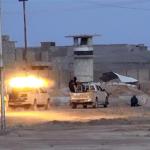
Kurdish youth fighting Turkish security forces in Sirnak province in Turkish Kurdistan, August 2015. Photo: Twitter

Kurdish youth fighting Turkish security forces in Sirnak province in Turkish Kurdistan, August 2015. Photo: Twitter

DIYARBAKIR-AMED, Turkey’s Kurdish region,— Young, urban-based fighters, many of them still teenagers, have taken centre-stage in the conflict between Kurdish militants and Turkish security forces that has flared anew in southeast Turkey since a two-year ceasefire fell apart in July.

The intensity of the violence recalls for some the 1990s, when the insurgency waged by the Kurdistan Workers Party (PKK) was at its peak and thousands were being killed annually, though the death toll remains for now well below those levels.

The fighters from the PKK’s youth wing, known as the ‘Patriotic Revolutionary Youth Movement’ (YDG-H), attack security forces in cities and towns with heavy weapons, dig trenches and erect barricades down side streets.

The police retaliate by imposing curfews and launching dragnet security operations, most controversially this month in the Kurdish town of Cizre near Turkey’s borders with Iraq and Syria where at least 20 people were killed.

More than 150 Turkish police officers and soldiers have died in the violence since July, many of them in cities and towns, government officials say, marking a departure from the PKK’s traditional focus on more rural areas.

“We are facing an effort to bring the war of armed groups in rural areas into the cities,” Turkish Prime Minister Ahmet Davutoglu told A Haber television in an interview this month.

The escalating bloodshed in Turkish Kurdistan, the mainly Kurdish southeast region, has exacerbated already sky-high political tensions in Turkey ahead of a snap Nov. 1 parliamentary election, with President Tayyip Erdogan and the ruling AK Party accusing pro-Kurdish lawmakers of being in cahoots with the PKK.

It also complicates international efforts to combat Islamic State fighters across the border in Syria: Turkey says there are links between the PKK and Kurdish groups in Syria who work with a U.S.-led alliance bombing Islamic State.

The PKK is considered as ‘terrorist’ organization by Ankara and U.S. The PKK continues to be on the blacklist list in EU despite court ruling which overturned a decision to place the Kurdish rebel group PKK and its political wing on the European Union’s terror list.

The Turkish military has resumed its attacks on PKK camps in Iraqi Kurdistan while also joining the U.S.-led campaign of air strikes against Islamic State, the hardline Islamists who have seized territory across the Turkish border in Syria and Iraq.

Inside Turkey, the YDG-H militants, largely untrained but determined to fight what they see as an oppressive Turkish state, say they have strong support from local people in a region long blighted by violence and poverty.

“There is a large mass of people who have huge sympathy and support for us. They are not armed but they do help us,” said 19-year-old Nuda, who said she had abandoned her education after high school to become a full-time insurgent.

Turkish government officials say the renewed violence in the southeast, where residents had cherished two years of calm as Erdogan’s government conducted peace talks with the PKK, has actually dented local support for the militants.

TRENCHES AND BARRICADES

Since it was established in 1984 the PKK has been fighting the Turkish state, which still denies the constitutional existence of Kurds, with the aim of creating an independent Kurdish state.

In the 1990s, the PKK limited its demands to establish an autonomous Kurdish region and more cultural rights for ethnic Kurds,who make up around 22.5 million of the country’s 75-million population but have long been denied basic political and cultural rights, its goal to political autonomy. A large Turkey’s Kurdish community openly sympathise with PKK rebels.

Turkey’s jailed PKK leader Abdullah Ocalan was jailed in 1999 but still has considerable influence in the PKK, whose senior commanders are based in the Qandil mountains of Iraqi Kurdistan.

The YDG-H, many of whose members were born in the traumatic 1990s, was only founded in 2006. The precise nature of its relationship with the PKK leadership is unclear, though there can be no doubting its dedication to the separatist cause.

“Police and soldiers come to your neighbourhood to detain you or intimidate you. We aim to prevent them from doing that by digging trenches and barricades,” said YDG-H fighter Mawa, speaking hurriedly while his comrades nervously stood guard, looking out for security patrols.

“We have units in every street, every neighbourhood across Kurdistan,” he said, his face concealed by a scarf.

Mawa, who said he had left university after a year to join the YDG-H, joked that, at 26, he was one of the oldest members of the group.

He was standing behind a community building in the Sur district of Diyarbakir, the biggest city of southeast Turkey, where authorities imposed a brief curfew this month after YDG-H militants killed two police officers.

YDG-H members say their group has grown rapidly but refuse to give a number. Mawa and other members described it as “semi-independent” of the PKK leadership, though Ankara refutes this.

“We act in line with the rules of the (PKK) leadership and its perspective against the destructive policies of the state,” said 23-year-old Sorxin, another young militant in Diyarbakir.

A Turkish foreign ministry official, however, insisted the YDG-H took its orders directly from senior PKK commanders.

“They are not flash mobs, they do not tweet each other and meet up,” said the official. “It is a structure and that structure is being directed from Qandil.”

One PKK fighter deployed to a base near the Iraqi city of Kirkuk told Reuters the reality was more ambivalent.

“They (the YDG-H) don’t have a direct relationship with the leadership because then they would be found out,” said the militant, who gave his name as “Kani Kobani”, sitting in a room with machine guns propped against the wall.

“The leadership gives general directions via TV. All the comrades watch TV. We know how to interpret the message.”

CURFEWS

Turkey’s Anadolu Agency, citing security officials, said this month the PKK had kidnapped more than 2,000 people below the age of 18 in the past two years to be used in its attacks.

Officials say as many as 70 YDG-H militants were involved in this month’s clashes in Cizre, where police imposed a round-the-clock curfew for more than a week.

Lawmakers from the pro-Kurdish Peoples’ Democratic Party (HDP) say 21 civilians were killed in Cizre and that people went hungry for days and could not bury their dead.

Turkey’s interior minister said only one civilian and 32 militants had been killed in the Cizre clashes.

The HDP, whose success in Turkey’s inconclusive June election deprived the AKP of its single-party majority in parliament, accuses the authorities of imposing curfews in areas that support the pro-Kurdish party in order to “punish” voters and intimidate them into not participating in the Nov. 1 poll.

The government denies such suggestions, saying the curfews are aimed at facilitating its operations against the YDG-H militants holed up in urban areas.

Officials are also very aware that a heavy security crackdown could prove counterproductive by further radicalising Kurds in the countdown to the Nov. 1 election and they acknowledge that having to fight teenagers complicates the aim of defeating the PKK.

“What do you do when a 15-year-old shoots at you? You shoot back,” the foreign ministry official said. “The police have to justify their actions and it’s very controversial.”

Suleyman Ozeren, a security analyst for the Ankara-based think-tank Global Policy and Strategy, said he expected no swift resolution of the conflict.

“There’s a very thin line between the terrorists and the (local) population … Turkey can degrade the PKK but it will take time, especially in the cities,” he said.

Source: eKurd

Filed Under: Articles Tagged With: Kurd, Kurdish, militants, new generation, Turkey

Kurdish militants threaten to attack Turkey dams

July 12, 2015 By administrator

e5c1083c8e5619ad154453d547b37a969dafe40e

AFP/File | Hasankeyf, a small poverty-stricken town on the banks of the Tigris and once a mighty city in ancient Mesopotamia,

ISTANBUL (AFP) – A Kurdish militant group on Sunday threatened to target dams harnessing hydroelectric power in southeastern Turkey, accusing the government of violating a fragile ceasefire.

The Kurdistan Communities Union (KCK) said in a statement quoted by the pro-Kurdish Firat news agency that the building of the dams was aimed at displacing people and to help the Turkish military rather than creating energy.

Turkish forces and the rebel Kurdistan Workers’ Party (PKK) have largely observed a ceasefire since 2013 but tensions have flared again in the last months as the parties remain short of a final deal.

The KCK — considered the urban wing of the PKK — said it would use all means, including guerrilla attacks, to prevent the construction of dams.

“From now on, all the dams and vehicles used in the construction will be targeted by our guerrilla forces,” the KCK said, urging contractors involved in new projects to leave the areas.

The public “should know that our guerrilla forces will use their right of resistance against construction of dams and outposts for military purposes,” the statement added.

The KCK said that while it had demonstrated great responsibility in observing the ceasefire, the Turkish state had failed to observe the conditions of the truce.

It said there was no need to build additional hydroelectric dams in the region. Turkey argues the projects are needed to improve its energy self-sufficiency.

Kurds, widely seen as the world’s largest stateless people, are Turkey’s largest minority and the main group in the southeast of the country.

The PKK waged a decades-long insurgency for self-rule that claimed tens of thousands of lives but declared a truce in 2013 after the government opened secret peace negotiations with its jailed chief Abdullah Ocalan.

However Kurds have become increasingly frustrated with the government’s policy on Syria, as Ankara refuses to support the Kurdish groups fighting Islamic State (IS) jihadists inside Syria.

The tensions come as the main pro-Kurdish party in Turkey — the Peoples’ Democratic Party (HDP) — scored a breakthrough in June elections to take 80 seats in parliament.

Filed Under: Articles Tagged With: dams, Kurdish, militants, Turkey

Syria Militants Confess to Receiving Training in Turkey

July 7, 2015 By administrator

This photo released by Syria’s official news agency, SANA, on June, 6, 2015

This photo released by Syria’s official news agency, SANA, on June, 6, 2015

DAMASCUS (PressTV)—A number of foreign-backed Takfiri militants, who have been arrested by the Syrian army, have confessed that they were trained in Turkey by the United States, Saudi Arabia and Qatar.

The Takfiri militants, who were caught recently in the northwestern Syrian city of Aleppo, confessed in interviews broadcast by Syrian state TV on Sunday that military personnel from the US, Saudi Arabia and Qatar had trained them on Turkish soil.

One of the terrorists, identified as Ahmad Mustafa Mastari, said that he, along with other members of a terrorist group, had been sent to Aleppo after receiving military training in Turkey for 30 days.

He added that the foreign personnel had trained them for 45 days in the Syrian city of Salqin before they were trained in Turkey.

“I was among the force that attacked Jam’yat al-Zahraa in Aleppo, we were about 250 persons, but the operation failed and we were arrested by the army” Mastari said.

Mohammad Aqel Akk said a group of terrorists, including himself, had been trained for 45 days in Salqin, adding that they were later sent to Turkey to complete their training.

He went on to say that besides receiving training, every trainee was given $200 USD in Turkey.

“We then returned to Aleppo and commenced a huge attack on army posts in Aleppo, but our operation was a failure and we got caught,” he added.

Qasem Abdullah, a terrorist who was caught by the Syrian army in Aleppo, said that he received five months of training in Turkey where he was receiving about $80 USD per month.

He added that he was among a group of 50 gunmen who took part in a failed attack in Aleppo.

“A number of us, including me, were injured in the attack and we decided to surrender to the army” he said.

Turkey is one of the main supporters of the Takfiri militancy against Syrian President Bashar al-Assad, with reports showing that Ankara actively trains and arms the militants operating in Syria, and facilitates the safe passage of would-be foreign terrorists into the country, which has been gripped by a devastating civil war since 2011.

Washington, along with its Western and Arab allies, has been among the major supporters of Takfiri extremists operating in Syria.

The US and Turkey signed a deal in February to train and arm militants in Syria.

On May 25, Turkish Foreign Minister Mevlut Cavusoglu said militants were being trained and equipped in the central Turkish city of Kirsehir under the joint Ankara-Washington program.

The mission, which officially started in June, will see more than 15,000 foreign-backed militants trained on Turkish soil in a three-year time period.  Over 120 US soldiers are reportedly in Turkey to train the militants.

Filed Under: Articles Tagged With: Confess, militants, Syria, training, Turkey

ANKARA, the epicenter for Middle-East atrocity will start training more Syria militants on May 9

May 3, 2015 By administrator

0a0b99a9-e7e6-4f89-9a84-342453e2bf33Turkey says it will start a program on May 9 to train and equip what it calls moderate militants fighting against the Syrian government.

A group of 300 militants will go through the first phase of the training program next Saturday, Turkish daily Yeni Şafak quoted the country’s Foreign Minister Mevlüt Çavuşoğlu as saying on Saturday.

Çavuşoğlu added that a total of 2,000 militants will be trained by the end of the current year, claiming that the trained militants will fight both the government of Syrian President Bashar al-Assad and the ISIL Takfiri terrorists, who control parts of Syria and neighboring Iraq.

Ankara and Washington signed a deal to train and arm the militants following months-long talks on February 19. The program is aimed at training over 15,000 militants in three years. Over 120 US soldiers are reportedly in Turkey to train the militants.

Çavuşoğlu also noted that a secure zone inside Syria should be established for the militants.

Ankara will provide the militants with assistance such as “consultations,” the Turkish minister said, adding that no decision has been made on sending Turkish and American troops to Syria.

Turkey was one of the three countries that publicly expressed readiness to open its territory for the training of the militants.

“Saudi Arabia and Qatar have also announced that they will be hosting a train-and-equip program,” Çavuşoğlu said on February 20.

Turkey has time and again been accused of supporting the so-called Free Syrian Army and the ISIL in Syria.

Ankara has also come under fire for not doing enough to halt the advance of the ISIL as well as for its perceived reluctance to crack down on militants using its territory to travel into Syria, gripped by deadly unrest since March 2011.

The US and its regional allies — especially Qatar, Saudi Arabia, and Turkey — are supporting the militants operating inside the Arab country.

Filed Under: Articles Tagged With: militants, training, Turkey

ISIL Turkey office recruits militants: Turkish officers have been arrested in the city of Falluja in Iraq,

September 2, 2014 By administrator

The ISIL Takfiri group recruits volunteer militants to join the ongoing battles in Syria and Iraq through a liaison office in the Turkish city of Istanbul, a 377113_ISIL-militantsGerman television station says. report Presstv

German television station ARD revealed recently that office, run by ISIL-affiliated Turks, helps foreign militants cross the Turkish border to join the terrorist group’s militants in Iraq and Syria. The report said that militants have been paid up to 400 euros, to join the battles.

“There is a liaison office of the terrorist organization in Fatih [district]. Militants have been given money, up to 400 euros and provided help to cross the border,” the report said.

The German state TV station also said that there are more than 2,000 militants joining ISIL who come from Europe, adding that they enter Istanbul as a tourist and then cross borders into Iraq and Syria.

This is not the first time that media expose links between the Turkish government and Takfiri militants.

A member of the Republican People’s Party in Turkey revealed earlier at the Turkish parliament that the government has been treating ISIL leaders in Turkish hospitals.

Meanwhile, Turkish media reported that four Turkish officers have been arrested in the city of Falluja in Iraq, adding that the officers were engaged in training ISIL militants.

The crisis in Iraq escalated after the ISIL militants took control of the city of Mosul in a lightning attack on June 10, which was followed by the fall of Tikrit. Tikrit was later taken back by the Iraqi army forces.

The Syria crisis began in March 2011, and many people have been killed in the violence. ISIL terrorists have been behind many of the attacks across Syria over the past three years.


Filed Under: News Tagged With: ISIL, militants, recruits, Turkey

Militants take two Iraqi towns in eastern Diyala province

June 13, 2014 By administrator

BAQUBA – Reuters
An image downloaded on June 9, 2014 from the jihadist website Welayat Salahuddin shows militants of the Islamic State of Iraq and the Levant (ISIL) firing heavy machine guns during alleged fighting in the northern Iraqi city of Samarra. AFP Photo

Militants gaineDiala provinced more ground in Iraq overnight, moving into two towns in the eastern province of Diyala after security forces abandoned their posts.
Security sources said the towns of Saadiyah and Jalawla had fallen to the insurgents, as well as several other villages around the Himreen mountains, which have long been a hideout for militants.

Kurdish peshmerga forces deployed more men to secure their political party offices in Jalawla before the insurgents arrived in the town. There were no confrontations between them.

The Iraqi army fired artillery at Saadiya and Jalawla from the nearby town of Muqdadiya, sending dozens of families fleeing towards Khaniqin near the Iranian border, security sources said.

Militants from the Islamic State in Iraq and the Levant (ISIL) overran the northern city of Mosul earlier this week and have since pressed south towards Baghdad in an onslaught against the Shiite-led government.

U.S. President Barack Obama threatened U.S. military strikes against the Sunni Islamist militants who want to establish their own state in Iraq and Syria.

The Kurds, who run their own autonomous region in the north, have taken the control of the oil-rich of Kirkuk and other areas outside the formal boundary of their enclave after the Iraqi army retreated.

June/13/2014

Filed Under: Articles Tagged With: Diyala, Iraqi, ISIL, militants

update: Militants overrun Iraqi city Tikrit

June 11, 2014 By administrator

Multiple reports from Iraq say that Islamist militants have overrun the central city of Tikrit. It would be the second city to fall into insurgent hands in as many days.

0,,17700325_303,00Insurgents from the jihadist Islamist State in Iraq and Syria (ISIS) took control of Tikrit on Wednesday afternoon, according to independent news site Alsumaria News and other sources.

Tikrit is 150 kilometers (95 miles) north of Baghdad, and the hometown of former dictator Saddam Hussein.

The development comes after insurgents seized the Turkish consulate in the northern city of Mosulearlier on Wednesday, and kidnapped diplomatic staff.

Members of ISIS, a thriving breakaway Islamist militant group, took control of Mosul, Iraq’s second biggest city, in a show of strength against Iraq’s Shiite-led government. Half a million people arereported to have fled Mosul.

Turkish media are reporting that Prime Minister Recep Tayyip Erdogan has gathered officials for an emergency meeting to discuss the consulate seizure.

The group’s assault in Mosul saw black banner-waving insurgents raid government buildings, push out security forces and capture military vehicles. They also abducted more than two dozen Turkish truck drivers who were delivering diesel to a power plant in Mosul.

UN Secretary General Ban Ki-moon has called for the release of the diplomats.

“No such attack on diplomatic officers and civilians can be justified under any circumstances or under any reason,” Ban said.

The militants have also pushed on to the northern oil refinery town of Biji, with officials reporting the setting alight of its court building and police station overnight.

It’s believed insurgents had warned police and soldiers ahead of time not to challenge them as they approached Biji.

News agency Reuters reported that NATO ambassadors held an emergency meeting on Wednesday on the situation in Iraq, at Turkey’s request.

‘Plan to restore security’

Authorities back in Mosul are determined to recapture the city.

“Mosul is capable of getting back on its feet and getting rid of all the outsiders … and we have a plan to restore security,” said Atheel al-Nujaifi, the governor of Ninevah province, of which Mosul is the capital.

“We have taken practical steps in order to restore order … by mobilizing people into public committees that would retake the city.”

Iraqi Foreign Minister Hoshyar Zebari said the government in Baghdad would work with the semi-autonomous regional government of Kurdistan to defeat the Islamists. The Iraqi parliament was set to meet on Thursday to discuss a state of emergency that might give Prime Minister Nouri al-Maliki greater powers in tackling the growing insurgency.

ISIS has controlled the city of Fallujah for the past five months and on Tuesday claimed control of Iraq’s second largest city, Mosul. It has also taken advantage of the civil war in neighboring Syria to gain a foothold there, where it is seen by some as the most capable of those forces fighting President Bashar al-Assad.

The group is believed to be fighting to establish an Islamist emirate that would straddle Syria and Iraq.

jr/dr (Reuters, AFP)

Filed Under: Articles Tagged With: Iraqi, militants, overrun, Tikrit

Iraq militants control second city of Mosul

June 10, 2014 By administrator

Iraq’s prime minister has asked parliament to declare a state of emergency, after Islamist militants effectively took control of Mosul, the BBC reported.

Mosul MilitantsNouri Maliki acknowledged “vital areas” of the northern city had been seized.

Overnight, hundreds of men armed with rocket-propelled grenades and machine-guns seized the Nineveh provincial government’s offices in Mosul.

They also destroyed several police stations before overrunning the airport and army’s operations headquarters.

Elsewhere, a double bomb attack in the central town of Baqouba killed at least 20 people, police and medics said. The blasts, targeting a funeral procession in the capital of Diyala province, also wounded 28 people.

In the past week, the jihadist Islamic State in Iraq and the Levant (ISIS) and its allies have carried out major attacks on cities and towns in western and northern Iraq, killing scores of people.

Filed Under: Articles Tagged With: Iraq, militants, Mosul

  • « Previous Page
  • 1
  • 2

Support Gagrule.net

Subscribe Free News & Update

Search

GagruleLive with Harut Sassounian

Can activist run a Government?

Wally Sarkeesian Interview Onnik Dinkjian and son

https://youtu.be/BiI8_TJzHEM

Khachic Moradian

https://youtu.be/-NkIYpCAIII
https://youtu.be/9_Xi7FA3tGQ
https://youtu.be/Arg8gAhcIb0
https://youtu.be/zzh-WpjGltY


gagrulenet Twitter-Timeline

Tweets by @gagrulenet

Archives

Books

Recent Posts

  • Pashinyan Government Pays U.S. Public Relations Firm To Attack the Armenian Apostolic Church
  • Breaking News: Armenian Former Defense Minister Arshak Karapetyan Pashinyan is agent
  • November 9: The Black Day of Armenia — How Artsakh Was Signed Away
  • @MorenoOcampo1, former Chief Prosecutor of the International Criminal Court, issued a Call to Action for Armenians worldwide.
  • Medieval Software. Modern Hardware. Our Politics Is Stuck in the Past.

Recent Comments

  • Baron Kisheranotz on Pashinyan’s Betrayal Dressed as Peace
  • Baron Kisheranotz on Trusting Turks or Azerbaijanis is itself a betrayal of the Armenian nation.
  • Stepan on A Nation in Peril: Anything Armenian pashinyan Dismantling
  • Stepan on Draft Letter to Armenian Legal Scholars / Armenian Bar Association
  • administrator on Turkish Agent Pashinyan will not attend the meeting of the CIS Council of Heads of State

Copyright © 2025 · News Pro Theme on Genesis Framework · WordPress · Log in