Gagrule.net

Gagrule.net News, Views, Interviews worldwide

  • Home
  • About
  • Contact
  • GagruleLive
  • Armenia profile

Iraq: 16 schools damaged by powerful quake in Darbandikhan

November 18, 2017 By administrator

ERBIL, Kurdistan Region – More than a dozen schools have been damaged in Darbandikhan due to the 7.3 magnitude earthquake which shook the Kurdistn Region and neighboring countries last week.

The Education Department of Darbandikhan explained 16 schools were damaged as a result of the earthquake and its aftershocks and that these schools cannot be used for classes due to the high possibility of the buildings collapsing.

“I was sad to see these things here. I want the government to repair this place. I want to go back to school to study,” Helen Mohammed sighed while holding the hands of her 3rd grader brother and looking for their class in the school only to find it in ruin.

In Darbandikhan area, a loss of 10 billion Iraqi Dinars (IQD) has been incurred on the education sector, according to local officials.

Darbandikhan Education Department now brings students from four schools and puts them in one building in order for the education process to continue.

“Sixteen of our schools and 2 kindergartens have been damaged. Classes cannot resume in them for now,” Omar Mohammed, head of the Darbandikhan Education Department, told Rudaw. “We distributed the students of these schools on other schools in Darbandikhan.”

He explained that “some schools will have three, sometimes four rounds of classes a day.”

After the Education Minister of the Kurdistan Regional Government (KRG) met with the head of Education Department and headmasters of affected schools, he said they were trying to dedicate a budget to renovate the schools.

“Although the government is in deep financial crisis, we should dedicate some of the budget to attend to things that require urgent attention,” KRG Minister of Education, Pishtiwan Sadiq, told Rudaw.

Some 1,968 teachers teach 16,343 students at 70 schools and kindergartens throughout Darbandikhan.

Students in Darbandikhan were wishing to go back to school after the earthquake. But the committee formed by the Darbandikhan Education Department says that some schools in the town should be demolished because of the direct impact of the earthquake.

Darbandikhan dam built in 1961 was also damaged by the powerful quake.

The death toll of last week’s earthquake, according to the latest figure, rose to 12 in the Kurdistan Region. More than 500 people were injured mainly in the areas of Darbandikhan, Halabja, Kalar and Khanaqin ,the International Federation of Red Cross and Red Crescent Societies (IFRC) announced in a press report on Tuesday.

Filed Under: Articles Tagged With: earthquake, Iraq, Kurdistan

Iran-Iraq earthquake passes 300 Death toll 6,000 Injured in powerful 7.3 earthquake

November 13, 2017 By administrator

TEHRAN — Iranians spent the night digging through rubble in a frantic search for survivors after a powerful earthquake struck near the Iraqi border on Sunday evening, killing more than 300 people and injuring thousands more, officials said.

The epicenter of the quake was near Ezgeleh, an Iranian town about 135 miles northeast of Baghdad, and had a preliminary magnitude of 7.3, according to the United States Geological Survey.

Photographs from the region — a patchwork of farms and home to many Kurds, a large ethnic minority in Iran — and posted on the internet showed collapsed buildings, cars destroyed by rubble and people sleeping in the streets in fear of aftershocks.

At least 341 people were killed and nearly 6,000 people in Iran were injured, according to the state news agency IRNA, and hundreds of people waited in line to donate blood in Tehran in response to a call from the government.

At least eight people were killed on the Iraqi side of the border, according to Dr. Saif al-Badir, a spokesman for the Health Ministry, and at least 535 were hurt.

Iran: 336 people confirmed dead, 3,950 injured, state-run IRINN TV has reported
Northern Iraq: 7 people dead, 300 people injured in the semi-autonomous Kurdish region, Rekawt Hama Rasheed, the health minister of the Kurdish Regional Government said.
Rescue efforts: Authorities in Iran and Iraq have initiated rescue operations; Iran has declared three days of mourning.
The earthquake hit late Sunday night with the epicenter across the Iraq-Iran border.
The quake, which reached a depth of 23 km (just over 14 miles) according to the US Geological Survey, was felt across the region with aftershocks hitting Pakistan, Lebanon, Kuwait and Turkey, news agencies in those countries reported.
Iraq’s Meteorological Organization issued a warning on Iraqi State TV urging citizens to stay away from buildings and to refrain from using elevators.

Filed Under: News Tagged With: earthquake, Iran, Iraq

Iraq Kurdistan Lost 50% of Oil Profits After Baghdad Took Over Kirkuk – Lawmaker

November 8, 2017 By administrator

An Iraqi Kurdistan energy official has told Sputnik about how the recent capture of the oil-rich Kirkuk region and escalated tensions over recent months have influenced the oil market.

“We lost 50 percent of all of our revenues from oil after the Iraqi Army … came,” Dilshad Shaaban, deputy head of the energy and natural resources committee in the Kurdistan Parliament, told Sputnik.

Tensions in the area have been escalating since the Kurdish referendum on independence that was held on September 25, which had resulted in more than 90 percent of Kurds favoring secession from Iraq. Baghdad has opposed the referendum and launched an offensive to recapture the Kurdish-held disputed areas of the country.

According to recent statements made by the Moscow office of the Kurdistan Democratic Party, the authorities of Iraqi Kurdistan and the Iraqi government are still negotiating on the status of the region and future actions.

Russia’s Stake

Dilshad Shaaban has explained why the Iraqi government and the UK oil and gas company BP should come to an agreement with Russia’s Rosneft and Iraqi Kurdistan to start pumping oil from the Kirkuk field through a pipeline to Turkey.

“The Iraqi government and BP will not be able to start working and deliver Kirkuk oil to Turkey without cooperation with Rosneft and the Kurdish government. Rosneft’s stake in the Iraqi Kurdistan pipeline is 60 percent. That’s why, BP must simply agree with Rosneft on the joint development of deposits in Kirkuk and the subsequent transportation of oil to the Turkish port of Ceyhan,” the lawmaker said.

According to Shaaban, the Kurdish government retained control over the Fish-Khabur border crossing, which was the only point through which oil could be transported to Turkey, as the Iraqi oil pipeline was destroyed by terrorists, and, therefore, Baghdad needed to agree with Erbil on the issue.

Earlier, the Iraqi Oil Ministry had asked Rosneft to clarify its position on contracts with Iraqi Kurdistan amid escalating tensions in the region, with the Russian company responding that it had clarified all necessary issues.

Filed Under: Articles Tagged With: Iraq, Kurdistan, oil

Iraq’s Christians ponder future in wake of Kurdish independence vote

October 25, 2017 By administrator

Omar Sattar,

BAGHDAD — The Chaldean Catholic Patriarch Louis Rafael Sako, in an Oct. 16 press interview, expressed his concern that the Kurdish crisis would put at risk the Christians’ presence in Iraq. He said the current conflict in the disputed areas between Baghdad and Erbil would impede the Christians’ return to their areas, and prompt Christians to rush to leave their country for good.

Sako appealed to Christians to unite their ranks and engage in dialogue to preserve the Christian component in Iraq. Nevertheless, the church’s calls for a dialogue that would have Iraq’s Christians discuss the future of “the Christian component” may not gain much traction because of the great divide among this religious grouping, particularly following the referendum on independence for the Kurdistan region that took place Sept. 25.

There are three main political stances among Christians. Ryan Chaldean, the leader of the Popular Mobilization Units’ (PMUs) Babylon Brigade, represents Christians close to the Shiites and federal authority. They are committed to Iraq’s unity and oppose the secession of Kurdistan, where the largest part of the Christian minority in Iraq lives.

Furthermore, there are those Christians who favor secession and becoming part of a Kurdish state. They are made up of a large number of Assyrian and Syriac parties, most notably the Chaldean Syriac Assyrian Popular Council.

The third stance is expressed by those who say there is a need for Christians to have an internationally sponsored special status within a federal Iraq. Sako is one of them.

There are an estimated 450,000 Christians in Iraq, mainly in Dahuk and Erbil provinces in the Kurdistan region and in Alqosh and Bartella in the Ninevah Plains in Ninevah province. There are also are some Christians in Baghdad and other Arab-majority provinces.

People in Christian areas were subject to captivity and forced displacement after the Islamic State (IS) seized parts of northern and western Iraq in 2014, particularly Mosul. This caused a majority of Christians to move to the Kurdistan region in the past three years. Earlier, other Christians had fled to the Kurdistan region as sectarian violence erupted in Baghdad. Presently, they hold an important card in the Iraqi-Kurdish equation, and many Christians voted in the referendum on Kurdish independence.

Halan Hermez, a member of the Chaldean Syriac Assyrian Popular Council, told Al-Monitor, “Christians are an important component in the Kurdistan region. They are even the indigenous people of this territory. Based on that, taking part in the referendum on the Kurdistan independence was imperative.”

Hermez, who is also a member of the Supreme Council for the Kurdistan Region Referendum, said, “The vast majority of this Christian component is in favor of the independence, as they were subjected to killings and displacements in the rest of the Iraqi areas. This is while they have found security and stability in Kurdistan.”

Commenting on the Chaldean Syriac Assyrian Popular Council’s perception of Christians’ future, Hermez said, “An independent region within the Kurdish state is what we seek. In case independence does not succeed, we seek to have a province that includes the Ninevah Plains established, provided that this province be within the Kurdistan region.”

Of note, Christians do not form a majority in all areas where they have a strong presence, particularly outside the Kurdistan region. For instance, Christians make up about 15% of the Ninevah Plains population, while the Yazidis consist of nearly 40%. The Shabak people represent 25% and Arabs 20%. In addition, there are 65,000 Christian citizens in Qaraqosh, also known as Hamdaniya, alongside 175,000 Shabak and Kurdish people in the Ninevah province.

There are about 25,000 Christian citizens out of 175,000 people in Tel Keppe district, while there are 7,000 Christians out of 37,000 people in the Shekhan district. Both are in Ninevah.

Based on that, Joseph Saliwa, a Christian member of the Iraqi parliament for the al-Warka bloc, said, “It is not to the Christians’ advantage to have a region established at present or to support the Kurdistan region’s secession from Iraq.” He told Al-Monitor, “The referendum has ignited many crises within the country and problems with neighbors and the rest of the world’s countries. It is not in the advantage of a minority, such as the Christian minority, to be involved in that.”

Saliwa said, “The establishment of a new province affiliated with the Baghdad central government is the most suitable solution for Christians — a province that would include the Ninevah Plains, and all of its neighboring areas inside and outside the region. It would also accommodate the area’s other components, such as the Shabak people and Yazidis, under the umbrella of the international community. It would be a province that would become a model of development in Iraq.”

He said, “The Iraqi Cabinet had previously decided to turn the Ninevah Plains into a province. We will be seeking to activate such a decision in parliament.”

He said, “Significant pressure placed on Christians by parties in control of their areas is behind the differing Christian stances.”

The Babylon Brigades’ Ryan Chaldean opposed the referendum and Christians’ secession from Iraq. He also rejected the idea that they should be given special status. He argued in Oct. 13 statement that Kurdish authorities are “further entrenching the Kurdish character” in the Kurdish areas, adding that the independence issue is like “a fire” ignited in Iraq.

Iraqi Christians’ pursuit of living in security and having their civil rights safeguarded exceeds their search for a political and administrative independence. This is due to the harassment they have suffered at the hands of armed groups and militias, as well as their political exploitation by various Iraqi parties that view the minority card to be of a major importance in acquiring land and obtaining international support and sympathy.

In order for minorities, particularly the Christian minority, to have a special status or have their social and security problems resolved, they are required to take part in a “historic” political settlement that may require that amendments be added to the Iraqi constitution, that ensures security, guarantees political stability and puts a halt to the demands that independence be achieved and a region be established.

Filed Under: Articles Tagged With: Christian, Iraq, Kurd

Kurdistan prepared for unconditional talks with Iraq

October 22, 2017 By administrator

By Daniel Uria

Oct. 22 (UPI) — Kurdistan’s two major political parties have announced they are prepared to enter unconditional talks with Iraq to discuss the nation’s constitution.

The Patriotic Union of Kurdistan and the Kurdistan Democratic Party stated they will abandon the region’s quest for independence from Iraq, but are willing to open a dialogue with the nation’s government.

“We hereby declare to all parties that we are prepared to have unconditional dialogue on the basis of the constitution, away from imposing the policy of de facto, attacks or military arrogance,” the statement read. “Iraq needs to come to the discussion table on the basis of recognizing the rights of Kurdistan nation. To this end, the government of Kurdistan will represent Kurdistan’s nation.”

The two major parties met with 30 other parties in the Kurdistan Region after nearly 170,000 people have been displaced from the Kirkuk region by Iraqi forces following a referendum for Kurdistan’s independence.

A total of 93 percent of voters chose to leave Iraq, but Iraqi Prime Minister Haider al-Abadi called it an illegal vote and the United States said it “does not recognize” the referendum.

“We have always been wanting to have dialogue, but the Iraqi side has chosen a military logic,” Kurdistan’s government said.

Nawzad Hadi, the governor of the Kurdistan Region’s capital in Erbil, said the region expected more support and involvement from the United States in response to the military action as a result of their alliance to fight against the Islamic state.

“We expected real support from the U.S. for their loyal ally. Weapons used, with the support of the Peshmerga Forces, to defeat IS should not now be directed toward the people of the Kurdistan Region,” he said.

Saad al-Hadithi, an Iraqi government spokesman, presented a number of conditions for negotiations with Kurdistan on Saturday.

“Holding any talks with Baghdad will surely be on the basis of conditions, namely the integrity of Iraq, the constitution, handing over border ports, airports, the country’s wealth, Peshmerga forces, Kurdish security establishments, enforcing the law in disputed areas and preventing any move which might be taken by the Kurdistan Region contrary to the constitution,” he said.

PUK spokesman Saadi Pira said the conditions were “unacceptable” and that talks would not move forward with any conditions attached.

“We want the people of Kurdistan to be assured that we will defend in earnest the mandate that is given to the Kurdish leadership to reach the eventual objectives of the people of Kurdistan,” he said.

Source: https://www.upi.com/Top_News/World-News/2017/10/22/Kurdistan-prepared-for-unconditional-talks-with-Iraq/6761508690619/

Filed Under: Articles Tagged With: Iraq, Kurdistan, talk, unconditional

Turkey Simultaneously invading Iraq and Syria taking advantages of turmoil

October 18, 2017 By administrator

Agression The Turkish military has launched a land operation against the outlawed Kurdistan Workers’ Party (PKK) in northern Iraq, stating that its aim is to “prevent PKK militants from threatening border security.”
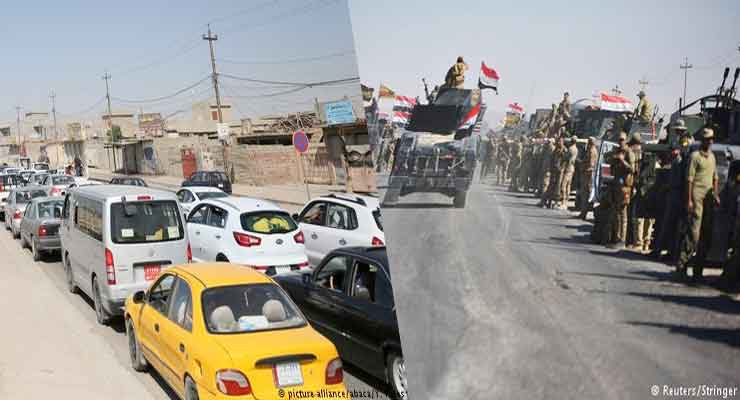
The operation is the first time in nine years that Turkish land forces have engaged in Iraq.

Commando units entered the Zap region of Iraq after crossing from the Çukurca district of the southeastern province of Hakkari. The move, which is part of “Operation Zap,” came after the military determined an increase in movement of outlawed militants in the area, Doğan News Agency reported on Oct. 18.

Turkey’s return riles Syria: It’s ‘blatant aggression’

From Oct. 8-12, Turkish intelligence and special forces elements carried out reconnaissance in Syria north of Idlib and south of Afrin while maintaining contacts with Sunni opposition units that control the region. This preparatory activity was actually shaping an operational theater. Afterward, a Turkish detachment of about 100 commandos, 30 vehicles, and construction and military engineering equipment entered Syria.

An Oct. 13 statement from the Turkish military high command said Turkish troops that will serve in the Idlib de-escalation zone had begun erecting military observation posts, as specified during the peace talks in Astana, Kazakhstan. That night, a second Turkish detachment, which was operating M60T Sabra and Leopard 2 tanks, entered Syria and began deploying at Sheikh Barakat, an 842-meter-high (2,762-foot-high) mountain that dominates Afrin.

The government of Syrian President Bashar al-Assad called Turkey’s deployment north of Idlib “a blatant aggression against the sovereignty and territorial integrity of Syria and a clear violation of international law and its principles.”

The Idlib operation launched Oct. 13 marks the third time the Turkish army has entered Syrian territory in less than three years. A February 2015 operation relocated the tomb of Suleiman Shah, which was threatened by the Islamic State (IS). In August 2016, Operation Euphrates Shield began clearing the Jarablus-al Rai-al Bab triangle of IS elements; that campaign lasted seven months.

Filed Under: Articles Tagged With: against, aggression, and Syria, Iraq, Turkey

Report: Iraqi forces have captured oil fields and a military base held by Kurdish forces Kirkuk

October 16, 2017 By administrator

Iraqi forces have captured oil fields and a military base held by Kurdish forces near the oil-rich city of Kirkuk. The US, which backs both sides, urged their allies to deescalate the explosive situation.

raqi security forces and allied Shiite militia clashed with Kurdish peshmerga forces Monday around Kirkuk, an oil-rich area at the heart of disputes between the two sides.

Tensions between the two sides have escalated since the the Iraqi Kurds overwhelmingly voted last month for an independent state in a non-binding referendum, which controversially included disputed territories such as Kirkuk.

Iraqi government and Iran-backed Shiite militia, known as Popular Mobilization Units (PMU), advanced to take control of oil fields, the airport and the strategically-important K1 military base in and around Kirkuk city, Iraq’s Joint Operations Command said.

Iraqi state TV reported that Iraqi forces had taken control of “vast areas” outside of Kirkuk city.

Kurdish peshmerga forces reportedly retreated back from positions outside the city, but were setting up defenses in the city as thousands of civilians fled in cars north to Erbil and Sulaymaniyah.

Prime Minister Haider al-Abadi ordered security forces “to impose security in Kirkuk in cooperation with the population of the city and the peshmerga.” He said that instructions were given for forces to stay out of the city.

The Kurdistan Region Security Council claimed peshmerga had destroyed several US-supplied Humvees belonging to the PMU.

Hemin Hawrami, an adviser to Kurdish President Masoud Barzani, quoted the peshmerga command as saying Abadi’s government would “pay a heavy price” for the assult on Kirkuk.

The US Defense Department, which has supplied and trained both the peshmerga and Iraqi army, urged its two allies in the war against the “Islamic State” (IS) “to avoid additional escalatory actions.” It added that it opposed destabilising actions that distract from the battle against IS militants.

The Iraqi troops and the Kurdish peshmerga fighters have been engaged in a standoff since Saturday, when they took positions on opposite banks of a river on the southern outskirts of the city of Kirkuk.

The Kurdish forces were given a deadline of 2 a.m. local time Sunday (2300 UTC Saturday) to surrender their positions and return to their pre-June 2014 positions.

Filed Under: Articles Tagged With: Iraq, kirkuk, Kurd

Kurdistan willing to hold talks with Iraqi officials over existing row: KRG

October 12, 2017 By administrator

Iraq’s Kurdistan Regional Government (KRG) has expressed willingness to hold negotiations with the Iraqi government regarding their dispute over the restrictions that Baghdad has imposed on the semi-autonomous region.

In a statement issued overnight, the KRG said it is willing to discuss its dispute with Baghdad over Kurdish airports, border posts and banks, Reuters reported on Thursday.

Iraqi website NRT also reported Thursday that the road connecting the Kurdistan region with Nineveh Province has been blocked by Kurdish Peshmerga fighters.

“The two main roads connecting Erbil and Dohuk to Mosul were cut off on Thursday with sand embankments as a precautionary measure after we detected an increase in deployments and movements of Iraqi forces near the front line with the Peshmerga,” AFP quoted a Kurdish official as saying.

However, another Kurdish official said later in the day that the barriers were removed.

“The closure was prompted by fears of a possible attack by Iraqi forces on the disputed areas,” held by Kurdish forces but outside the autonomous Kurdish region, the official added.

The move came after Kurdish authorities said late on Wednesday they feared Iraqi government forces and allied paramilitary units were preparing to launch an assault on the region.

Meanwhile, the Iraqi government spokesman has rejected speculations about Iraq’s alleged plans to invade the Kurdistan region, saying Baghdad will only fight Daesh Takfiri terrorists.

Iraq’s Prime Minister Haider al-Abadi has reaffirmed the country’s determination to protect its Kurdish population against any threats amid the ongoing tensions.

Tensions have been running high between Iraq’s Kurds and central authorities in the wake of last month’s Kurdish independence referendum.

Much of the international community has been vocally critical of the referendum. Kurdish officials claim that over 90 percent of the voters in the semi-autonomous region have said ‘Yes’ to separation from Iraq.

In response to the non-binding Kurdish independence referendum on September 25, the Iraqi government has cut Kurdistan’s direct air links with the outside world, partially isolating the northern region.

Baghdad has also called on the Kurdistan Regional Government (KRG) to either cancel the result of the plebiscite or face potential sanctions, international isolation, and military intervention.

Iraq’s Supreme Judicial Council has issued arrest warrants for the elections and referendum commission chairman of Kurdistan region and his two aides over the controversial referendum.

The Iraqi government has also decided to impose control over mobile phone operators in the Iraqi Kurdistan Region and to relocate their headquarters to Baghdad as part of punitive measures against the KRG


Filed Under: Articles Tagged With: Iraq, Kurdistan

Iraq allows foreigners to leave Kurdistan via Baghdad

October 3, 2017 By administrator

BAGHDAD,— Iraq on Monday authorised foreigners stranded in Iraqi Kurdistan after an international flight ban to leave the country via Baghdad despite not having a federal visa.

Foreigners who had entered the northern autonomous region on regional visas not recognised by Baghdad could previously not travel to other parts of Iraq.

“Any person can leave the country via Baghdad without paying a fine or for an exit visa,” Interior Minister Qassem al-Araji told journalists.

Baghdad ordered the suspension of international flights to and from Iraqi Kurdistan from Friday in retaliation for the Kurds voting for independence earlier last week.

A top ministry official said he would facilitate journalist visas, which usually take at least a month to process.

Iraqi Kurds gave a resounding 92.7-percent “yes” vote for independence in last Monday’s non-binding referendum, which has also sent regional tensions soaring.

Filed Under: Articles Tagged With: allows, foreigners, Iraq, Kurdistan

Iraqi MP: parliament mulls arrests of Kurdistan secession advocates

September 25, 2017 By administrator

by  Mohamed Mostafa

Baghdad (IraqiNews.com) An Iraqi parliament member said Monday that the chamber puts arrests of proponents of Kurdistan’s secession from Iraq as an option in dealing with the divisive referendum.

Hassan Khallati, a member of the Mowaten (citizen) parliamentary bloc, told Alsumaria News that a current referendum held by the autonomous Kurdistan Region violates a recent verdict by Iraq’s federal court which ordered to cancel the vote. He said that overrunning that verdict involves legal consequences.

He said penal measures are considered by a parliament committee formed by the parliament’s speaker to address the referendum, noting that one measure could be “approaching international bodies to arrest whoever endangers the country’s unity and sovereignty”.

Kurds headed to voting stations on Monday to partake in a plebiscite on independence from the central government in Baghdad, a move objected by the Arab-led government in Baghdad, the United Nations, the European Union, the United States and regional powers Iran and Turkey.

Iraqi Prime Minister Haider al-Abadi has repeatedly vowed to take legal action if Erbil proceeded with the vote.

Kurdistan gained actual autonomous governance based on the 2005 constitution, but is still considered a part of Iraq. The region was created in 1970 based on an agreement with the Iraqi government, ending years of conflicts.

Baghdad and Erbil have for long disputed sovereignty over a number of regions, most notably the oil-rich province of Kirkuk, besides contending over petroleum exports’ revenues from those regions.

Source: https://www.iraqinews.com/baghdad-politics/iraqi-mp-parliament-mulls-arrests-kurdish-secession-advocates/

Filed Under: Articles Tagged With: advocates, arrests, Iraq, Kurdistan, secession

  • « Previous Page
  • 1
  • 2
  • 3
  • 4
  • 5
  • …
  • 33
  • Next Page »

Support Gagrule.net

Subscribe Free News & Update

Search

GagruleLive with Harut Sassounian

Can activist run a Government?

Wally Sarkeesian Interview Onnik Dinkjian and son

https://youtu.be/BiI8_TJzHEM

Khachic Moradian

https://youtu.be/-NkIYpCAIII
https://youtu.be/9_Xi7FA3tGQ
https://youtu.be/Arg8gAhcIb0
https://youtu.be/zzh-WpjGltY


gagrulenet Twitter-Timeline

Tweets by @gagrulenet

Archives

Books

Recent Posts

  • Pashinyan Government Pays U.S. Public Relations Firm To Attack the Armenian Apostolic Church
  • Breaking News: Armenian Former Defense Minister Arshak Karapetyan Pashinyan is agent
  • November 9: The Black Day of Armenia — How Artsakh Was Signed Away
  • @MorenoOcampo1, former Chief Prosecutor of the International Criminal Court, issued a Call to Action for Armenians worldwide.
  • Medieval Software. Modern Hardware. Our Politics Is Stuck in the Past.

Recent Comments

  • Baron Kisheranotz on Pashinyan’s Betrayal Dressed as Peace
  • Baron Kisheranotz on Trusting Turks or Azerbaijanis is itself a betrayal of the Armenian nation.
  • Stepan on A Nation in Peril: Anything Armenian pashinyan Dismantling
  • Stepan on Draft Letter to Armenian Legal Scholars / Armenian Bar Association
  • administrator on Turkish Agent Pashinyan will not attend the meeting of the CIS Council of Heads of State

Copyright © 2025 · News Pro Theme on Genesis Framework · WordPress · Log in