Gagrule.net

Gagrule.net News, Views, Interviews worldwide

  • Home
  • About
  • Contact
  • GagruleLive
  • Armenia profile

Mob attack Turkish bank in Greece, and why is there Turkish Bank in Greece?

March 22, 2018 By administrator

Around 25 people attacked a Turkish bank in the northern Greek city of Komotini on Tuesday in response to the Turkish occupation of the town of Afrin in Syria, Greek Kathimerini newspaper reported.

The assailants, it said, were “anti-establishment anarchists” acting in solidarity with Kurdish fighters in northwest Syria.

They badly damaged the glass of the branch of Turkish state-owned Ziraat Bank, but no one was hurt, the newspaper said. So far, no one had been arrested over the incident.

It follows attacks on Turkish targets including mosques, shops and restaurants across Europe by those angered by the Turkish invasion of Afrin, the source said.


Source Panorama.am

Filed Under: Articles Tagged With: Greece, Mob attack, Turkish bank

Turkey arrests Greek soldiers on espionage charges

March 3, 2018 By administrator

A Turkish court has ordered two Greek soldiers to be held on charges of ‘military espionage.’ The soldiers claim they lost their way in bad weather before being apprehended by a Turkish border patrol.

A court in the northwestern Turkish city of Edirne has ordered the detention of two Greek soldiers, charging them on suspicion of “military espionage.” Greek authorities have demanded the soldiers — a lieutenant and a sergeant — be immediately released.

The soldiers, who were apprehended by officers in a Turkish military zone, claim they lost their way due to heavy snow and fog before straying over the border. The two-man Greek patrol was detained in an unclearly marked wooded area near Edirne.

The Greek military confirmed the men’s statements and said that Greek and Turkish authorities were in contact and working toward a solution to have the soldiers returned.

A Greek official said Prime Minister Alexis Tsipras was “closely following” developments and was in “constant contact” with the Greek defense and foreign ministers.

Greek government spokesman Dimitris Tzanakopoulos said he expected the return of the two soldiers to be a “pure formality” and that Athens expected to “swiftly settle the issue.”

However, the Turkish court’s decision on Friday could see the men ordered to remain in prison ahead of a trial, a date for which has not yet been set up.

Sour relations

Despite being NATO allies, relations between Greece and Turkey have become increasingly strained in recent years.

One festering sore is the issue of Cyprus, the northern part of which has been occupied by Turkish troops since 1974, following an Athens-inspired coup aimed at uniting the island with the rest of Greece.

Tensions in the Aegean Sea continue to remain high after Turkey last year vowed to block any moves by the Greek Cypriot government to exploit oil reserves in the Mediterranean.

However, Ankara’s greatest gripe concerns a Greek court decision not to extradite eight Turkish former servicemen who fled to Greece following the botched 2016 military coup against the Turkish government. The court ruled that the men, who deny any role in the attempted government overthrow, would not receive a fair trial if they were returned to Turkey. The ruling infuriated Turkish President Recep Tayyip Erdogan.

When asked whether Ankara could keep the two soldiers as leverage to secure the extradition of the eight Turkish servicemen, Tzanakopoulos said:  “I have heard various scenarios since this morning about possible negotiations the Greek government could enter with Turkey on possible exchanges. These are spy and conspiracy scenarios that do not merit comment.”

dm, js/aw (AP, AFP, Reuters)

Filed Under: Articles Tagged With: Greece, soldier, Turkey

Tesla is building an electric motor R&D group in Greece to tap into strong local electrical engineering talent

February 25, 2018 By administrator

Tesla’s engineering and design teams are primarily based in the US and especially in California, but the company has been expanding internationally over the last few years with teams in the UK and Germany.

Now we learn that the automaker is also building a small research and development office in Athens, Greece to develop new electric motor technologies.

Several reports came out of Greece over the last few weeks about rumors of Tesla establishing a local presence in the country.

The nature of the company’s presence was never clear since Greece is a market that Tesla has yet to officially enter.

We reached out to the company for a comment on the situation and a spokesperson confirmed that Tesla is establishing a local research and development office:

“Tesla is building a small research and development office in Athens, which will be comprised of a highly-qualified engineering team. This team will focus solely on limited research and development activities to accelerate electric motor technology development through close collaboration with our team in the US.”

Three of Tesla’s top electric motor designers, Principal Motor Designer Konstantinos Laskaris, Motor Design Engineer Konstantinos Bourchas, and Staff Motor Design Engineer Vasilis Papanikolaou, all came out of the National Technical University of Athens.

The company wants to tap even more into this local electrical engineering talent with an office in the Greek capital.

The Tesla spokesperson added:

“Greece has strong electric motor engineering talent and technical universities, offering tailored programs and specialized skills for electric motor technology.”

The team will be relatively small – starting with just 10 engineers.

Electrek’s Take

That’s an interesting development and probably a good move by Tesla. The three engineers mentioned above moved to Palo Alto to work on Tesla’s electric motors, but that can be a hard sale for some people and a local office offers an easier alternative.

The emphasis on electric motor development is also interesting as Tesla is rapidly becoming a large manufacturer of electric drive units and other power electronics.

JB Straubel, Tesla’s Chief Technology Officer, himself an expert in energy conversion, has previously stated that he sees power electronics as one of Tesla’s main advantages in the industry.

The company has already received a lot of praise for its Model S/Model X drive units, but Tesla also built powertrains for several other vehicles like the electric versions of the Toyota Rav4, the Smart, and Mercedes B-class, and they have designed a brand new drive unit for the Model 3, which will also be used in the Tesla Semi.

Filed Under: Articles Tagged With: Greece, motor R&D group, tesla

Turkey Threatens to Invade Greece

February 19, 2018 By administrator

Turkish President Recep Tayyip Erdoğan recently said: “We warn those who have crossed the line in the Aegean and Cyprus… Their courage persists only until they see our army, our ships and our planes.” (Photo by Elif Sogut/Getty Images)

by Uzay Bulut,

  • Turkey’s ruling party, and even much of the opposition, seem intent on, if not obsessed with, invading and conquering these Greek islands, on the grounds that they are actually Turkish territory.
  • “The things we have done so far [pale in comparison to the] even greater attempts and attacks [we are planning for] the coming days, inshallah [Allah willing].” – Turkish President Recep Tayyip Erdoğan, February 12, 2018.
  • The head of the state-funded Directorate of Religious Affairs, the Diyanet, has openly described Turkey’s recent military invasion of Afrin as “jihad.” This designation makes sense when one considers that Muslim Turks owe their demographic majority in Asia Minor to centuries of Turkish persecution and discrimination against the Christian, Yazidi and Jewish inhabitants of the area.

In an incident that took place less than two weeks after the Greek Defense Ministry announced that Turkey had violated Greek airspace 138 times in a single day, a Turkish coast guard patrol boat on February 13 rammed a Greek coast guard vessel off the shore of Imia, one of many Greek islands over which Turkey claims sovereignty.

Most of the areas within modern Greece’s current borders were under the occupation of the Ottoman Empire from the mid-15th century until the Greek War of Independence in 1821 and the establishment of the modern Greek state in 1832. The islands, however, like the rest of Greece, are legally and historically Greek, as their names indicate.

Turkey’s ruling Justice and Development Party (AKP), however, and even much of the opposition seem intent on, if not obsessed with, invading and conquering these Greek islands, on the grounds that they are actually Turkish territory.

In December, for instance, Kemal Kılıçdaroğlu, the leader of the main Turkish opposition CHP party, stated that when he wins the election in 2019, he will “invade and take over 18 Greek islands in the Aegean Sea, just as former Turkish PM Bulent Ecevit invaded Cyprus in 1974.” He said that there is “no document” proving that those islands belong to Greece.

Meral Akşener, the head of the newly established opposition “Good Party,” has also called for an invasion and conquest of the islands. “What is required must be done,” she tweeted on January 13.

The most garish muscle-flexing has come from Turkish President Recep Tayyip Erdoğan, of course, who seems emboldened by his military invasion of the Afrin region in northern Syria having gone virtually unchallenged.

“We warn those who have crossed the line in the Aegean and Cyprus,” Erdoğan declared, continuing:

“Their courage persists only until they see our army, our ships and our planes… Whatever Afrin is to us, our rights in the Aegean and Cyprus are the same. Do not ever think that the natural gas exploration in the waters of Cyprus and the opportunistic attempts in the Aegean Sea drop off our radar.

“Just as we disrupt the plots [in the region] through Operation Euphrates Shield and Operation Olive Branch [on Syria], and soon in Manbij and other regions, we can and we will disrupt the plots of those who engage in miscalculations on our southern border… Our warships and air forces are keeping an eye on the area closely to intervene in every way when required.”

Referring to the days of the Ottoman Empire, Erdoğan went on:

“Those who think that we have erased from our hearts the lands from which we withdrew in tears a hundred years ago are wrong.

“We say at every opportunity we have that Syria, Iraq and other places in the geography [map] in our hearts are no different from our own homeland. We are struggling so that a foreign flag will not be waved anywhere where adhan [Islamic call to prayer in mosques] is recited.

“The things we have done so far [pale in comparison to the] even greater attempts and attacks [we are planning for] the coming days, inshallah [Allah willing].”

The Ottoman dynasty and empire was established by a nomadic Turkmen chief sometime around the year 1300. During the more than 600 years of the Ottoman period, the Ottoman Turks, who also represented the Islamic Caliphate, regularly launched wars of jihad, invading and occupying lands across five continents.

Neo-Ottomanists in Turkey still proudly embrace the concept of jihad (Islamic holy war) against the kafirs (infidels). The head of the state-funded Directorate of Religious Affairs, the Diyanet, has openly described Turkey’s recent military invasion of Afrin as “jihad.”

This designation makes sense when one considers that Muslim Turks owe their demographic majority in Asia Minor to centuries of Turkish Muslim persecution and discrimination against the Christian, Yazidi and Jewish inhabitants of the area. In the 11th century, Turkic jihadists from Central Asia invaded and conquered the Greek-speaking, Christian Byzantine Empire, paving the way for the gradual Turkification and Islamization of the region through methods such as murder, kidnapping, rape and forced conversions.

The greatest 20th century Turkish assault against Christians took place in the 1914-1923 genocide of Greeks, Armenians and Assyrians (Syriacs/Chaldeans) in Ottoman Turkey. This did not prevent Turkey, which continues to deny the genocide, from becoming a member of NATO in 1952. The assault also did not stop Turkey, three years after joining NATO, from committing a savage anti-Greek pogrom in Istanbul or from forcibly expelling the remaining Greeks from Turkey in 1964.

It is precisely because the Turks have never been held accountable for their criminal actions and aggression that they continue to threaten the security and sovereignty of their neighbors. It is high time for the West wake up and take Ankara to task.

Uzay Bulut is a Turkish journalist born and raised in Turkey. She is presently based in Washington D.C.

Filed Under: Articles Tagged With: Greece, invade, threatens, Turkey

Is Greece about to LOSE IT with Turkey? Tsipras issues rare WAR WARNING as tensions mount

February 15, 2018 By administrator

GREECE issued a warning to Turkey today saying it would NOT tolerate any challenge to its territorial integrity.

By CHARLIE BUCKLE

Prime Minister Alexis Tsipras said today Greece would not tolerate any move from Turkey after Turkish and Greek coastguard vessels collided close to disputed islets in the Aegean Sea.

He said: “Our message, now, tomorrow and always, is clear… Greece will not allow, accept or tolerate any challenge to its territorial integrity and its sovereign rights.”

“Greece is not a country which plays games,” Tsipras told an audience at the country’s shipping ministry.

The collision involving the two vessels occurred on Monday evening off Imia, known as Kardak in Turkish. Each side blamed the other for the incident.

Turkey and Greece, NATO allies, have been at odds over a host of issues from ethnically split Cyprus to sovereignty over airspace and overflights.

They came to the brink of war in 1996 in a sovereignty dispute over the islets, but tensions have eased since.

Noting that Greece’s eastern border is also that of the European Union, Tsipras said: “Challenges and aggressive rhetoric against the sovereign rights of an EU member state are against the EU in its entirety.”

Tensions between the two countries have been on the rise since a Greek court blocked the extradition of eight Turkish soldiers whom Ankara accuses of involvement in a failed coup against President Tayyip Erdogan in 2016.

Yesterday Turkish advisor to Erdogan said Greece was “like a fly picking a fight with a giant.”

The chief advisor told Turkey’s TRT channel that he is “in no doubt” that the US has a plan to make Greece attack Turkey while its military is engaged in Syria.

Turkey’s response, Yigit Bulut said, will be tough, adding that Greece is no match for Turkey’s might. It would be like a “fly picking a fight with a giant,” he said and warned that terrible consequences would follow for Greece.

Bulut made similar comments earlier in the month referring to Imia over which Greece and Turkey came close to war in 1996. “We will break the arms and legs of any officers, of the prime minister or of any minister who dares to step onto Imia in the Aegean,” Bulut said.

Meanwhile Turkey’s defence minister said today he had told his U.S. counterpart, Jim Mattis, that the Syrian Kurdish YPG should be removed from the Syrian Democratic Forces (SDF), the militia that Washington is backing in the fight against Islamic State.

Nurettin Canikli, in a briefing to reporters in Brussels after meeting with the U.S. Defence Secretary, also said he disputed Mattis’s characterisation of the SDF as dominated by Arabs, saying the militia was completely controlled by the YPG.

Filed Under: Articles Tagged With: Greece, Turkey

#Greece Macedonia: Name dispute draws mass protest in Athens

February 4, 2018 By administrator

Hundreds of thousands of Greeks have taken to the streets of Athens in a protest about the decades-long dispute over the name Macedonia.

Many Greeks object to the country of the same name calling itself Macedonia, saying it implies a territorial claim on Greece’s northern Macedonia region.

Protesters oppose Greek government proposals on resolving the issue.

Celebrated Zorba The Greek composer Mikis Theodorakis, 92, was among those addressing the crowds.

Anarchists daubed red paint over his home on Saturday but he was unfazed, declaring, “I am calm and ready.”

Demonstrators carrying Greek flags chanted “hands off Macedonia” and “Macedonia is Greece” as they assembled in Syntagma Square outside parliament.

It is the second such protest in recent weeks – demonstrators rallied in Thessaloniki, the capital of the Macedonia region, on 21 January.

The dispute with Macedonia has festered since it gained independence from Yugoslavia in 1991 and has held up its bids to join Nato and the EU.

It is officially known as the Former Yugoslav Republic of Macedonia (FYROM) in organisations such as the UN.

Greece’s left-wing Syriza government says the issue is a diplomatic obstacle it wants resolved and has proposed agreeing to a composite name for the country which would include the word Macedonia but ensure a clear differentiation from the Greek region.

But for many Greeks that would be a step too far.

Talks are under way at the United Nations but the Greek Foreign Minister Nikos Kotzias has received death threats since saying he expects the dispute to be resolved within months.

The Greek Orthodox church backs the campaign to stop Macedonia using any variant of the name.

UN mediator Matthew Nimetz has suggested alternative names such as “Republic of New Macedonia”.

Filed Under: News Tagged With: Greece, Macedonia, Name Dispute

‘Worse than Afrin’: Erdogan’s aide threatens to ‘break legs’ of Greek ministers over disputed isles

February 2, 2018 By administrator

Greek officials who set foot on contested islands in the Aegean Sea will face Turkey’s wrath that will be “worse than that in Afrin,” a Turkish presidential advisor has charged. Athens swiftly denounced his rant.

“We will break the arms and legs of the [Greek] Prime Minister [Alexis Tsipras] or of any minister, who dares to step onto Imia in the Aegean,” Yigit Bulut, a senior advisor to the Turkish President Recep Tayyip Erdogan, told the Turkish TRT broadcaster Thursday. The official was referring to a pair of uninhabited isles in the eastern part of the Aegean Sea that have long been the subject of a bitter territorial dispute between Turkey and Greece.

Turkish president #Erdogan's chief advisor Yigit Bulut threatens #Greece, says Athens will face the wrath of #Turkey worse than #Afrin offensive, vows to break arms & legs of officials, PM or any Minister, who dare to land on disputed Kardak/Imia islet in Aegean. pic.twitter.com/XPmATUchnm

— Abdullah Bozkurt (@abdbozkurt) February 1, 2018

If Athens would further attempt to infringe upon what Ankara claims to be its territorial sovereignty, it would “feel the anger of Turkey, worse than that in Afrin,” the official warned, referring to the ongoing Turkish military operation in the northern Syria targeting local Kurdish militias. His angry remarks were apparently prompted by the Greek Defense Minister’s recent attempt to visit the contested territories.

On January 28, Turkish media reported that Turkey’s coast guard “blocked” the Panos Kammenos from approaching the islands. Kammenos was heading to the disputed territories to lay a wreath in commemoration of three Greek officers who died there in a helicopter crash in 1996.

Following the warning from the Turkish military, the vessel carrying the minister left the area without any incident, Turkey’s Anadolu news agency reported, citing the the Turkish interior minister and the General Staff.

The Greek Foreign Ministry slammed Bulut’s threats by calling them “unspeakable.” Such remarks “are alien to European political culture,”the ministry said in a statement, adding, that “such positions do not contribute to improving relations” between Athens and Ankara.

It also pointed out that “the legal status of the Aegean is clear and guaranteed by international law,” apparently implying that the disputed islands are Greek territory.

The incident adds further fuel to already escalating tensions between the two neighboring NATO allies. Greek media reported about “a spike in Turkish airspace violations in the Aegean.” While Turkish news outlets said “the Turkish Armed Forces continue to determinedly protect the nation’s rights and interests stemming from international law and agreements.”

Bulut, a former editor-in-chief at the Turkish news channel Haberturk TV, is known for his controversial statements. In 2013, he claimed that some foreign powers had been trying to kill Erdogan using telekinesis. The Turkish president was PM at the time. The same year, he also claimed that German airline Lufthansa were fuelling anti-government protests in Turkey, allegedly concerned over passenger flows being diverted from Germany to Turkey.

The Imia islands, also known as the Kardak islands in Turkey, are two small islets that together occupy a total area of some 40,000 square meters. The isles lie 4.6 kilometers from the nearest Greek island and 7 kilometers away from the Turkish coast.

The territorial dispute over the islands has already pushed Greece and Turkey to the brink of war. In 1996, tensions around the contested territory escalated rapidly with both Athens and Ankara sending Special Forces to the area. The crisis prompted the US to intervene to prevent an armed conflict between the two NATO member states.

Filed Under: Articles Tagged With: Erdogan, Greece, Turkey

Macedonia Extends Olive Branch To Greece In Name Dispute

January 24, 2018 By administrator

Macedonia has extended an olive branch toward Greece by agreeing to rename its main airport and a major highway in another step toward ending a decades-old dispute over the former Yugoslav republic’s name.

Prime Minister Zoran Zaev said after meeting his Greek counterpart Alexis Tsipras on January 24 in the Swiss winter resort of Davos that Skopje’s Alexander the Great Airport would be renamed, while a highway leading from his country to Greece will drop a similar moniker and instead be called the Friendship Highway.

“To demonstrate, in practice, that we are committed to finding a solution, I am announcing that we will change the name of the airport and avenues,” Zaev told reporters after the meeting, adding that a new name for the airport has yet to be determined.

Macedonia kept its communist-era name after declaring independence from Yugoslavia in 1991. But the move angered Greece, which says it implies territorial claims to a Greek province of the same name as well as to Greece’s history.

Greece has since insisted that the country be referred to internationally as the Former Yugoslav Republic of Macedonia and blocked its path to European Union and NATO membership until a solution to the dispute is found.

“The solution must be in the direction of protecting the national identity and identity of our peoples in order to show that we are committed to the process of finding a solution. Our activities show our goodwill and this testifies to the fact that we do not have any territorial aspirations towards our neighbor,” Zaev said.

Name Suggestions

Authorities from both Greece and Macedonia have said that they want to settle the issue this year and the two sides have agreed to intensify consultations, Tsipras said.

“We don’t want to just solve the issue of the name, but to put the relations of our two countries on solid foundations,” he added.

UN-mediated talks between the two countries’ chief negotiators in New York on January 17 did not produce concrete results but some name suggestions were put forward for negotiation, according to media reports.

Greece wants Macedonia to change its name — adding a modifier like “New” or “North” — to clarify that it has no claim on the neighboring Greek province of Macedonia.

However, many Greeks disagree with such a solution.

Tens of thousands of people took to the streets of the northern Greek city of Thessaloniki on January 21 to show they were against the use of the word “Macedonia” in any solution to the row.

The Former Yugoslav Republic of Macedonia is the name under which Macedonia was admitted to the United Nations in 1993.

Filed Under: Articles Tagged With: Greece, Macedonia, Name Dispute

Greece Seizes Libya-Bound Ship Carrying Explosive Materials Loaded In Turkish Ports

January 11, 2018 By administrator

Greek authorities have seized a Tanzanian-flagged ship heading for Libya and carrying materials, which have been loaded in Turkey’s İskenderun and Mersin ports, used to make explosives, the Greek coastguards said on Wednesday.
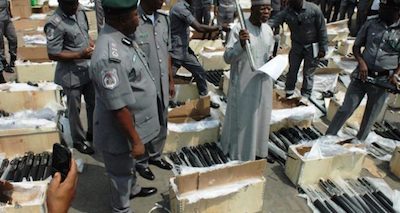
According to a report by Reuters, the vessel was detected sailing near the Greek island of Crete on Saturday. Authorities found 29 containers carrying materials including ammonium nitrate, non-electric detonators and 11 empty liquefied petroleum gas tanks. “The materials were headed to Libya,” Rear Admiral Ioannis Argiriou told reporters. He said the material could be used “for all sorts of work, from work in quarries to making bombs and acts of terrorism.”

European Union and United Nations-imposed arms embargoes have prohibited the sale, supply or transfer of arms to Libya since 2011. According to the ship’s bill of lading, the cargo had been loaded in the Turkish ports of Mersin and İskenderum and was destined for Djibouti and Oman.

But the Greek coastguard said a preliminary investigation found the captain had been ordered by the vessel’s owner to sail to the Libyan city of Misrata to unload and deliver the entire cargo. No shipping maps were found on the ship’s logbook for the Djibouti and Oman areas, the coastguard said. The eight-member crew has been arrested and will appear before a prosecutor on Thursday.

On September 2017, the Tin-Can Island Command of the Nigeria Customs Service (NCS) busted syndicates that smuggled weapons into Nigeria in containers containing guns from Turkey and apprehended weapons and ammunition two times within two weeks. Nigerian customs had said the guns were found in a 20-foot container marked No. CMAU189817/8.

The statement quoted Col. Hammed Ali, the comptroller-general, as narrating how the terminal operator quarantined the flagged container for stricter analysis. “It was transferred to the enforcement unit, where 100 percent examination revealed 470 pump action rifles as against elbow plumbing plastics on its bill of lading,” it said.

“Importer of this deadly cargo is Great James Oil and Gas Ltd, while the vessel is MV Arkas Africa owned by Hull Blyth. This discovery brings to a total of 2,671 rifles seized within the last eight months of this year,” said the statement. “Since this container belongs to the same importer of the 1,100 rifles, the ongoing investigation will be reinvigorated to fish out all those directly or remotely connected with these dangerous importers,” it added.

A top Nigerian official had also met with the Turkish ambassador to Nigeria after a container containing hundreds of guns from Turkey was confiscated. The Nigerian media had reported that this was the fourth time in a year that illegal arms shipments from Turkey were seized by customs officers in Nigeria. Nigeria Customs Service, NCS, said 2,671 rifles had been imported from Turkey since January.

“The government is worried about the incessant importation of arms from Turkey. This year alone, four shipments have come from that country,” customs spokesman Joseph Attah had told AFP. According to Attah, 470 rifles were seized on Tuesday less than two weeks after operatives of the Tin-Can Island Command of NCS busted a syndicate that smuggled over 1,100 weapons into Nigeria.

“We have found out that the people bringing in these weapons are Nigerians. They have syndicates in Turkey who are manifesting these weapons,” Atah said and added that “We are yet to get to the bottom of the whole issue. We will investigate to know if these weapons are meant for commercial purposes or group of insurgents or agitators.”

In January 2014, a number of trucks that were found to belong to MİT were stopped by Turkish gendarmes in two separate incidents in the southern provinces of Hatay and Adana, after prosecutors received tips that they were carrying arms to Syria.

Although the Justice and Development Party (AKP) government has claimed that the trucks were transporting humanitarian aid to the Turkmen community in Syria, opposition voices have continued to question why, if the operation was within the law, the government intervened to prevent the trucks from being searched.

Cumhuriyet daily had reported in May 2015 that  trucks allegedly owned by the National Intelligence Organisation (MİT) were found to contain weapons and ammunition that were headed for Syria when they were stopped and searched in southern Turkey in early 2014.

When the MİT truck story first broke in 2015, it produced a political firestorm in Turkey about the role of the Turkish spy agency in arming rebel factions in Syria and prompted an investigation into Cumhuriyet daily journalists Can Dündar and Erdem Gül, who published the report.

Also in 2014, Turkish Airlines attracted attention after a voice recording surfaced, allegedly a phone conversation between a senior Turkish Airlines (THY) official and one of then-Prime Minister Recep Tayyip Erdoğan’s advisers.

“Lots of material is on its way to Nigeria right now. Is it going to kill Muslims or Christians? I am sinning right now, you should know,” one voice, purportedly that of the THY official, says.

The voice supposedly of Erdoğan’s adviser says he would contact with MİT Undersecretary Hakan Fidan. Turkish Airlines denied carrying weapons and military equipment to Nigeria.

Filed Under: Articles Tagged With: Explosive Materials, Greece, Turkey

Greece limits Islamic Sharia law courts for Muslim minority

January 10, 2018 By administrator

Women of Greece’s Muslim community in Komotini, northeastern Greece, read the Quran at a mosque

The Greek parliament has changed a century-old law that gave Islamic courts priority over family law matters among the Muslim minority in Western Thrace. Greece is the only EU country with Islamic religious courts.

Greek lawmakers on Tuesday overwhelmingly backed legislation to limit the purview of Islamic religious courts over the nearly 120,000-strong Muslim minority in the region of Western Thrace.

Islamic religious courts will only be able to rule in family law matters such as divorce, child custody and inheritance if all parties agree, under the new law supported by major parties. Regular Greek law will apply in cases where all parties do not agree to a religious court settling a dispute.

Prime Minister Alexis Tsipras called the vote a “historic step” that “extended equality before the law to all Greeks” while respecting the “special characteristics” of Greece’s Muslim minority.

Historical legacy

Greece is the only EU country that has Islamic religious courts.

State-appointed clerics, known as muftis, have resolved family law matters among Muslims in Western Thrace under the 1923 Treaty of Lausanne between Turkey and Greece following the collapse of the Ottoman Empire.

Among other things, the treaty involved a population exchange of some 2 million people between Turkey and Greece, except for on some Aegean islands, the Greek Orthodox community in Istanbul and the largely Turkish-speaking Muslim community in Western Thrace.

The Greek Orthodox and Muslim minorities were given certain minority language, cultural and religious rights under the treaty.

But in a strange twist of history, the Muslims of Greece fell under Islamic law while Turkey moved to a secular legal system in the Turkish Republic.

The Muslims in the northeastern corner of Greece near the border with Turkey are mostly ethnic Turks, although there is also a Bulgarian-speaking Pomak community.

Turkey has long taken an interest in what it deems Turkish-ethnic brothers in Western Thrace, drawing accusations from Greece that Ankara is interfering in its affairs.

Greece has been reluctant to change the law around Muslim family matters, fearful that it could prompt Turkey to request changes to the Lausanne Treaty.

During a visit to Greece last month, Turkish President Recep Tayyip Erdogan insisted that Athens was failing to adhere to the treaty by refusing to respect the country’s Muslim minority.

Greece challenged in European Court of Human Rights

The change to the law comes as the European Court of Human Rights (ECHR) is expected to rule later this year on a case that could have been embarrassing for the Greek government.

A 67-year-old widow, Hatijah Molla Salli, from the city of Komotini in Western Thrace filed a complaint against Greece over an inheritance dispute with her late husband’s sisters.

Salli won an appeal in the Greek secular justice system, but the supreme court in 2013 ruled that only a mufti had the power to resolve Muslim inheritance issues.

Filed Under: Articles Tagged With: Greece, limits Islamic, Sharia law

  • « Previous Page
  • 1
  • 2
  • 3
  • 4
  • 5
  • …
  • 16
  • Next Page »

Support Gagrule.net

Subscribe Free News & Update

Search

GagruleLive with Harut Sassounian

Can activist run a Government?

Wally Sarkeesian Interview Onnik Dinkjian and son

https://youtu.be/BiI8_TJzHEM

Khachic Moradian

https://youtu.be/-NkIYpCAIII
https://youtu.be/9_Xi7FA3tGQ
https://youtu.be/Arg8gAhcIb0
https://youtu.be/zzh-WpjGltY


gagrulenet Twitter-Timeline

Tweets by @gagrulenet

Archives

Books

Recent Posts

  • Pashinyan Government Pays U.S. Public Relations Firm To Attack the Armenian Apostolic Church
  • Breaking News: Armenian Former Defense Minister Arshak Karapetyan Pashinyan is agent
  • November 9: The Black Day of Armenia — How Artsakh Was Signed Away
  • @MorenoOcampo1, former Chief Prosecutor of the International Criminal Court, issued a Call to Action for Armenians worldwide.
  • Medieval Software. Modern Hardware. Our Politics Is Stuck in the Past.

Recent Comments

  • Baron Kisheranotz on Pashinyan’s Betrayal Dressed as Peace
  • Baron Kisheranotz on Trusting Turks or Azerbaijanis is itself a betrayal of the Armenian nation.
  • Stepan on A Nation in Peril: Anything Armenian pashinyan Dismantling
  • Stepan on Draft Letter to Armenian Legal Scholars / Armenian Bar Association
  • administrator on Turkish Agent Pashinyan will not attend the meeting of the CIS Council of Heads of State

Copyright © 2025 · News Pro Theme on Genesis Framework · WordPress · Log in