Gagrule.net

Gagrule.net News, Views, Interviews worldwide

  • Home
  • About
  • Contact
  • GagruleLive
  • Armenia profile

Film: “The Armenian Genocide”, at Concordia University, Irvine, CA.

March 30, 2014 By administrator

Wednesday, April 2, 2014 7.00PM

the-armenian-gen_largeSpeakers: Barbara English, Jeff Mallinson, Levon Marashlian

Concordia University

1530 Concordia West, Irvine, CA (map)

April 2014 Genocide Awareness and Prevention Month

They are committing the greatest indignity human beings can inflict on one another: telling people who have suffered excruciating pain and loss that their pain and loss were illusions.
– Elie WieselRemembering the Past toward Healing our Future

A free six-event commemorative film series featuring stories of survivors and their children

The Armenian Genocide – PBS (2006)

GENOCIDE: Armenian
Wednesday, April 2, 2014 – 9p
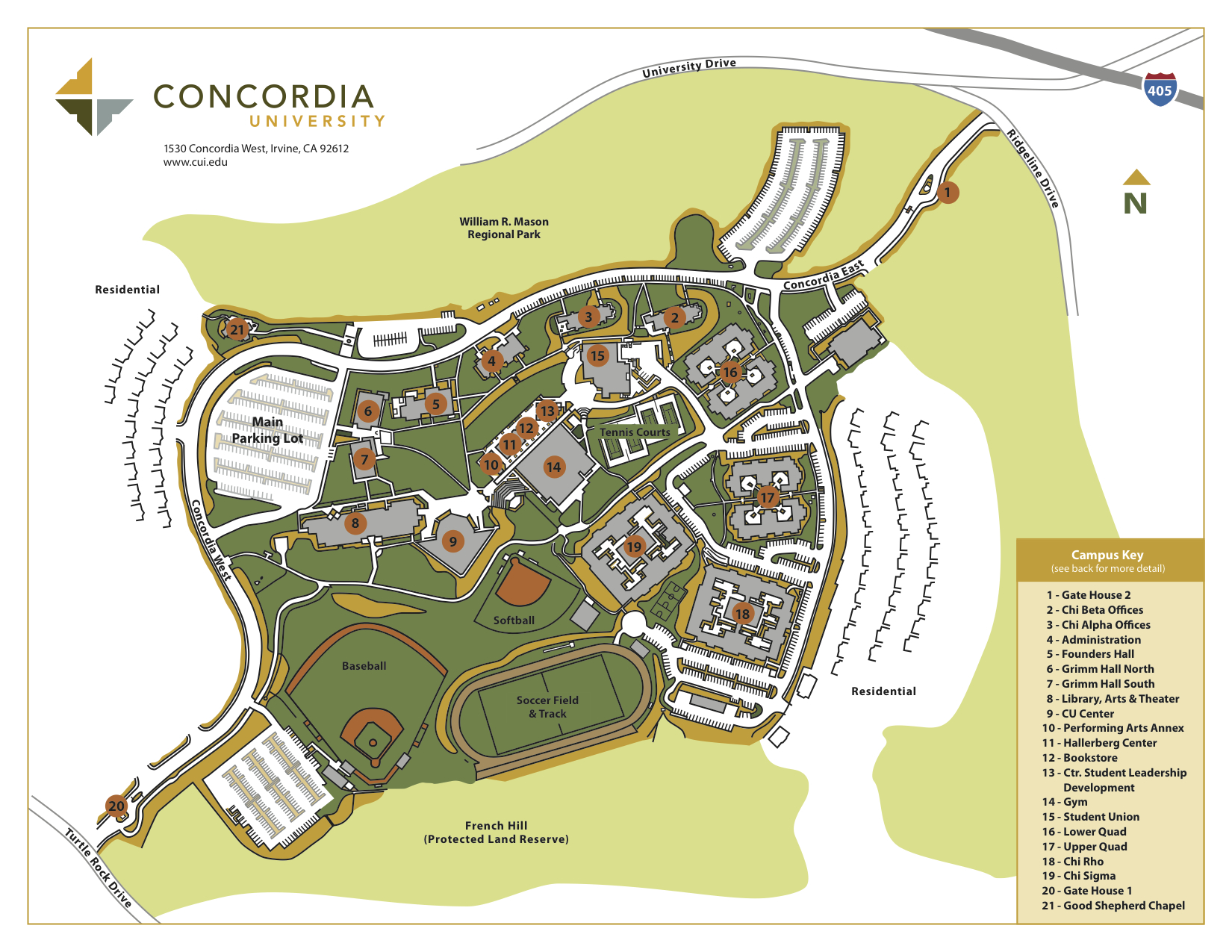
Concordia University  Center
1530 Concordia West, Irvine, CA 92612
campus map
(See below for free PARKING details.)
Speakers: Barbara English, Jeff Mallinson, Levon Marashlian
RSVP
Space is limited.

Camp Darfur a traveling, awareness-raising six-tent refugee camp exhibit, (one for each genocide being commemorated in April), will be on campus all day outside venue location beginning at noon.
Community booths from our partnering organizations will also be featured in the same area beginning at 5:30p.
–

Film Synopsis:

The Armenian Genocide is the complete story of the first Genocide of the 20th century – when over a million Armenians died at the hands of the Ottoman Turks during World War I. This unprecedented and powerful one-hour documentary, was written, directed and produced by Emmy Award-winning producer Andrew Goldberg. Featuring interviews with the leading experts in the field such as Pulitzer Prize-winning author Samantha Power and New York Times best-selling author, Peter Balakian, this film features never-before-seen historical footage of the events and key players of one of the greatest untold stories of the 20th century. The Armenian Genocide is narrated by Julianna Margulies and includes historical narrations by Ed Harris, Natalie Portman, Laura Linney and Orlando Bloom, among others.

Speakers:

Barbara English, LMFT is a Licensed Marriage Family Therapist and Certified Bioenergetic Therapist with over 20 years of experience in psychotherapy. Ms. English’s training included a strong focus on Early Development and Infant Mental Health. Working from a mind-body perspective, she utilizes relational somatic methods as part of the healing process for those seeking recovery after abuse or trauma. Recognizing that current Western models of recovery are grossly inadequate for addressing the pervasiveness of traumatized societies, locally and globally, in 2005, she founded Living Ubuntu and serves as its volunteer Executive Director. Living Ubuntu seeks to increase compassion and support for the common good. Its efforts include raising awareness of trauma, while offering methods of recovery better-suited to large numbers of people from a variety of cultures. Recovery begins in safety; highlighting related human right issues (e.g. genocide and mass atrocities) is a companion piece of the organization’s approach. Ms. English is a 2009 Carl Wilkens Fellow.

Jeff Mallinson, Ph.D. is Associate Professor of Theology and Philosophy at Concordia University, Irvine,  where he serves as the Faculty in Residence for Global Village, a living-learning community for student residents interested in global issues.  He earned his doctorate at Oxford University, and researches and writes in the area of intellectual history during the Reformation and early modernity. He serves part time as director of the League of Faithful Masks (faithful masks.org) and is co-host of the Virtue in the Wasteland podcast (virtueinthewasteland.com).

Levon Marashlian, Ph.D. is Professor of History at Glendale Community College. He holds a B.A. from the University of Illinois in Chicago and an M.A. and Ph.D. from UCLA. He has lectured extensively in Armenia at the Academy of Sciences, Yerevan State University, and the American University of Armenia, as well as in Beirut, Lebanon and Montreal, Canada. He was a Fulbright Scholar in Armenia in 1994, teaching courses on democracy in America. In 1996, Dr. Marashlian testified before the US House of Representatives International Relations Committee, during a hearing on the Armenian Genocide; his testimony was published in the Congressional Record, 5 May 1998. In 1987, he served on the California Department of Education Curriculum Advisory Committee for the development of instructional material on genocide and human rights and testified before government committees in favor of legislation mandating the teaching of the Armenian Genocide in secondary schools. He was invited to Ankara in 1990 to participate in the government-sponsored 11th Congress of Turkish History. His paper, “Economic and Moral Influences on US Policies Toward Turkey and the Armenians, 1919-1923,” covered the Armenian Genocide and its aftermath and was published in Ankara by the Turkish Historical Society Press in 1994. He has been published in the New York Times, Los Angeles Times, Daily News, Education Week, Washington Jewish Week, Jewish Daily, Houston Chronicle, Glendale News Press, Washington Times, Daily Star (Beirut) and Courier (Paris), as well as in several scholarly journals.

Parking:
Let the guard gate attendant know you are coming to the event and they will distribute visitor parking passes and direct you to appropriate place to park.  There is no charge for parking. See campus map.

Living Ubuntu, in collaboration with Amnesty International – Irvine, community partners and six local academic institutions, presents a six-event commemorative film series featuring the stories of survivors and their children. April is Genocide Awareness and Prevention Month, and each film commemorates a genocide that started during April. Living Ubuntu provides education about global traumas as part of its mission to heal trauma in order to promote peace. All events are free and open to the public. The second one is about the Armenian genocide. All details are above.

For info on all six events, a complete list of community partners, and to RSVP, click here.

Filed Under: Articles, Events Tagged With: armenian genocide, Camp Darfur, Concordia University, Irvine, Turkey

AGBU to join Armenian Genocide commemoration events in Turkey

March 28, 2014 By administrator

March 28, 2014 – 17:54 AMT

177380PanARMENIAN.Net – The Armenian General Benevolent Union (AGBU) Europe, the European Grasroots Anti-racist Movement (EGAM) and the Turkish movement DurDe! (“Say Stop”) call upon all concerned to sign onto a public appeal issued on the occasion of the 99th anniversary of the Armenian Genocide that will be commemorated on April 24, 2014.

The appeal calls upon all Europeans to join in these commemorations in a spirit of “recognition, solidarity, justice, and democracy”.

The text has already received the support of such celebrities as public intellectual Bernard Henry-Levy, writer Tahar Ben Jelloun and international celebrity Charles Aznavour, as well as numerous civil society leaders from around Europe. The appeal is due to be published in newspapers in many countries in early April.

The campaign now also has a website at www.remember24april1915.eu, where supporters are invited to sign onto the appeal, as well as a Facebook page.

April 24 this year will be the second time a joint EGAM-AGBU Europe delegation takes part in the commemorations in Turkey. In addition to Istanbul, the three organizations are also involved in organizing genocide commemoration events in Van and Diyarbakir, in the east of the country.

Commenting on the commemorations to come, DurDe leader Levent Sensever said that “this question is very important for people in Turkey. How we resolve it will have an enourmous influence on what our country will be like in the future. DurDe aspires to a democratic society that does not tolerate impunity and that values its remaining diversity instead of promoting nationalism and prejudice. We also owe it to the Armenians to recognize the crime, to apologize and to see what should be done about it now.”

Benjaming Abtan, President of EGAM, noted that “Turkish society is at a historic turning point. A struggle is being waged between denialism on the one hand, and democracy on the other. This year, Turkish civil society will commemorate the genocide. Cities, such as Diyarbakir and Van, will commemorate it too. The State could soon be the last major institution to deny the truth of the genocide.”

Filed Under: Articles, Genocide Tagged With: AGBU, armenian genocide, Turkey

Ahmet Insel Turkish Intellectuals Who Recognized The Armenian Genocide.

March 28, 2014 By administrator

By:Hambersom Aghbashian

 Ahmet InsAhmet Insel Turkish intellectualel (born in 1955 in Istanbul to a Turkish Sunni Muslim and kemalist family), is a Turkish Economist, University professor, Writer and a Columnist. He did his university studies in Paris and directed the Economics Department of the University of Paris I from 1990 to 1994.  Since 2004, he teaches in the Economics Department of Galatasaray University in Istanbul and since 2007, he has been Head of the department of economy in Galatasaray  In France, he was one of the founders of the review MAUSS (Anti-Utilitarian Movement in the Social Sciences); in Turkey, he participates in the Iletisim venture, the editing house which published the writer Orhan Pamuk, and he is a chronicler for the daily Radikal.  Ahmet Insel wrote a great number of books about Turkey and is now one of the managing editor of the progressist editing house Iletisim.(1)(2)

AhGenocide bookmet Insel is one of the initiators of a Turkish petition asks Armenians for forgiveness for the 1915 genocide. On Dec. 7,2008, Robert Tait wrote in (The Guardian) “Academics and writers in Turkey have risked a fierce official backlash by issuing a public apology which came in an open letter that invites Turks to sign an online petition supporting its sentiments. It reads: “My conscience does not accept the insensitivity showed to and the denial of the Great Catastrophe that the Ottoman Armenians were subjected to in 1915. I reject this injustice and for my share, I empathize with the feelings and pain of my Armenian brothers. I apologize to them”. Tait added that “The contents expose its authors – three scholars, Ahmet Insel, Baskin Oran and Cengiz Aktar, and a journalist, Ali Bayramoglu – to the wrath of the Turkish state, which has prosecuted writers, including the Nobel prize-winning novelist Orhan Pamuk, for supporting Armenian genocide claims”.(3)

In April 2010, Ahmet Insel  and Michel Marian published “Dialogue about the Armenian Taboo” (in Turkish and French).The book is a conversation between two men, one Turk, Ahmet Insel ,and one Armenian, Michel Marian , about the past, the present, and the future.  Through their personal and family itineraries, the great events that marked the history of these two peoples are evoked with, as its culminating point, the 1915 genocide and the question of its recognition.(1)(4)

In his article “Could Europe have an effect on the Armenian question ? (www.repairfuture.net)-  10 October 2013,  Insel wrote “it is obvious that there is a strong sensitivity among EU member countries towards genocide which Armenians were exposed to. We saw the reflection of this fact in decisions of parliaments of some EU member countries to accept the genocide and especially in the attitude of European Parliament continues from 1987 till today “. He added ” We are in an era in which the policy of “no problems with neighbor countries” is collapsed in Turkish foreign policy. Within the following two years, Armenian question shall be discussed in the world public opinion and the genocide shall be commemorated. In such an environment,  the approach of Turkey towards Armenian question shall tend to be more defensive and reactive rather than to be proactive towards positive solution. The improvement which shall neutralize this tendency could be the fact that EU Council shall accelerate membership negotiations of Turkey spectacularly.”(5)

According to   (hyemedia.com, 17 Oct 2013) , Ahmen Insel visited Armenia to participate in a book festival. Presentation of Armenian version of Dialogue sur le tabou arménien (Dialogue about the Armenian Taboo) co-authored by Ahmet Insel and Michel Marian was held during the festival.(6)

——————————————————————————————————————-

1-http://www.lianalevi.fr/f/index.php?sp=liv&livre_id=332

2-http://www.recon-project.com/index.php?option=com_k2&view=item&id=31&Itemid=157&lang=en

3-http://www.theguardian.com/world/2008/dec/08/armenian-genocide-turkey-apology-petition

4- http://www.esiweb.org/index.php?lang=en&id=322&debate_ID=4&slide_ID=25

5- http://www.repairfuture.net/index.php/en/turkey-and-european-union-standpoint-of-turkey/could-europe-have-an-effect-on-the-armenian-question

6-http://www.zoominfo.com/p/Ahmet-Insel/529539334

Also featured in Nor Or


Filed Under: Articles Tagged With: Ahmet Insel, armenian genocide, Intellectuals, Turkish

Armenian Genocide Commemoration at Boston’s Temple Israel

March 26, 2014 By administrator

BOSTON, Mass.–The rabbis and congregation of Boston’s Temple Israel cordially invite the Armenian community to a commemoration of the Armenian Genocide during Friday evening services on April 11.  “A Shabbat of Remembrance and Empowerment: Commemorating the 99th Anniversary of the Armenian Genocide” will feature Dr. Dikran Kaligian who will speak on the genocide and the quest for recognition in face of denial.  Following the service, there will be an opportunity for discussion over refreshments.

Rabbi Ronne Friedman, Temple Israel’s senior rabbi, is a leader of the Coalition to Recognize the Armenian Genocide, a grassroots group comprised of members of the Boston-area Armenian and Jewish communities.  Together with Rabbi Howard Jaffe of Lexington, Rabbi Friedman has been active in educating the Jewish community about the Armenian Genocide and in working toward its recognition.

Temple Israel is located at 477 Longwood Avenue, Boston.  The service will begin at 5:45 p.m.  For directions and parking information go to: http://www.tisrael.org/directions.asp

Source: the Armenian weekly

Filed Under: Articles, Genocide Tagged With: armenian genocide

Germany: Turkish deniers protest to Constance against a play on the Armenian Genocide

March 23, 2014 By administrator

About 100 demonstrators protested Friday night with Turkish flags and German flags and banners against the performance of a play about the genocide of Armenians in the Ottoman Empire.
Demo-vor-Stadttheater-20140321_193030-853x640-480x361-480x361“The events of 1915 are events that need to be explored by historians and are still subject to scientific debate,” said Aras Tugrul, one of the organizers.

However, neither he nor the Turkish Consul General Serhat Aksen would have demanded the withdrawal of the play “The Tale of the Last Thought” writer Edgar Hilsenrath. Protesters outside the theater have mainly targeted the posters of the piece: They show the feet of a man lying on the ground that a white cloth covers. On the bottom a Turkish flag with a sentence of Turkish Prime Minister Recep Tayyip Erdogan said: “In our history, no genocide was committed.”

“The death of an innocent person can not be combined in this way with the flag of the republic, Tugrul decalre Aras. Artistic freedom has been exploited at the expense of human dignity. That is why we are here. This is an obvious violation of artistic freedom. ”

The Director of the theater Christoph Nix scored protesters after their silent march through the city center of Constance in front of the theater. “It is your right to be here,” said Nix. However, “it is the duty of art to face history.” However, before the show, he read a statement from the Consul General of Turkey, outlining his vision. The show itself was not disrupted by protests.

The theater director was supported by the entire political class Constance. “This is something that you need to support,” said Mayor Constance Andreas Osner after the show.

Green member of parliament Siegfried Lehmann expressed his dismay at this discussion. In particular, the intervention of the Consulate General described as “unacceptable face of artistic freedom speech,” said the Green Party in a letter to the editor. “The public debate is not only appropriate, but it is time to bring to the surface the sensitive subject of the history of Turkey.” Even Peter Friedrich (SPD) Minister of Bundesrat, Europe and dpa-1488ea0027b1c6b1-480x270-480x270International Affairs, from Constance and representing the interests of Baden-Württemberg federal and European political level was present at the first. “The sensitivities are due to the fact that there is still no adequate answer to the question,” said the minister. “Our review of the history of murder, systematic destruction and the displacement of hundreds of thousands of Armenians from 1915 shows that it is not enough to leave it to historians to review the law Criminal. To develop a good democratic culture must address this issue of history in society as a whole. This is the only way to develop a good and open democratic culture. I thank the Stadttheater Konstanz have driven this debate. “.

Sunday, April 13, 2014, the municipal theater provides a roundtable with Seyhan Bayraktar, Erdal Dogan, Patrak Estukyan (AGOS), Dr. Raffi Kantian (the German-Armenian Society), Kemal Yalcin (writer) and will be moderated Wolfgang Koydl, (Süddeutsche Zeitung). Other performances of the play are scheduled.

Sunday, March 23, 2014,

Stéphane © armenews.com

Filed Under: Articles, Genocide Tagged With: armenian genocide, Turkish deniers protest

Sacramento CA. Near East Relief to Be Highlight of Rotunda Exhibit during Advocacy Day

March 23, 2014 By administrator

GLENDALE—On Monday, April 7th, 2014, the Armenian National Committee of America-Western Region (ANCA-WR), the California State Legislature, and California activists will join to commemorate the 99th Anniversary NERof the Armenian Genocide at the State Capitol in Sacramento.

Hundreds across California are expected to gather for Advocacy Day to educate and motivate advocates on the legislative process and on issues significant to Armenian Americans who live across the State. The day’s events will include visits to various legislators’ offices, a commemoration of the Armenian Genocide on the State Senate and Assembly floors, and an exhibit in the Capitol’s Rotunda showcasing the Near East Relief’s (NER) rescue of over a million Armenians, including 134,000 orphans, during and after the Genocide.

“The generosity and assistance displayed through the NER by the United States and the American people in the aftermath of the Armenian Genocide is truly unprecedented.
We are grateful to our state legislators for showcasing this important part of American history on a day when hundreds of Armenian-Americans will join the State of California in commemorating the atrocities that took place in 1915,” stated Elen Asatryan Executive Director of ANCA WR.

The NER was established in 1915 at the behest of U.S. Ambassador to Constantinople Henry Morgenthau, who sent an urgent plea for help to the U.S. State Department to rescue the Armenians in the Ottoman Empire from total annihilation. President Woodrow Wilson responded by asking his advisor Cleveland H. Dodge to form a committee, which was promptly provided with unprecedented access to all government information on the condition of non-Muslim minorities in the Ottoman Empire. Though the NER’s initial fundraising goal was $100,000, it actually raised $117,000,000, the equivalent of $2.7 billion in today’s dollars! While every State in the Union was mobilized to participate in this nationwide public effort of philanthropy, California activists from San Francisco to Fresno to Los Angeles raised several thousand dollars in cash and thousands of tons in food and clothing, amounting to a $1M contribution in one year alone. As a tribute to NER, the ANCA-WR has initiated a project entitled “America We Thank You” to recognize the efforts of NER from 1915-1930 in saving the Armenian Nation from total destruction.

For individuals/groups who are interested in participating from the Los Angeles area, bus transportation to and from Sacramento as well as lodging will be provided.
The bus will depart on Sunday, April 6, 2014 and will return the following evening on Monday, April 7, 2014. For tickets, please visit itsmyseat.com/ancawr. Community members interested in participating that do not need transportation or lodging may register online at ancawr.org/registeradvocacyday. For more information about Advocacy Day, visit ancawr.org, email CAstate@ancawr.org or call (818) 500-1918.

The Armenian National Committee of America-Western Region is the largest and most influential Armenian American grassroots advocacy organization in the Western United States. Working in coordination with a network of offices, chapters, and supporters throughout the Western United States and affiliated organizations around the country, the ANCA-WR advances the concerns of the Armenian American community on a broad range of issues.

Filed Under: Genocide, News Tagged With: armenian genocide

Clark University to host lecture commemorating Armenian Genocide

March 23, 2014 By administrator

March 22, 2014 – 11:02 AMT

177141To mark the 99th anniversary of the Armenian Genocide, Clark University’s Strassler Center for Holocaust and Genocide Studies will present a lecture by Professor Taner Akçam. “On Truth and Memoirs: The Case of an Armenian Soldier in the Ottoman Army” will explore the subject of a vigorous debate over the authenticity of a memoir recently published in Turkey.

Akҫam will discuss the case of Sarkis Torossian who served as a lieutenant in the Ottoman Army during World War I. According to his memoir, Torossian was a graduate of a military college and a decorated Ottoman officer who served at Gallipoli and other important battle fronts. Learning that his parents and sister were deported and died in the Armenian Genocide, Torossian changed allegiance. He joined the Arab rebellion in Palestine and Syria and fought with a French battalion against Kemalist forces in Cilicia. Akçam will consider the veracity of Torossian’s account and interpret the public debate surrounding the memoir in Turkey. Turkish scholars Ayhan Aktar and Edhem Eldem will comment and respond.

Torossian immigrated to the United States in 1920. In 1947, he published his memoirs in English, “From Dardanelles to Palestine: a true story of five battle fronts of Turkey.” Following the Turkish translation published in 2012, reactions in the Turkish press have been intense. Some discredited the memoir as fabricated. Others championed its authenticity. Akҫam will discuss the veracity of Torossian’s account and interpret the public debate surrounding the memoir in Turkey.

This event is part of the 2013-2014 “Critical History” lecture series at the Strassler Center.

A professor of history at Clark University, Akçam holds the Robert Aram & Marianne Kaloosdian and Stephen & Marian Mugar Chair in Armenian Genocide Studies at the Strassler Center. An internationally recognized human rights activist, he was one of the first Turkish intellectuals to recognize and openly discuss the Armenian Genocide. He is the author of several books, most recently, “The Young Turks’ Crime Against Humanity: The Armenian Genocide and Ethnic Cleansing in the Ottoman Empire” (2012), which earned the Middle East Studies Association Albert Hourani Book Award (2013) and was named one of the year’s (2012) best books on the Middle East by Foreign Affairs.

Filed Under: News Tagged With: armenian genocide

USA: On a bottle, the label that ask questions

March 2, 2014 By administrator

While I Chinais in an antique shop in Oregon last summer, a small glass bottle full of rice grains caught my eye. I seized and read the label: “The daily ration for 750 children in an orphanage, the Near East Relief [Armenian] Orphanage, is 40 tn-gnp-verdugo-views-a-bottle-label-leads-to-r-001pounds of rice [18.160 kg], less than 7/8 of ounce [24 grams] per child. Can not supply more than the small amount they refuse children by the thousands. Do you want help? “.

The label bore the name of the President of State Samuel C. Lancaster, director JJ Handsaker and mentioned an address, 606 Stock Exchange Bldg., Portland, Ore. No date or other information contained therein.

Intrigued, I bought the bottle, took it home and placed it on a shelf, promising to do some research on this subject at one time or another. It was then that hearing about the program 2014 “One book, One Glendale” [A book, A Glendale] with the theme of the Armenian Genocide, I thought of the bottle. Taking it from the shelf, I moved to the computer and began a search with “Near East Relief” [Relief Near East].

After a few “enter”, here’s what I learned:

Near East Relief has existed for nearly a century, according to the website of the Near East Foundation. It was created in 1915 under the name of “The American Committee for Armenian and Syrian Relief” [The American Relief Committee Armenian and Syrian] to respond to a massive humanitarian crisis affecting millions of Armenians, Assyrians, Greeks and members other minorities.

According to the website, “more than one and a half million died in deportation, forced marches, starvation and executions.”

During the crisis, the U.S. ambassador to Turkey, Henry Morgenthau, brings together a group of friends and colleagues who – with the help of then President Woodrow Wilson – began to solicit donations from the public U.S..

There were many answers to this call, according to the website. The money raised helped save at least one million people.

In 1919, the action of the operation zone being extended to the Middle East and West Asia, its name was changed to “Near East Relief” [Relief Near East].

On the website of the Armenian National Institute, I found an article written by Rouben Paul Adalian article, explaining that through campaigns in the streets, collections in churches and with the assistance of organizations and foundations charity, the Near East Relief Committee has raised millions for his operation to save “dying of hunger Armenians”.

So it seems that this little bottle, still full of beans almost old rice was the clever use of two men, Oregon Lancaster Handsaker to help the Armenian cause.

According Adalian the funds raised here in the United States were transferred to the U.S. Embassy in Constantinople, which gave the missionaries and consuls care to distribute the aid.

“Between 1915 and 1930, the year in which the operation ended, the Near East Relief Gera 117 000 000 dollars of aid,” writes Adalian. “Near East Relief directed his food, clothing and care products for boats from America. NER settled in refugee camps, clinics, hospitals, orphanages and vocational training centers. Attributed to Near East Relief rescue 132,000 Armenian orphans scattered from the region of Tbilisi and Yerevan to Constantinople, Beirut, Damascus and Jerusalem.

“Near East Relief was a work of philanthropy,” concludes Adalian “which according to the American historian Howard M. Sachar, has actually literally kept alive an entire nation.”

By Katherine Yamada

February 12, 2014

Gilbert translation Béguian

http://www.glendalenewspress.com/opinion/columnists/katherine-yamada/tn-gnp-verdugo-views-a-bottle-label-leads-to-research-20140212,0,269188.story

Sunday, March 2, 2014,
Stéphane © armenews.com


This bottle still full of rice used to support a call for funds for children in an orphanage, the Near East Relief [Armenian] Orphanage, between 1915 and 1930. (Authorization Katherine Yamada / February 12, 2014)

“The daily ration for 750 children in an orphanage, the Near East Relief [Armenian] Orphanage, is 40 pounds of rice [18.160 kg], less than 7/8 ounce [24 grams] per child. Unable supply more than this small amount, they refuse children by the thousands.

Do you want help?

Samuel C. Lancaster,

State President

JJ Handsaker,

Director

606 Stock Exchange Bldg.,

Portland, Oregon “


Filed Under: Genocide, News Tagged With: armenian genocide, the label that ask questions, USA: On a bottle

Major exhibit on Armenian Genocide available online

February 27, 2014 By administrator

February 26, 2014 – 14:57 AMT
The First Refuge and the Last Defense

Armenian Genocide AMThe Armenian National Institute (ANI), Armenian Genocide Museum of America (AGMA) and Armenian Assembly of America (Assembly) jointly, and in cooperation with the Mother See of Holy Etchmiadzin, the Armenian Genocide Museum-Institute in Yerevan, and the Republic of Armenia National Archives, announced the release of a major exhibit consisting of 20 panels with over 150 historic photographs documenting the role of the Armenian Church during the Armenian Genocide.

Titled ‘The First Refuge and the Last Defense: The Armenian Church, Etchmiadzin, and The Armenian Genocide,’ the exhibit explains the importance of the Mother See of Holy Etchmiadzin during the Armenian Genocide. It also examines the vital leadership role played by the clergy during the Armenian Genocide, especially the all-important intervention of His Holiness Catholicos Gevorg V Sureniants in alerting world leaders about the massacres, effectively issuing the first ‘early warning’ of an impending genocide, ANI said in a press release.

The exhibit provides ample evidence of the aid extended by fellow Armenians to the refugees fleeing Ottoman Turkey as the Young Turk regime pursued its path toward the destruction of the Armenians. It is now almost forgotten that the first people to come to the aid of the fleeing and starving were Armenians across the Russian-Turkish border who welcomed their countrymen into their homes and threw open the doors to their schools, hospitals, and other facilities to house, care, and feed the hungry, the sick, and the homeless.

With testimony from survivors and witnesses, the exhibit reconstructs this particular chapter of the Armenian Genocide, a chapter often overlooked in the context of the mass deportations of the Armenians from all across Ottoman Turkey to the interior of the Syrian desert where hundreds of thousands perished from hunger, thirst, and slaughter. The episode in Van was no less tragic as the death toll was no less ferocious even after thousands seemingly reached safety only to die of exhaustion, fright, starvation, and raging epidemics as the resources in Eastern Armenia were quickly overwhelmed and Etchmiadzin transformed overnight into a vast and fetid refugee camp.

With 3 maps, 12 historic documents and news clippings, and 16 survivor testimonies, specific to the details of the events documented with over 150 photographs, the exhibit reconstructs the Armenian Genocide in a single region of historic Armenia and reveals how the people of Eastern Armenia became aware of the policies of the Young Turks during World War I. The exhibit combines images retrieved from archives and repositories in Armenia and America and connects them together in this first extensive narrative exhibit on the Armenian Genocide.

The exhibit also explores the role of the laity in responding to the appeals of the Armenian Church and reveals how the Eastern Armenian intelligentsia, as represented by figures such as Hovhannes Tumanian, the most prominent writer of his era, and the famed artist Martiros Sarian, closely cooperated with the Mother See in order to assist the Western Armenian refugees.

Numerous other important figures are also represented through photographs and testimony in the exhibit, including United States President Woodrow Wilson, U.S. Secretary of State William Jennings Bryan, American missionary in Van Dr. Clarence D. Ussher, Prince Argoudinsky-Dolgoroukov, Komitas, Alexander Khatisian, Aghassi Khanjian, and General Andranik Ozanian.

Filed Under: Genocide, News Tagged With: armenian genocide, Major exhibit on Armenian Genocide available online

SACRAMENTO: Nazarian and Achadjian Introduce Armenian Genocide Education Act

February 25, 2014 By administrator

AB 1915 Will Promote Teaching of the Armenian Genocide in California Schools

SACRAMENTO—Last week Assemblymembers Adrin Nazarian (D-Van Nuys) and Katcho Achadjian (R-San Luis Obispo) introduced AB 1915, the Armenian Genocide Education Act, which will promote the teaching of the Armenian Genocide in adrinkhachoCalifornia schools.

AB 1915 will require the inclusion of the Armenian Genocide in the list of studied subject areas for the adopted courses of study in Social Science for 7-12. This bill will also require the Department of Education to include the atrocities of 1915 into their publications and teaching materials.

Currently, California is one of 11 states, including Georgia, Illinois, Kansas, Massachusetts, Minnesota, New Jersey, New York, Ohio, Rhode Island, and Virginia, which have the Armenian Genocide included in their curriculum. The California Model Curriculum developed by the Department of Education, includes the Armenian Genocide as a recommended topic to teach. However, schools aren’t required to follow this Model Curriculum.

“It all starts with education,” said Assemblymember Nazarian. “California has had a steadfast record in promoting education on the Armenian Genocide, but much more needs to be done. I am confident that AB 1915 will shed some light on the horrors of 1915 and educate our students about an important yet dark period of time in World History.”

Supporters of the bill echoed Assemblymember Nazarian’s sentiments about the current state of Armenian Genocide curriculum in California. “Currently the State Department of Education Curriculum framework does provide for the teaching of the genocide but unfortunately this has not been put into practice within most California schools. We are deeply appreciative for the stewardship of Assemblymembers Nazarian and Achadjian on Armenian Genocide Education reform and look forward to working with them on this landmark legislation.” said Haig Baghdassarian, Legislative Affairs Director for the Armenian National Committee of America Western Region.

Joint Author Assemblymember Katcho Achadjian, stated “AB 1915 is a significant step in educating our youth about the Armenian Genocide and ensuring these atrocities are not repeated. I would like to thank Assemblyman Nazarian for his leadership on this critical issue.”

Assemblymembers Nazarian and Achadjian introduction of AB 1915 re-emphasizes their commitment to pursue a more complete approach in teaching about the Armenian Genocide. AB 1915 joins AB 659 to complete a package of human rights education bills. Similarly AB 659, introduced last year called on the Department of Education to incorporate an Oral History Component to the existing curriculum when teaching about specific instances of genocide including the genocides in Armenia, Cambodia, Darfur, and Rwanda into existing curriculum. AB 659 saw overwhelming success in the Assembly, enjoying unanimous passage in all committees and on the Assembly floor. That bill awaits to be heard in the State Senate.

Adrin Nazarian represents the 46th Assembly District, serving the San Fernando Valley communities of Hollywood Hills, Lake Balboa, North Hills, North Hollywood, Panorama City, Sherman Oaks, Studio City, Toluca Lake, Universal City, Van Nuys, and Valley Village.

Katcho Achadjian represents the 35th Assembly District, serving all of San Luis Obispo County and part of Santa Barbara County, including the cities of Arroyo Grande, Atascadero, Paso Robles, Grover Beach, Guadalupe, Lompoc, Morro Bay, Pismo Beach, San Luis Obispo, Santa Maria and surrounding communities.

The Armenian National Committee of America-Western Region is the largest and most influential Armenian American grassroots advocacy organization in the Western United States. Working in coordination with a network of offices, chapters, and supporters throughout the Western United States and affiliated organizations around the country, the ANCA-WR advances the concerns of the Armenian American community on a broad range of issues.

Filed Under: Articles, Genocide Tagged With: armenian genocide, SACRAMENTO: Nazarian and Achadjian Introduce Armenian Genocide Education Act

  • « Previous Page
  • 1
  • …
  • 87
  • 88
  • 89
  • 90
  • 91
  • 92
  • Next Page »

Support Gagrule.net

Subscribe Free News & Update

Search

GagruleLive with Harut Sassounian

Can activist run a Government?

Wally Sarkeesian Interview Onnik Dinkjian and son

https://youtu.be/BiI8_TJzHEM

Khachic Moradian

https://youtu.be/-NkIYpCAIII
https://youtu.be/9_Xi7FA3tGQ
https://youtu.be/Arg8gAhcIb0
https://youtu.be/zzh-WpjGltY


gagrulenet Twitter-Timeline

Tweets by @gagrulenet

Archives

Books

Recent Posts

  • Pashinyan Government Pays U.S. Public Relations Firm To Attack the Armenian Apostolic Church
  • Breaking News: Armenian Former Defense Minister Arshak Karapetyan Pashinyan is agent
  • November 9: The Black Day of Armenia — How Artsakh Was Signed Away
  • @MorenoOcampo1, former Chief Prosecutor of the International Criminal Court, issued a Call to Action for Armenians worldwide.
  • Medieval Software. Modern Hardware. Our Politics Is Stuck in the Past.

Recent Comments

  • Baron Kisheranotz on Pashinyan’s Betrayal Dressed as Peace
  • Baron Kisheranotz on Trusting Turks or Azerbaijanis is itself a betrayal of the Armenian nation.
  • Stepan on A Nation in Peril: Anything Armenian pashinyan Dismantling
  • Stepan on Draft Letter to Armenian Legal Scholars / Armenian Bar Association
  • administrator on Turkish Agent Pashinyan will not attend the meeting of the CIS Council of Heads of State

Copyright © 2025 · News Pro Theme on Genesis Framework · WordPress · Log in