Gagrule.net

Gagrule.net News, Views, Interviews worldwide

  • Home
  • About
  • Contact
  • GagruleLive
  • Armenia profile

Armenia as a bridge to Iran? Russia won’t like it

August 30, 2015 By administrator

By Richard Giragosian,

Tourists visit the ancient Tatev monastery in Armenia's southern mountains near the Iranian border [AFP]

Tourists visit the ancient Tatev monastery in Armenia’s southern mountains near the Iranian border [AFP]

After years of steadily deepening relations with Iran, Armenia is poised to take advantage of the recent Western engagement of Iran. For Armenia, Iran has always represented a significant alternative to its geographic isolation.

It was this sense of isolation that has also drawn these two countries together – albeit, somewhat counterintuitively. With its borders with neighbouring Turkey and Azerbaijan closed, Armenia’s southern neighbour, Iran, offered an essential second outlet for trade and energy imports. And given the constraints of both Armenia’s reliance on Georgia as its primary trade route and its dangerous over-dependence on Russia as a major trade and security partner, the need for alternatives and options has always been an imperative.

Yet, Armenia’s Iranian option has always been fraught with difficulty. For the West, Armenia’s steady but stealthy ties to Iran were overlooked.

In exchange, Armenia was careful to abide by the limits of Western sanctions on Iran. And this has also generally limited trade, with bilateral trade at only about $300m last year and with meagre Iranian investments in Armenia, estimated at only $100,000 for 2014.

Carefully scrutinised

For Russia, the course of Armenian ties to Iran was also carefully scrutinised, as Moscow sought to maintain Armenian dependence on Russian energy. This was also most evident in Russia’s move to pressure Armenia over the construction of a natural gas pipeline, which was officially inaugurated in March 2007.

Moscow succeeded in reducing the pipeline’s diameter, thereby limiting the volume of Iranian gas exports to Armenia. In fact, despite the strategic significance of the pipeline, Moscow’s successful move to reduce the diameter from 1,420 to 700 millimetres imposed an obvious limit to any competition for Russian gas, and made any Armenian re-export of gas impossible.

Moscow’s limits over Armenia’s ability to turn to other energy suppliers is now demonstrated by the disparity of Armenian gas imports, which receives a mere 500 million cubic metres (cm) of gas from Iran, while importing some 2 billion cm from Russia.

Much to the frustration of the Armenian energy sector, the Iranian pipeline’s overall capacity of 1.1 billion cm stands as an example of underused potential.

But in the wake of the recent Western-brokered nuclear deal with Iran, Armenia is now looking to position itself as a “bridge”, or at least a platform, for engaging Iran. And it is geography – not geopolitics – that now counts the most in determining whether Armenia can exploit its position.

There are several advantages for Armenia, ranging from a cheap, educated workforce to low transport costs stemming from reliable infrastructure links. Perhaps most importantly, Armenia is one of the few stable neighbours of Iran, with a deep degree of stability and a long record of close and cooperative relations.

More recently, with several high-level visits of Armenian officials to Iran this year, and the planned visit to Armenia by the Iranian president, there is renewed interested in expanding trade and transport ties. The possible construction of a second twin gas pipeline has also resurfaced as a strategic priority for both countries as well.

Armenian role

On a smaller, yet more realistic scale, Armenia is also eager to expand its existing exports of surplus electricity to Iran. For years, as the only country in the region with a nuclear power plant, Armenia has sold electricity to neighbouring Georgia and Iran.

Iran is also keenly interested, as the planned expansion of the power grid would also link Iran to the Georgian network as well. This has also recently driven Iran to pledge to invest some $91m as its share in the $117m project. This is further supplemented by the development of hydroelectrical projects aimed at bolstering Armenian energy exports to Iranian consumers.

However, the outlook for a key Armenian role in re-engaging Iran depends less on energy and more on other trade opportunities. More specifically, according to diplomatic sources, Armenia offers a unique opportunity for Western commercial engagement with Iran, especially in the sectors of aircraft and automotive parts, as well as high-end consumer products, all of which have been subject to strict sanctions.

And after years of pent up demand and steady levels of disposable income, the sheer size of the Iranian market and the scale of opportunity have already attracted the interest of several larger Western firms.

This inherent opportunity for Armenia is also driving recent negotiations over an ambitious railway project connecting Armenia with Iran. The large, roughly $3bn project has also attracted the interest of Chinese investors, aimed at further leveraging the rail link to expand Chinese-Armenian trade, which stood at $600m last year, but that is limited to a reliance on a lengthy road network to Armenia from southern Iranian ports.

Despite the obvious potential for the deepening and development of Armenian-Iranian trade, the geographical advantage may still be trumped by the geopolitical reality. And unlike the limits on Armenian-Iranian ties imposed by Western sanctions, the coming challenge may be Russia, which is likely to see a new threat from any decrease in Armenian dependence on Russian energy and trade.

All this only raises the risk for Armenia to miss yet another strategic opportunity.

Richard Giragosian is the founding director of the Regional Studies Center (RSC), an independent think-tank in Yerevan, Armenia.

Source: Al Jazeera

Filed Under: Articles Tagged With: Armenia, Iran, Russia

Russia, Egypt support forming anti-ISIS coalition with Syria – Putin

August 26, 2015 By administrator

Russian President Vladimir Putin (L) shakes hands with his Egyptian counterpart. Alexey Druzhinin / Reuters

Russian President Vladimir Putin (L) shakes hands with his Egyptian counterpart.
Alexey Druzhinin / Reuters

Russia and Egypt support the creation of a broad anti-terrorist coalition, which would include Syria, to fight Islamic State militants, Russian President Vladimir Putin said at a joint media conference with his Egyptian counterpart Abdel el-Sisi.

“We underline the fundamental importance of the formation of a broad anti-terrorist front involving key international players and regional countries, including Syria,” Putin said on Wednesday.

“We have common views on the need to intensify the fight against international terrorism, which is relevant, considering the aggressive ambitions of radical structures, particularly the so-called Islamic State.”

“Every time we meet, the Egyptian people hope to see improvements in the cooperation between us and Russia in different fields, including the economy, but also the fight against terror in a region suffering from terrorism,” Sisi said at the media conference.

“It has an impact on our region’s stability and security. Not just in some countries, but in the entire region and possibly the whole world.”

During Sisi’s visit to Moscow, the heads of states discussed a wide range of issues, including the situation in the Middle East and North Africa, as well as economic cooperation.

At their third meeting this year, Putin reiterated Russia’s commitment to include Egypt in the Russian-led Eurasian Economic Union (EAEU) free trade zone. He repeated that the two countries intend to exclude the US dollar and use their own national currencies to settle accounts in bilateral trade.

“We agreed to jointly foster efforts in order to weaken the impact of external factors and bring the turnover of goods to a sustainable growth trajectory. Practicable establishment of a free trade zone between the EAEU and Egypt, the use of national currencies in mutual settlements, and promotion of investment cooperation are among the specific steps for the incentivization of the economy,” Putin said.

Putin added that Egypt has enjoyed wider opportunities in supplying food to Russia since Moscow introduced counter-sanctions related to food imports against some states last year. Egypt’s supplies to Russia rose significantly in the first half of 2015, he said.

He also announced plans to increase grain deliveries to Egypt. Plans for Russia to participate in the developing of Egypt’s grain infrastructure were also discussed by the heads of state.

Grain deliveries from Russia to Egypt amounted to 4 million tons in 2014, which is 40% of Egypt’s total demand, Putin noted. In 2014, there was an 86% increase in bilateral trade compared to 2013, reaching $5.5 billion.

The two leaders also discussed joint construction of a nuclear power plant in Egypt using Russian technology, Putin said.

“One of the largest bilateral projects is the construction of a nuclear power plant in Egypt using Russian technology. Experts of both countries are completing the development of practical aspects concerning the construction of this station,” Putin said.

In February, Putin and Sisi signed several agreements under which Russia committed to help Egypt build a new nuclear power industry.

On Wednesday, Putin hinted that Russia may supply the Sukhoi Superjet 100 aircraft to Egypt.

“The issue of deliveries of Sukhoi Superjet aircraft for the needs of the Egyptian national airline is being worked out,” Putin said.

Filed Under: Articles Tagged With: anti-ISIS, Egypt, Russia

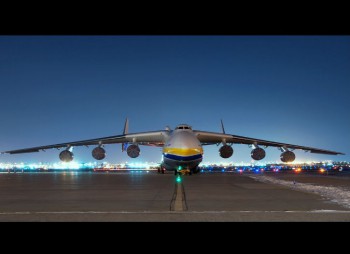
Russia: 18 Incredible Facts About The Largest Plane Ever Built

August 21, 2015 By administrator

aad281308bfef13639d07563a53f9917c0a79eb1A product of the last days of the U.S.S.R, the Antonov An-225 Mriya is the largest airplane in existence, and one of the most impressive examples of modern engineering.

Filed Under: Articles Tagged With: Largest Plane, Russia

TELEPHONY-ARMENIA Orange Armenia is passed into the hands of the Russian telephone operator Ucom

August 21, 2015 By administrator

arton115253-380x285The now settled. Orange Armenia the Armenian subsidiary of the French telephone operator passes into the hands of the Russian operator Ucom phone. All shares of Orange Armenia were sent to Ucom August 20 at a signing before the Regulatory Commission of Public Services of Armenia, a government supervisory authority. On July 22, Orange Armenia had declared last leave the Armenian market “too narrow” for its development. Ucom and Orange Armenia absorbing may however continue to use the brand Orange Armenia for a year.

Krikor Amirzayan

Filed Under: Articles Tagged With: Armenia, orange, Russia, ucom

Russia Sends MiG-31 Jets to Syria – Media

August 17, 2015 By administrator

Russian MiG-31s Perform Unique Non-Stop Flight With Three Aerial Refuelings

Russian MiG-31s Perform Unique Non-Stop Flight With Three Aerial Refuelings

Russian officials have not yet confirmed the information.

Russia reportedly supplied Syria with supersonic MiG-31 fighter/interceptors, partly fulfilling the bilateral contract of 2007, BGNNews.com reported.

In 2007, Russia and Syria signed two agreements worth 1 billion dollars for the supply of MiG-29M and MiG-31. The deliveries of the MiG-29M’s are underway, but those of the MiG-31’s were reportedly delayed because of pressure from Israel.

In 2009, Russia confirmed its intention to fulfill the deal and deliver 8 MiG-31 fighters to Damascus.

According to media sources, six MiG-31 jets have already landed in Damascus. The website connects Russia’s decision with its intention to help Syria in its fight against the Islamic State terrorist group.

A group of four MiG-31 jets is capable of controlling the air space to a distance of 800-900 km.

The MiG-31 is a supersonic interceptor aircraft built for use by the Soviet Air Forces in the 1970s. It is designed to detect and destroy air targets at extremely low, low, medium and high altitudes, at day and night time and in any adverse weather conditions.

Source:  http://sputniknews.com/russia/20150817/1025833178.html#ixzz3j6RQ11Mh

Filed Under: Articles Tagged With: MiG-31, Russia, Syria

Russia, Leader Of Self-Proclaimed Caucasus Emirate Killed In Daghestan

August 11, 2015 By administrator

August 11, 2015

The leader of the self-proclaimed Caucasus Emirate, Magomed Suleimanov, was killed in a special operation in Russia’s North Caucasus region of Daghestan on August 11.

Russia’s National Antiterrorist Committee said that Suleimanov was among four militants killed by security forces in Daghestan’s Untsukul district.

The pro-militant website Kavkazcenter.com confirmed that Suleimanov, also known as Abu Usman Gimrinsky, “became a martyr” in the August 11 operation.

Suleimanov was announced as the leader of the Caucasus Emirate in April after its previous leader, Aliaskhab Kebekov, was killed by Russia’s security forces.

Kebekov took over the Caucasus Emirate leadership in March 2014 after it was announced that its founding leader, Doku Umarov, was killed by Russian federal security troops.

The North Caucasus has become Russia’s most violence-plagued region in recent years.

After two unsuccessful separatist wars in Chechnya in the mid-1990s and early 2000s, the Islamic militancy spilled over into other North Caucasus republics, such as Kabardino-Balkaria, Daghestan, and Ingushetia, which Umarov proclaimed as subjects of the Caucasus Emirate in 2007.

Based on Interfax and kavkazcenter.com

Filed Under: Articles Tagged With: Daghestan, Russia, Self-Proclaimed

Russia challenges legitimacy of Turkey’s anti-PKK raids on Iraq

August 6, 2015 By administrator

c3e2dafb-d6ab-455c-bd70-685d9ffb11f2

Russian Prime Minister Dmitry Medvedev (© AFP)

Russian Prime Minister Dmitry Medvedev has questioned the legitimacy of Turkey’s military offensive against the bases belonging to the Kurdistan Workers’ Party (PKK) in Iraq, arguing that the move lacks Baghdad’s approval.

In an interview with Egypt’s al-Ahram newspaper published on Thursday, Medvedev drew a parallel between Ankara’s ongoing military campaign in northern Iraq and airstrikes conducted by the so-called anti-ISIL coalition led by the US in Syria, expressing skepticism about the legality of both actions in the region.

“The coalition was set up bypassing the UN Security Council and has spread its activities over the territory of Syria without its government’s consent. This provokes serious doubts in terms of legitimacy of such actions. By the way, the recent Turkish airstrikes against Iraq cannot help but raise similar questions as well,” he said.

The Russian premier further emphasized the need for a joint effort by a wide range of countries under the auspices of an international organization to combat terrorism.

Recently, the Arab League denounced Turkey’s anti-PKK operations in Iraq, calling on Ankara to recognize its neighbor’s sovereignty.

The Turkish government, however, reacted angrily and rejected the 22-nation Arab body’s criticism.

Turkey recently launched airstrikes against the PKK bases in northern Iraq as well as purported ISIL positions in Syria after a deadly bomb attack, which left 32 people dead in the southwestern town of Suruç, across the border from the Syrian Kurdish town of Kobani.

Iraqi Prime Minister Haider al-Abadi, however, condemned Turkey’s anti-PKK attacks as a “dangerous escalation” and a “violation” of his country’s sovereignty.Both Turkey and most parties to the so-called anti-ISIL coalition have long been viewed as major supporters of the Takfiri terrorists operating to topple the Syrian government.

Syrian delegation in Russia

Meanwhile, in another development, a delegation of Syrian military and experts on security arrived in the Russian capital city of Moscow earlier this week.

A Syrian embassy representative, whose name was not released in reports, told Russia’s Interfax news agency that the delegation of six people are expected to discuss ways to counter terrorism in the Arab country.

Syria has been battling foreign-sponsored militancy since March 2011. The violence fueled by Takfiri terrorist groups has so far left over 230,000 people dead.

This is while the Western governments and their regional allies such as Turkey have contributed to the rise of terrorist groups fighting against the government of Syrian President Bashar al-Assad.

Source: Presstv.com

Filed Under: News Tagged With: Kurd, PKK, Russia, Turkey

Russia slams US for assisting Syria militants

August 3, 2015 By administrator

Demitry Peskov, the spokesman for the Kremlin

Demitry Peskov, the spokesman for the Kremlin

Russia has criticized the United States over its plans to support militants in Syria, saying it could further escalate the chaotic situation in the Arab country.

The spokesman for the Kremlin said Monday that Washington’s plans together with Turkey’s to provide air cover for some militants operating inside Syria could undermine the central government’s ability to fight Takfiri groups like ISIL.

“Of course, Moscow has repeatedly stressed that the aid, especially financial or technical, to the opposition in Syria, leads to further destabilization of the situation in the country,” Russian media quoted Dmitry Peskov as saying.

Washington and Ankara have declared that by helping the so-called “moderate” armed groups fighting ISIL in Syria, they aim to weaken the group in order to purge it from the long strip of land it controls along the Turkish border.

Peskov said, however, that the schemes would seriously hamper the Syrian government’s ability to fight ISIL.

“This essentially creates a situation which could be used by terrorists of [the so-called] Islamic State (ISIL),” Peskov said, adding that the move causes “the weakened leadership” in Damascus to simply lose its potential to stop the growth of the terrorist group.

The Russian official added that growing interest from the US to intervene in Syria clearly exposes the difference between Moscow and Washington’s positions toward more than four years of conflict in the Arab country.

“And this is absolutely no secret. We have never hushed up these differences,” Peskov added.

Since last year, the US-led so-called international coalition against ISIL have been hitting the positions of the group in Syria without the authorization of Damascus or a UN mandate. The Syrian government has criticized the uncoordinated attacks, saying they violate the country’s sovereignty.

Filed Under: Articles Tagged With: ISIL, Russia, Syria, US

EU farmers lost €5.5 Billion from Russian food import ban – Unions

August 1, 2015 By administrator

EU-lostThe trade embargo from Russia has cost European farmers an estimated 5.5 billion euros in lost revenue, a senior trade union official complained on Friday, sputniknews.com reports.

The trade embargo from Russia – which farmers and cooperatives are the victims of — has cut approximately half, 5.5 billion euros of our agri-food exports,” Albert Jan Maat, the president of the Brussels-based European farmers union Copa Cogeca, an umbrella group that includes around 60 agricultural organizations from all EU member states, said in a statement.

Maat welcomed as “a step forward” the EU Commission move to introduce new measures to support EU fruit and vegetable growers and dairy producers, but added that it was “nowhere near enough to compensate producers for their huge losses.”

Speaking on behalf of the Copa Cogeca union, representing 28 million EU farmers, Albert Jan Maat urged the EU to intensify negotiations with Russia to have the restrictions imposed on EU pig meat exports in early 2014 lifted.

In June Russia extended for another year its ban on food imports from the European Union, the United States, Canada and Norway. The list of products, first prohibited from being imported to Russia in August 2014, includes meat, poultry, fish, seafood, dairy products, fruit and vegetables.

Source: Panorama.am

Filed Under: Articles Tagged With: EU, Farmars, import, Russia

Armenia to compete in International Army Games in Russia

August 1, 2015 By administrator

Armenia-Army-The 2015 International Army Games have kicked off Saturday in Moscow.

The Minister of Defence of Russia, Sergey Shoygu, delivered remarks at the opening ceremony of the event.

“We will witness an intense battle,” the minister specifically stated.

The army games will be conducted in various regions of Russia, reported Interfax news agency.

A total of 57 teams from 17 countries will take part in the event.

Team Armenia will compete in the Tank Battalion contest.

The 2015 International Army Games will come to an end on August 15.

Source: NEWS.am

Filed Under: Articles Tagged With: Armenia, Army, compete, Russia

  • « Previous Page
  • 1
  • …
  • 36
  • 37
  • 38
  • 39
  • 40
  • …
  • 48
  • Next Page »

Support Gagrule.net

Subscribe Free News & Update

Search

GagruleLive with Harut Sassounian

Can activist run a Government?

Wally Sarkeesian Interview Onnik Dinkjian and son

https://youtu.be/BiI8_TJzHEM

Khachic Moradian

https://youtu.be/-NkIYpCAIII
https://youtu.be/9_Xi7FA3tGQ
https://youtu.be/Arg8gAhcIb0
https://youtu.be/zzh-WpjGltY


gagrulenet Twitter-Timeline

Tweets by @gagrulenet

Archives

Books

Recent Posts

  • Pashinyan Government Pays U.S. Public Relations Firm To Attack the Armenian Apostolic Church
  • Breaking News: Armenian Former Defense Minister Arshak Karapetyan Pashinyan is agent
  • November 9: The Black Day of Armenia — How Artsakh Was Signed Away
  • @MorenoOcampo1, former Chief Prosecutor of the International Criminal Court, issued a Call to Action for Armenians worldwide.
  • Medieval Software. Modern Hardware. Our Politics Is Stuck in the Past.

Recent Comments

  • Baron Kisheranotz on Pashinyan’s Betrayal Dressed as Peace
  • Baron Kisheranotz on Trusting Turks or Azerbaijanis is itself a betrayal of the Armenian nation.
  • Stepan on A Nation in Peril: Anything Armenian pashinyan Dismantling
  • Stepan on Draft Letter to Armenian Legal Scholars / Armenian Bar Association
  • administrator on Turkish Agent Pashinyan will not attend the meeting of the CIS Council of Heads of State

Copyright © 2025 · News Pro Theme on Genesis Framework · WordPress · Log in